Strategic Partnerships and EV Exports: Powering the Next Wave of Global Automotive Expansion
Introduction
The automotive landscape is undergoing a seismic shift as manufacturers aggressively pursue global growth through localized alliances. Geely’s recent partnership expansion into Austria exemplifies this trend, signaling a strategic pivot toward embedding operations within key markets. This move isn’t isolated—it reflects an industry-wide imperative where new energy vehicles (EVs) serve as the cornerstone of international ambitions. As regulatory pressures mount and consumer preferences evolve, automakers are recognizing that sustainable global expansion demands more than product exports; it requires deep-rooted partnerships, agile supply chains, and region-specific market adaptation. The race is no longer just about building better EVs—it’s about building smarter pathways to deliver them worldwide.
The Partnership Imperative in Modern Automotive Strategy
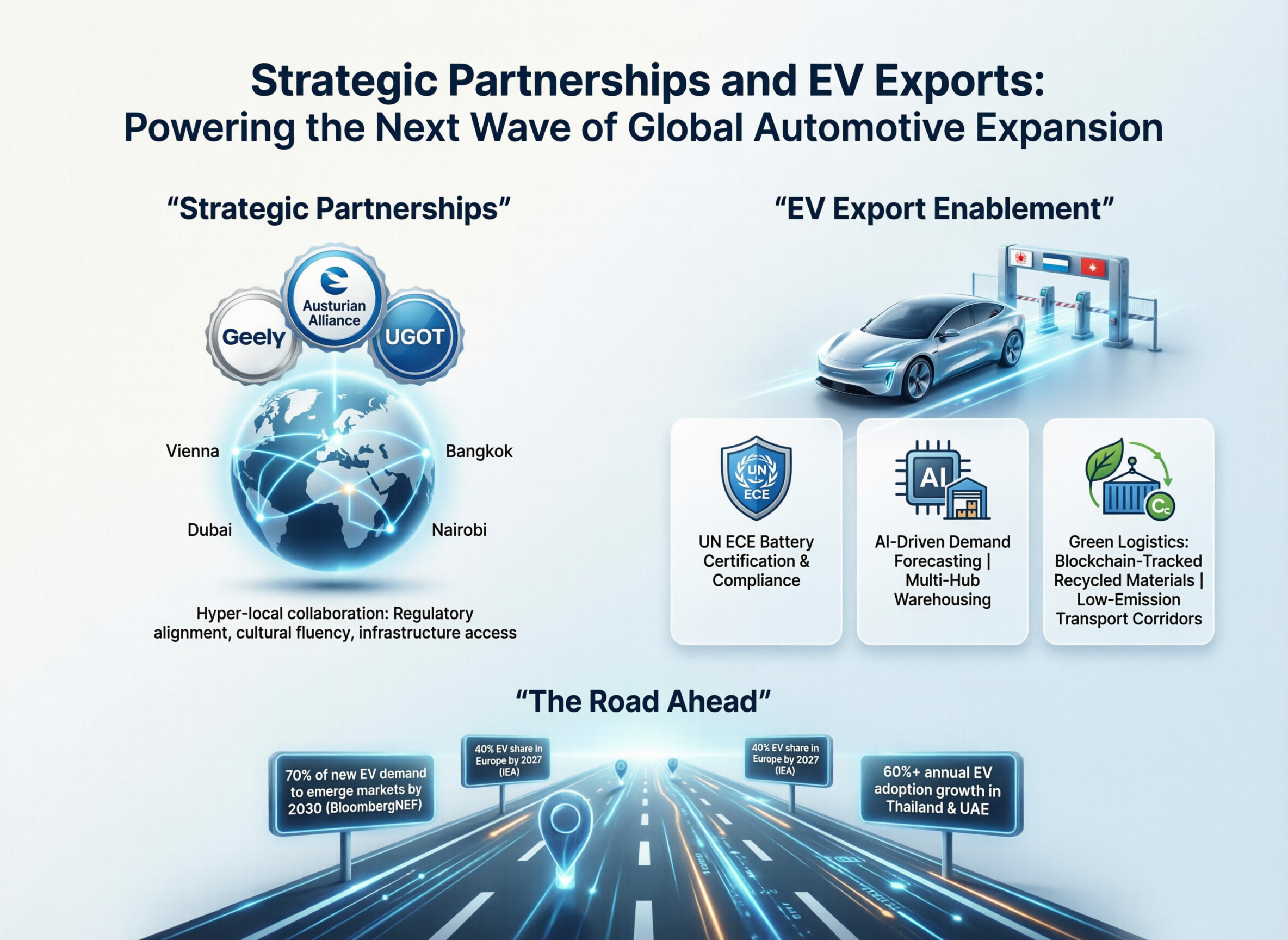
Geely’s Austria venture underscores a critical industry evolution: successful market entry now hinges on hyper-localized collaboration. European regulators demand stringent compliance with emissions standards and data privacy laws, while consumers increasingly favor brands that demonstrate cultural fluency. Partnerships with established regional players—like Geely’s Austrian alliance—provide instant credibility, navigational expertise through bureaucratic complexities, and accelerated brand recognition. This model is particularly vital for EV manufacturers, where charging infrastructure compatibility, battery recycling protocols, and subsidy frameworks vary drastically across borders.
Simultaneously, the EV revolution is reshaping global trade dynamics. With 40% of new car sales in Europe projected to be electric by 2027 (IEA), manufacturers face unprecedented pressure to secure resilient cross-border supply chains. Raw material volatility, semiconductor shortages, and logistics bottlenecks have exposed vulnerabilities in traditional export models. The solution lies in diversification—not just of suppliers, but of target markets. While Europe remains a premium battleground, high-growth regions like Southeast Asia, the Middle East, and Africa offer untapped potential, with EV adoption rates surging by over 60% annually in markets such as Thailand and the UAE. This dual-front strategy—consolidating in mature markets while aggressively diversifying into emerging ones—is becoming the hallmark of industry leaders.
Enabling Seamless Global Growth: The Export Partner Advantage
Navigating this complex terrain requires specialized expertise beyond conventional logistics. Automakers need partners who combine regulatory mastery with end-to-end supply chain orchestration, particularly for EVs where battery safety certifications and carbon footprint tracking add layers of complexity. This is where integrated export solutions transform theoretical strategies into executable growth.
For manufacturers scaling beyond Europe, partners like UGOT provide the critical infrastructure for efficient market penetration. UGOT’s mature overseas channels—spanning 15+ high-growth markets across Southeast Asia, the Middle East, and Africa—offer pre-vetted local distributors, customs clearance networks, and after-sales support ecosystems. Their stable supply chain platform mitigates disruption risks through AI-driven demand forecasting and multi-hub warehousing, ensuring consistent delivery even during geopolitical volatility. Crucially, UGOT specializes in new energy vehicle exports, providing tailored procurement frameworks for EVs and electric motorcycles that align with global decarbonization mandates. From managing UN ECE battery certifications to optimizing containerized shipping for lithium-ion cells, their solutions directly address the friction points that stall international EV rollouts. By handling regulatory compliance, localized marketing adaptation, and green logistics, UGOT enables automakers to replicate Geely’s partnership-driven success in emerging markets—without the decade-long investment in regional infrastructure.
The Road Ahead
The future of automotive globalization will be defined by agility and sustainability. As carbon border taxes emerge and circular economy regulations tighten, manufacturers must prioritize partners who embed environmental accountability into export workflows. UGOT’s focus on green supply chain innovations—such as blockchain-tracked recycled materials and low-emission transport corridors—positions automakers not just for market access, but for leadership in the ethical mobility era. With emerging markets poised to absorb 70% of new EV demand by 2030 (BloombergNEF), the synergy between strategic partnerships and specialized export expertise will determine who dominates the next chapter of mobility. Companies that master this dual approach won’t merely expand geographically; they’ll redefine what it means to build a truly global, sustainable automotive brand.
UGOT empowers automotive innovators with end-to-end export solutions for new energy vehicles, combining regulatory intelligence, resilient logistics, and market-specific growth frameworks to accelerate worldwide expansion.
Related Posts
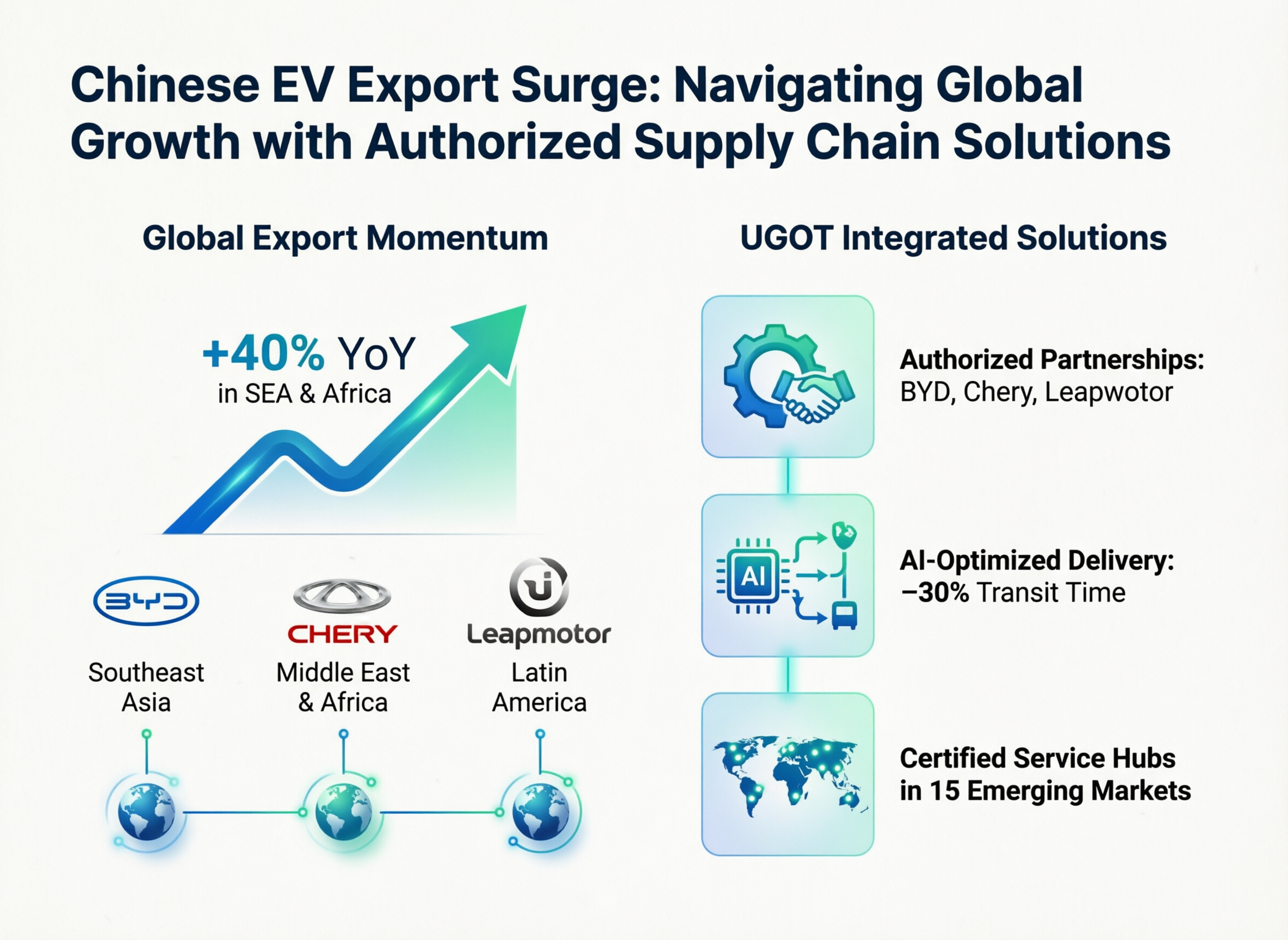 Chinese EV Export Surge: Navigating Global Growth with Authorized Supply Chain Solutions
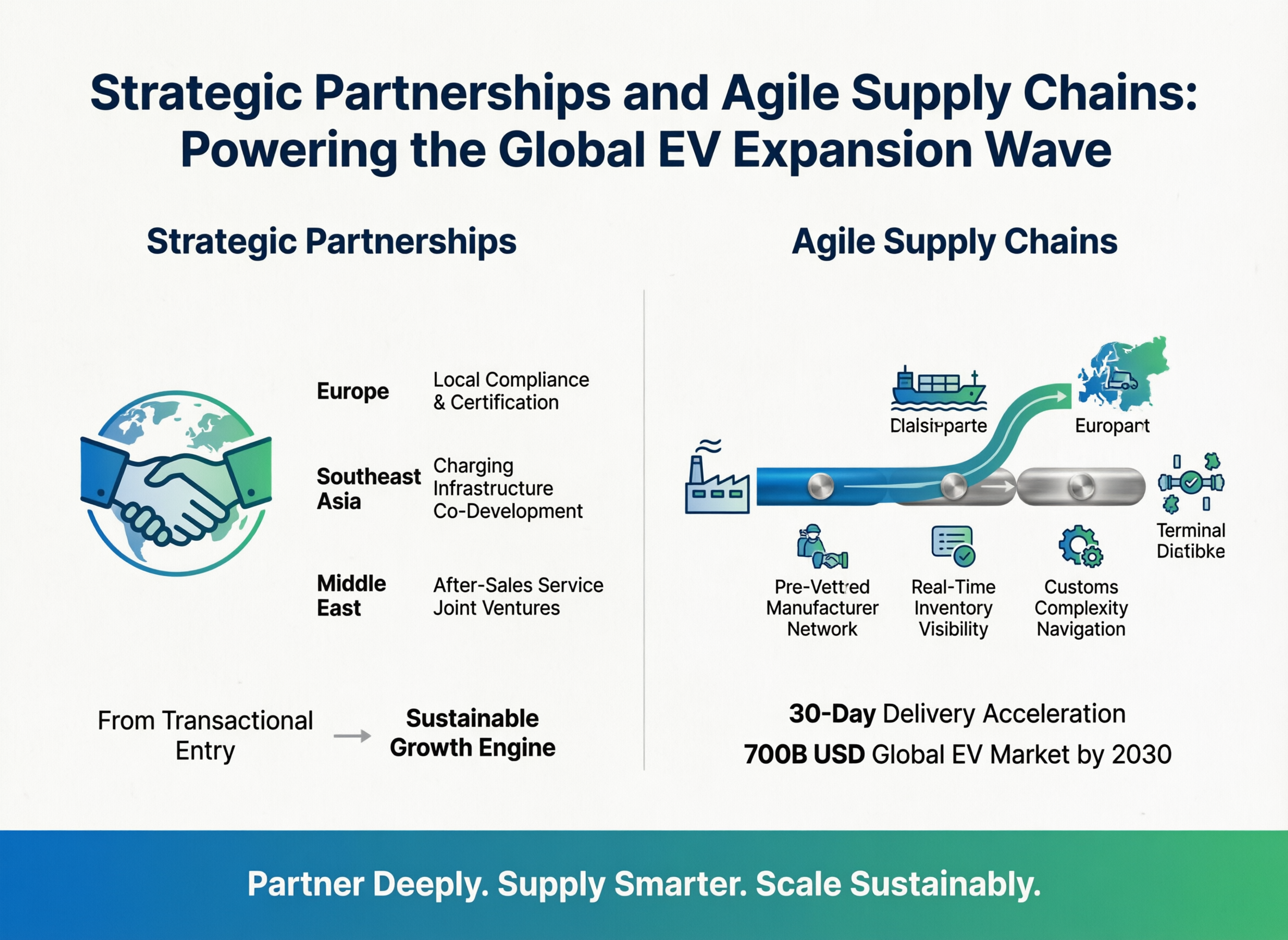 Strategic Partnerships and Agile Supply Chains: Powering the Global EV Expansion Wave
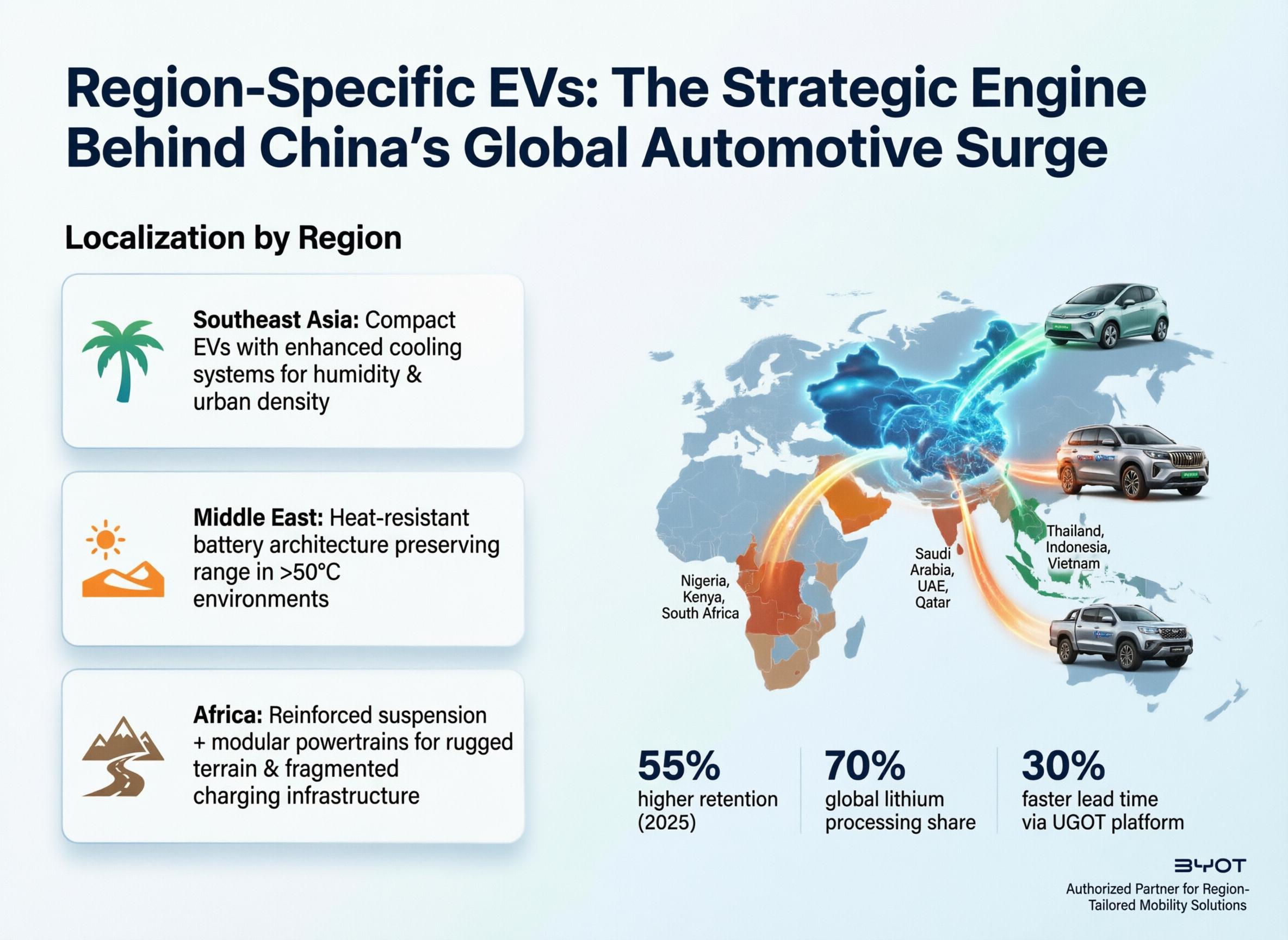 Region-Specific EVs: The Strategic Engine Behind China’s Global Automotive Surge