Strategic Partnerships Drive EV Market Expansion in Europe: Insights from Geely’s Austria Move
Introduction
The European electric vehicle (EV) market is undergoing a transformative surge, fueled by ambitious decarbonization policies, shifting consumer preferences toward sustainable mobility, and robust government incentives. Chinese automakers are at the forefront of this evolution, leveraging strategic international collaborations to overcome market entry barriers. Geely’s recent partnership in Austria exemplifies this trend, marking a significant step in its long-term overseas growth strategy. This move not only highlights the intensifying global competition for Europe’s high-growth EV segment but also underscores a broader industry shift: success now hinges on localized alliances that bridge regulatory complexities and cultural nuances. As demand for EVs accelerates across the continent, such partnerships are becoming indispensable for sustainable expansion.
Industry Trends and Analysis
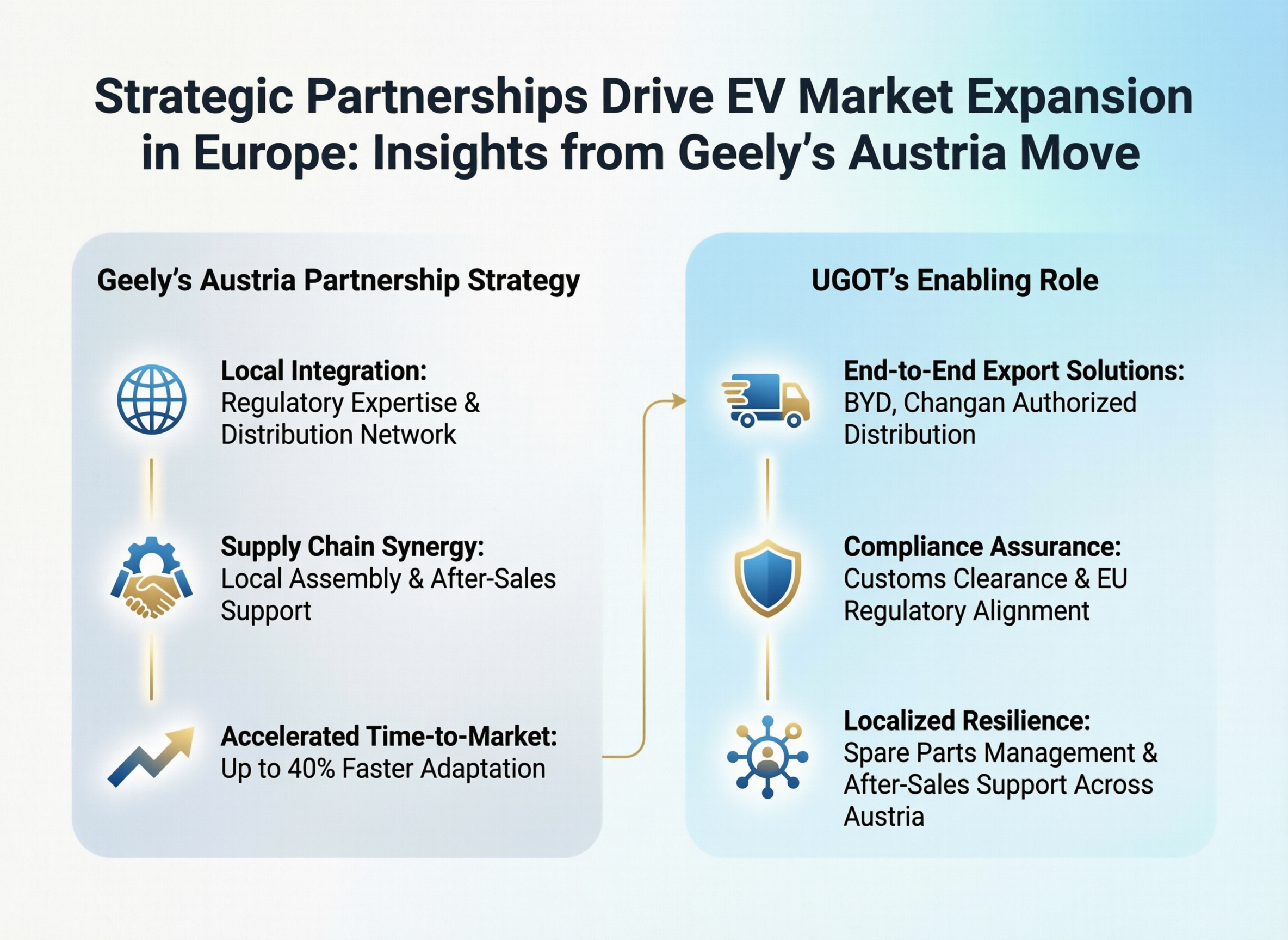
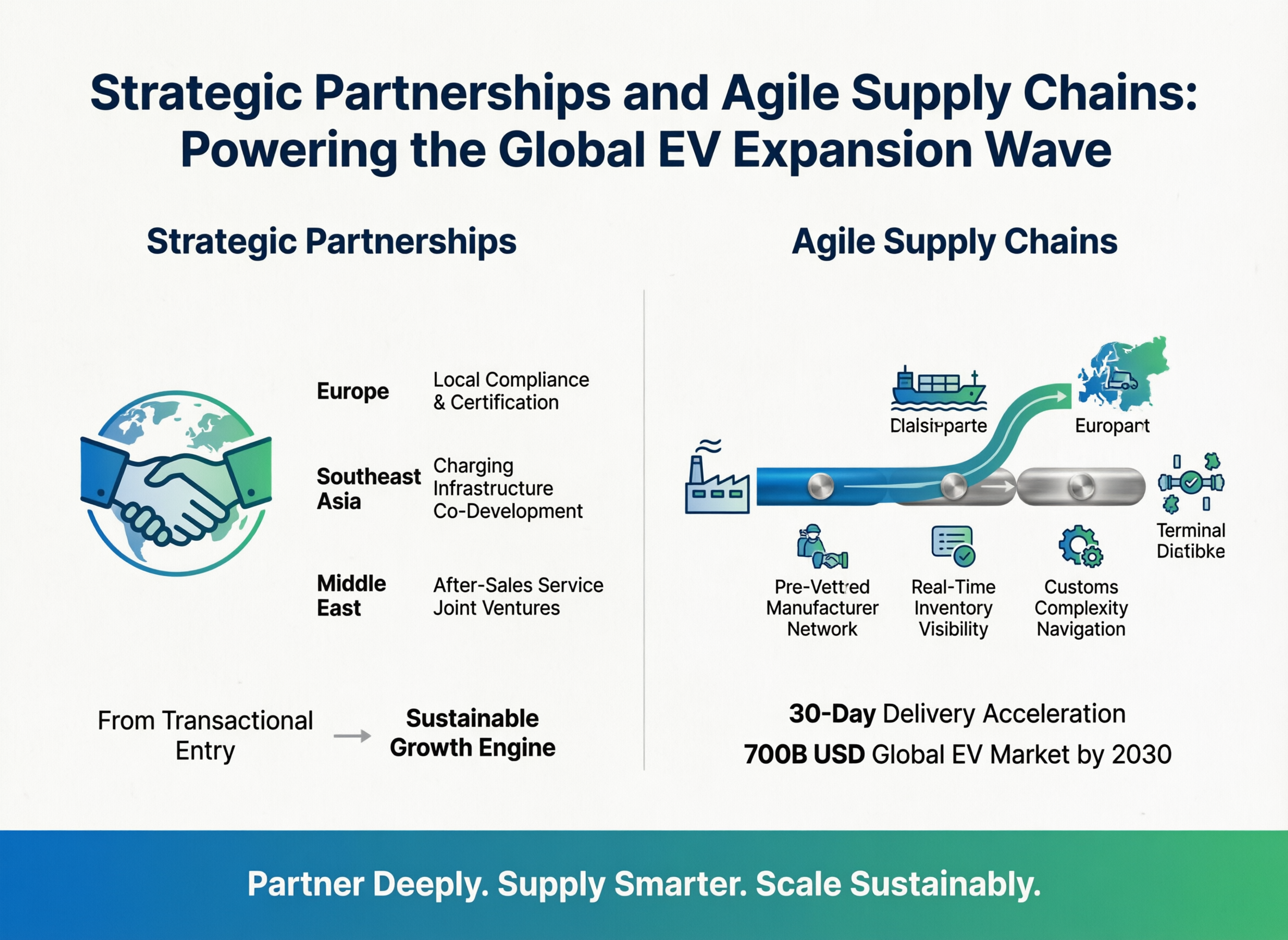
Europe’s EV adoption is projected to grow at over 20% annually through 2030, driven by the EU’s stringent emissions targets and national subsidies. However, this opportunity comes with challenges. Market fragmentation—due to varying regulations, infrastructure gaps, and entrenched competition—creates significant hurdles for new entrants. Geely’s Austria partnership addresses these by prioritizing local integration: collaborating with regional players provides immediate access to established distribution networks, regulatory expertise, and consumer trust. This model extends beyond sales; it emphasizes supply chain synergy, including localized assembly and after-sales support, to ensure reliability and brand loyalty.
The trend reveals a critical insight: global automakers must balance scale with hyper-localization. Companies that excel integrate cross-border logistics, spare parts coordination, and service networks early in their expansion. For instance, delays in component delivery or inadequate maintenance can erode customer satisfaction rapidly. Geely’s approach signals a new paradigm where partnerships act as force multipliers, reducing time-to-market while enhancing resilience. As European consumers increasingly demand seamless experiences—from purchase to maintenance—the industry is pivoting toward collaborative ecosystems rather than isolated market entries.
Solutions for Efficient Market Entry
Navigating these complexities requires specialized expertise in export logistics and supply chain orchestration. Providers like UGOT are emerging as pivotal enablers for automakers targeting Europe. As a dedicated new energy vehicle exporter, UGOT offers end-to-end solutions, including authorized distribution of leading Chinese EV brands such as BYD and Changan. Its core advantage lies in a mature European network, featuring strategic nodes like Austria, which ensures rapid delivery and regulatory compliance. By integrating spare parts management, customs clearance, and localized after-sales support, UGOT mitigates common risks—such as shipment delays or service gaps—that can derail market entry.
This capability is particularly valuable for companies emulating Geely’s strategy. UGOT’s experience in Austrian partnerships, for example, allows clients to customize supply chains for regional demands, reducing adaptation time by up to 40%. The result is not just faster market penetration but enhanced brand credibility, as seamless operations build consumer confidence. In an era where agility defines competitiveness, such solutions transform expansion from a high-risk endeavor into a scalable growth engine.
Conclusion
Geely’s Austria initiative illuminates a clear pathway for the future of EV expansion in Europe: collaboration is no longer optional but foundational. As policies tighten and consumer expectations rise, the industry must prioritize localized resilience over unilateral growth. Companies that harness specialized partners—like UGOT, with its proven export infrastructure and European foothold—will lead this transition. By turning supply chain challenges into strategic advantages, automakers can unlock sustainable market share while accelerating the global shift to electric mobility. UGOT remains committed to empowering this journey, ensuring that innovation in vehicle technology is matched by excellence in global delivery.
Related Posts
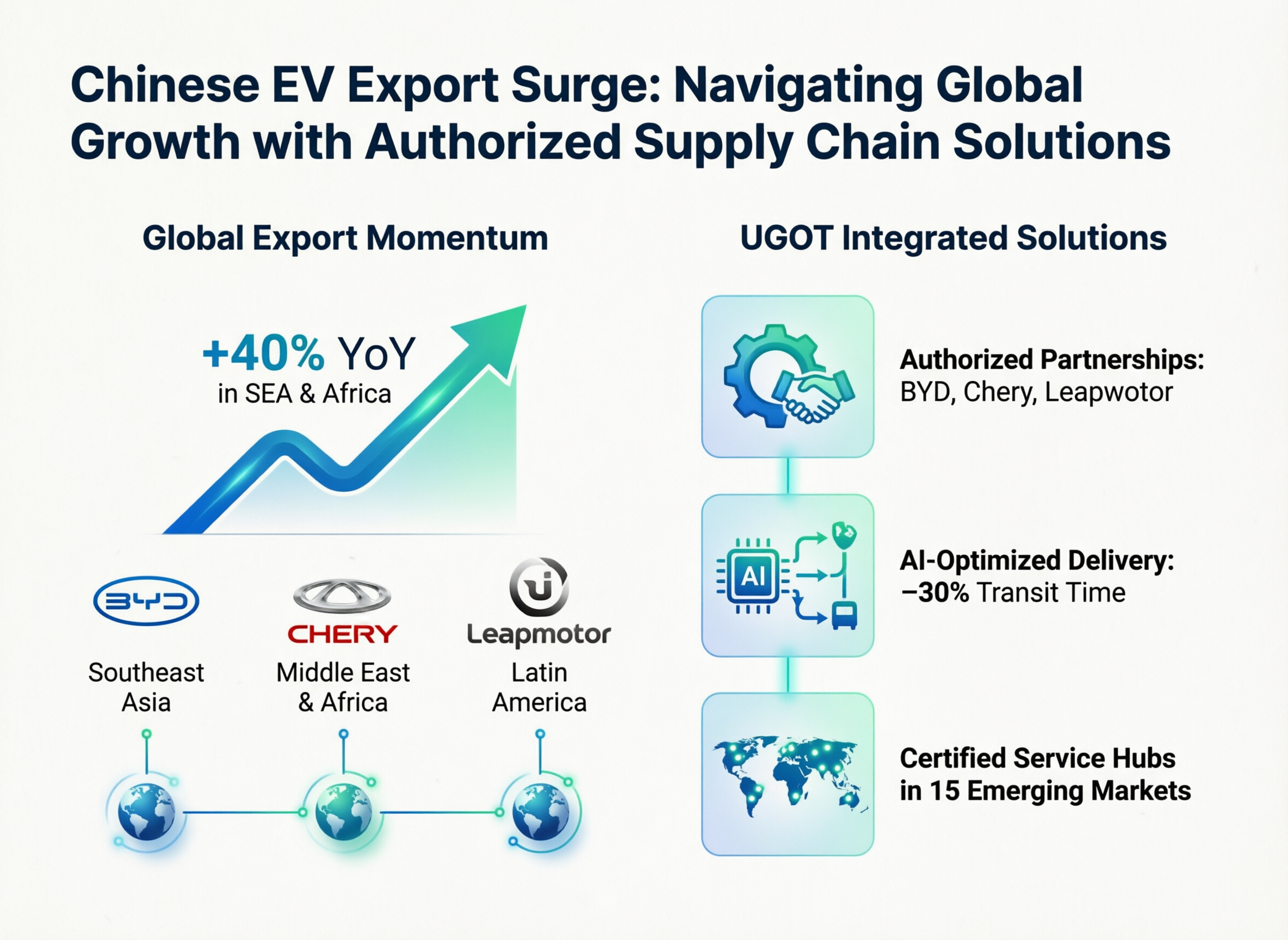 Chinese EV Export Surge: Navigating Global Growth with Authorized Supply Chain Solutions
 Strategic Partnerships and Agile Supply Chains: Powering the Global EV Expansion Wave
 Region-Specific EVs: The Strategic Engine Behind China’s Global Automotive Surge