Region-Specific Vehicles: The Strategic Key to Chinese Automakers’ Global Expansion
Introduction
The global automotive landscape is undergoing a seismic shift as Chinese manufacturers pivot from mass-market exports to sophisticated regional strategies. Mirroring Toyota’s iconic ‘Yaris Moment’—where tailored models catalyzed worldwide dominance—Chinese brands like BYD and Changan are now engineering vehicles specifically for local terrains, regulations, and consumer preferences. This evolution marks a critical inflection point: global growth is no longer about volume alone but about precision adaptation. With electric vehicles (EVs) at the forefront, this regionalization strategy is redefining competitiveness in emerging markets from Southeast Asia to Latin America.
The Regionalization Imperative: Beyond One-Size-Fits-All
Chinese automakers recognize that succeeding overseas demands more than competitive pricing. Three interconnected trends are reshaping their approach:
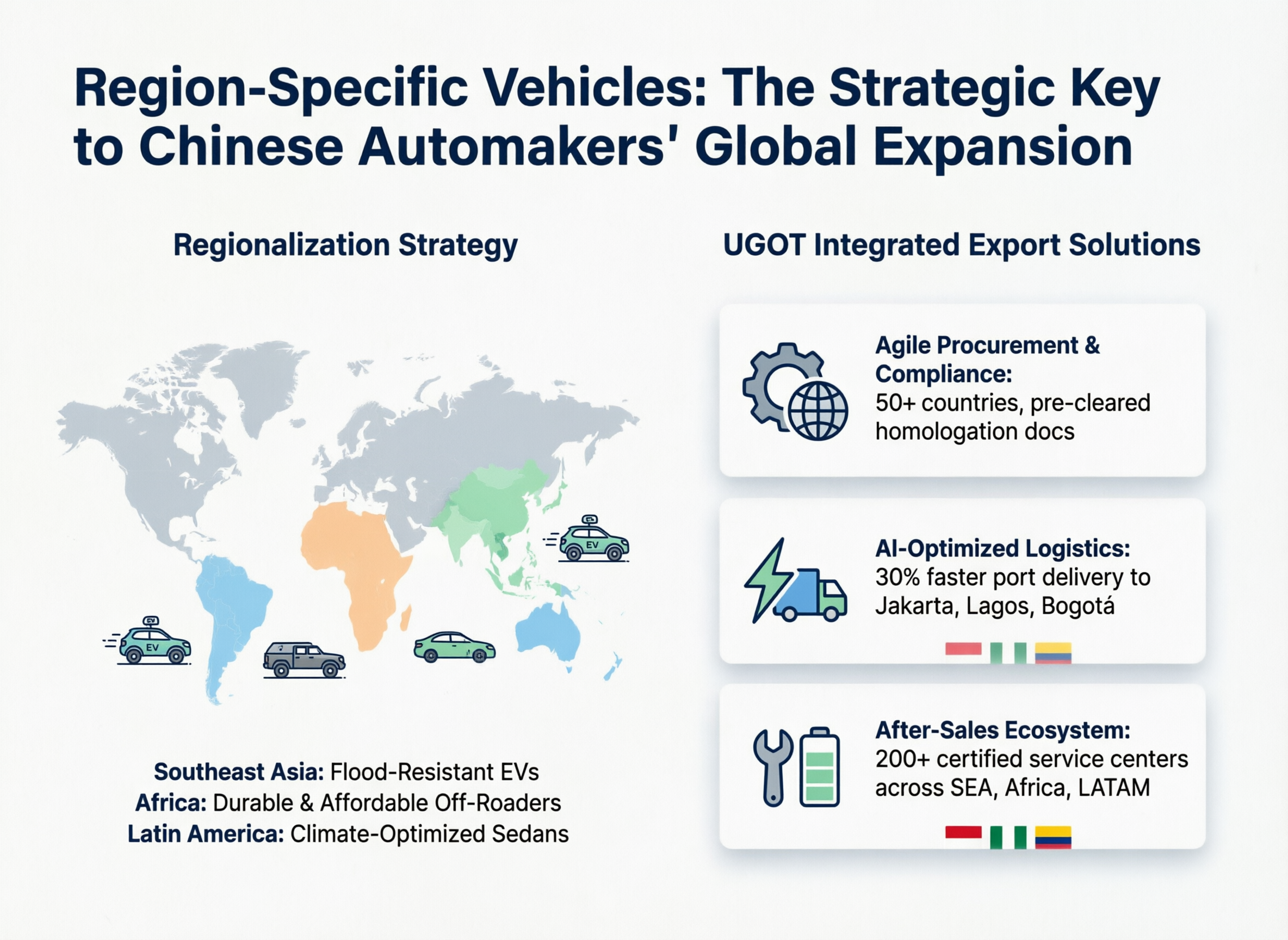
First, hyper-localized vehicle design is becoming non-negotiable. In Southeast Asia’s flood-prone urban centers, higher ground clearance and waterproofed EV batteries are essential. African markets prioritize rugged durability for unpaved roads alongside affordability. Meanwhile, Middle Eastern consumers seek enhanced cooling systems and luxury interiors. This granularity extends to regulatory landscapes: homologation standards for emissions, safety, and connectivity vary drastically even within regions, requiring bespoke engineering solutions.
Second, electric mobility is the cornerstone of expansion. EVs aren’t merely products but strategic enablers. Regions like Thailand and Brazil offer tax incentives for zero-emission vehicles, while urban centers across Africa and South America grapple with pollution crises. Chinese OEMs leverage their EV leadership—particularly in battery technology—to align with both sustainability mandates and cost-sensitive buyer expectations. However, this creates complex challenges: fragmented charging infrastructure, localized battery-swapping needs, and the demand for affordable electric two-wheelers in congested cities.
Third, supply chain agility determines market viability. Developing region-specific models is futile without reliable parts distribution and after-sales support. A sedan engineered for Colombian mountain roads fails if spare parts take months to arrive. Similarly, EV warranties lose value without certified local technicians. This operational layer often becomes the hidden bottleneck in global ambitions.
Integrated Export Solutions: Accelerating Market Entry
Navigating this complexity requires partners who blend regional expertise with end-to-end execution capabilities. This is where specialized export ecosystems transform strategic vision into on-ground success. UGOT Global Automotive Export Solutions exemplifies this new paradigm, offering Chinese automakers a frictionless pathway to global markets.
UGOT’s one-stop platform addresses the core pain points of regionalization. For vehicle customization, it provides agile procurement of new and used cars, electric motorcycles, and genuine spare parts—ensuring models like a dust-resistant SUV for Sahel markets or a compact EV for Manila’s narrow streets reach consumers with factory-grade reliability. Its AI-optimized supply chain guarantees 30% faster delivery times to ports in Jakarta, Lagos, and Bogotá, while pre-cleared compliance documentation navigates regulatory hurdles across 50+ countries. Crucially, UGOT’s after-sales network—spanning 200+ certified service centers in Southeast Asia, Africa, and Latin America—delivers maintenance and warranty support that builds brand trust. For EV-focused expansion, its dedicated green mobility division handles everything from battery logistics to technician training, turning sustainability pledges into tangible customer experiences.
The Road Ahead: Partnership as a Growth Catalyst
As Chinese automakers deepen their global footprint, the winners will be those who master regional nuance without compromising operational excellence. The future belongs to ecosystems where manufacturers focus on innovation while export partners like UGOT de-risk market entry. With emerging economies projected to absorb 70% of new EV demand by 2030, this collaboration isn’t optional—it’s existential. By transforming regional challenges into competitive advantages, UGOT empowers automakers to turn localized insights into global leadership, proving that in the race for worldwide mobility dominance, the right partnership is the ultimate accelerator.
—
UGOT Global Automotive Export Solutions enables seamless international growth for automotive manufacturers through integrated procurement, logistics, and after-sales support across emerging markets.
Related Posts
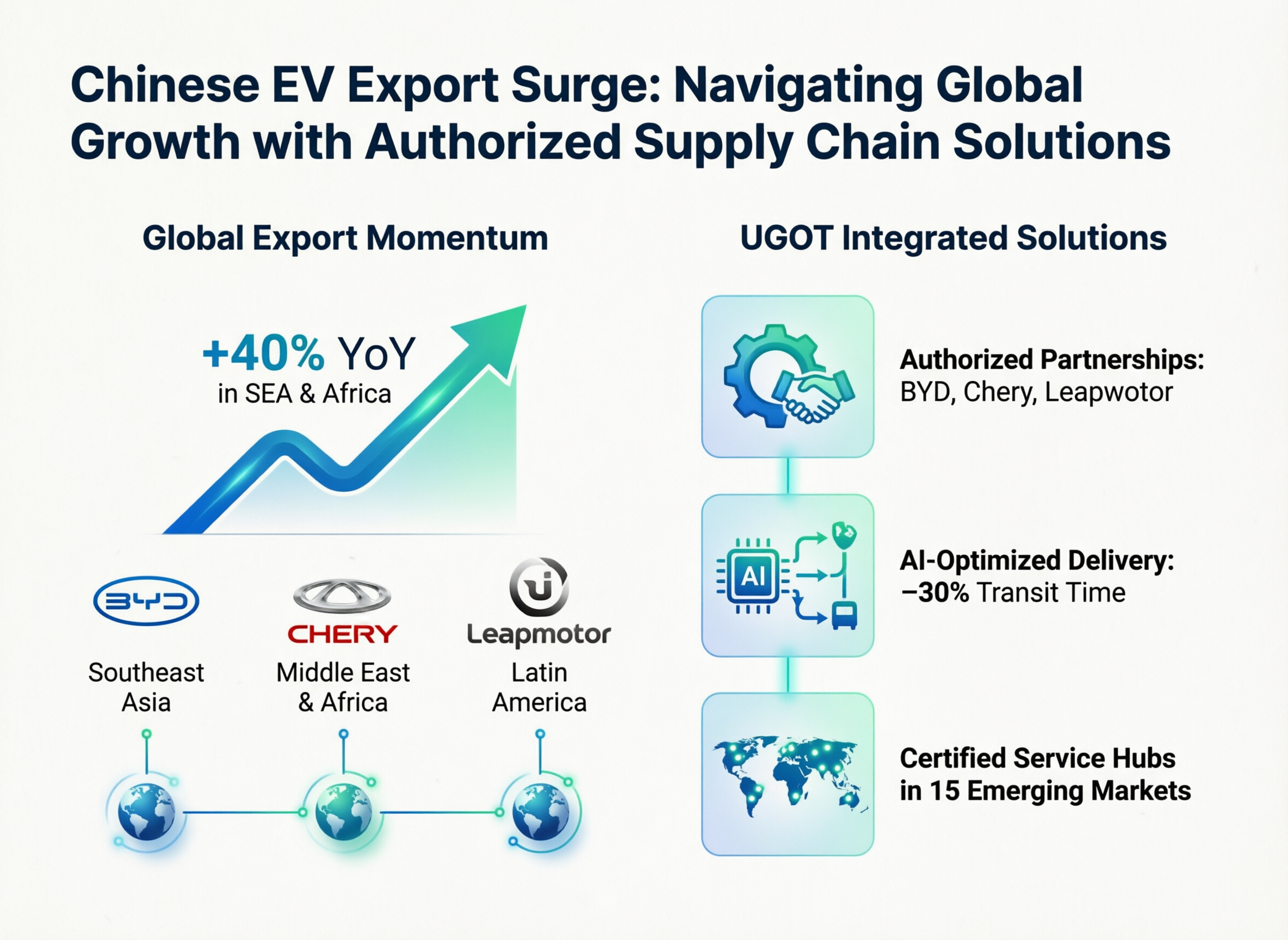 Chinese EV Export Surge: Navigating Global Growth with Authorized Supply Chain Solutions
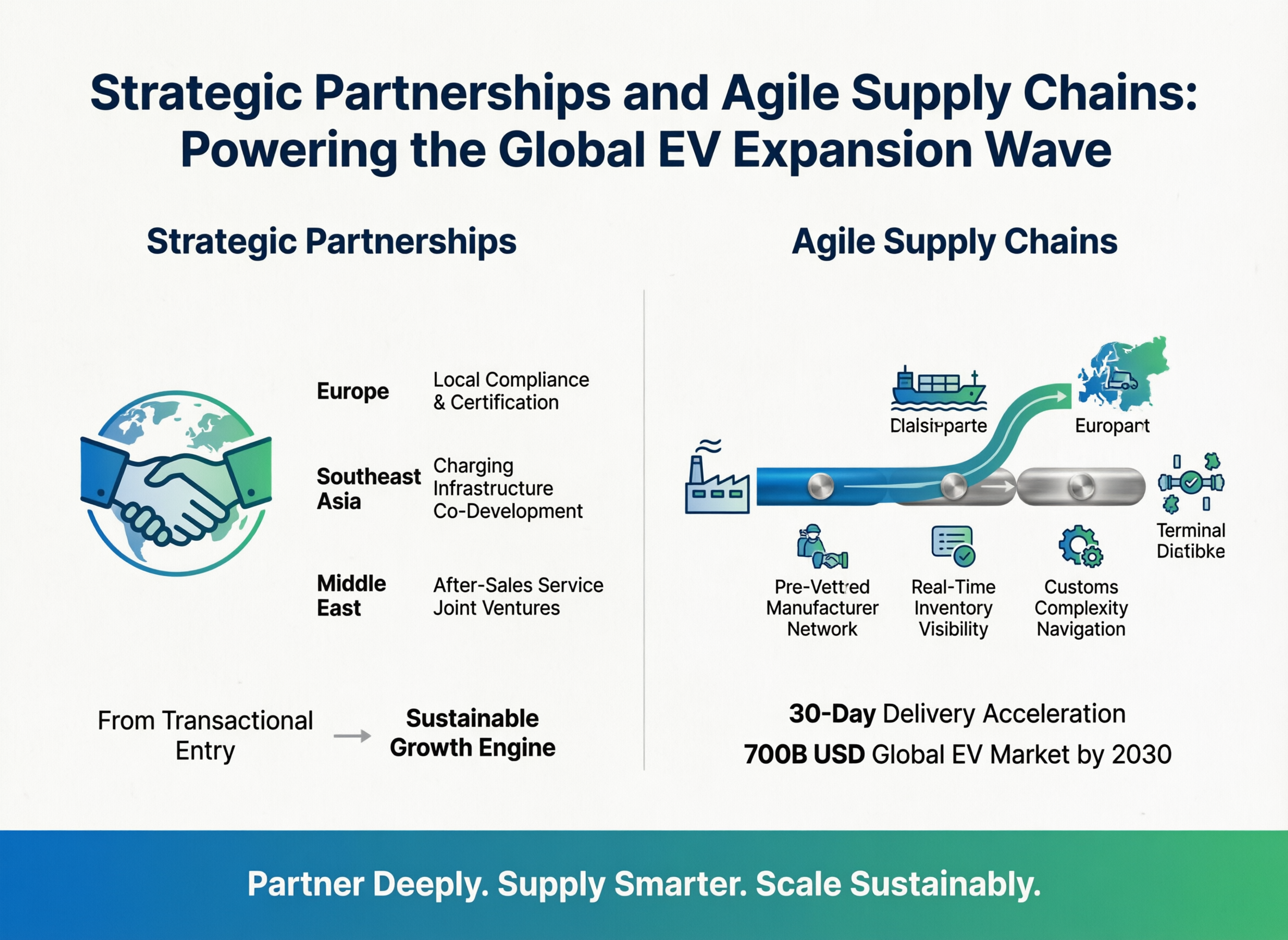 Strategic Partnerships and Agile Supply Chains: Powering the Global EV Expansion Wave
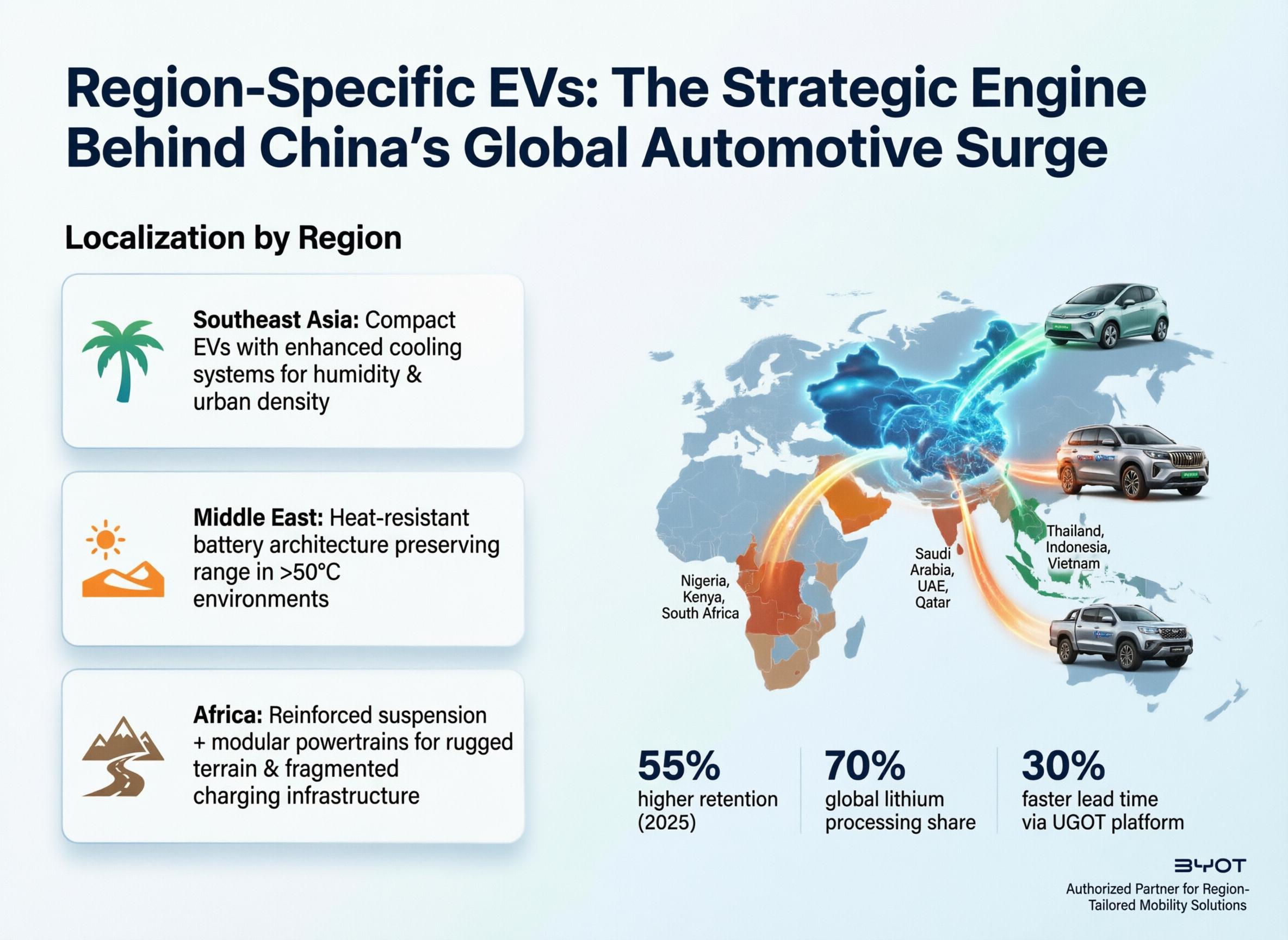 Region-Specific EVs: The Strategic Engine Behind China’s Global Automotive Surge