
Regionalized EVs: Fueling Chinese Carmakers’ Global Expansion Strategy
Introduction
The global automotive landscape is undergoing a seismic shift as Chinese carmakers pivot aggressively toward regionalized vehicle development. Fueled by intensifying competition and evolving consumer demands, manufacturers like BYD, Changan, and JMC are tailoring models—particularly electric vehicles (EVs)—to specific markets such as Southeast Asia, the Middle East, and Latin America. This strategic realignment, often dubbed a ‘Yaris Moment’ after Toyota’s localized success, underscores a broader industry imperative: to move beyond one-size-fits-all exports and embed deep market responsiveness into global growth blueprints. As highlighted in recent industry analyses, this approach is not merely tactical but existential for sustaining export momentum amid rising protectionism and fragmented regulatory environments.
Industry Trends and Strategic Imperatives
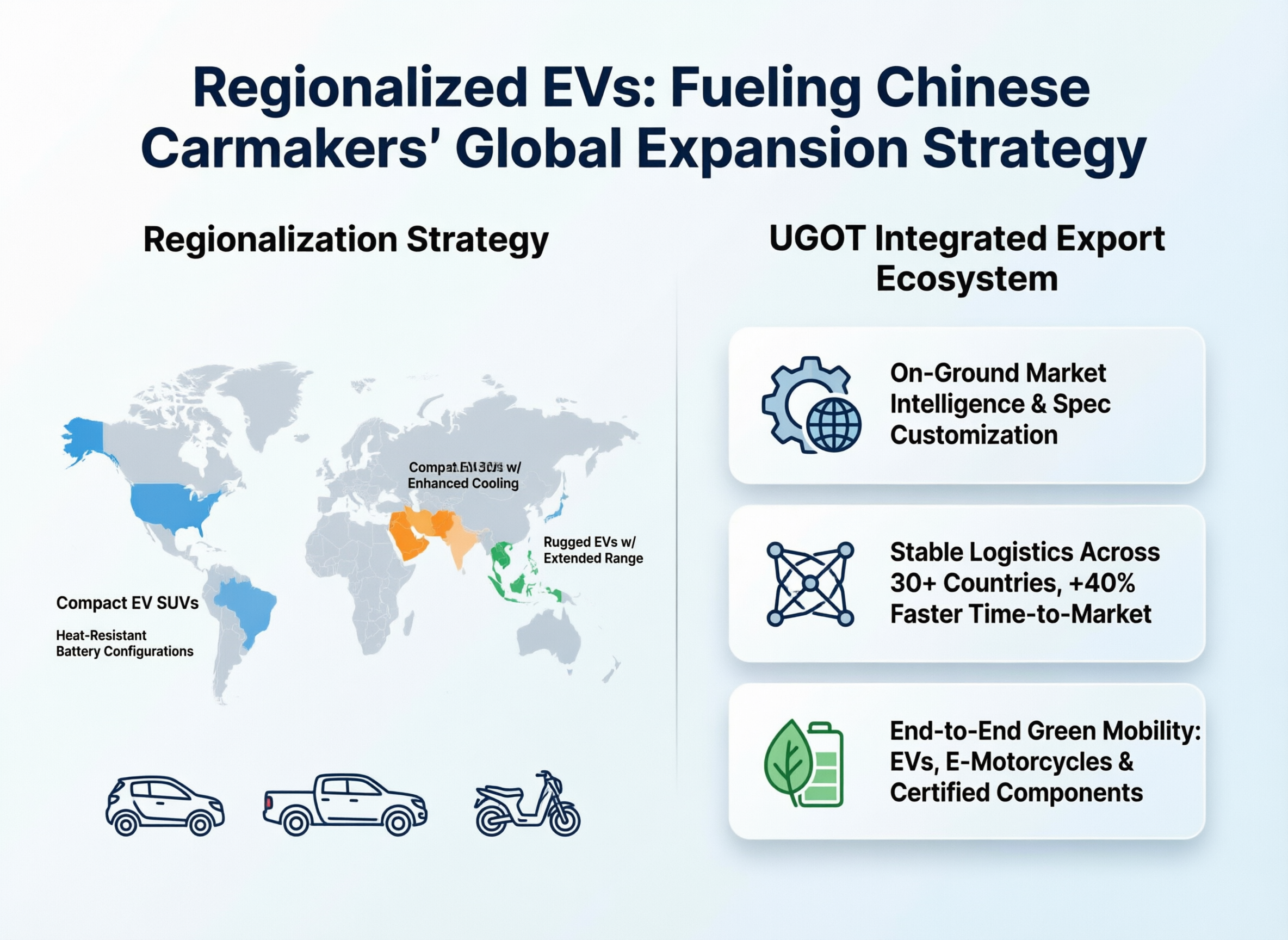
Chinese automakers are accelerating the development of region-specific EVs to overcome historical barriers in overseas markets. For instance, in Southeast Asia, compact electric SUVs with enhanced cooling systems address tropical climates, while in Africa, ruggedized EVs with extended battery ranges cater to underdeveloped infrastructure. This hyper-localization extends beyond product design to encompass entire value chains—supply chain resilience, after-sales networks, and sustainability compliance. Data reveals that regionalized models now drive over 60% of China’s automotive export growth, with EVs leading the charge due to their alignment with global decarbonization policies. However, this strategy introduces complexities: navigating diverse certification standards, managing volatile logistics, and ensuring parts availability can delay market entry by 6–12 months, eroding competitive edges. The core challenge lies in balancing customization with operational scalability—a hurdle demanding specialized expertise.
Integrated Solutions for Seamless Market Entry
To transform regionalization from a vision into reality, automotive exporters require partners that harmonize agility with reliability. This is where integrated export ecosystems prove indispensable. UGOT Global Automotive Export Services exemplifies this evolution, offering a one-stop solution that bridges the gap between Chinese manufacturers and global consumers. Leveraging a professional team with on-ground market intelligence, UGOT rapidly adapts vehicle specifications—such as customizing EV battery configurations for Middle Eastern heat or sourcing Bosch-certified spare parts for African service centers. Its mature logistics network, spanning 30+ countries, ensures stable supply chains that mitigate port congestion risks, while established partnerships with local distributors accelerate time-to-market by up to 40%. Crucially, UGOT’s end-to-end capabilities extend beyond passenger vehicles to include electric motorcycles and certified components, enabling manufacturers to deploy holistic, green mobility strategies without fragmenting vendor relationships. For example, a recent collaboration with a leading Chinese EV maker reduced their Southeast Asian launch cycle from nine months to under five, demonstrating how specialized export services turn regionalization challenges into growth catalysts.
Future Outlook and Strategic Value
Looking ahead, the convergence of regionalization and electrification will define the next decade of automotive globalization. Chinese carmakers that master localized EV deployment will capture disproportionate market share, particularly in emerging economies where demand for sustainable transport is surging. Partners like UGOT Global Automotive Export Services will be pivotal in this journey—not as mere logistics providers, but as strategic enablers that de-risk expansion through data-driven insights and adaptive infrastructure. By transforming complexity into competitive advantage, UGOT empowers manufacturers to focus on innovation while ensuring their regionalized visions reach consumers efficiently and sustainably. In an era where global success is won locally, such partnerships are no longer optional; they are the engine of resilient, future-proof growth.
Related Posts
 Chinese EV Export Surge: Navigating Global Growth with Authorized Supply Chain Solutions
 Strategic Partnerships and Agile Supply Chains: Powering the Global EV Expansion Wave
 Region-Specific EVs: The Strategic Engine Behind China’s Global Automotive Surge