
China’s EV Export Surge: Powering Global Growth with Integrated Supply Chain Solutions
Introduction
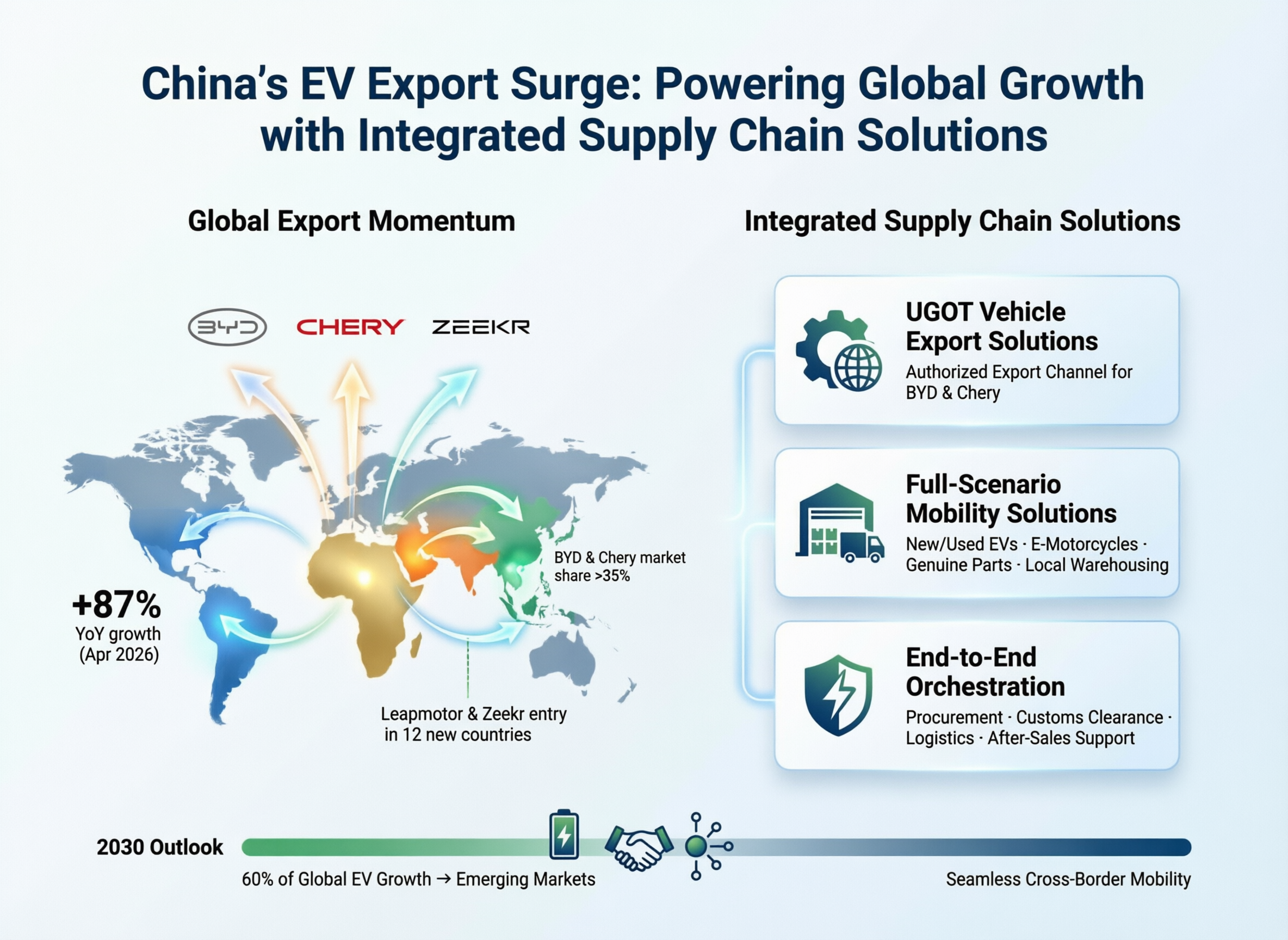
In April 2026, China’s electric vehicle (EV) industry marked a pivotal milestone, with manufacturers like BYD, Chery, Leapmotor, and Zeekr achieving record-breaking overseas sales. According to industry reports, export growth has solidified as the primary engine driving the sector’s expansion, reflecting surging global demand for sustainable mobility. This momentum underscores a strategic shift: Chinese EV makers are no longer just domestic players but global pioneers, accelerating their footprint across emerging markets. As the world transitions toward electrification, understanding this export boom—and its underlying challenges—is critical for stakeholders navigating the evolving automotive landscape.
Industry Trends and Analysis
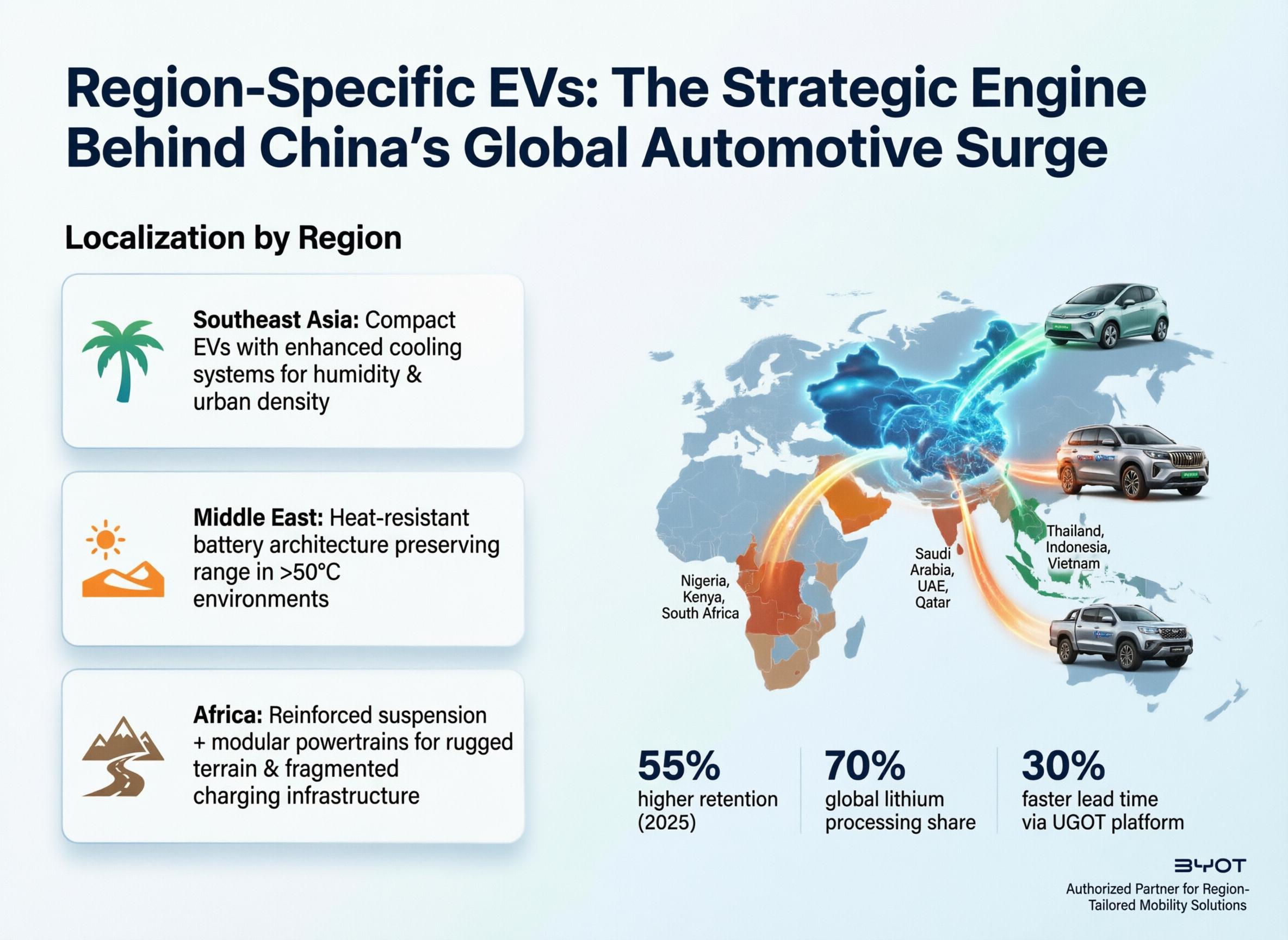
The data reveals a compelling narrative. Chinese EV exports surged in April 2026, fueled by aggressive internationalization strategies from leading brands. BYD and Chery, for instance, have prioritized regions like Southeast Asia, the Middle East, Africa, and Latin America, where infrastructure gaps and rising urbanization create fertile ground for affordable, eco-friendly transport. This expansion isn’t merely about volume; it signals a maturation of China’s EV ecosystem, with companies leveraging cost efficiencies and technological innovations to capture market share. However, this rapid growth exposes vulnerabilities. Supply chain fragmentation—such as inconsistent parts availability, customs delays, and localized service demands—threatens scalability. Industry analysts note a clear trend: successful exporters are pivoting toward integrated, one-stop solutions that streamline procurement, logistics, and after-sales support. Without this cohesion, even the most ambitious global campaigns risk stalling in complex, high-growth markets.
Bridging the Gap: The Role of Specialized Export Partners
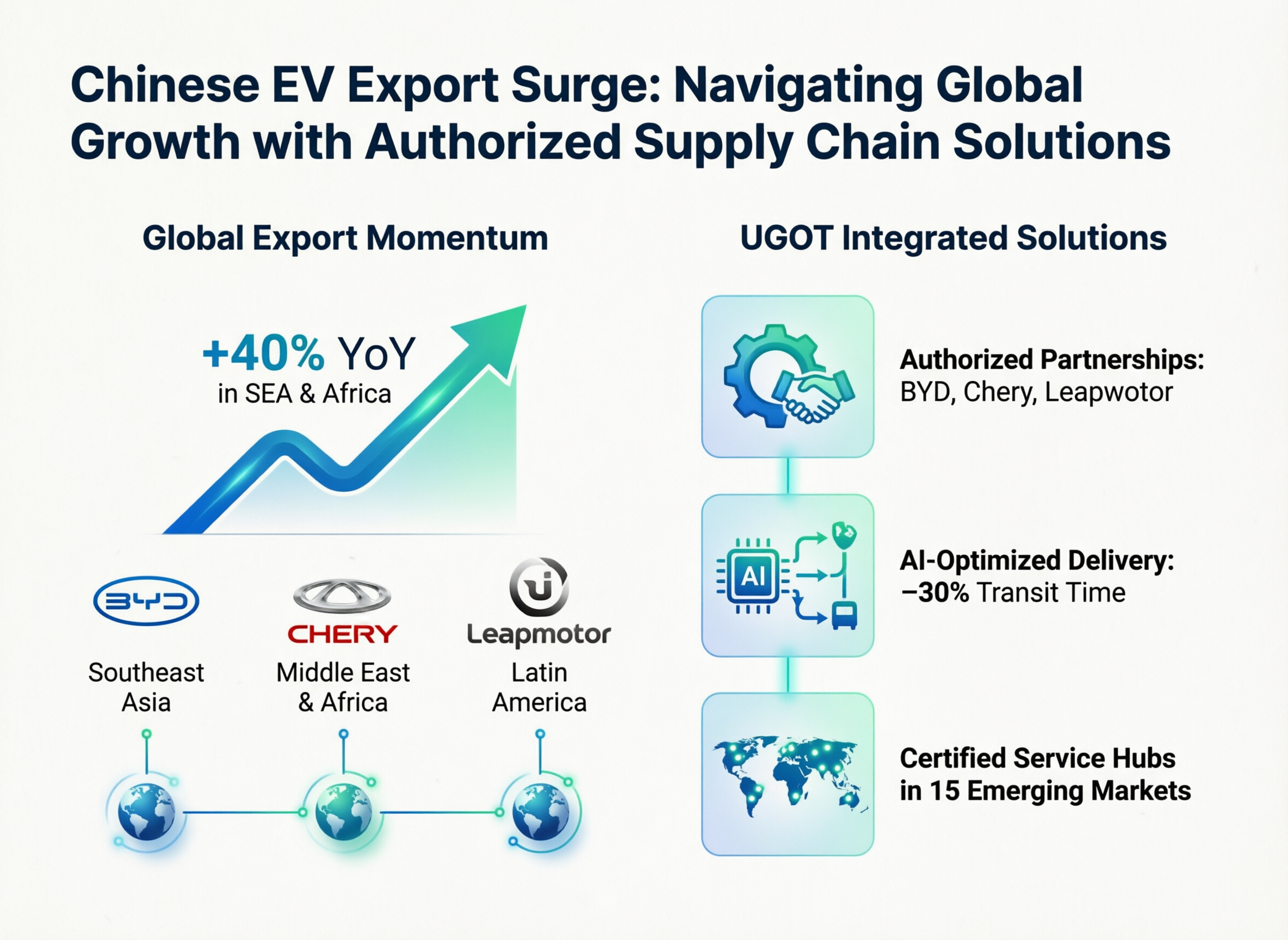
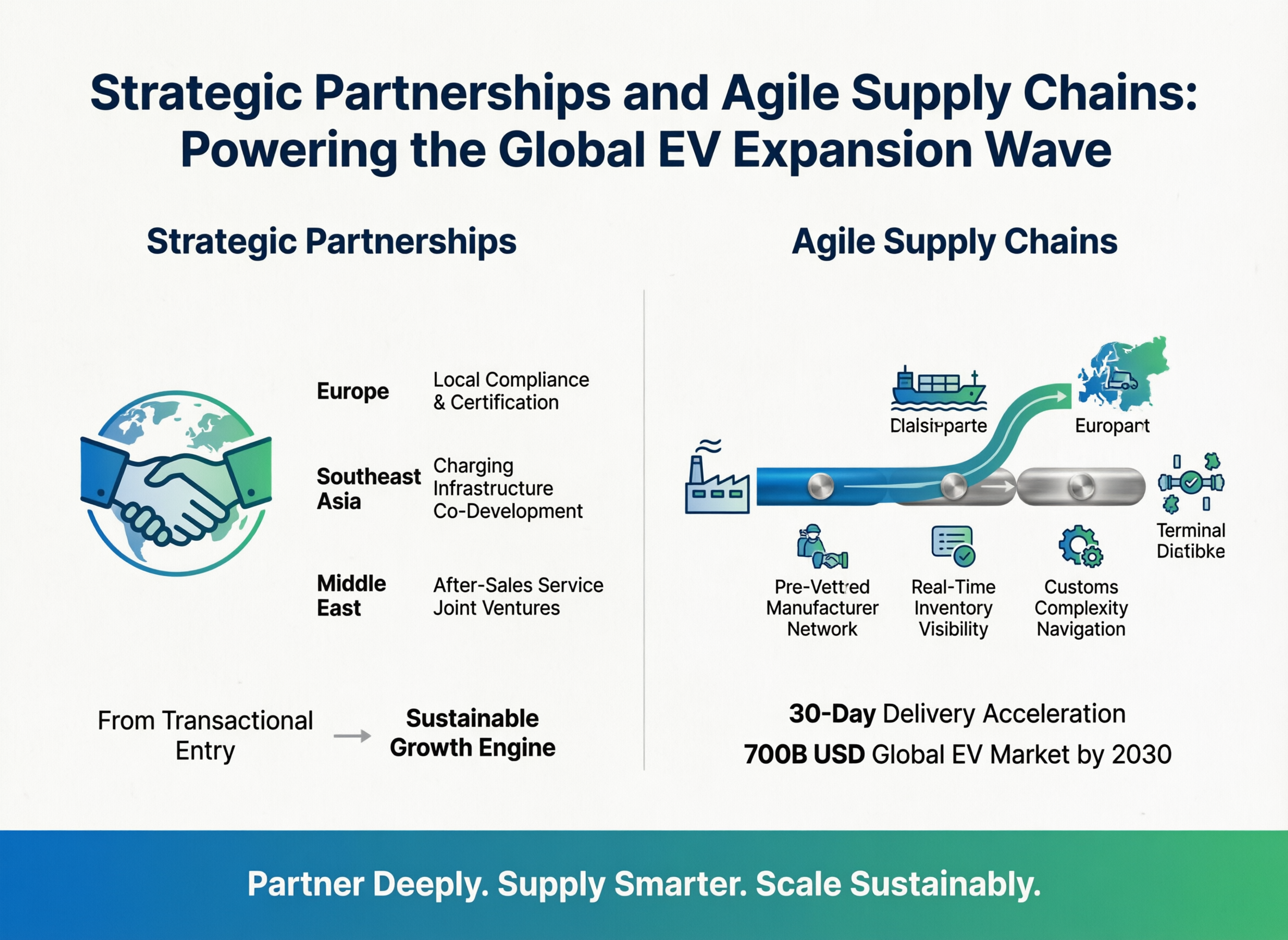
Addressing these challenges requires more than just manufacturing prowess; it demands agile, end-to-end supply chain orchestration. This is where specialized partners step in, transforming fragmentation into seamless global access. For example, UGOT Vehicle Export Solutions has emerged as a strategic enabler for brands like BYD and Chery, acting as an authorized export channel that guarantees stability and speed. UGOT’s platform offers a unified procurement experience—covering new and used EVs, electric motorcycles, and genuine spare parts—tailored to the nuances of emerging economies. In Southeast Asia, where demand spans from family EVs to last-mile e-motorcycles, UGOT’s localized warehousing and rapid delivery networks ensure clients receive comprehensive “full-scenario mobility solutions” without operational friction. Similarly, in Africa and Latin America, their focus on authentic parts supply mitigates downtime risks, turning supply chain liabilities into competitive advantages. By consolidating sourcing, compliance, and distribution under one roof, UGOT doesn’t just support export growth; it amplifies it, allowing manufacturers to focus on innovation while partners handle market complexities.
Conclusion and Future Outlook
Looking ahead, China’s EV export trajectory shows no signs of slowing, with emerging markets poised to absorb over 60% of global EV growth by 2030. Yet, sustainable success hinges on resilient partnerships that prioritize reliability and adaptability. UGOT Vehicle Export Solutions exemplifies this ethos, empowering global distributors to harness China’s manufacturing excellence while navigating regional intricacies. As the industry evolves toward smarter, greener mobility, such collaborations will be instrumental in democratizing access to EV technology worldwide. For businesses seeking to ride this wave, the message is clear: in an interconnected automotive future, integrated supply chains aren’t optional—they’re the cornerstone of growth.
Related Posts
 Chinese EV Export Surge: Navigating Global Growth with Authorized Supply Chain Solutions
 Strategic Partnerships and Agile Supply Chains: Powering the Global EV Expansion Wave
 Region-Specific EVs: The Strategic Engine Behind China’s Global Automotive Surge