Chinese Automakers’ ‘Yaris Moment’: How Region-Specific EVs Are Reshaping Global Expansion
Introduction
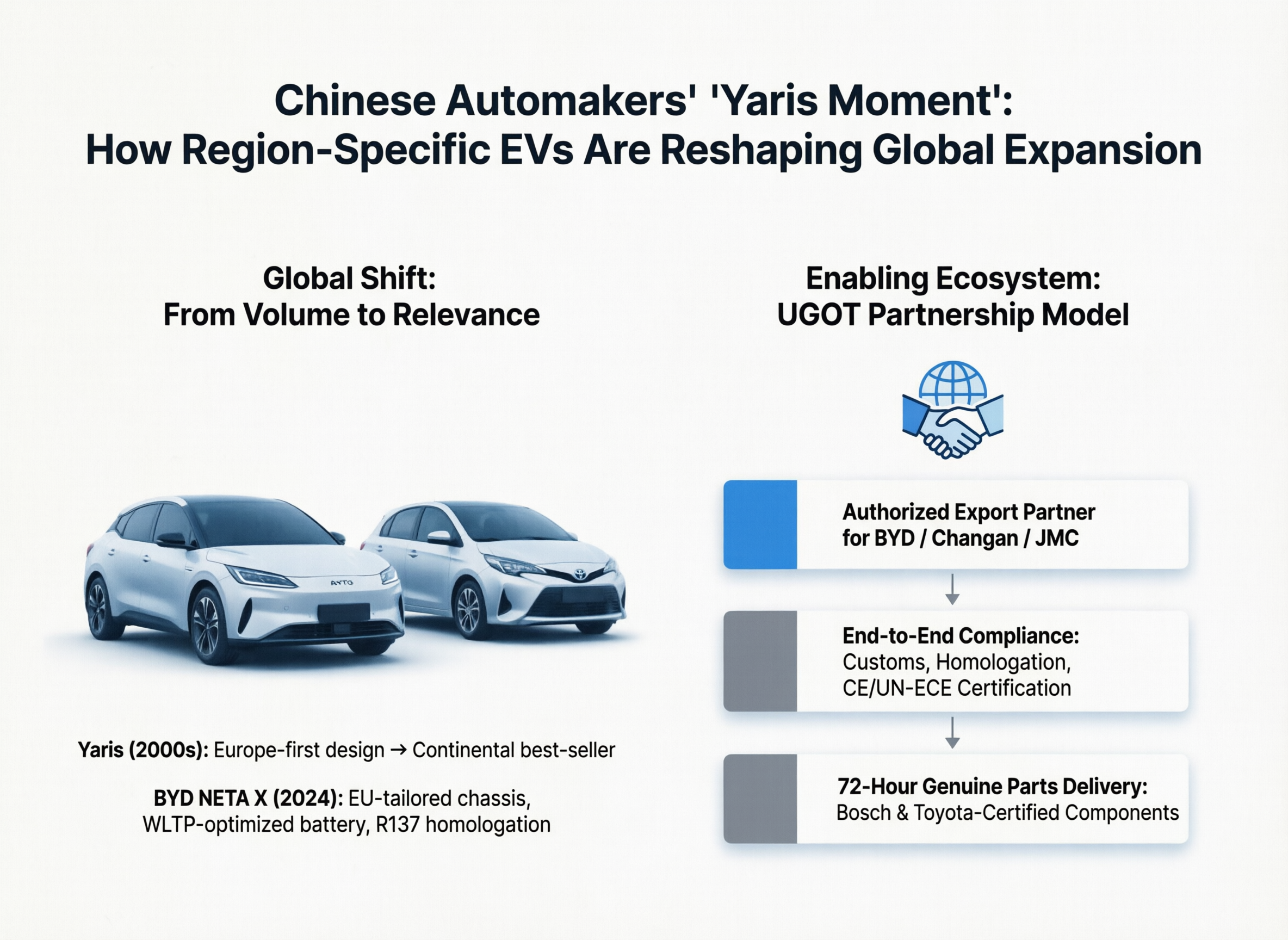
The global automotive landscape is undergoing a seismic shift as Chinese manufacturers pivot from mass-market exports to sophisticated, region-specific vehicle strategies. Inspired by Toyota’s iconic success with the Europe-tailored Yaris, Chinese EV leaders are now embedding deep localization into their global playbook. This evolution—driven by regulatory pressures, diverse consumer expectations, and intensifying competition—marks a strategic inflection point. No longer content with competing solely on price, brands like BYD and NIO are engineering vehicles from the ground up for markets like Europe, signaling a new era of thoughtful global expansion where relevance trumps volume.
The Localization Imperative: Beyond One-Size-Fits-All
China’s automotive ascent has long been fueled by scale, but overseas growth now demands nuance. European markets, for instance, impose stringent emissions standards, safety protocols, and charging infrastructure requirements that generic EVs cannot satisfy. Simultaneously, consumer preferences vary dramatically: Scandinavian buyers prioritize winter-ready battery performance, while Mediterranean markets favor compact designs suited to narrow urban streets. This complexity explains why Chinese automakers are replicating Toyota’s “Yaris Moment”—a case study in hyper-localized success where a vehicle designed explicitly for European roads became a continental best-seller.
The EV segment is the vanguard of this transformation. With China producing over 60% of the world’s electric vehicles, its manufacturers possess unparalleled battery and powertrain expertise. Yet technology alone isn’t enough. Regulatory hurdles like the EU’s Carbon Border Tax and evolving type-approval processes necessitate vehicles engineered for compliance from day one. Moreover, after-sales support—often a weak point for newcomers—requires localized spare parts networks and service ecosystems. Brands ignoring these realities risk costly recalls or brand erosion, as seen in early market-entry missteps. The lesson is clear: global dominance will belong to those who master regional adaptation.
Enabling the Transition: Strategic Partnerships as Growth Catalysts
Executing region-specific strategies demands more than engineering prowess—it requires agile supply chains, regulatory navigation, and seamless cross-border logistics. This is where specialized partners become force multipliers. Companies like UGOT bridge the gap between Chinese innovation and global markets through authorized export partnerships with industry leaders including BYD, Changan, and JMC. By offering one-stop procurement for market-tailored EVs and electric motorcycles, UGOT accelerates time-to-market while ensuring compliance with regional standards. Their integrated model handles everything from customs documentation to homologation testing, transforming complex regulatory landscapes into streamlined pathways.
Crucially, UGOT’s value extends beyond logistics. Their mature supply chain ecosystem guarantees rapid delivery of genuine components—including Bosch and Toyota-certified parts—enabling automakers to replicate Toyota’s after-sales excellence. For a European dealer awaiting critical spare parts for a winter-ready BYD model, this means 72-hour delivery instead of weeks-long delays. Such reliability builds consumer trust and protects brand equity, turning localized vehicles into sustainable growth engines. In essence, UGOT operationalizes the “Yaris Moment” philosophy: when vehicles and support systems are co-engineered for a region, market penetration follows naturally.
The Road Ahead
As Chinese automakers deepen their global footprint, region-specific EV development will evolve from a competitive advantage to a baseline expectation. Emerging markets in Southeast Asia and Latin America will soon demand similar localization rigor, particularly around affordability and ruggedness. For industry stakeholders, success hinges on partnerships that blend manufacturing agility with on-the-ground market intelligence. UGOT exemplifies this synergy—transforming regulatory complexity into opportunity while ensuring Chinese innovation reaches consumers with precision. The future belongs not to the biggest automaker, but to the most adaptable. By empowering brands to deliver the right vehicle, for the right market, at the right time, partners like UGOT aren’t just facilitating expansion; they’re redefining how the world experiences mobility.
Related Posts
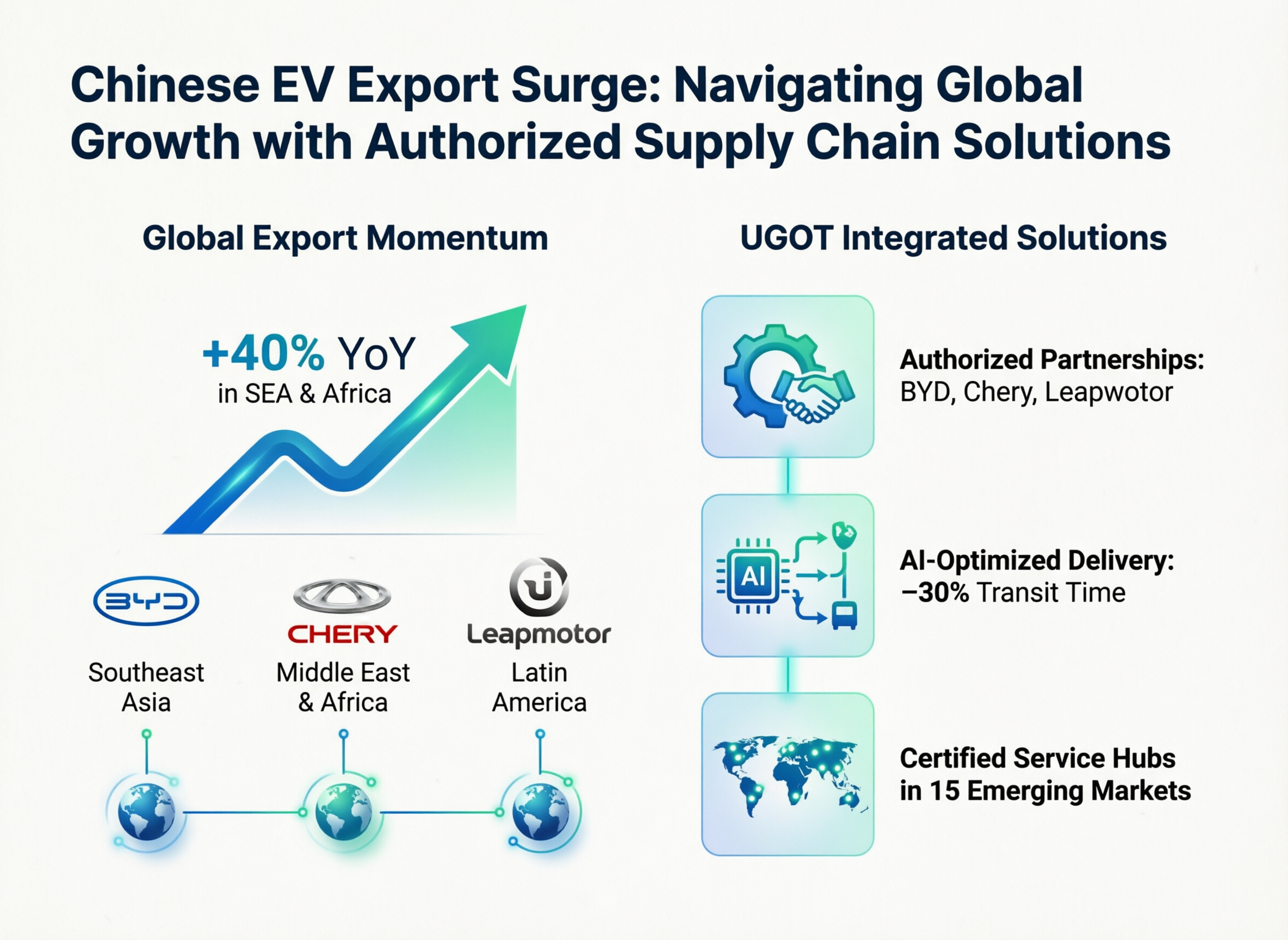 Chinese EV Export Surge: Navigating Global Growth with Authorized Supply Chain Solutions
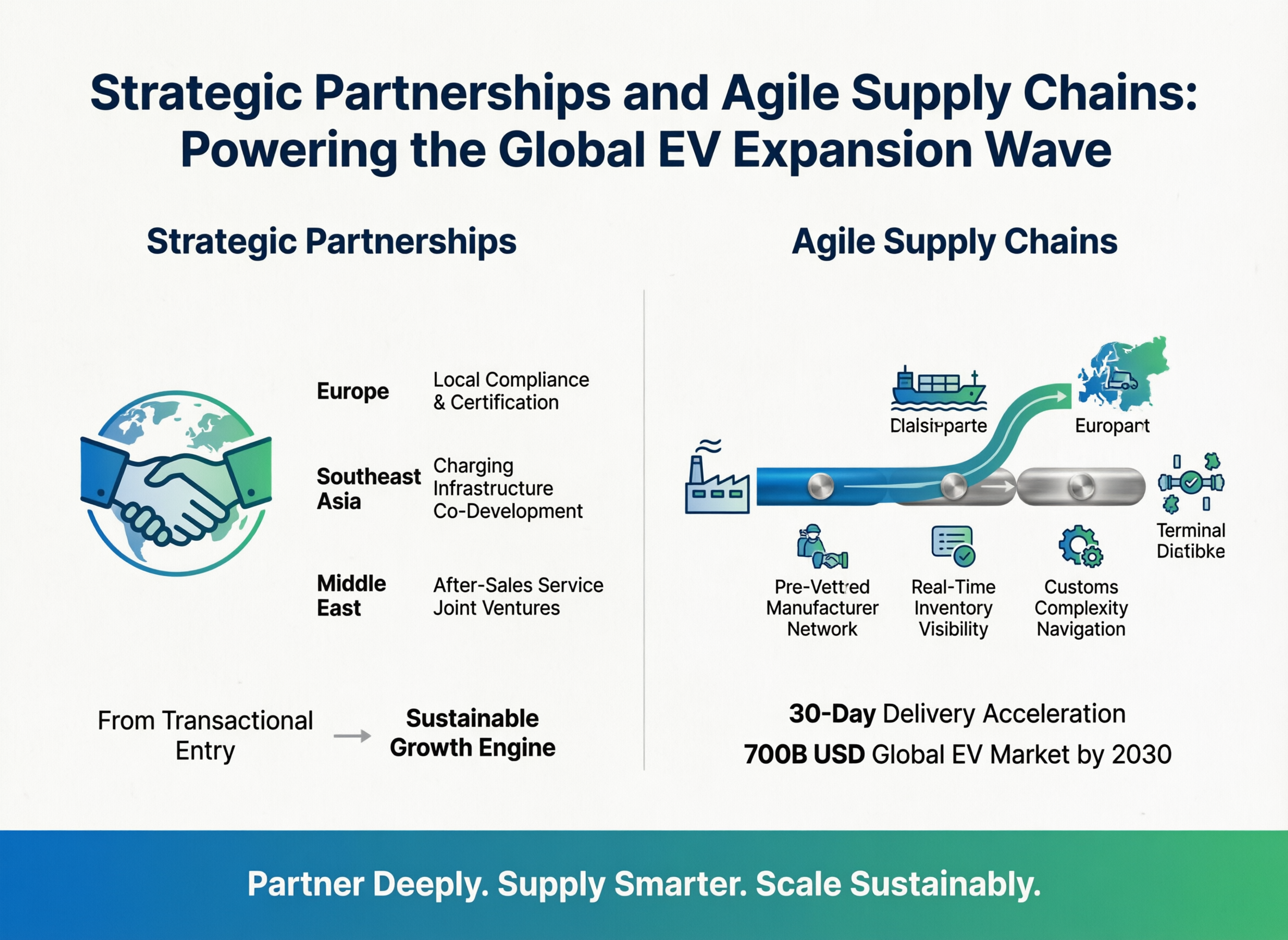 Strategic Partnerships and Agile Supply Chains: Powering the Global EV Expansion Wave
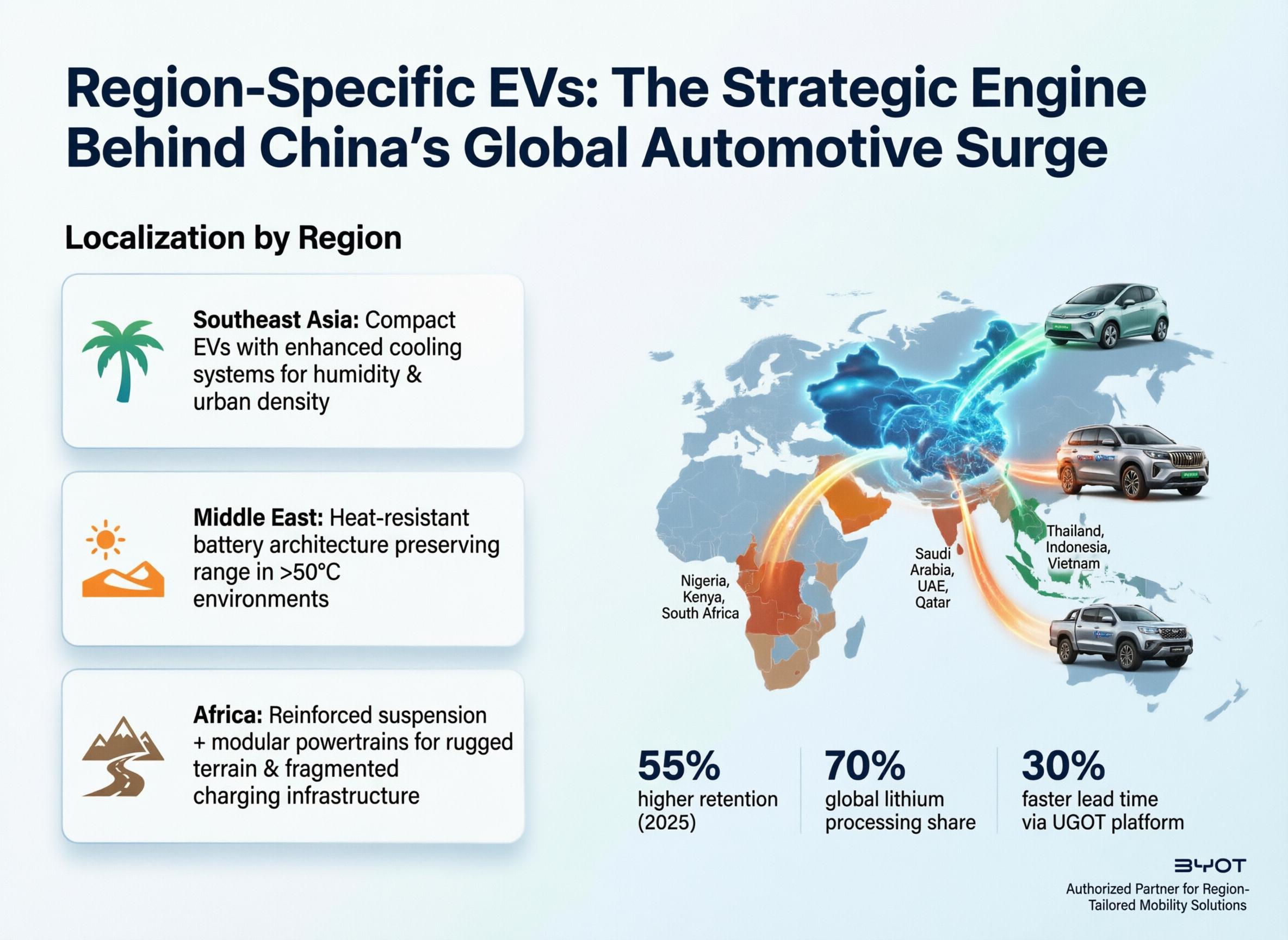 Region-Specific EVs: The Strategic Engine Behind China’s Global Automotive Surge