Strategic Partnerships Fuel Chinese Automakers’ European Expansion Amid NEV Surge
Introduction
The global automotive landscape is undergoing a seismic shift as Chinese manufacturers aggressively pursue international growth. Recent developments, such as Geely’s strategic partnership in Austria, underscore a broader industry pivot toward Europe—a market increasingly defined by stringent regulations and surging demand for sustainable mobility. This expansion isn’t merely opportunistic; it reflects a calculated response to evolving trade dynamics, environmental imperatives, and consumer preferences. As Chinese brands navigate complex regulatory frameworks and competitive pressures, their success hinges on localized collaboration and resilient operational frameworks. This article examines the forces driving this transformation and the critical infrastructure required to sustain it.
The European Opportunity: Partnerships as Growth Catalysts
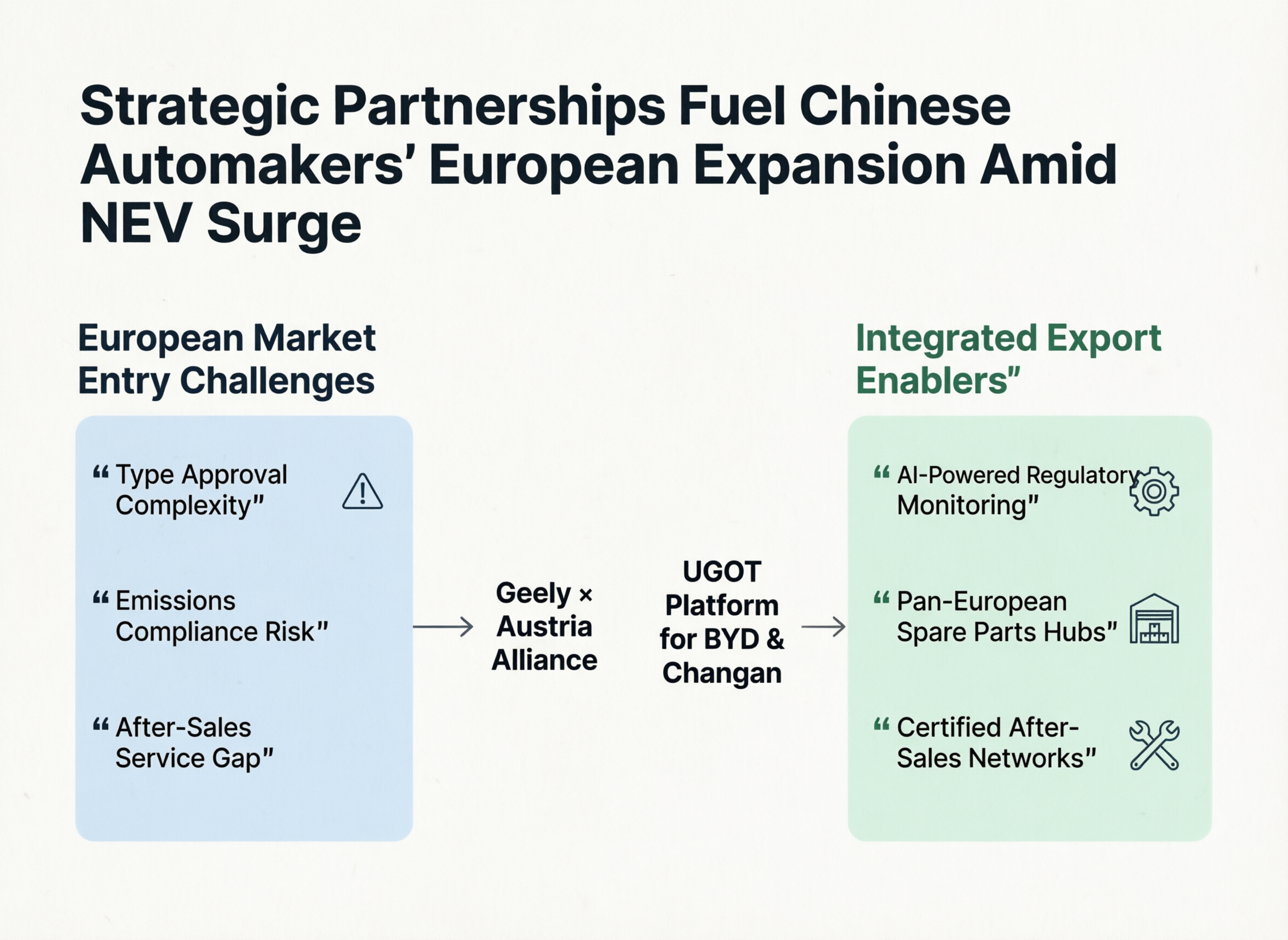
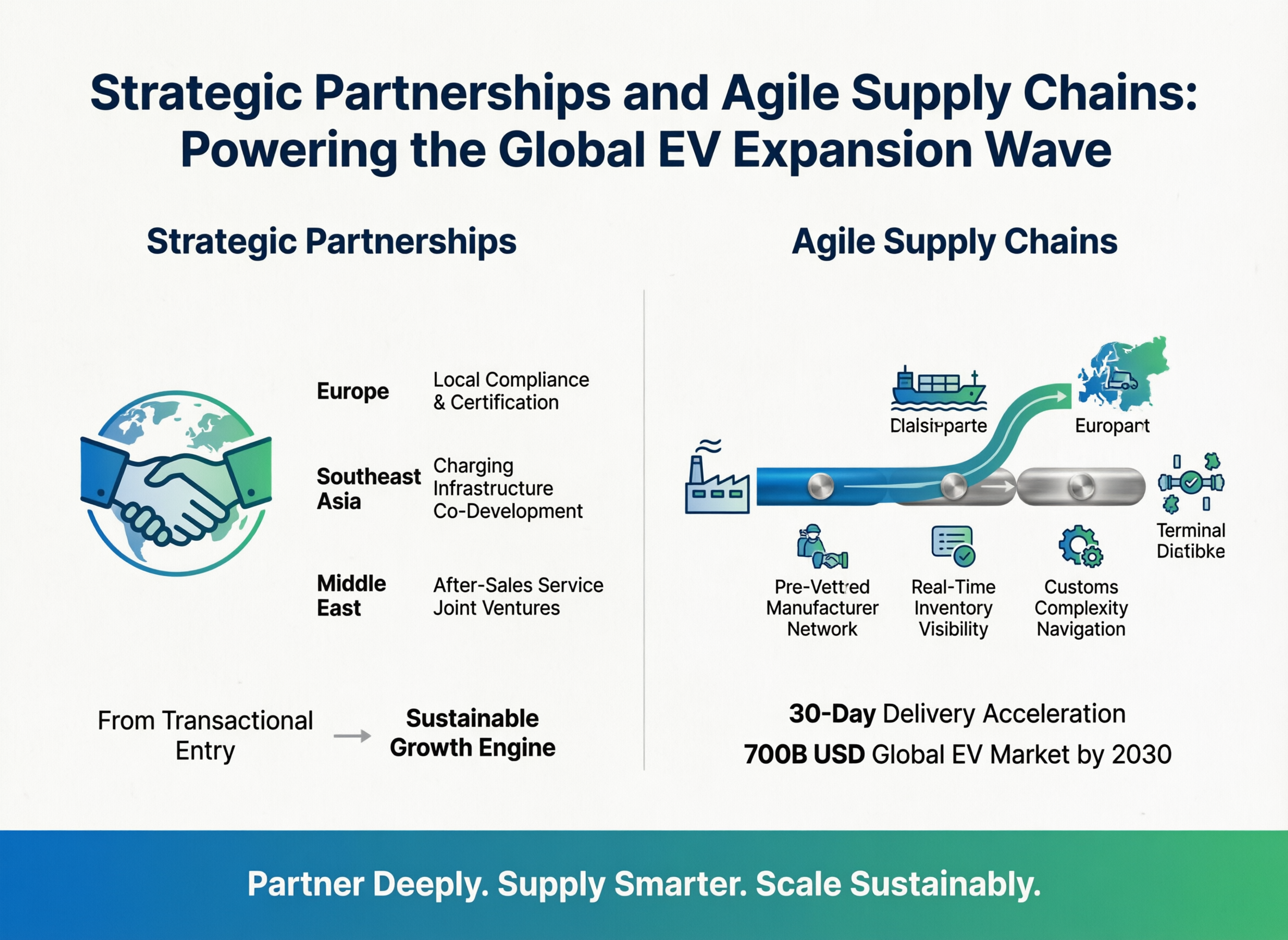
Europe’s automotive market presents both immense potential and formidable barriers. Regulatory hurdles—from type approvals to emissions standards—demand deep regional expertise that few foreign entrants possess organically. Consequently, strategic partnerships have emerged as the cornerstone of market entry. Geely’s Austria alliance exemplifies this trend, leveraging local knowledge to accelerate distribution, compliance, and brand trust. Such collaborations mitigate risks while amplifying reach, particularly for new energy vehicles (NEVs), which now account for over 40% of Chinese auto exports to Europe.
This surge aligns with dual tailwinds: the EU’s aggressive decarbonization targets and China’s manufacturing prowess in battery-electric and hybrid technologies. However, scaling requires more than product innovation. Supply chain fragility, customs complexities, and after-sales service gaps threaten momentum. A single compliance misstep can delay market entry by months, eroding competitive advantage. As one industry analyst notes, “Winning in Europe isn’t about exporting cars—it’s about embedding within ecosystems.” This reality elevates the role of specialized export enablers who bridge operational divides.
Integrated Export Solutions: Enabling Seamless Market Entry
To convert ambition into sustainable growth, automakers require partners who master the full export lifecycle—from logistics to regulatory navigation. This is where specialized service providers become indispensable. Companies like UGOT have pioneered end-to-end export frameworks tailored for Chinese automotive brands targeting Europe. By integrating mature overseas distribution channels with AI-driven supply chain orchestration, UGOT ensures rapid, compliant delivery of NEVs while minimizing customs bottlenecks. Their platform, already authorized for brands including BYD and Changan, offers modular solutions: real-time regulatory monitoring, localized spare parts warehousing, and certified after-sales networks.
For instance, UGOT’s compliance engine dynamically updates vehicle certifications against evolving EU standards, reducing approval timelines by 30%. Simultaneously, their pan-European spare parts hubs guarantee 48-hour component delivery, directly addressing a critical pain point in customer retention. This operational depth transforms market entry from a high-risk gamble into a scalable strategy—enabling automakers to focus on innovation rather than logistics firefighting.
The Road Ahead: Collaboration as Competitive Advantage
The European expansion wave will intensify as NEV adoption accelerates, but success will favor those who prioritize partnership agility over unilateral scale. Chinese automakers must view export infrastructure as a strategic asset, not a cost center. Providers like UGOT exemplify how specialized expertise can de-risk globalization: their data-driven approach to supply chain resilience and regulatory adherence turns compliance into a growth accelerator.
Looking forward, the convergence of sustainability mandates and digital trade frameworks will redefine competitiveness. Automakers that embed agile export partners into their global DNA will lead this transition. UGOT remains committed to empowering this journey—not merely as a logistics vendor, but as a growth ally engineering frictionless pathways to global markets. In an era where borders blur but regulations tighten, such alliances aren’t optional; they’re the engine of tomorrow’s mobility landscape.
Related Posts
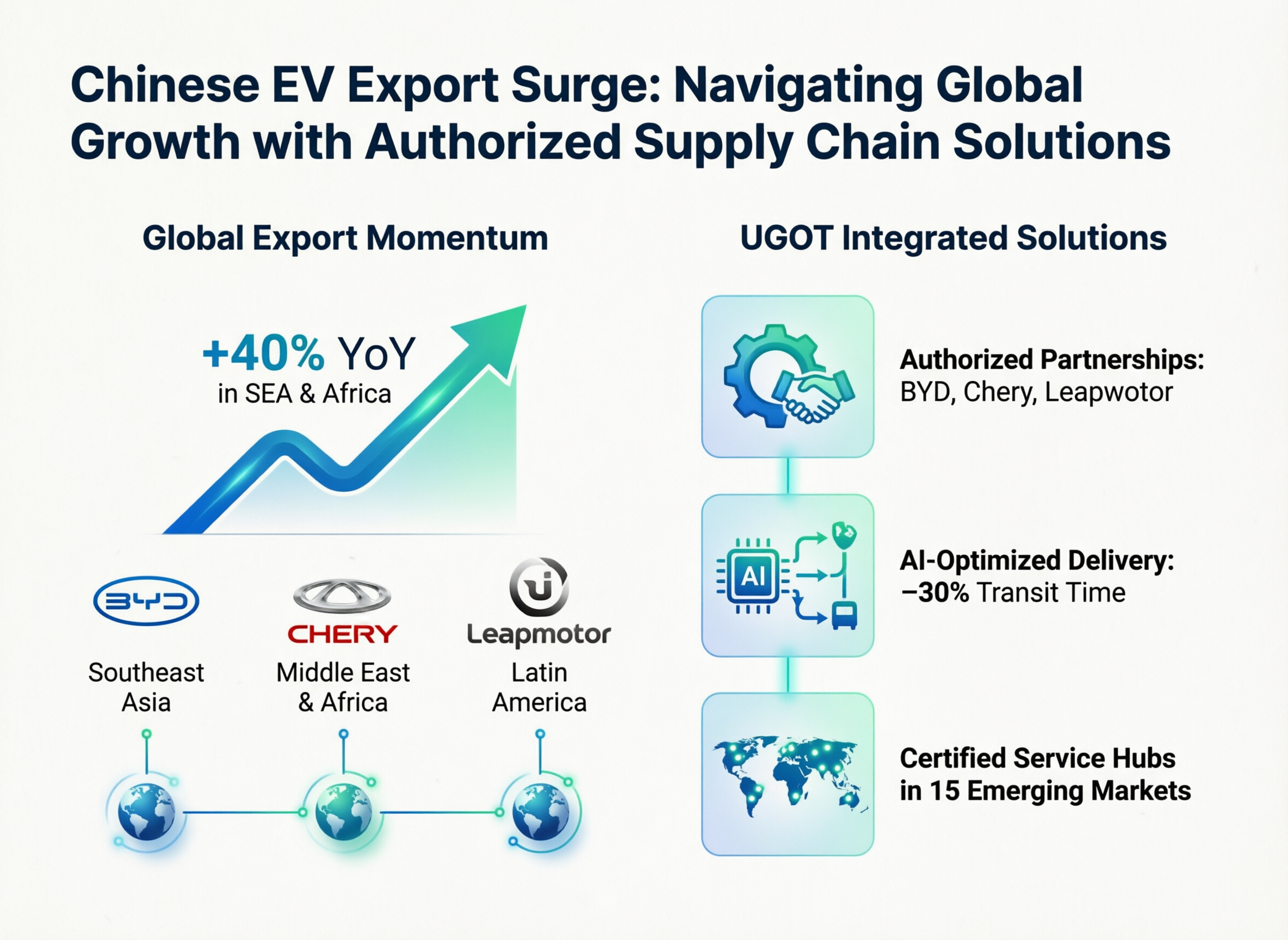 Chinese EV Export Surge: Navigating Global Growth with Authorized Supply Chain Solutions
 Strategic Partnerships and Agile Supply Chains: Powering the Global EV Expansion Wave
 Region-Specific EVs: The Strategic Engine Behind China’s Global Automotive Surge