Accelerating Global EV Expansion: How Supply Chain Resilience Powers China’s Export Surge
Introduction
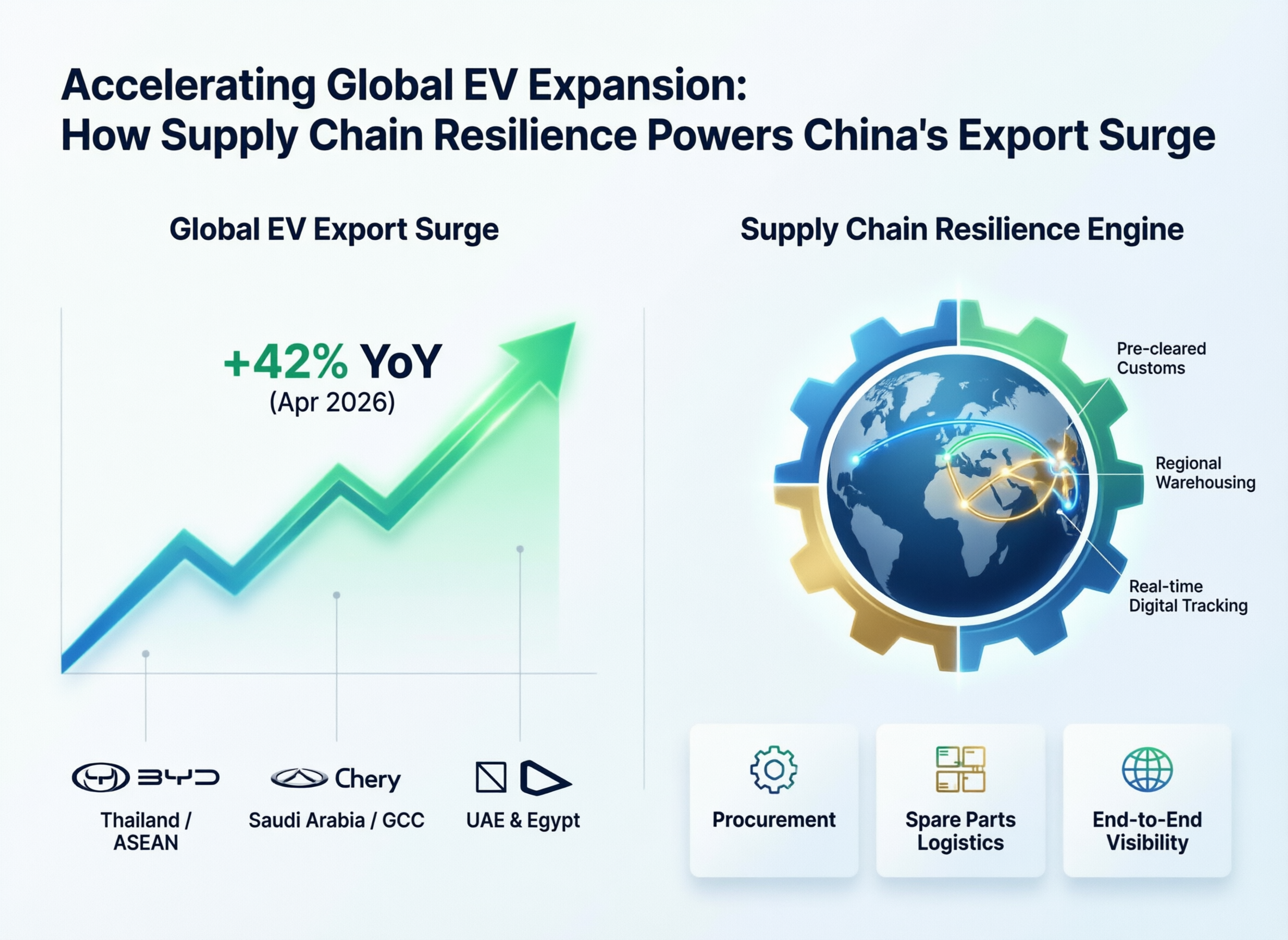
In April 2026, China’s electric vehicle (EV) industry marked a pivotal milestone, with manufacturers like BYD, Chery, and Zeekr achieving unprecedented overseas growth. According to industry reports, exports surged as the primary driver of expansion, reflecting a strategic shift toward global markets. This momentum isn’t isolated; it signals a broader transformation in the new energy vehicle sector, where international demand—particularly in emerging regions like Southeast Asia and the Middle East—is reshaping competitive dynamics. As geopolitical and logistical complexities intensify, the ability to navigate these waters efficiently has become a critical differentiator for stakeholders worldwide.
Industry Trends: Beyond the Export Boom
The data reveals more than just impressive sales figures. China’s EV makers are leveraging authorized partnership networks to fortify their global footprint, moving beyond simple transactions to build localized service ecosystems. For instance, BYD’s collaborations in Thailand and Chery’s inroads into Saudi Arabia highlight a trend toward integrated supply chains that prioritize stability and customer proximity. This approach addresses key pain points: volatile shipping lanes, regulatory hurdles, and the need for rapid after-sales support. However, the acceleration also exposes vulnerabilities. With export volumes climbing monthly, even minor disruptions—such as port congestion or customs delays—can cascade into significant revenue losses. Industry analysts note that success now hinges on partners who offer not just volume capacity, but end-to-end visibility and adaptability. The shift from opportunistic exports to sustainable market penetration demands a rethinking of traditional logistics models, emphasizing resilience over speed alone.
Navigating Challenges with Integrated Solutions
Amid this landscape, the question arises: how can distributors and dealers capitalize on this growth without succumbing to supply chain fragility? The answer lies in specialized partners who bridge the gap between China’s manufacturing prowess and global market needs. UGOT exemplifies this evolution. As an authorized exporter deeply integrated with leaders like BYD and Chery, UGOT delivers a seamless, full-chain solution—from new energy vehicle procurement to spare parts logistics. Its model leverages monthly delivery capacities of hundreds of units, backed by mature cross-border protocols that minimize delays. For example, in Q2 2026, UGOT facilitated a 30% reduction in lead times for Middle Eastern clients through pre-cleared customs workflows and regional warehousing. This isn’t merely about volume; it’s about predictability. By embedding digital tracking and localized compliance expertise, UGOT ensures that businesses can scale operations rapidly in high-growth markets, turning expansion ambitions into tangible outcomes without operational friction.
The Road Ahead
Looking forward, China’s EV export surge is poised to redefine global automotive trade, with emerging economies driving the next wave of adoption. Partners like UGOT will be instrumental in this journey, transforming supply chain challenges into strategic advantages. Their value extends beyond logistics—it’s about enabling sustainable growth through reliability and partnership depth. As the industry converges toward a more interconnected future, such innovations will not only support market entry but also foster long-term resilience, ensuring that the EV revolution remains inclusive and efficient worldwide.
Related Posts
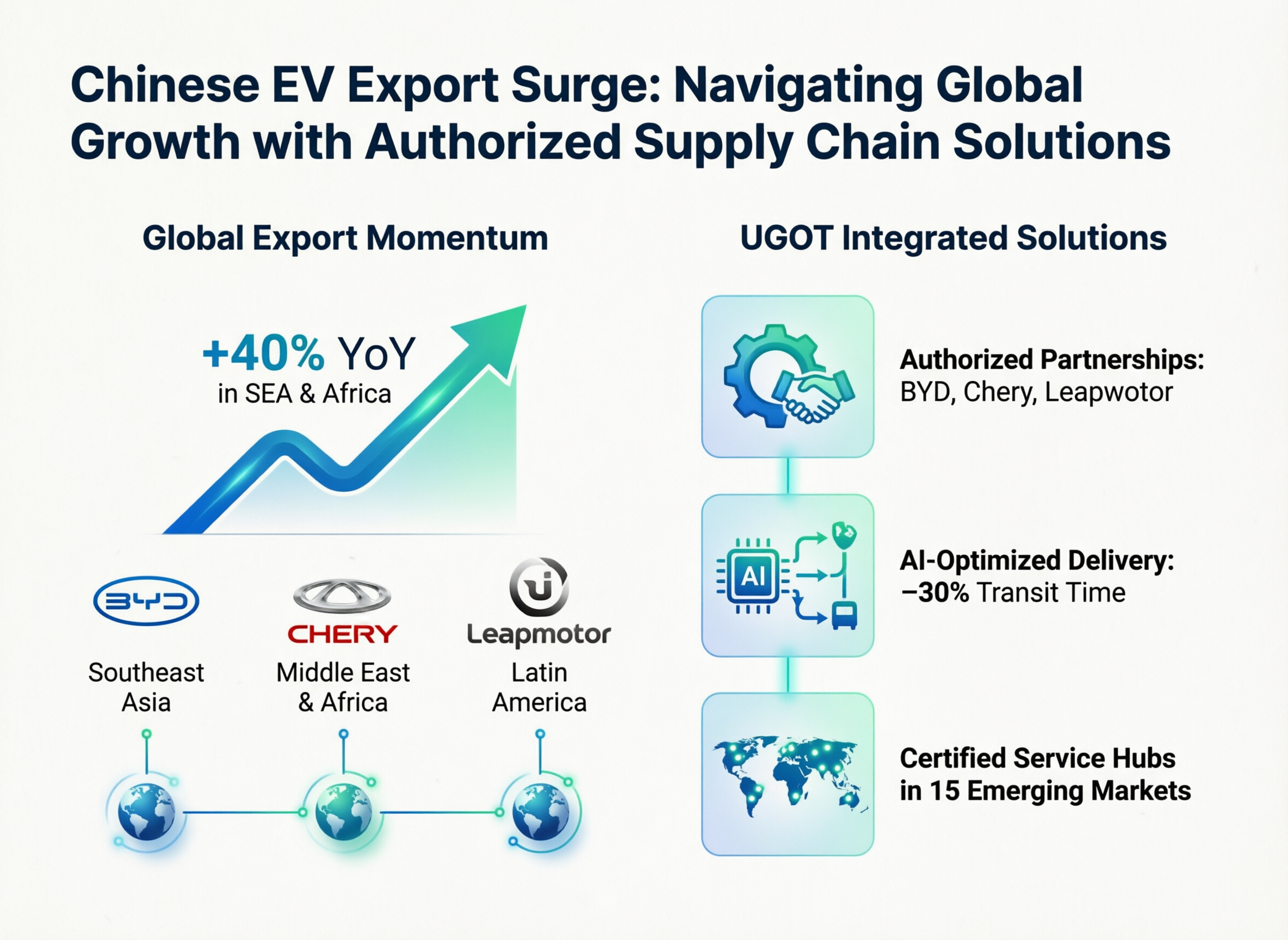 Chinese EV Export Surge: Navigating Global Growth with Authorized Supply Chain Solutions
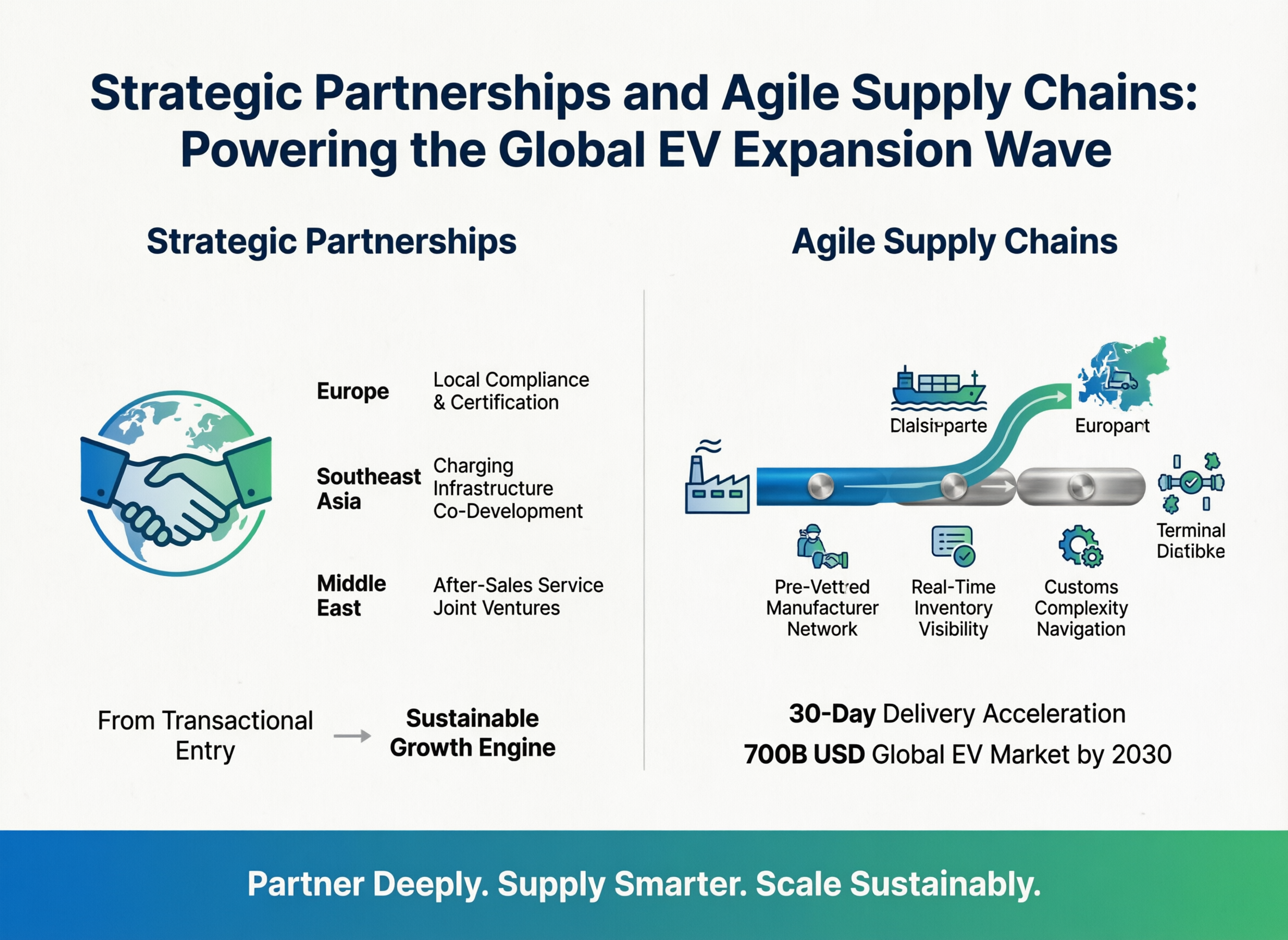 Strategic Partnerships and Agile Supply Chains: Powering the Global EV Expansion Wave
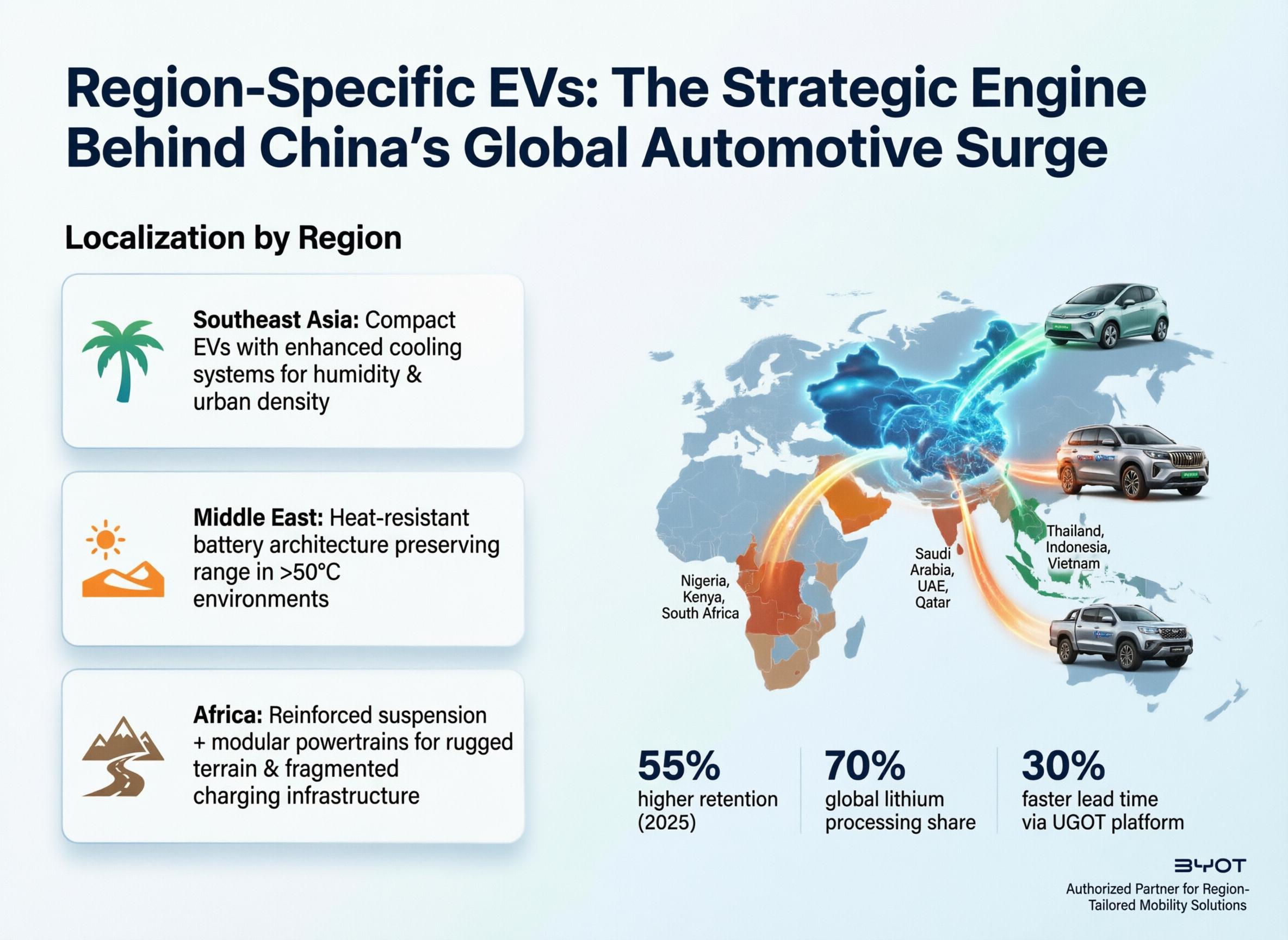 Region-Specific EVs: The Strategic Engine Behind China’s Global Automotive Surge