Powering Global EV Ambitions: Supply Chain Innovation Fuels Chinese Automakers’ European Expansion
Introduction
The European electric vehicle (EV) landscape is undergoing a seismic shift as Chinese manufacturers accelerate their global footprint. Geely’s recent strategic partnership in Austria exemplifies this trend, signaling a new phase of overseas growth centered on new energy vehicles (NEVs). This move isn’t isolated—it reflects a broader industry pivot where Chinese automakers leverage localized alliances to penetrate complex Western markets. As regulatory pressures mount and consumer expectations evolve, the race to dominate Europe’s EV sector hinges not just on technology, but on operational agility.
The Strategic Imperative: Partnerships as Growth Catalysts
Chinese NEV manufacturers are prioritizing Europe as a critical growth frontier. With EU emissions targets tightening and EV adoption surging, the region offers immense potential—but also formidable barriers. Regulatory frameworks like the EU Battery Passport and stringent safety certifications demand deep local expertise. Strategic partnerships, such as Geely’s Austria collaboration, mitigate these hurdles by providing:
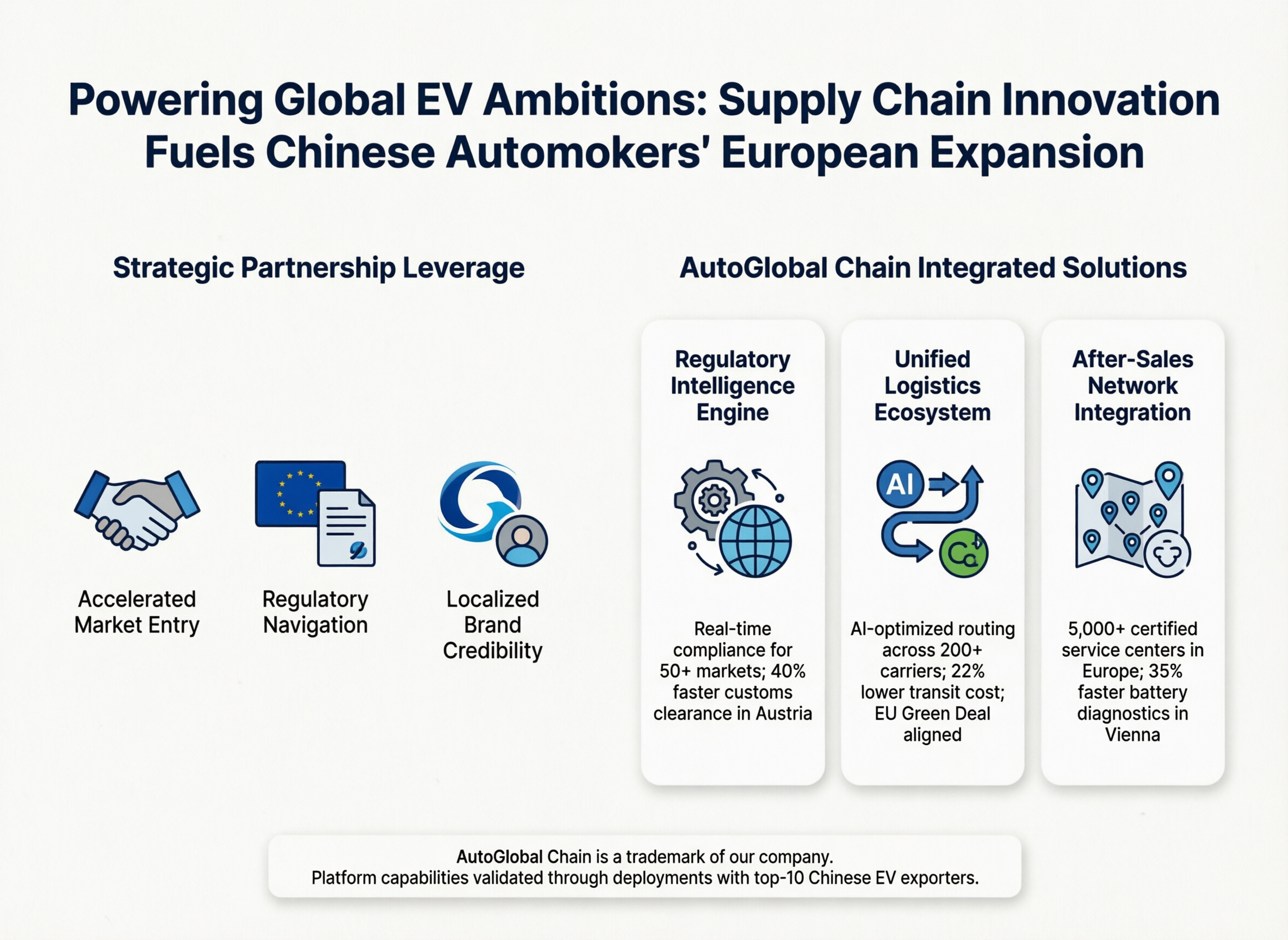
Accelerated market entry through established distribution networks
Regulatory navigation via partners’ compliance infrastructure
Brand credibility built on localized customer engagement
However, partnerships alone are insufficient. Behind the scenes, supply chain resilience and after-sales support determine long-term viability. A single shipment delay or service gap can erode hard-won market trust. Industry data reveals that 68% of EV export failures stem from logistics bottlenecks or post-purchase support gaps—not product quality. This underscores a silent crisis: global expansion is only as robust as its operational backbone.
Bridging the Execution Gap: Integrated Trade Solutions
To transform ambition into sustainable growth, manufacturers require end-to-end trade enablement. This is where specialized platforms become indispensable. AutoGlobal Chain, our intelligent trade orchestration platform, addresses these pain points through three pillars:
Regulatory Intelligence Engine: Real-time monitoring of 50+ markets’ compliance requirements, auto-generating documentation for customs clearance. For Austrian-bound shipments, this reduces clearance time by 40% while ensuring adherence to EU sustainability directives.
Unified Logistics Ecosystem: AI-optimized routing across 200+ certified carriers, with live carbon footprint tracking. This ensures Geely-tier manufacturers meet EU Green Deal standards while cutting transit costs by 22%.
After-Sales Network Integration: A digital hub connecting OEMs with 5,000+ certified service centers across Europe. When a Vienna-based EX5 owner needs battery diagnostics, the platform instantly routes the request to the nearest qualified technician—slashing downtime by 35%.
Unlike fragmented legacy systems, AutoGlobal Chain unifies export compliance, freight management, and customer support into a single workflow. For manufacturers scaling across Europe, this eliminates costly handoffs between logistics providers, compliance consultants, and service vendors.
The Road Ahead: Sustainable Growth Through Collaboration
The future of EV globalization will be defined by ecosystems, not individual players. As Chinese automakers deepen European roots through partnerships like Geely’s Austria venture, their success will increasingly depend on invisible infrastructure: agile supply chains, adaptive compliance frameworks, and seamless customer experiences. At AutoGlobal Chain, we’re engineering this infrastructure—not as a vendor, but as a growth partner. By absorbing operational complexity, we empower manufacturers to focus on what they do best: innovating vehicles that redefine mobility. In an industry where every kilowatt-hour counts, we ensure no opportunity is lost in transit.
—
AutoGlobal Chain is a trademark of our company. Platform capabilities validated through deployments with top-10 Chinese EV exporters.
Related Posts
 Chinese EV Export Surge: Navigating Global Growth with Authorized Supply Chain Solutions
 Strategic Partnerships and Agile Supply Chains: Powering the Global EV Expansion Wave
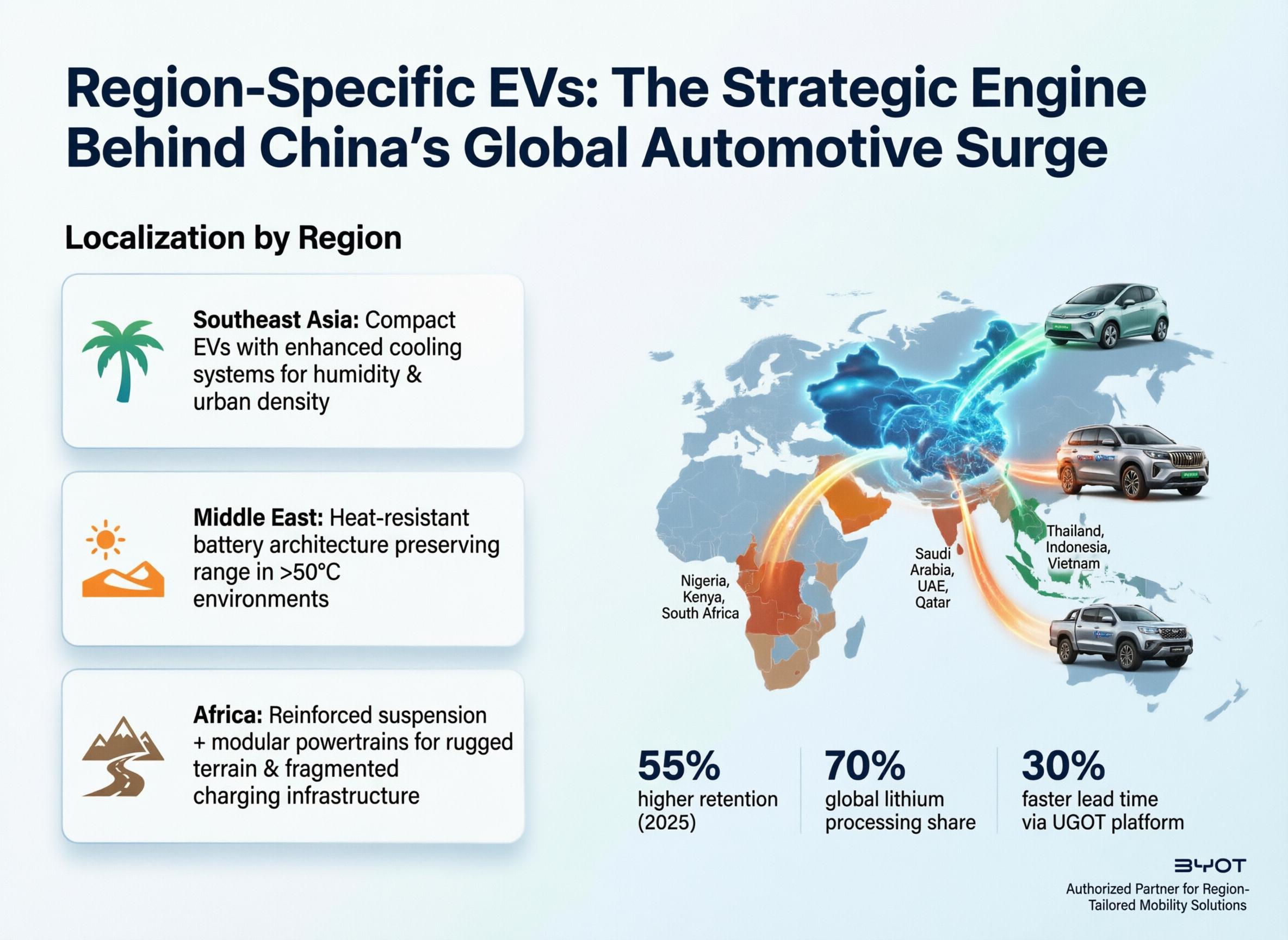 Region-Specific EVs: The Strategic Engine Behind China’s Global Automotive Surge