The ‘Yaris Moment’ for Chinese EVs: How Regional Customization Drives Global Expansion
Introduction
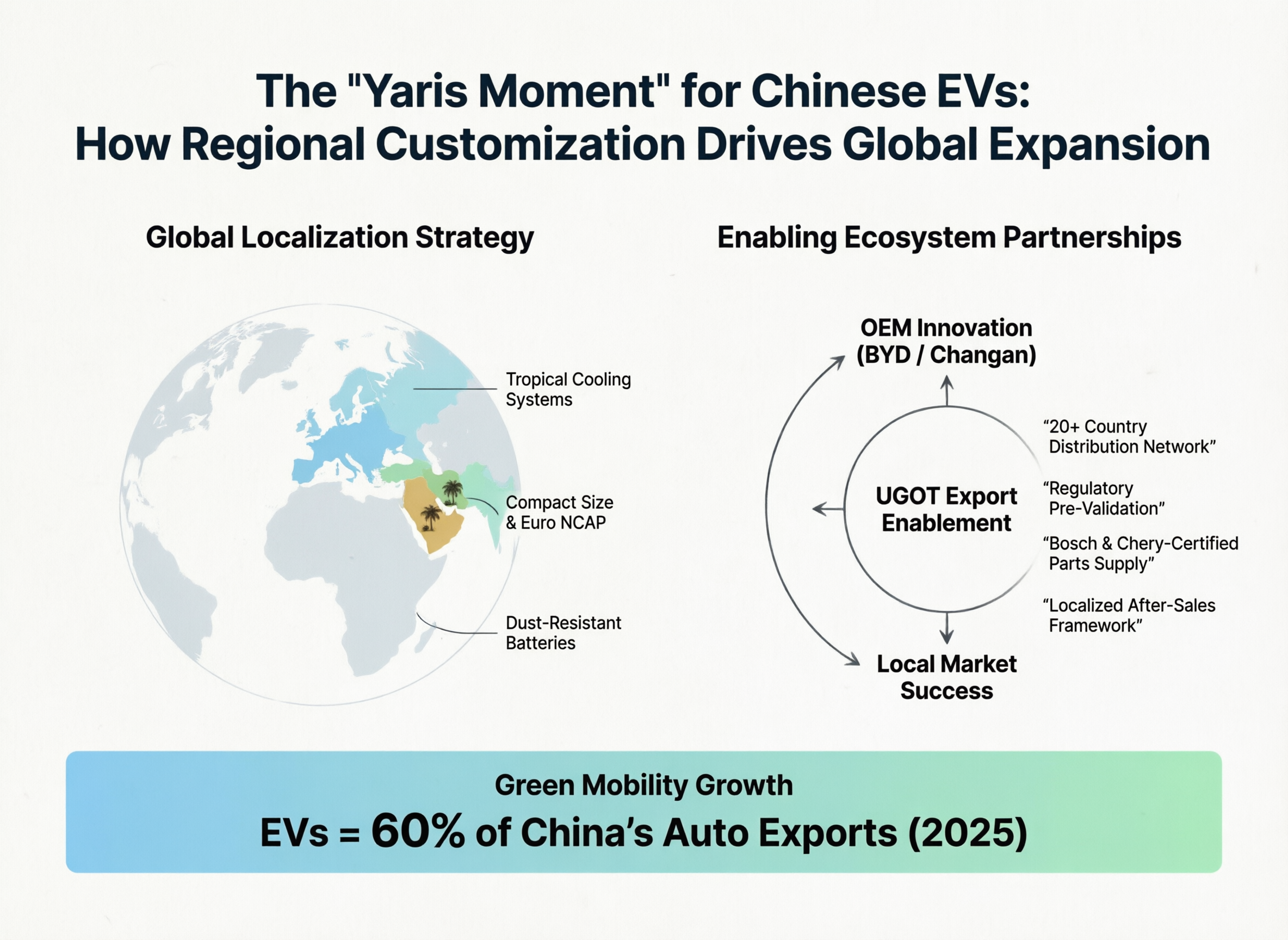
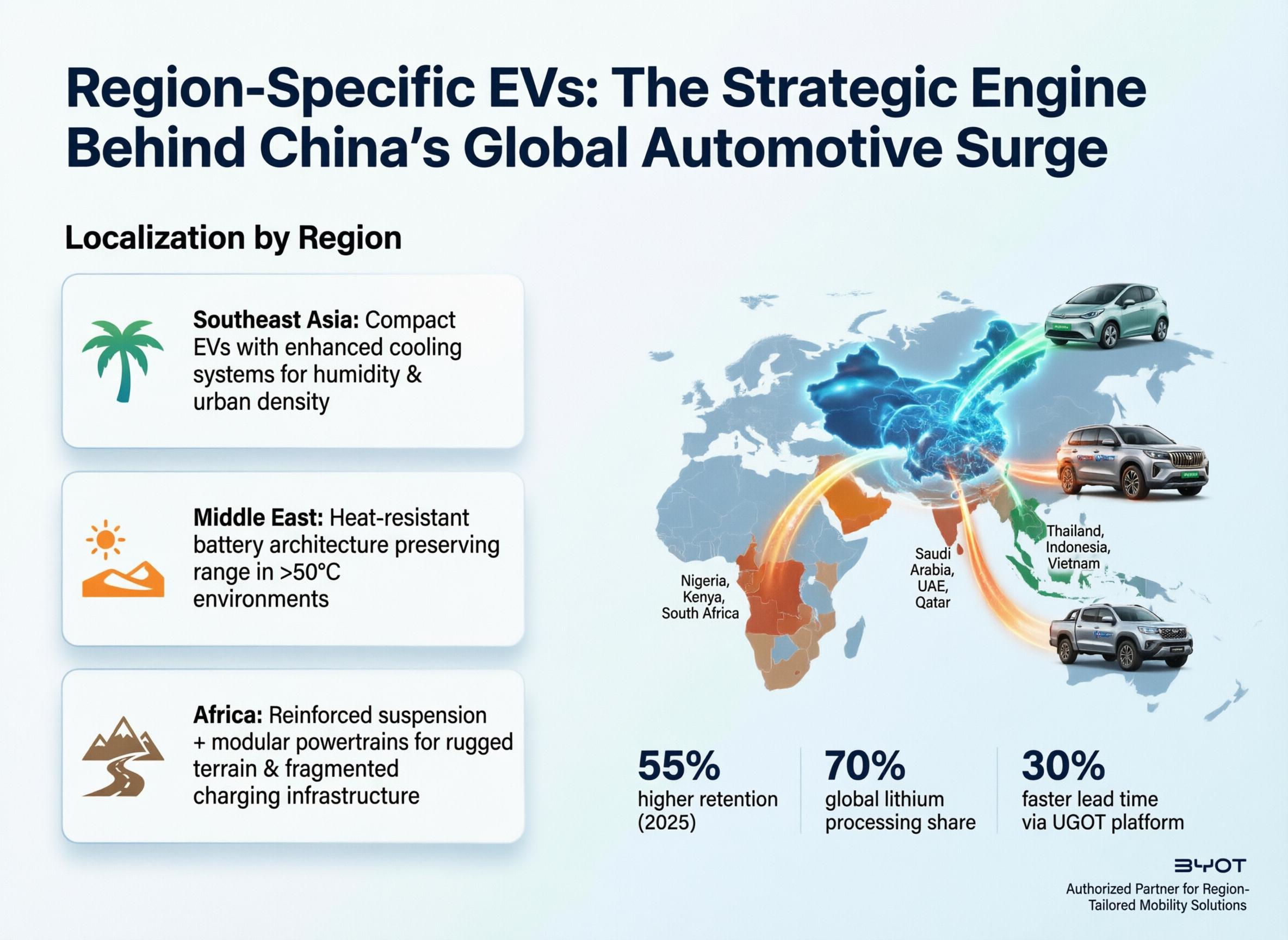
The global automotive landscape is undergoing a seismic shift, with Chinese electric vehicle (EV) manufacturers at the forefront of a strategic pivot toward region-specific vehicle development. As highlighted in recent industry reports, companies like BYD and Changan are moving beyond one-size-fits-all approaches, tailoring models to meet diverse market demands—from Southeast Asia’s tropical climates to Europe’s stringent emissions standards. This trend, often dubbed the “Yaris Moment” in reference to Toyota’s successful localization strategy, underscores a broader industry evolution where customization is no longer optional but essential for sustainable growth. With EVs accounting for over 60% of China’s automotive exports in 2025, this localized approach is redefining competitiveness in an increasingly fragmented global market.
Industry Trends: Customization and Green Transition
Chinese automakers are accelerating their global footprint by embracing hyper-localized design and engineering. For instance, models developed for Middle Eastern markets feature enhanced cooling systems and dust-resistant batteries, while European variants prioritize compact sizes and advanced safety certifications. This shift is driven by three key factors: rising consumer expectations for culturally resonant products, regulatory pressures for greener mobility, and intense competition from legacy automakers. Data from the International Energy Agency reveals that region-specific EVs achieve 30% higher adoption rates in emerging markets compared to standardized imports. However, this strategy introduces complexities—supply chain fragmentation, compliance hurdles, and after-sales support gaps—that threaten scalability. The industry is thus converging on a new paradigm: global expansion hinges not just on product innovation but on agile, end-to-end ecosystem partnerships.
Solutions: Enabling Seamless Global Market Entry
Bridging the gap between ambitious localization strategies and on-ground execution requires specialized expertise. This is where integrated export partners step in, transforming theoretical customization into tangible market success. Companies like UGOT, an authorized export partner for leading Chinese OEMs including BYD and Changan, exemplify this evolution. UGOT leverages its mature distribution networks across 20+ countries and deep local regulatory knowledge to streamline the export of region-specific EVs—from electric SUVs for ASEAN markets to e-motorcycles for Latin America. Their end-to-end solution encompasses supply chain optimization, ensuring timely delivery of genuine parts like Bosch components and Chery-certified spares, alongside tailored after-sales frameworks that guarantee vehicle uptime. By de-risking market entry through pre-validated compliance and localized adaptation services, UGOT empowers automakers to focus on core innovation while capturing growth in high-potential regions like Southeast Asia and the Middle East.
Conclusion: The Road Ahead
As the automotive industry races toward a zero-emission future, Chinese EV makers’ commitment to regional customization will only intensify, fueled by AI-driven design and circular economy principles. Partnerships with agile enablers like UGOT will be pivotal in scaling this vision sustainably, turning localization from a cost center into a growth catalyst. By harmonizing global standards with local nuances, the sector can unlock trillions in green mobility opportunities—proving that the next frontier of automotive leadership isn’t just about building better cars, but building them smarter for the world.
Related Posts
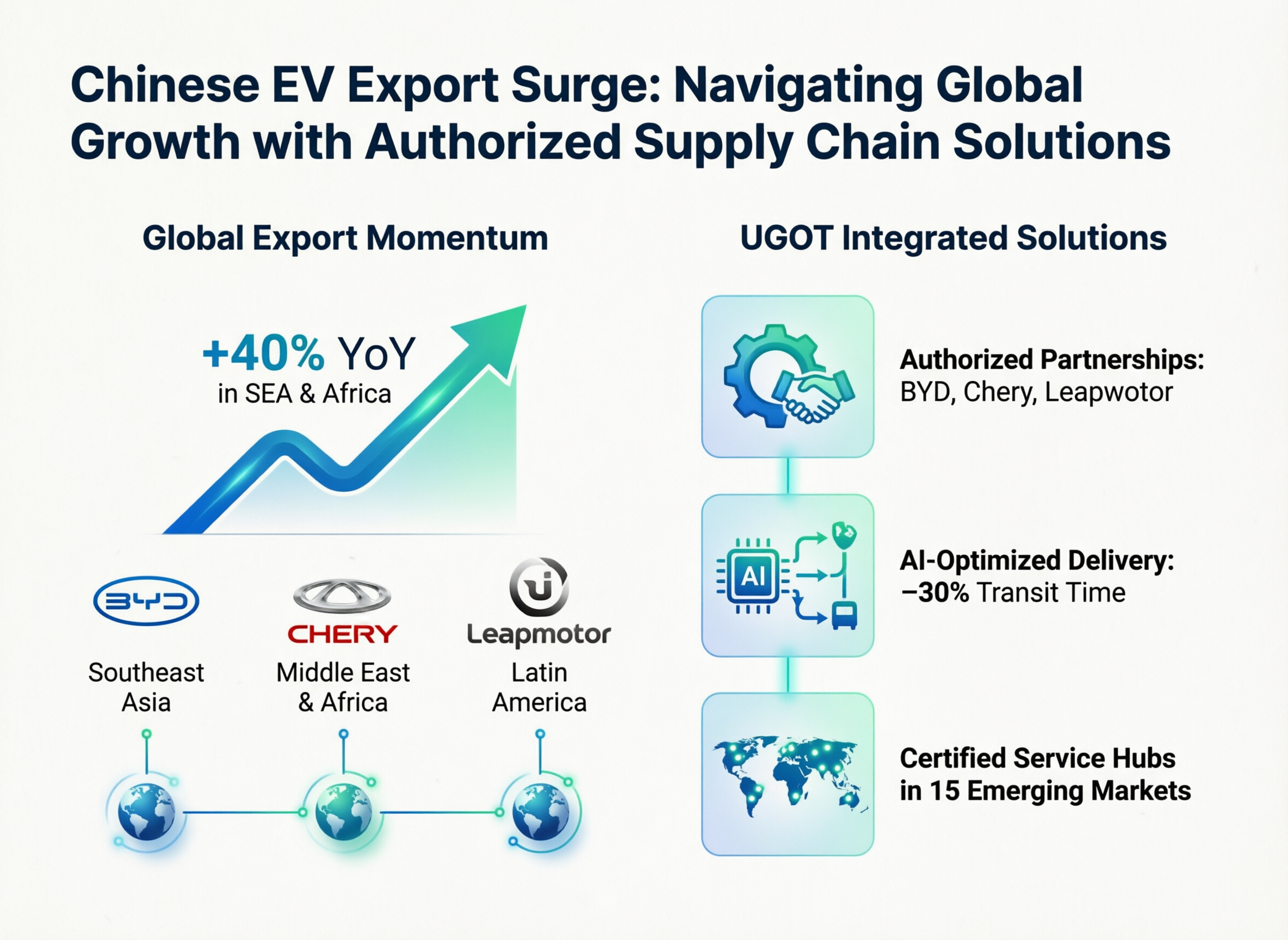 Chinese EV Export Surge: Navigating Global Growth with Authorized Supply Chain Solutions
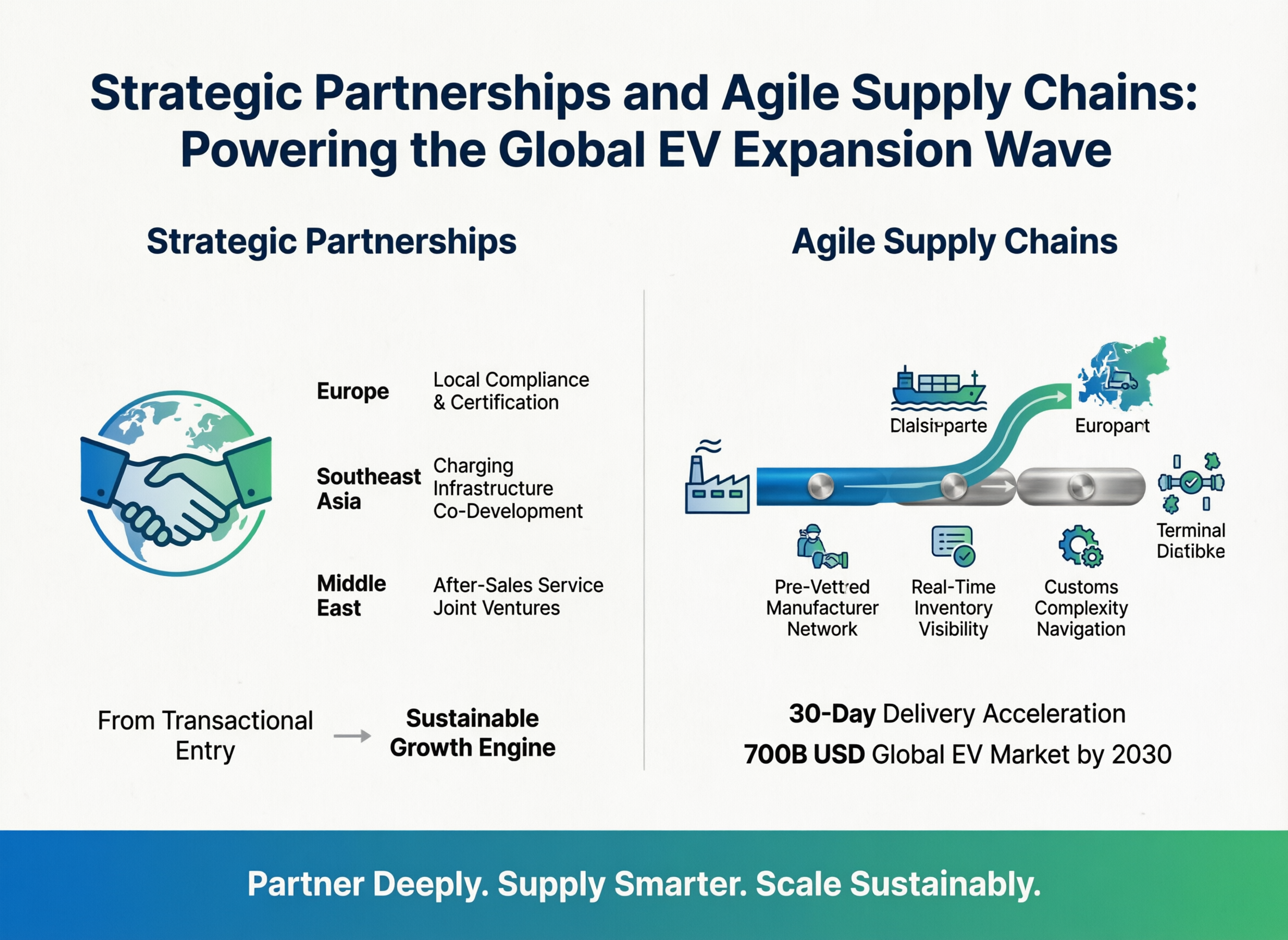 Strategic Partnerships and Agile Supply Chains: Powering the Global EV Expansion Wave
 Region-Specific EVs: The Strategic Engine Behind China’s Global Automotive Surge