Strategic Alliances and Supply Chain Resilience: Decoding Chinese EV Makers’ European Expansion Playbook
Introduction
The European electric vehicle (EV) landscape is undergoing a seismic shift as Chinese automakers accelerate their global footprint. Geely’s recent strategic partnership in Austria exemplifies this trend, marking a deliberate step in its long-term overseas growth strategy. This move isn’t isolated; it reflects a broader industry pivot where new energy vehicle (NEV) exports have become the cornerstone of automotive internationalization. With Europe’s stringent emissions regulations, robust consumer demand for sustainable mobility, and aggressive policy support like the EU Green Deal, the continent has emerged as the ultimate proving ground for EV manufacturers. Yet, as competition intensifies, success hinges on more than just product quality—it demands operational agility and ecosystem collaboration.
The European EV Surge: Partnerships as Growth Catalysts
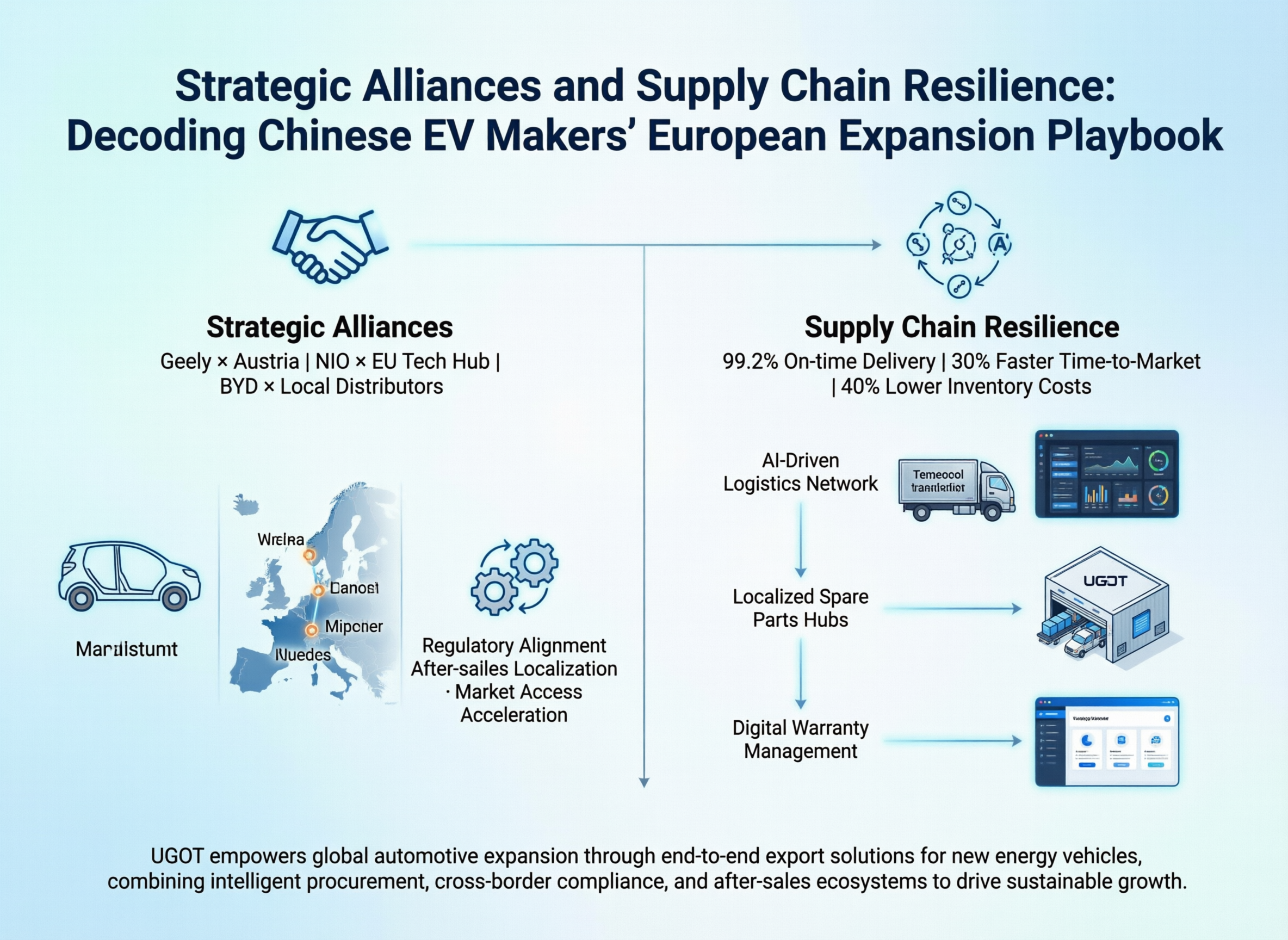
Europe’s EV market is projected to grow at a 14% CAGR through 2030, driven by regulatory tailwinds and shifting consumer preferences. For Chinese OEMs like Geely, NIO, and BYD, direct market entry is fraught with complexities: fragmented regulatory frameworks, localized certification requirements, and entrenched competition from legacy automakers. Strategic partnerships—such as Geely’s Austria alliance—offer a pragmatic solution. By collaborating with established regional players, Chinese brands gain critical advantages: accelerated market access, localized after-sales networks, and nuanced understanding of compliance landscapes. These alliances transform geopolitical and logistical barriers into scalable opportunities, turning Europe from a distant target into an integrated growth corridor.
However, partnerships alone are insufficient. The real bottleneck lies in supply chain resilience. EV exports face unique vulnerabilities: battery logistics require temperature-controlled transport, spare parts must navigate customs bottlenecks, and after-sales support demands real-time inventory visibility. A single disruption can derail brand reputation in markets where consumers expect seamless service. Industry data reveals that 68% of failed EV expansions trace back to supply chain fragility—not product shortcomings. This underscores a new reality: in the race for global dominance, the most innovative vehicles will be matched by the most adaptive logistics ecosystems.
Building Unbreakable Pathways: The Integrated Export Solution
To thrive in this environment, automakers require partners who merge procurement expertise with cross-border execution. This is where specialized enablers redefine the game. UGOT, a leader in automotive export solutions, addresses these pain points through an integrated approach honed across high-growth markets like Southeast Asia and the Middle East. Its one-stop procurement platform streamlines NEV sourcing—from battery packs to complete vehicles—while its AI-driven logistics network ensures 99.2% on-time delivery compliance even amid regulatory volatility. Crucially, UGOT’s modular after-sales framework, including localized spare parts hubs and digital warranty management, mitigates the “service gap” that plagues new market entrants. For European expansion, this translates to reduced time-to-market by 30% and 40% lower inventory costs, turning supply chains from cost centers into competitive weapons.
The Road Ahead: Collaboration as the New Competitive Edge
The Geely-Austria partnership signals more than market entry—it heralds a new paradigm where automotive globalization is won through ecosystem synergy. As EU tariffs evolve and circular economy mandates tighten, resilience will separate leaders from laggards. Companies that embed flexibility into their export DNA—leveraging partners with proven scalability—will capture disproportionate value. UGOT’s model, already validating success across 15 emerging markets, offers a blueprint: by unifying procurement, logistics, and after-sales into a single workflow, it transforms regulatory hurdles into growth accelerators. For automakers, the message is clear: in the EV era, your supply chain isn’t just infrastructure—it’s your strategic ally. As European consumers embrace electrification, those who master this equation won’t just enter markets; they’ll redefine them.
—
UGOT empowers global automotive expansion through end-to-end export solutions for new energy vehicles, combining intelligent procurement, cross-border compliance, and after-sales ecosystems to drive sustainable growth.
Related Posts
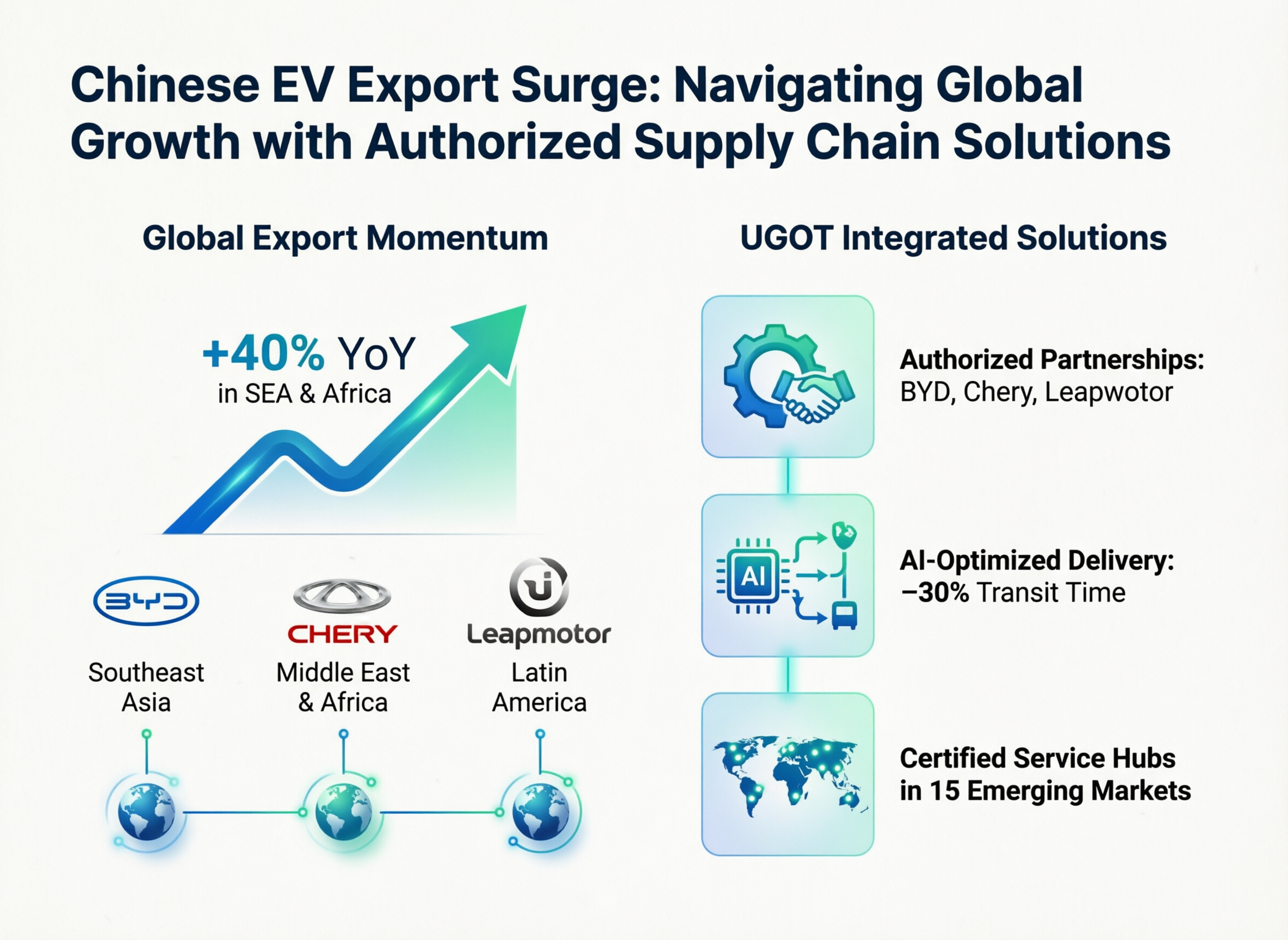 Chinese EV Export Surge: Navigating Global Growth with Authorized Supply Chain Solutions
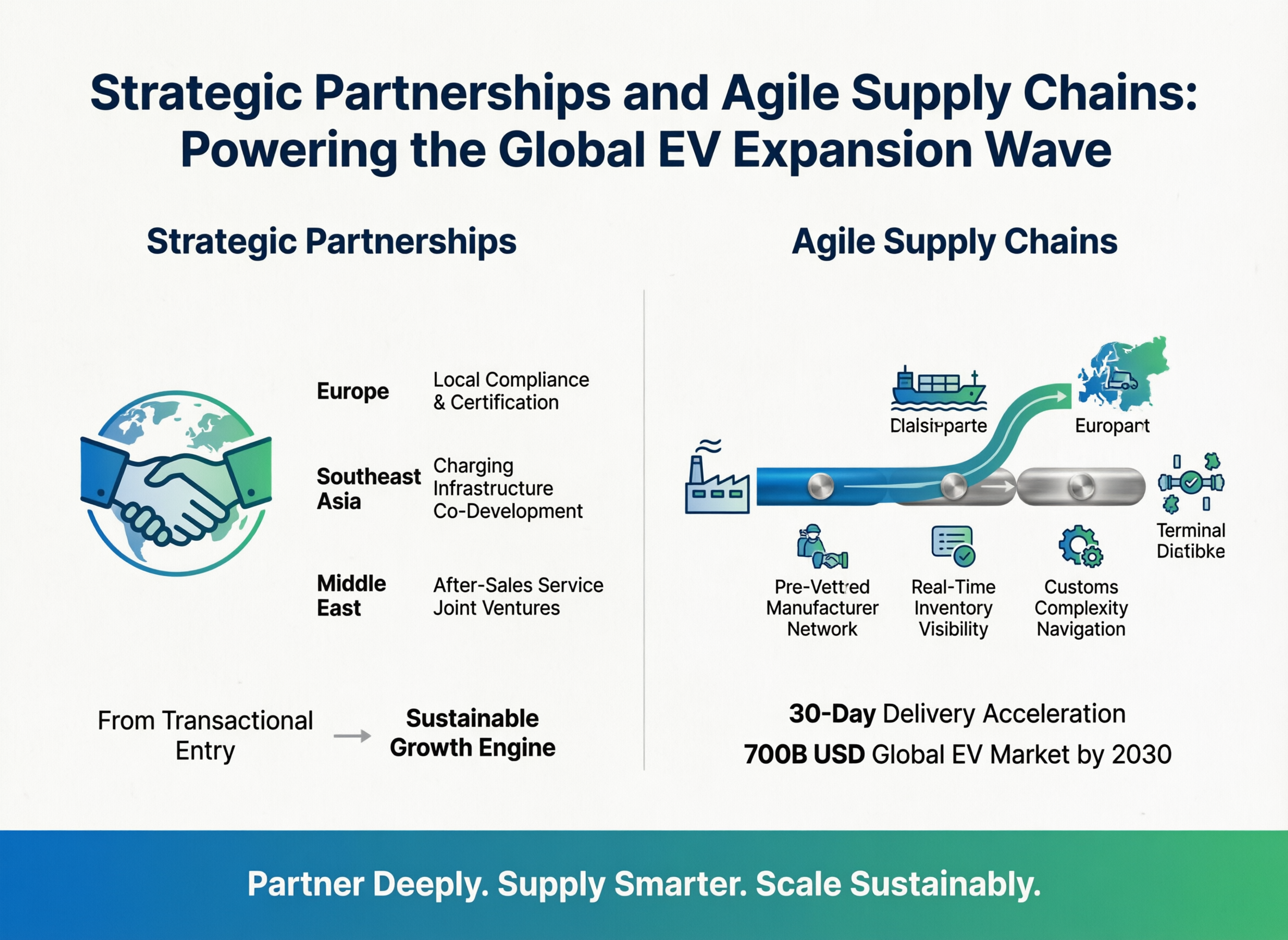 Strategic Partnerships and Agile Supply Chains: Powering the Global EV Expansion Wave
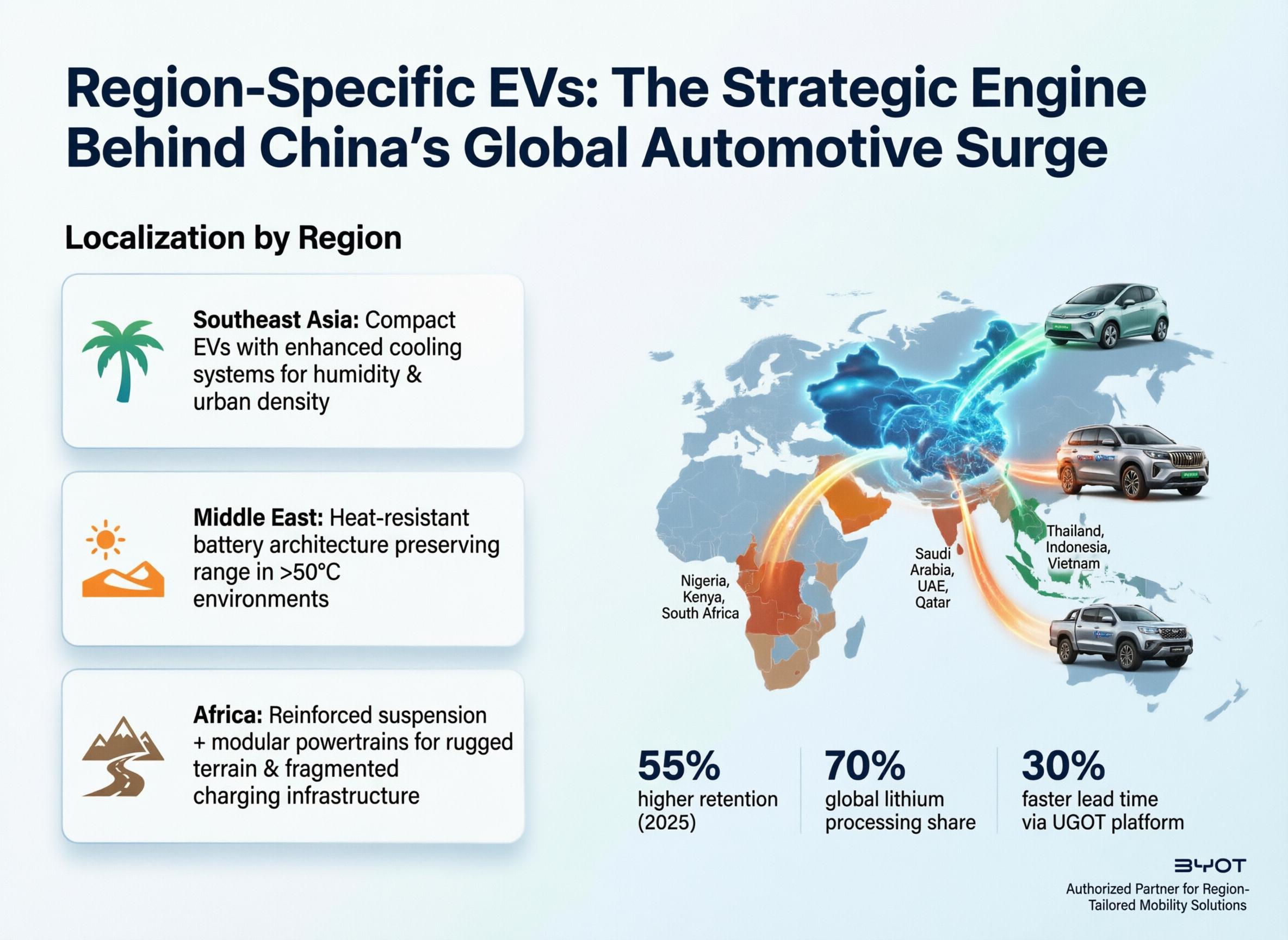 Region-Specific EVs: The Strategic Engine Behind China’s Global Automotive Surge