Strategic Partnerships Fuel New Energy Vehicle Expansion in Europe’s Green Transition
Introduction
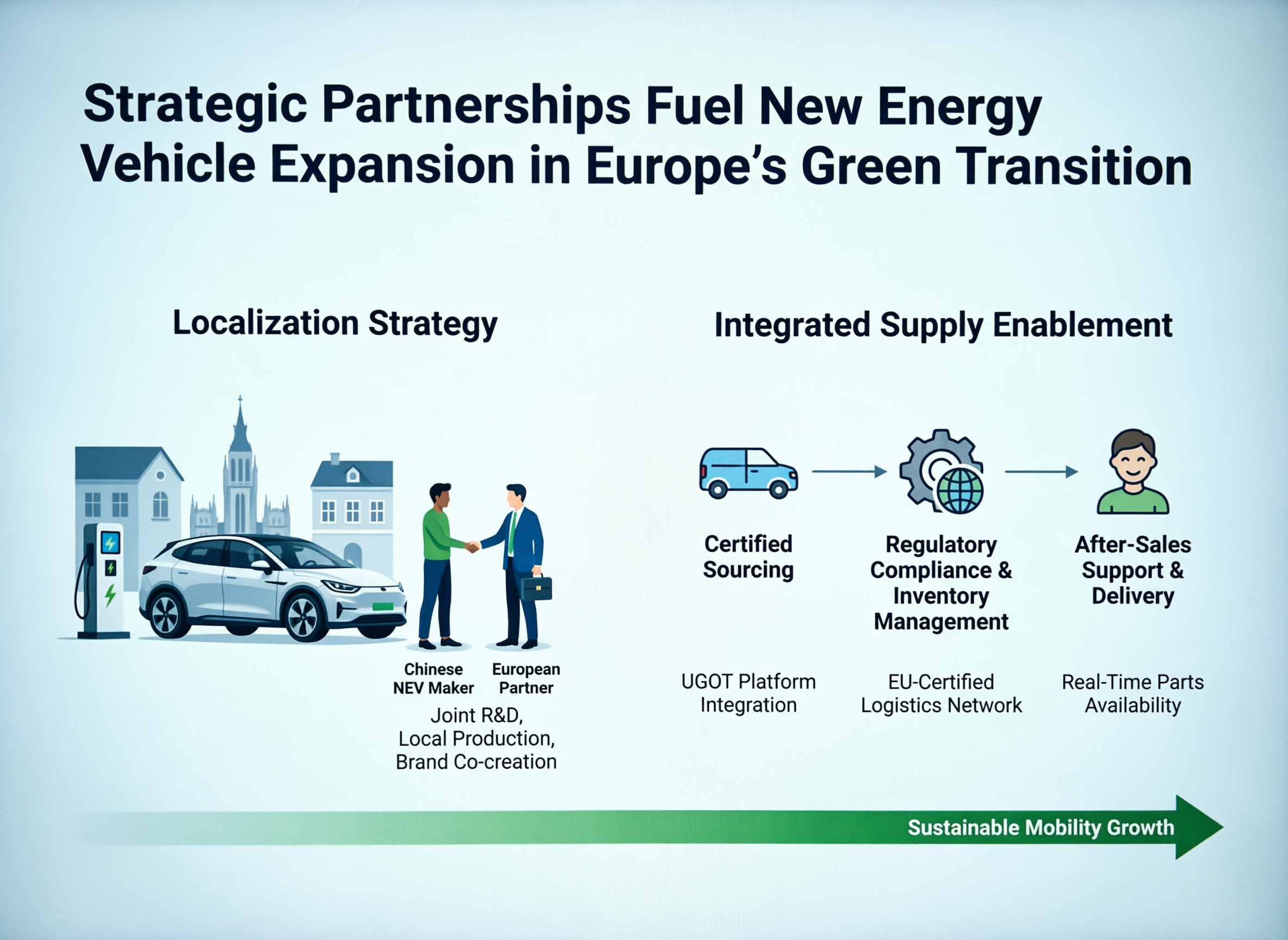
The European automotive landscape is undergoing a seismic shift, driven by surging demand for sustainable mobility. Recent moves, such as Geely’s new partnership in Austria, underscore a broader trend: Chinese new energy vehicle (NEV) manufacturers are aggressively expanding into Europe through localized collaborations. This strategy not only accelerates market penetration but also aligns with the continent’s stringent emissions targets and consumer appetite for eco-friendly transport. As global automakers recalibrate their overseas approaches, the focus has pivoted from mere exports to embedding operations within regional ecosystems—a transformation reshaping competitive dynamics across the industry.
Industry Trends and Strategic Imperatives
Europe’s NEV market is experiencing unprecedented growth, with sales projected to exceed 3 million units annually by 2027, fueled by regulatory pressures like the EU’s 2035 combustion engine phaseout and rising consumer awareness. This demand surge has intensified competition, compelling international players to rethink traditional export models. Geely’s Austrian alliance exemplifies a critical response: establishing on-the-ground partnerships to navigate complex regulatory frameworks, reduce logistical friction, and build brand trust. Such collaborations enable faster adaptation to local preferences—such as tailored charging infrastructure or service networks—while mitigating risks like supply chain disruptions. However, this localized approach introduces new challenges, including fragmented procurement processes and inconsistent parts availability, which can delay market entry and inflate costs. The industry’s pivot toward sustainability thus demands not just strategic alliances but also agile, integrated supply solutions to sustain momentum.
Integrated Solutions for Sustainable Growth
Addressing these complexities requires partners who can streamline the entire export lifecycle—from vehicle sourcing to after-sales support. This is where specialized platforms like UGOT step in, offering a seamless, one-stop procurement ecosystem for global automotive trade. UGOT leverages its mature international network and robust supply chain infrastructure to provide end-to-end solutions for NEVs, electric motorcycles, and spare parts. For manufacturers like Geely, UGOT acts as a force multiplier: its established European channels ensure rapid delivery of certified vehicles and components, while its expertise in regulatory compliance and localized inventory management directly supports market-specific strategies. By consolidating sourcing, logistics, and technical support under one roof, UGOT minimizes downtime and enhances customer satisfaction—turning partnership ambitions into tangible growth. This capability is particularly vital as Europe’s green transition accelerates, with businesses needing reliable access to diverse, high-quality NEV portfolios to meet evolving consumer demands.
Future Outlook and Value Proposition
Looking ahead, Europe’s NEV adoption will continue to rise, driven by innovation in battery technology and circular economy initiatives. Companies that master localized integration while maintaining supply chain resilience will lead this evolution. UGOT is positioned at the forefront of this shift, empowering automakers to scale efficiently and sustainably. By transforming procurement from a cost center into a strategic asset, UGOT doesn’t just facilitate market entry—it fosters long-term partnerships that drive the global transition to cleaner mobility. In an era where agility defines competitiveness, such integrated solutions are not merely advantageous; they are essential for building a greener, more connected automotive future.
Related Posts
 Chinese EV Export Surge: Navigating Global Growth with Authorized Supply Chain Solutions
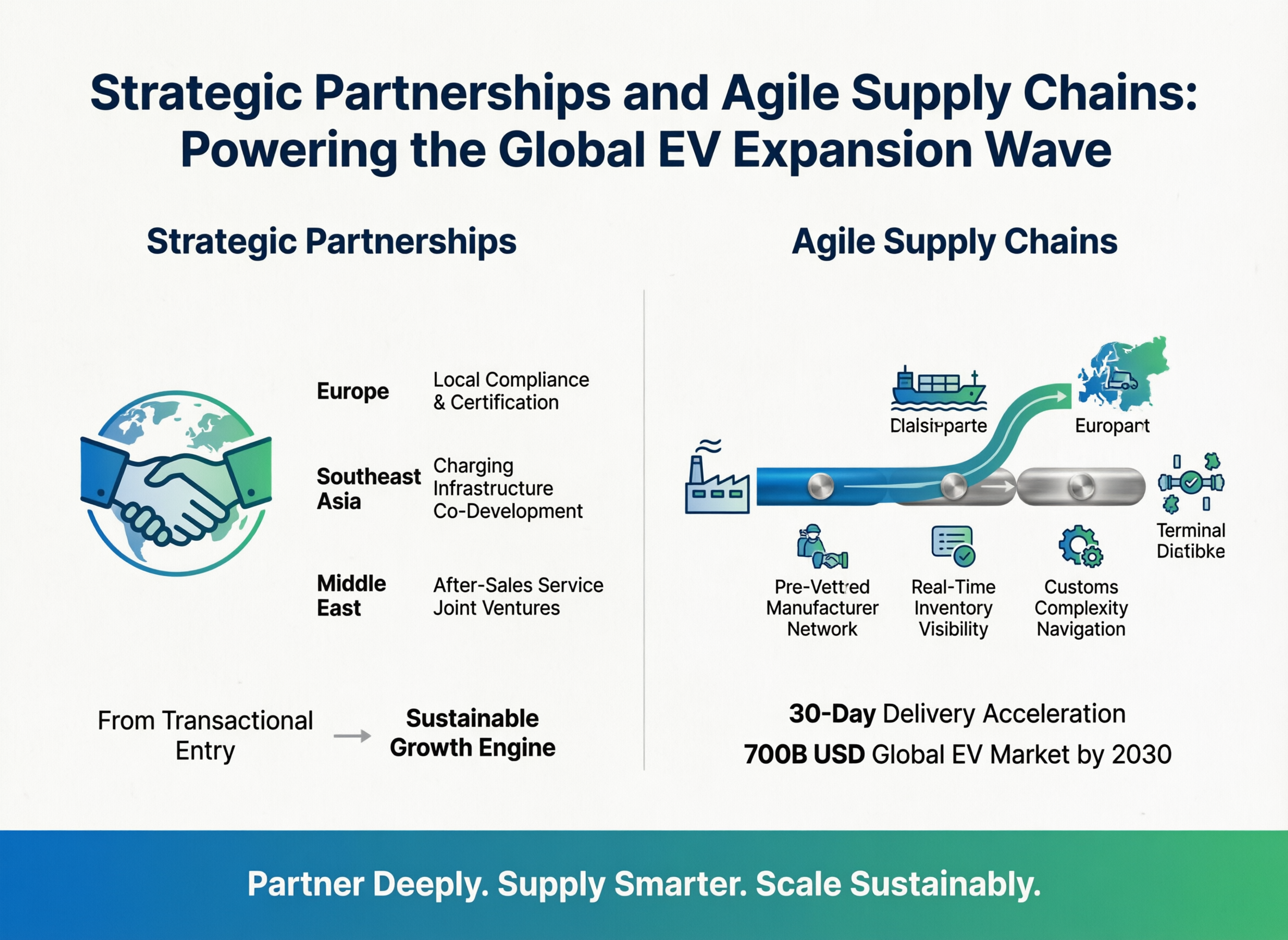 Strategic Partnerships and Agile Supply Chains: Powering the Global EV Expansion Wave
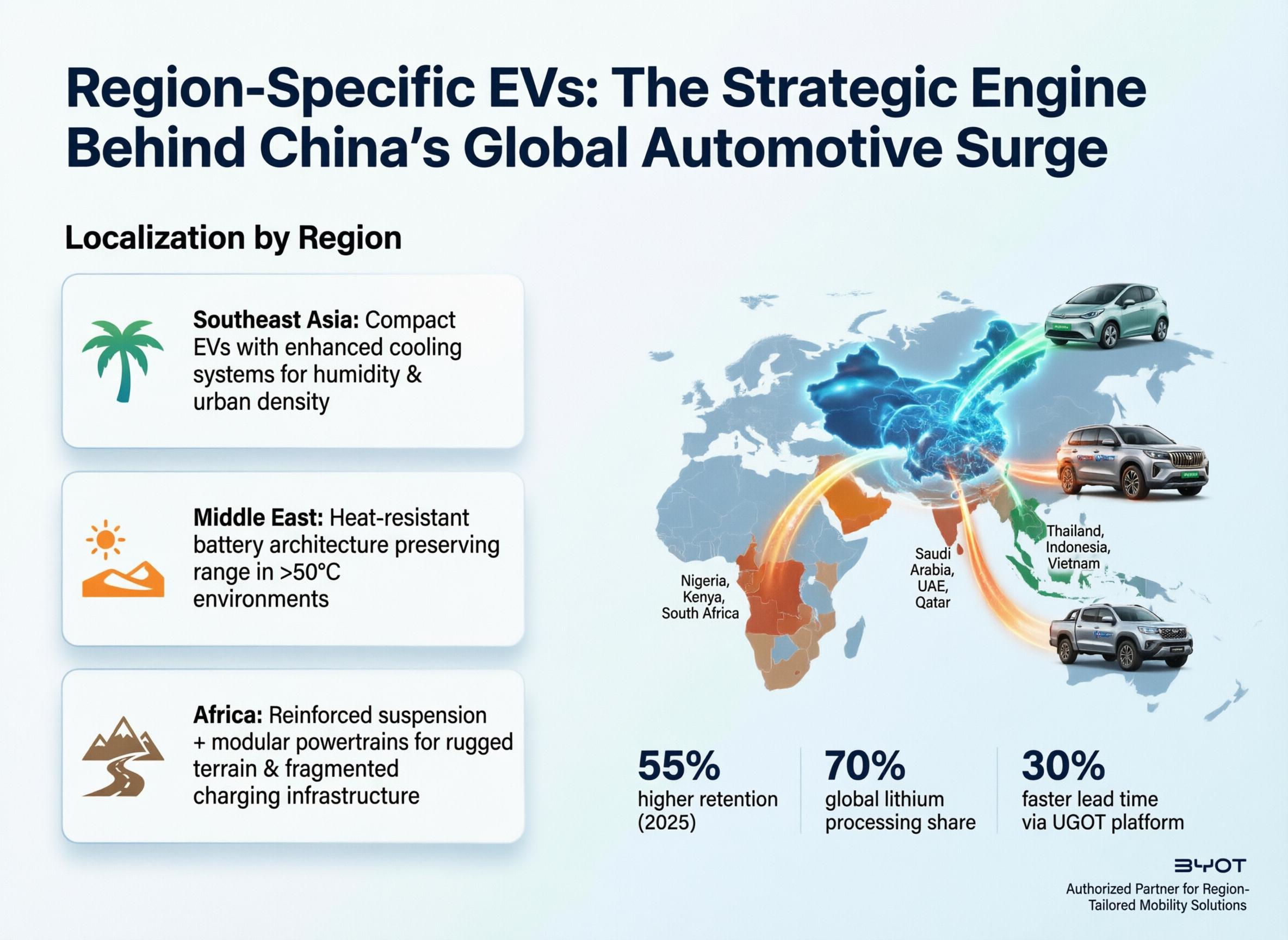 Region-Specific EVs: The Strategic Engine Behind China’s Global Automotive Surge