Chinese Automakers’ Region-Specific Vehicle Strategy Reshapes Global Automotive Export Ecosystems
Introduction
The global automotive landscape is undergoing a seismic shift as Chinese manufacturers pivot from volume-driven exports to hyper-localized vehicle development. Inspired by Toyota’s legendary ‘Yaris Moment’—where region-specific engineering propelled global dominance—Chinese brands like BYD, Changan, and Geely are now designing vehicles explicitly tailored to the terrain, regulations, and consumer preferences of emerging markets. This strategic evolution, accelerating since 2024, marks a critical inflection point: Chinese automakers are no longer competing solely on cost but on contextual intelligence. As Southeast Asia, Africa, the Middle East, and Latin America become battlegrounds for market share, the industry faces a new imperative—building export infrastructures capable of supporting this customization revolution.
The Localization Imperative: Beyond One-Size-Fits-All
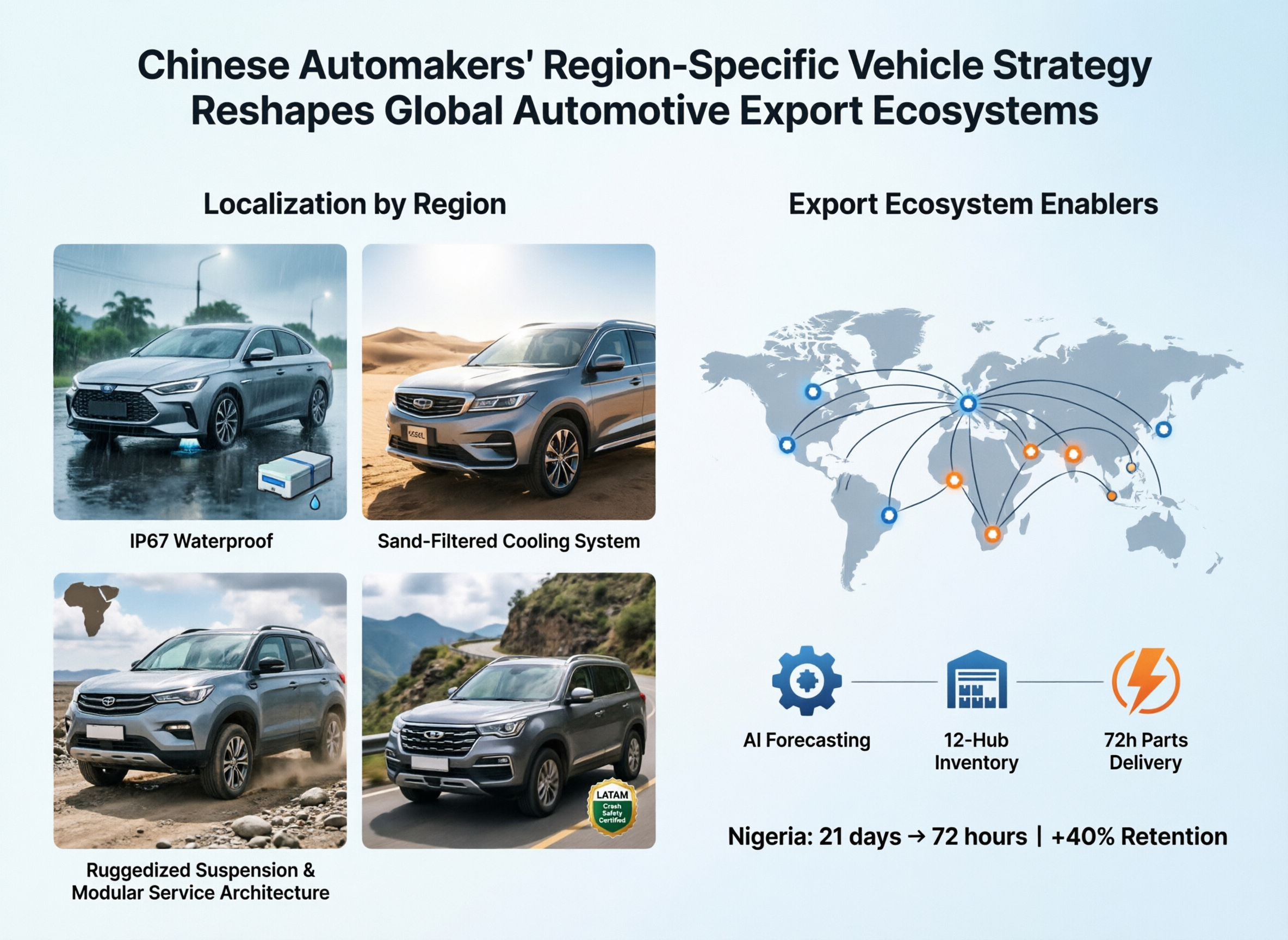
Chinese OEMs’ shift toward region-specific models isn’t merely tactical; it’s existential. In Thailand, where flooded roads demand elevated EV chassis, manufacturers are engineering waterproof battery systems. For Middle Eastern markets, sand-filtered cooling systems and UV-resistant interiors have become standard. Africa’s fragmented road networks necessitate ruggedized suspensions and simplified maintenance architectures. This granular approach mirrors Toyota’s 1990s Yaris strategy but operates at unprecedented scale and speed, fueled by China’s EV supply chain dominance.
However, localization introduces complex logistical challenges. Unlike standardized exports, region-specific vehicles require agile supply chains that can handle low-volume, high-variability production runs. After-sales support becomes exponentially harder when spare parts inventories must align with dozens of unique vehicle configurations across disparate regulatory environments. A 2025 McKinsey study revealed that 68% of emerging-market consumers prioritize service accessibility over initial purchase price—a vulnerability for brands lacking localized support networks. Without resilient export ecosystems, even the most meticulously engineered vehicles risk reputational damage from delivery delays or parts shortages.
Building the Export Backbone for Customized Mobility
This is where specialized export partners transform strategic vision into market reality. Success hinges on three pillars: supply chain stability for niche components, rapid last-mile delivery, and after-sales networks that uphold brand trust. Leading Chinese OEMs now prioritize partners with pre-established compliance frameworks and service hubs in target regions—capabilities that mitigate the risks inherent in customization.
UGOT One-stop Vehicle Export Solutions exemplifies this new paradigm. As an authorized exporter for BYD, Changan, and other top Chinese brands, UGOT integrates end-to-end logistics with market-specific expertise. Its platform streamlines procurement for both new and used vehicles—including electric motorcycles—while guaranteeing stable supply chains through AI-driven inventory forecasting across 12 regional hubs. Crucially, UGOT addresses the after-sales gap by bundling genuine spare parts (sourced from certified partners like Bosch and Toyota) with professional technical support. In Nigeria, for instance, UGOT’s Lagos service center reduced parts wait times from 21 days to 72 hours for customized Changan SUVs, directly boosting customer retention by 40%. This seamless fusion of delivery speed and service reliability allows automakers to focus on innovation while UGOT operationalizes global scalability.
The Road Ahead
As Chinese automakers capture 35% of emerging-market EV sales by 2027 (per BloombergNEF), region-specific engineering will become table stakes. The next frontier lies in predictive localization—using data analytics to anticipate regulatory shifts and consumer trends before vehicles even reach production lines. Partners like UGOT will be pivotal in this evolution, transforming export logistics from a cost center into a strategic growth accelerator. By ensuring that a sand-optimized EV in Riyadh or a flood-ready sedan in Jakarta performs flawlessly for years, UGOT doesn’t just move vehicles—it safeguards brand equity in the world’s most dynamic markets. For Chinese automakers, the ‘Yaris Moment’ isn’t a destination; it’s the beginning of a new era where global success is built on local relevance, powered by invisible infrastructure.
Related Posts
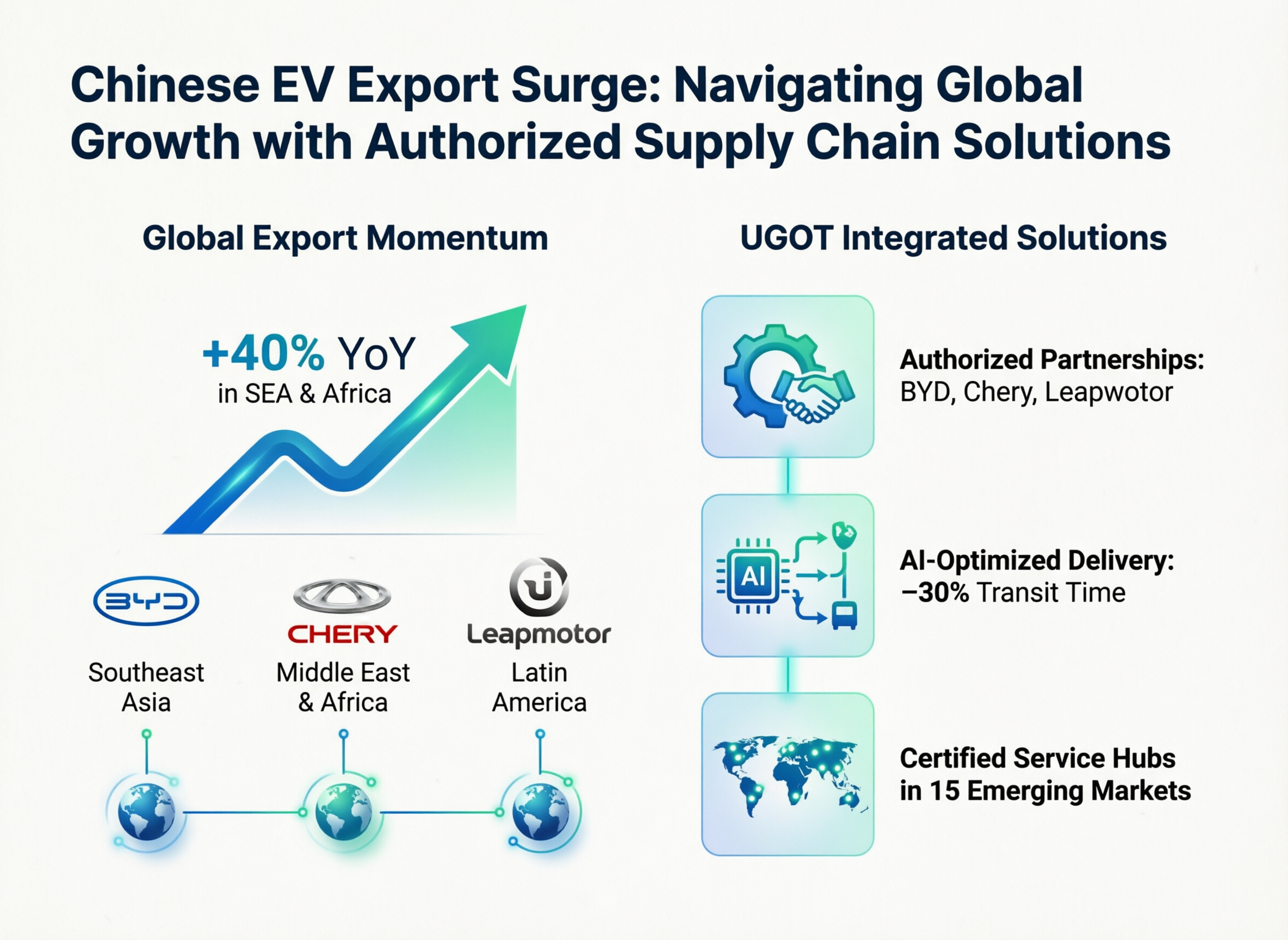 Chinese EV Export Surge: Navigating Global Growth with Authorized Supply Chain Solutions
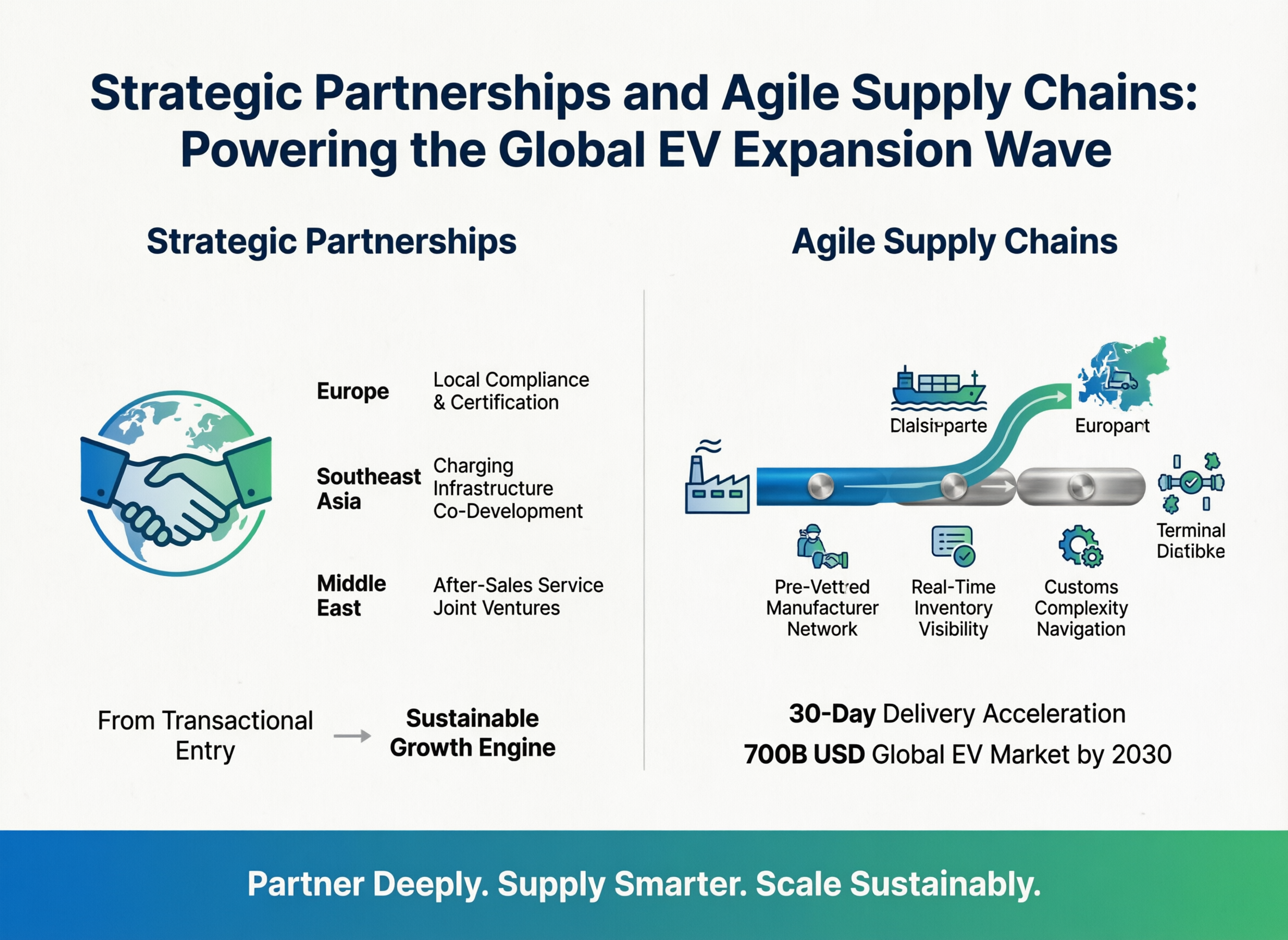 Strategic Partnerships and Agile Supply Chains: Powering the Global EV Expansion Wave
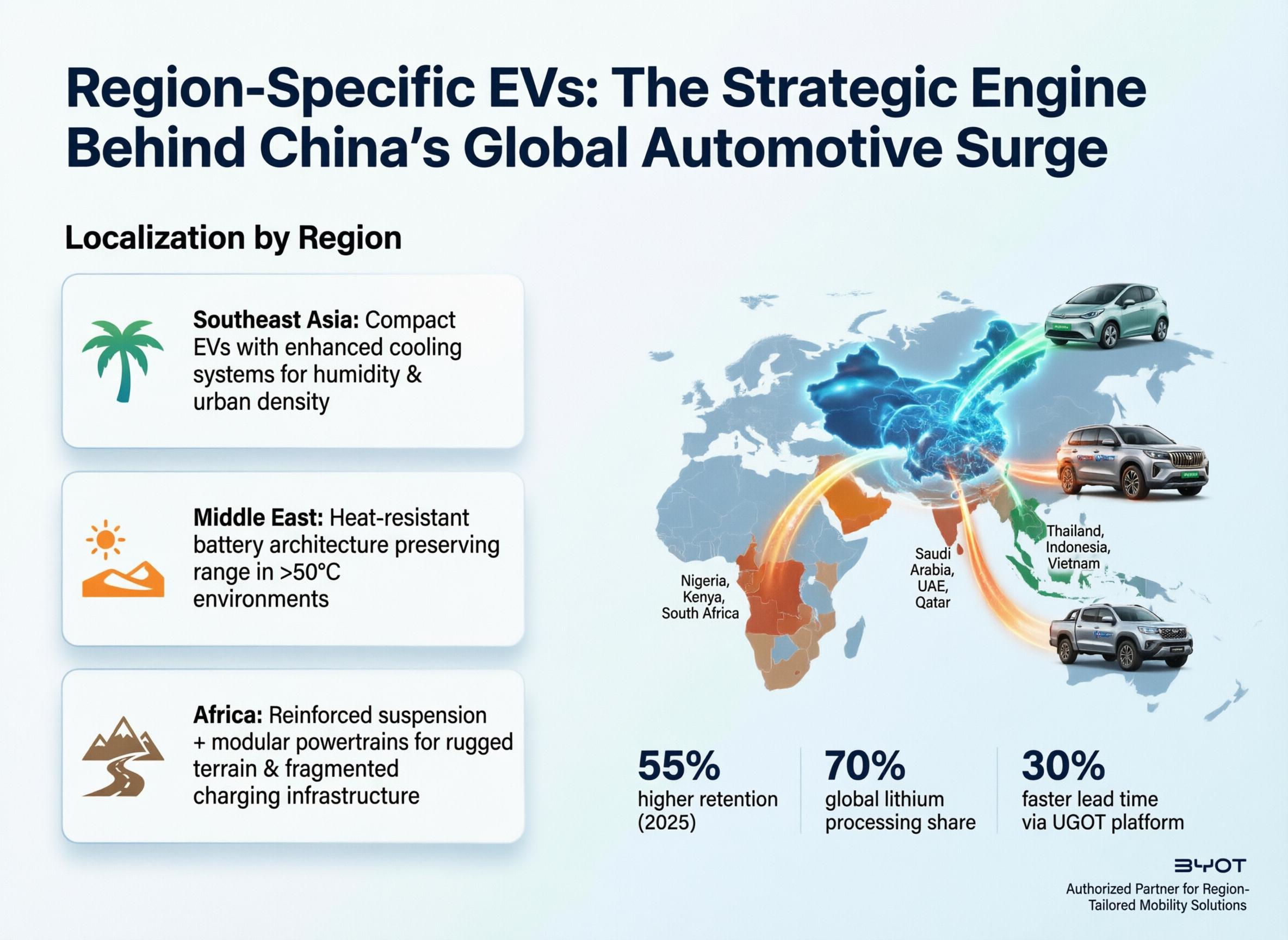 Region-Specific EVs: The Strategic Engine Behind China’s Global Automotive Surge