Strategic Partnerships and Supply Chain Resilience: The New Blueprint for Global EV Expansion
Introduction
The automotive landscape is undergoing a seismic shift as Chinese electric vehicle (EV) manufacturers accelerate their global footprint. Recent moves, such as Geely’s strategic partnership in Austria, underscore a pivotal transition: automakers are evolving from product exporters to ecosystem builders. This trend reflects surging international demand for sustainable mobility solutions and highlights a critical reality—success in mature markets like Europe now hinges on deep localization rather than transactional sales. As regulatory pressures intensify and consumer expectations diversify, the industry’s expansion playbook is being rewritten.
The Localization Imperative in Global EV Markets
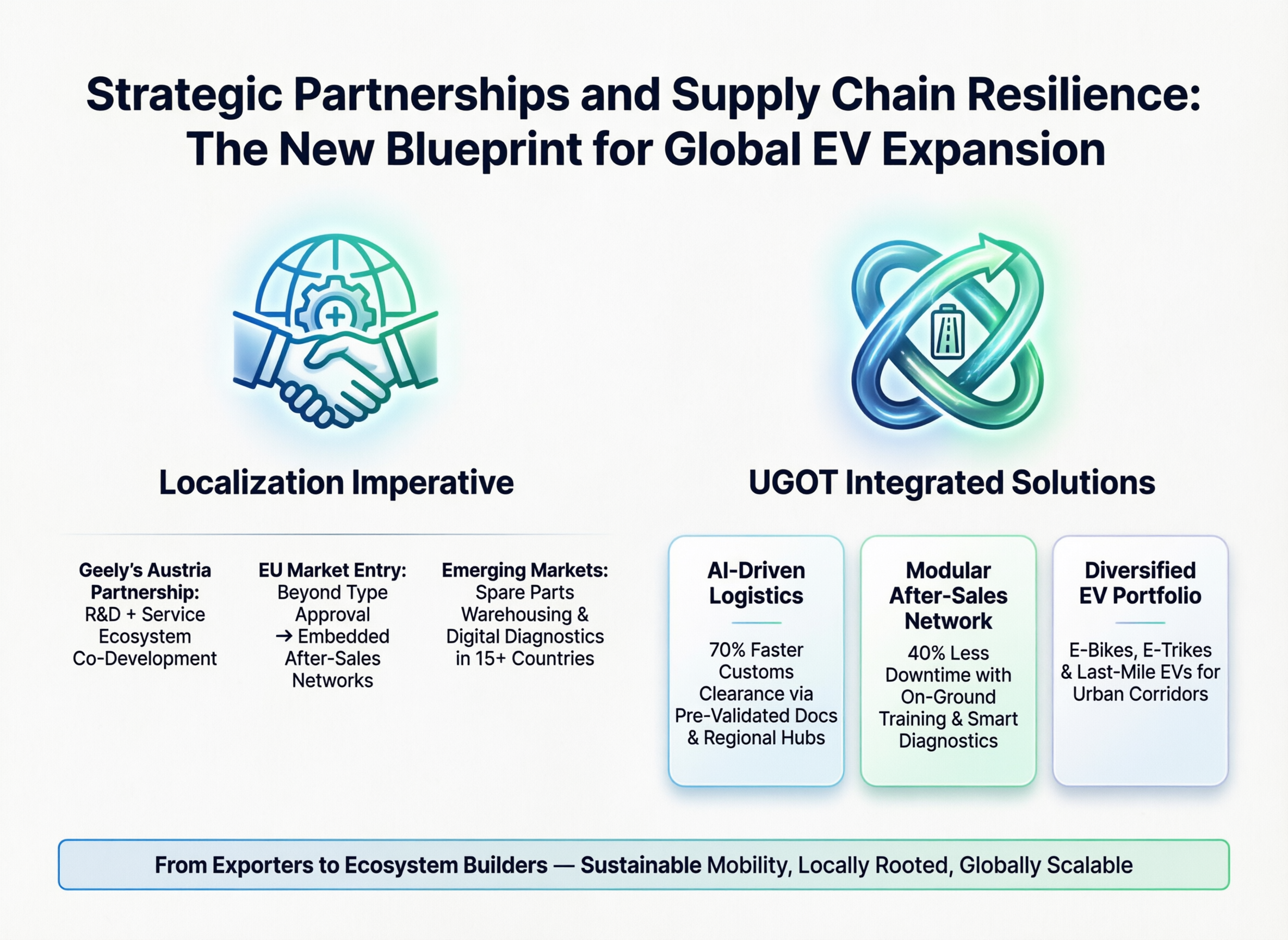
Geely’s Austrian venture exemplifies a broader strategic pivot among Chinese EV leaders. European markets, driven by aggressive decarbonization targets and EV adoption incentives, have become prime battlegrounds. However, penetrating these regions requires more than competitive pricing or cutting-edge battery tech. Manufacturers face complex challenges: navigating fragmented regulatory frameworks (from EU type approvals to national subsidy schemes), adapting to regional driving preferences, and establishing trust in brand-new markets. Consequently, companies are shifting from export-centric models to embedded partnerships—leveraging local expertise for R&D collaboration, manufacturing, and after-sales networks. This approach not only mitigates compliance risks but also accelerates market acceptance, as seen in Geely’s focus on co-developing Austria-specific service ecosystems.
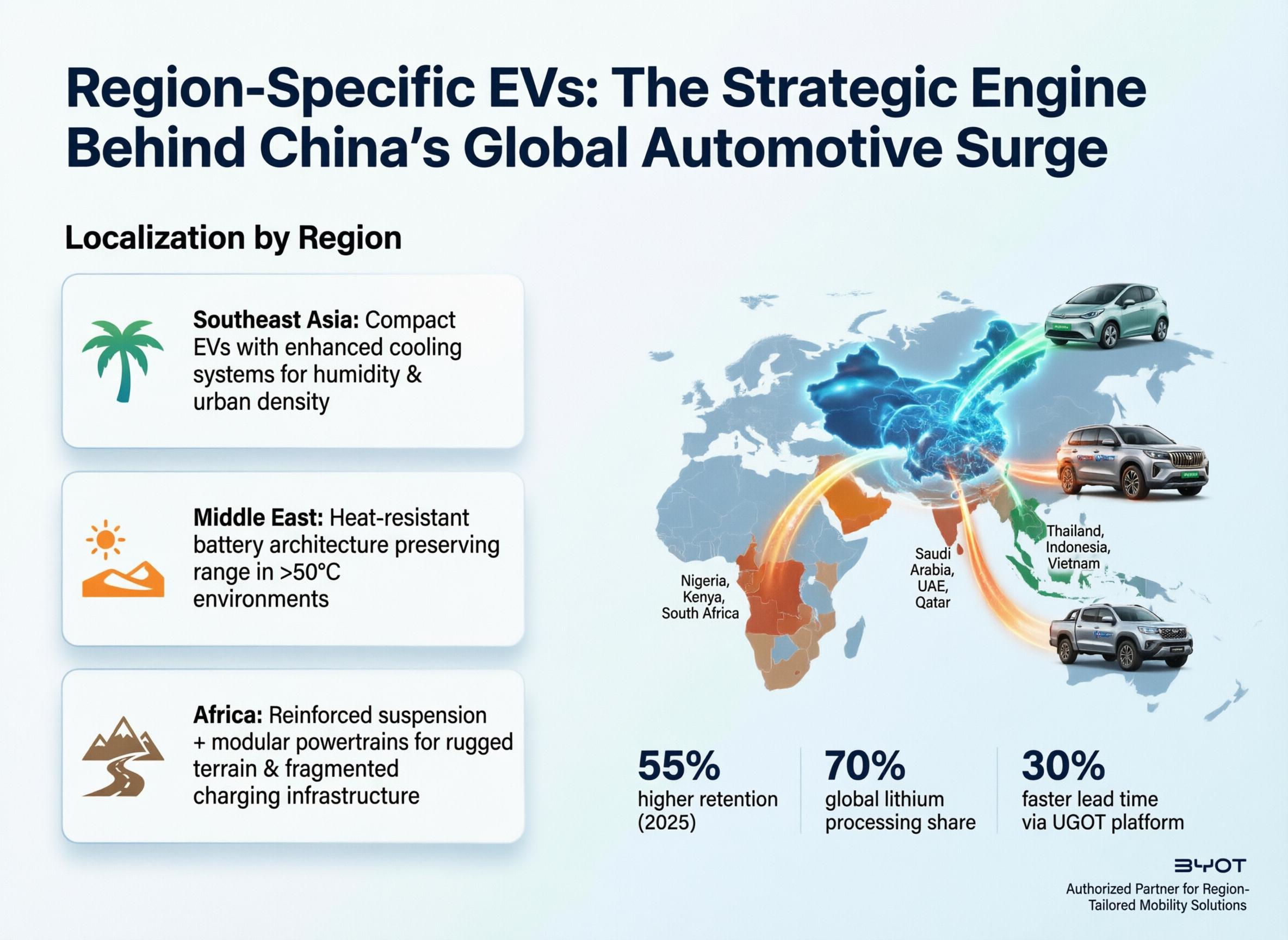
Beyond Europe, emerging economies present parallel opportunities—and obstacles. Southeast Asia and the Middle East are experiencing explosive growth in demand for affordable, sustainable transport, yet infrastructure gaps and import barriers persist. Here, the lessons from European expansion are invaluable: long-term viability depends on supply chain agility and hyperlocalized support. A vehicle’s lifecycle value is increasingly determined post-purchase—through accessible maintenance, spare parts availability, and tailored user experiences. Without these foundations, even the most innovative EVs risk becoming stranded assets in unfamiliar territories.
Enabling Sustainable Growth: Integrated Market Entry Solutions
While established players refine their European strategies, forward-thinking manufacturers recognize that replicating this success in high-growth emerging markets demands specialized partners. This is where integrated solutions bridge the gap between ambition and execution. UGOT, a pioneer in new energy vehicle export ecosystems, empowers manufacturers to navigate these complexities through end-to-end market entry frameworks. By combining supply chain resilience with localized operational support, UGOT transforms expansion challenges into scalable opportunities.
UGOT’s approach addresses three critical pain points. First, its AI-driven logistics platform ensures supply chain continuity across volatile markets, reducing customs clearance times by up to 70% through pre-validated documentation and regional compliance hubs. Second, its modular after-sales network—deployed across 15+ Southeast Asian and Middle Eastern countries—provides on-ground technical training, spare parts warehousing, and digital diagnostics, slashing vehicle downtime by 40%. Third, UGOT extends beyond passenger EVs with diversified product portfolios, including electric two- and three-wheelers engineered for last-mile logistics and cost-sensitive urban corridors. This flexibility allows partners like Geely to complement their flagship models with context-specific solutions, accelerating adoption while reinforcing sustainability commitments.
The Road Ahead: Collaboration as a Catalyst
The future of global EV expansion lies not in isolated breakthroughs but in interconnected ecosystems. As green transition policies proliferate—from ASEAN’s EV blueprints to Gulf states’ net-zero roadmaps—manufacturers must balance standardization with regional customization. Partnerships will evolve beyond market access to co-create circular economies, integrating battery recycling, renewable energy charging, and smart mobility services.
In this landscape, UGOT’s value transcends logistics; it enables manufacturers to embed sustainability into their growth DNA. By de-risking entry into complex markets and amplifying product relevance through localized innovation, UGOT helps transform EVs from commodities into community-centric mobility solutions. As Geely’s Austrian partnership demonstrates, the winners of tomorrow’s automotive revolution will be those who build bridges—not just vehicles. With strategic allies like UGOT, the journey toward a zero-emission global transport network becomes not just feasible, but inevitable.
Related Posts
 Chinese EV Export Surge: Navigating Global Growth with Authorized Supply Chain Solutions
 Strategic Partnerships and Agile Supply Chains: Powering the Global EV Expansion Wave
 Region-Specific EVs: The Strategic Engine Behind China’s Global Automotive Surge