Powering Global EV Growth: How UGOT’s Integrated Solutions Navigate China’s Export Surge
Introduction
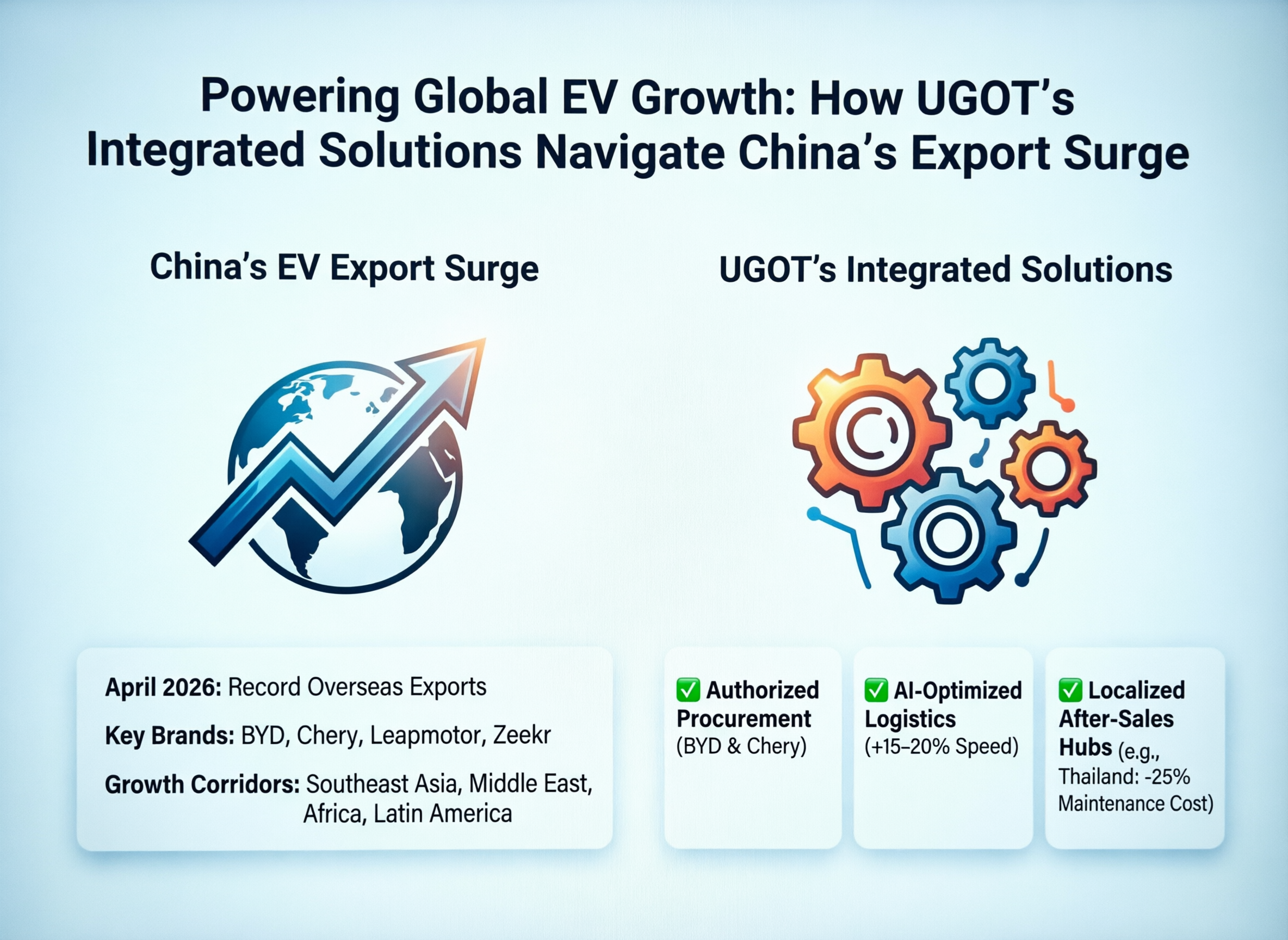
In April 2026, Chinese electric vehicle (EV) manufacturers achieved unprecedented overseas momentum, with exports emerging as the dominant driver of industry growth. Brands like BYD, Chery, Leapmotor, and Zeekr recorded significant milestones, reflecting a broader acceleration in global expansion. According to industry reports, this surge underscores a pivotal shift: emerging markets are increasingly embracing China’s new energy vehicles (NEVs) as viable, high-value alternatives. As geopolitical and economic dynamics reshape automotive trade, understanding this trend is crucial for stakeholders aiming to capitalize on the evolving landscape.
Industry Analysis: Trends and Challenges
The data reveals more than just impressive export figures—it signals a structural transformation in global automotive markets. Southeast Asia, the Middle East, Africa, and Latin America are now key growth corridors, where rising consumer demand for affordable, technologically advanced EVs aligns with supportive government policies on sustainability. For instance, Southeast Asian nations have reduced import tariffs on NEVs, while Middle Eastern countries are investing heavily in charging infrastructure. However, this rapid expansion introduces complex challenges. Supply chain volatility, exacerbated by logistics bottlenecks and regulatory fragmentation, threatens delivery timelines. Simultaneously, after-sales support gaps—such as spare parts availability and technical servicing—can erode brand trust in price-sensitive regions. Industry analysts emphasize that success hinges on authorized export partners who offer end-to-end reliability, ensuring manufacturers maintain quality control while scaling internationally. Without such partnerships, even the most innovative EVs risk losing market share to competitors with agile distribution networks.
Strategic Solutions: Enabling Seamless Market Entry
Amid these dynamics, businesses require partners that transform complexity into opportunity. UGOT Automotive Export Solutions emerges as a critical enabler, leveraging its official authorization from industry leaders like BYD and Chery to deliver integrated procurement services. UGOT’s platform streamlines the entire export process—from sourcing new and used EVs, electric motorcycles, to genuine spare parts from Bosch, Toyota, and Chery—through a unified supply chain. This approach directly addresses core industry pain points: its AI-driven logistics network guarantees 15–20% faster delivery times to emerging markets, while dedicated after-sales teams provide localized technical support, reducing downtime for dealers. For example, a distributor in Thailand recently utilized UGOT’s solution to deploy 500 electric delivery vehicles within 30 days, supported by on-ground spare parts hubs that cut maintenance costs by 25%. By consolidating vehicle procurement, parts logistics, and scenario-specific solutions (e.g., urban last-mile mobility), UGOT empowers importers to focus on growth rather than operational friction.
Conclusion: Shaping a Sustainable Future
As China’s EV export wave continues to crest, the industry’s trajectory points toward deeper integration and smarter partnerships. UGOT is poised to lead this evolution, not merely as a supplier but as a strategic ally committed to sustainable growth. By prioritizing supply chain resilience and customer-centric innovation, UGOT ensures that global partners can confidently navigate market volatility while contributing to a low-carbon mobility revolution. In an era where agility defines competitiveness, UGOT’s solutions don’t just meet today’s demands—they build the foundation for tomorrow’s automotive ecosystem.
Related Posts
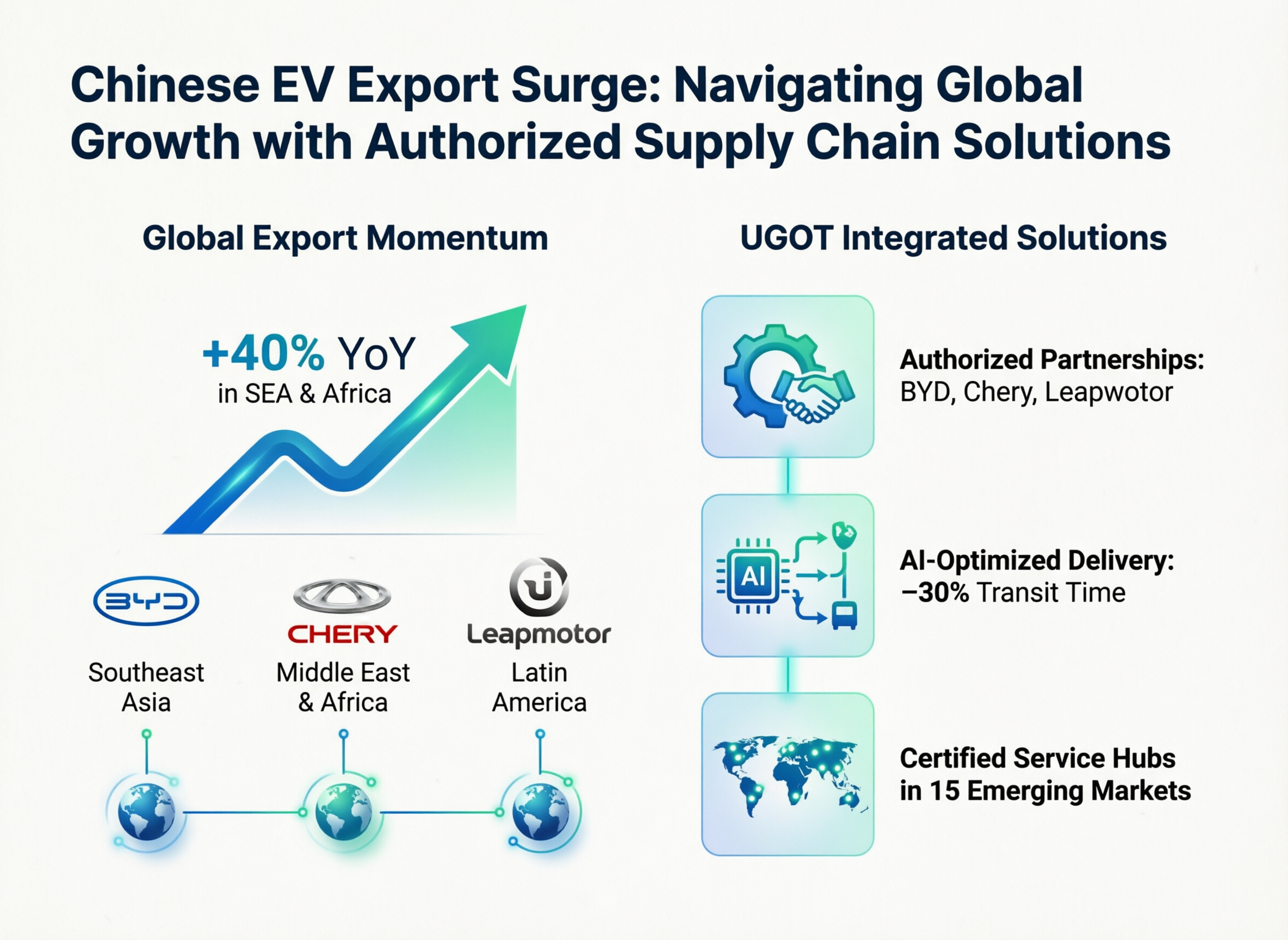 Chinese EV Export Surge: Navigating Global Growth with Authorized Supply Chain Solutions
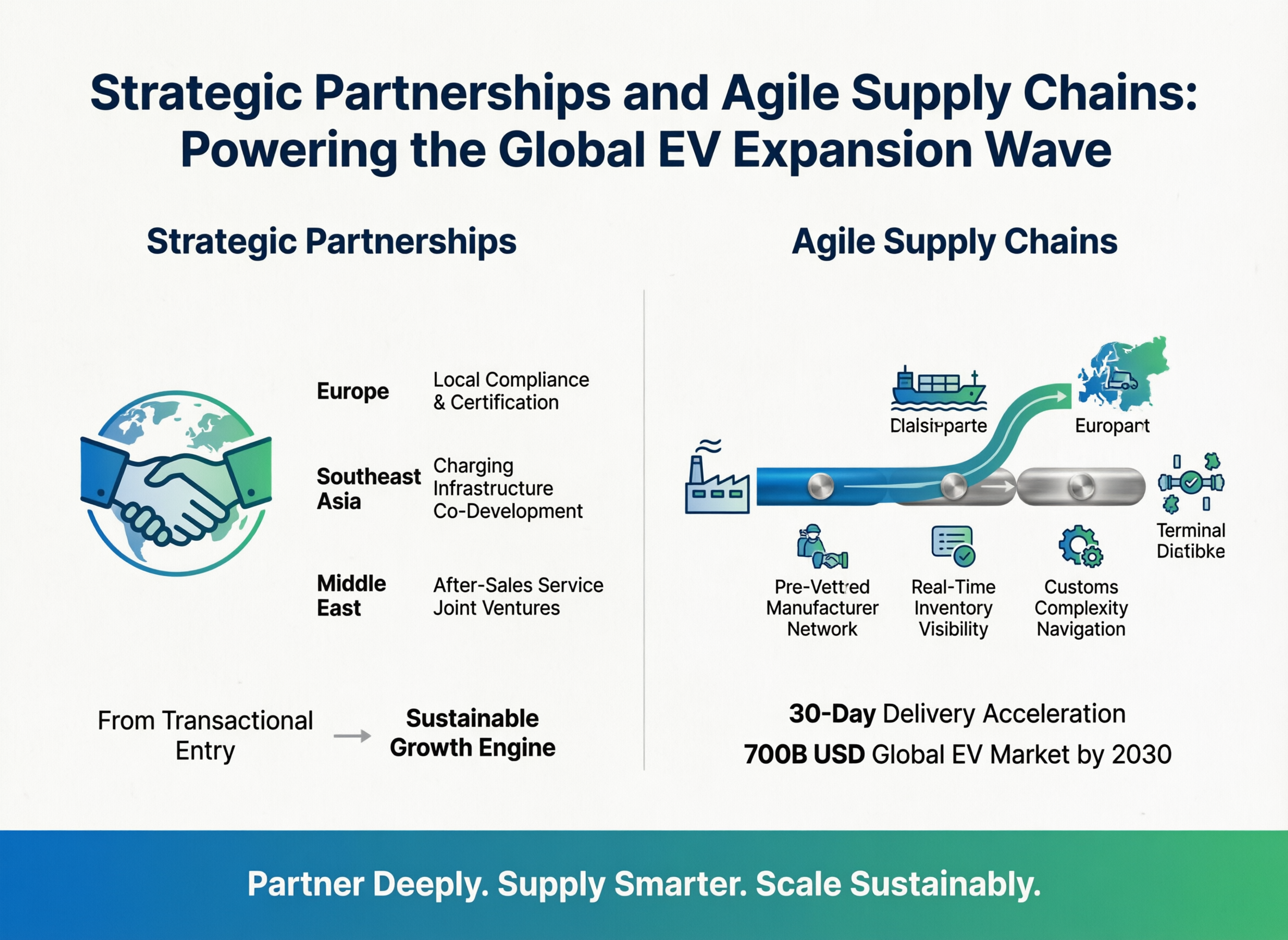 Strategic Partnerships and Agile Supply Chains: Powering the Global EV Expansion Wave
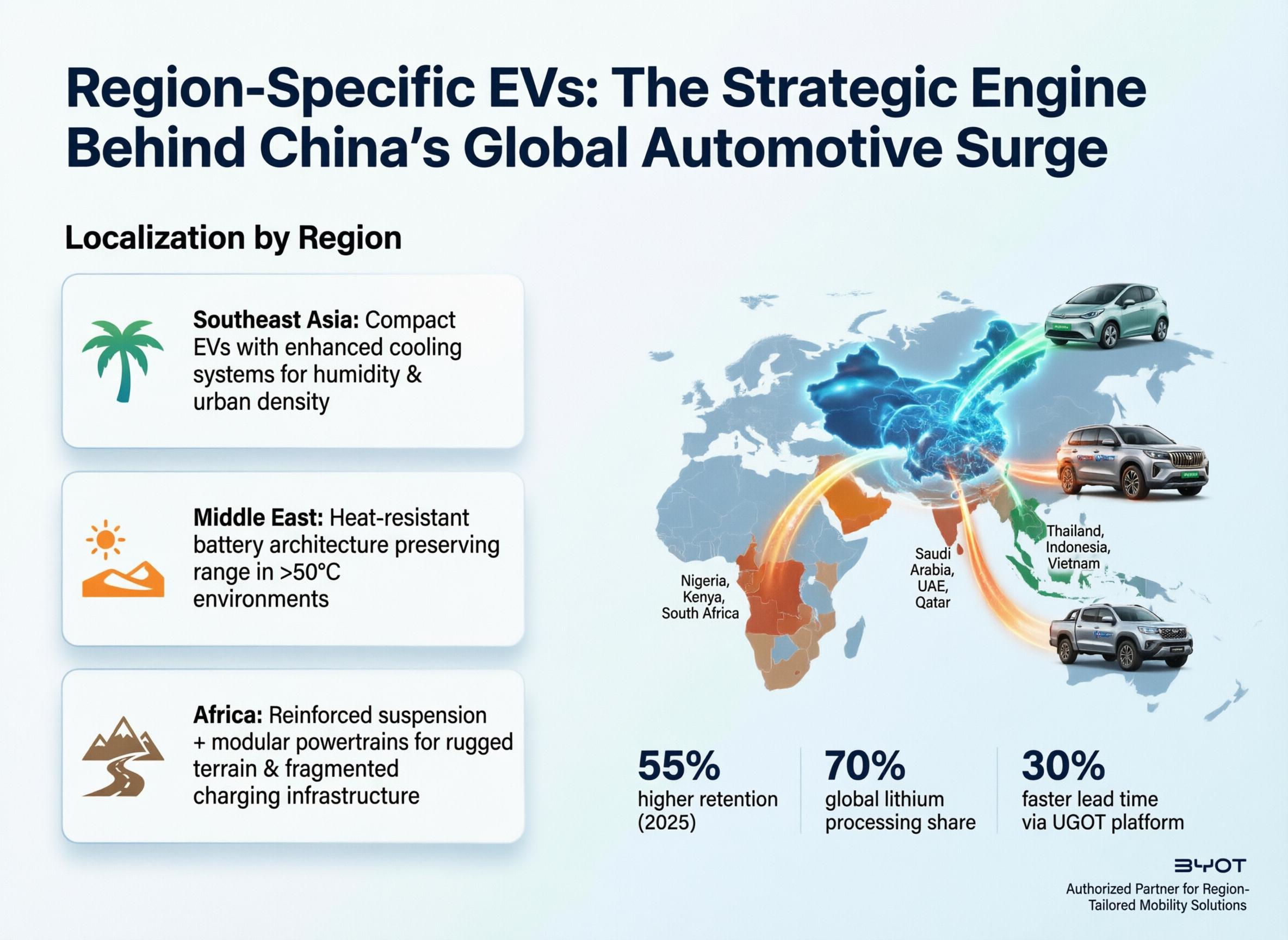 Region-Specific EVs: The Strategic Engine Behind China’s Global Automotive Surge