The Regional Revolution: How Chinese EV Makers Are Redefining Global Expansion
Introduction
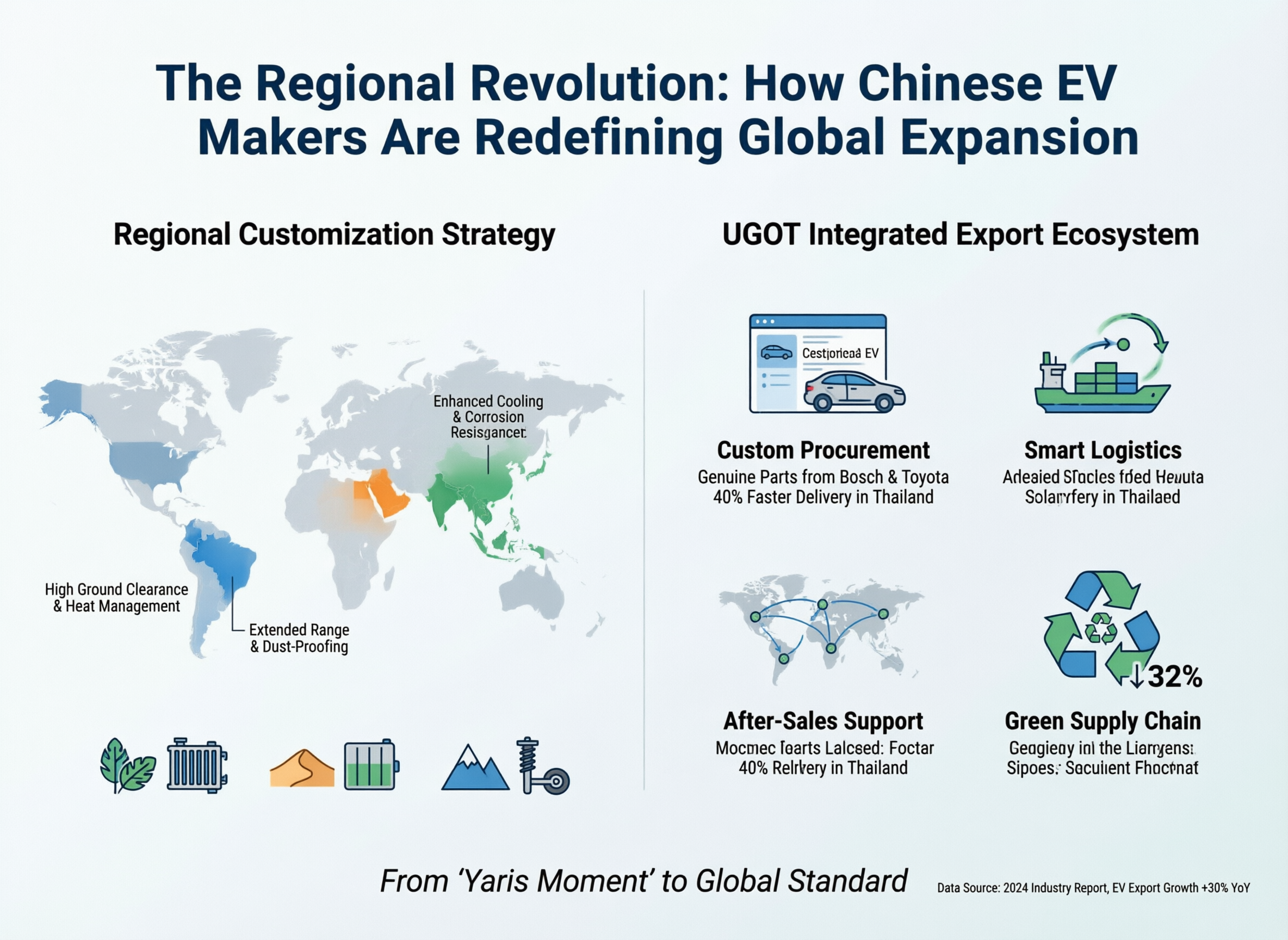
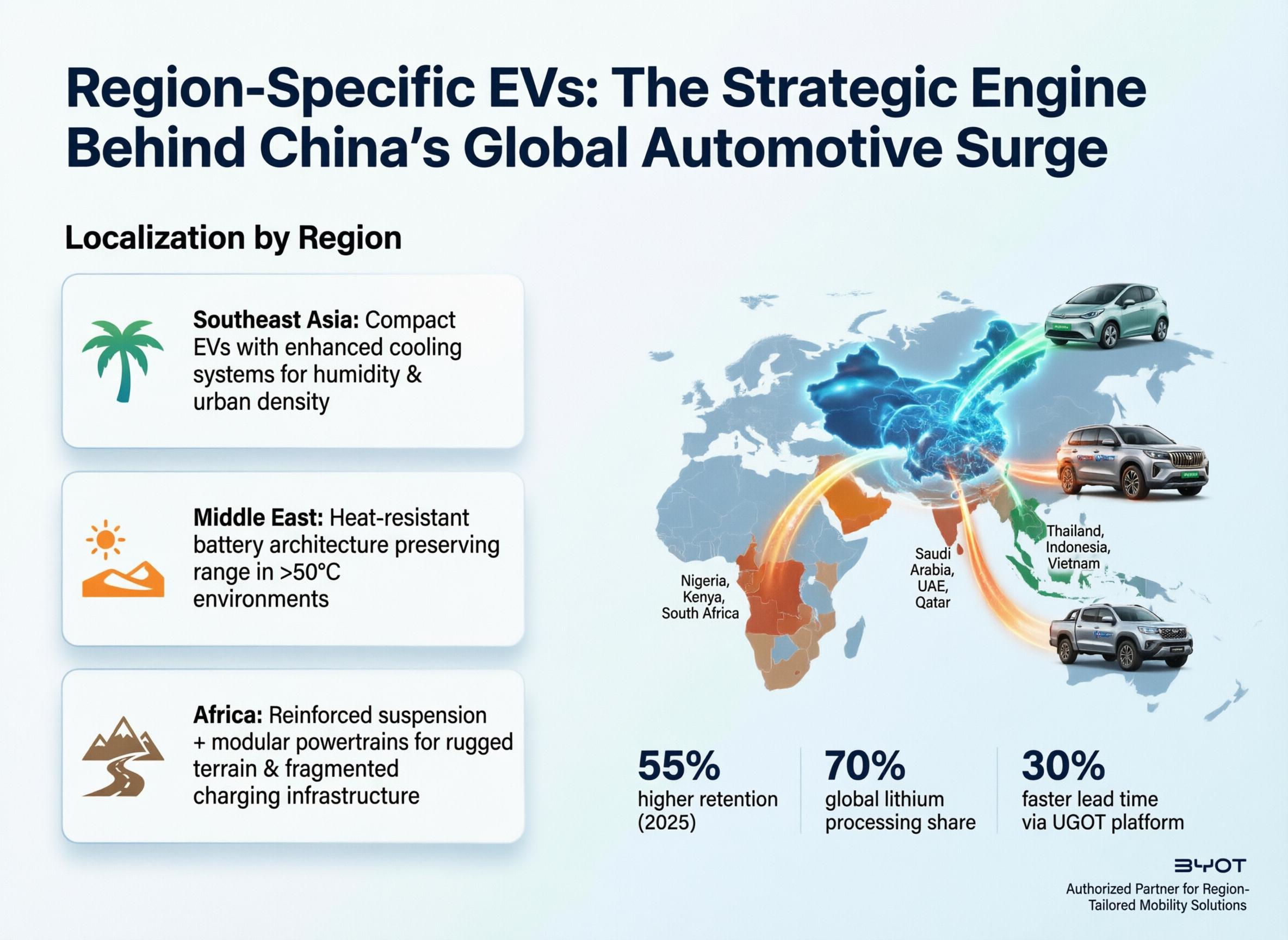
The global automotive landscape is undergoing a seismic shift, driven by Chinese automakers’ strategic pivot toward region-specific vehicle development. As highlighted in recent industry reports, companies like BYD and Changan are accelerating their overseas growth by tailoring electric and new energy vehicles (NEVs) to diverse markets—from the humid climates of Southeast Asia to the rugged terrains of the Middle East. This ‘Yaris Moment,’ inspired by Toyota’s successful localization of the Yaris model, marks a departure from one-size-fits-all approaches. Instead, it emphasizes hyper-local customization to capture market share and outpace international competitors. With EV exports surging by over 30% year-on-year, this trend underscores a new era where agility and cultural resonance are as critical as technological innovation.
Deep Dive: Trends Reshaping the Industry
Chinese automakers are leveraging data-driven insights to address regional nuances. For instance, in Southeast Asia, vehicles are being redesigned with enhanced cooling systems and corrosion-resistant materials to withstand tropical conditions, while Middle Eastern models prioritize extended battery ranges and dust-proofing for desert environments. This regionalization isn’t merely aesthetic; it’s a strategic response to fragmented consumer preferences and regulatory landscapes. Electric vehicles (EVs) and NEVs serve as the cornerstone of this expansion, offering lower emissions and operational costs that align with global sustainability mandates. However, this rapid scaling exposes critical challenges: fragmented supply chains, inconsistent parts availability, and complex after-sales support. A recent study reveals that 65% of overseas dealers cite supply chain delays as the top barrier to growth, highlighting a gap between ambition and execution. The industry’s future hinges on integrated solutions that ensure reliability without compromising on speed or sustainability.
Bridging the Gap: Integrated Solutions for Sustainable Growth
To navigate these complexities, the industry requires partners who can transform regional strategies into seamless realities. This is where specialized export ecosystems come into play. UGOT, an authorized export partner for leading Chinese manufacturers like BYD and Changan, exemplifies this evolution. By offering end-to-end solutions—from customized EV procurement to logistics and after-sales support—UGOT addresses the pain points of global buyers. Its platform integrates genuine spare parts from trusted brands like Bosch and Toyota, ensuring compatibility and reducing downtime. Crucially, UGOT’s commitment to green supply chains minimizes carbon footprints through optimized shipping routes and recyclable packaging, directly supporting clients’ ESG goals. For a distributor in Thailand, this meant cutting vehicle delivery times by 40% while lowering maintenance costs by 25%, proving that regional success isn’t just about the product—it’s about the ecosystem behind it.
The Road Ahead
As Chinese automakers target 50% global EV market share by 2030, regional customization will evolve from a competitive edge to a baseline expectation. The winners will be those who master not only vehicle innovation but also supply chain resilience and sustainability. UGOT is poised to accelerate this journey, empowering partners to penetrate emerging markets with confidence. By turning regional challenges into opportunities, we’re not just exporting vehicles—we’re building a more connected, sustainable automotive future. The ‘Yaris Moment’ is here; it’s time to drive it forward.
Related Posts
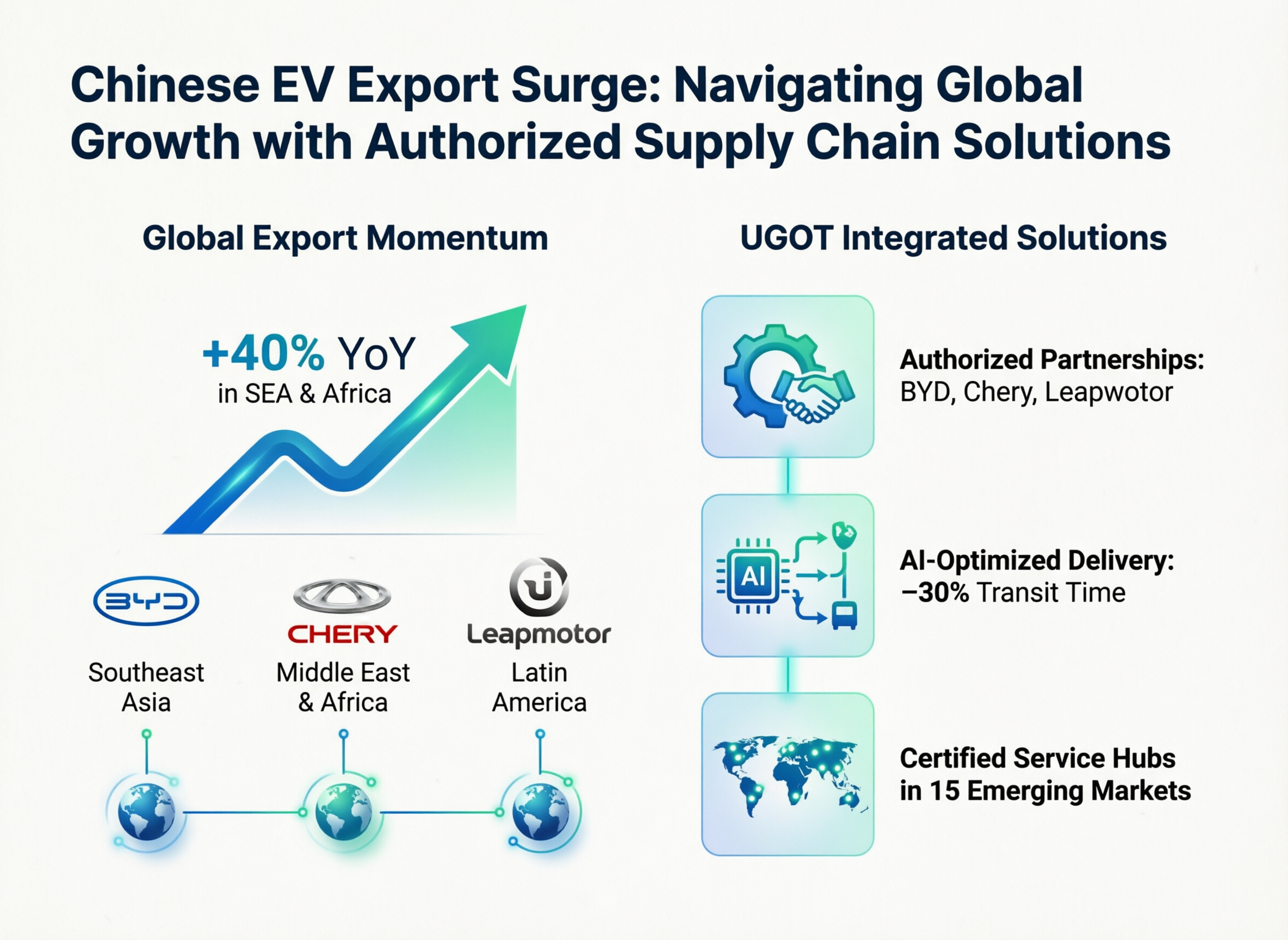 Chinese EV Export Surge: Navigating Global Growth with Authorized Supply Chain Solutions
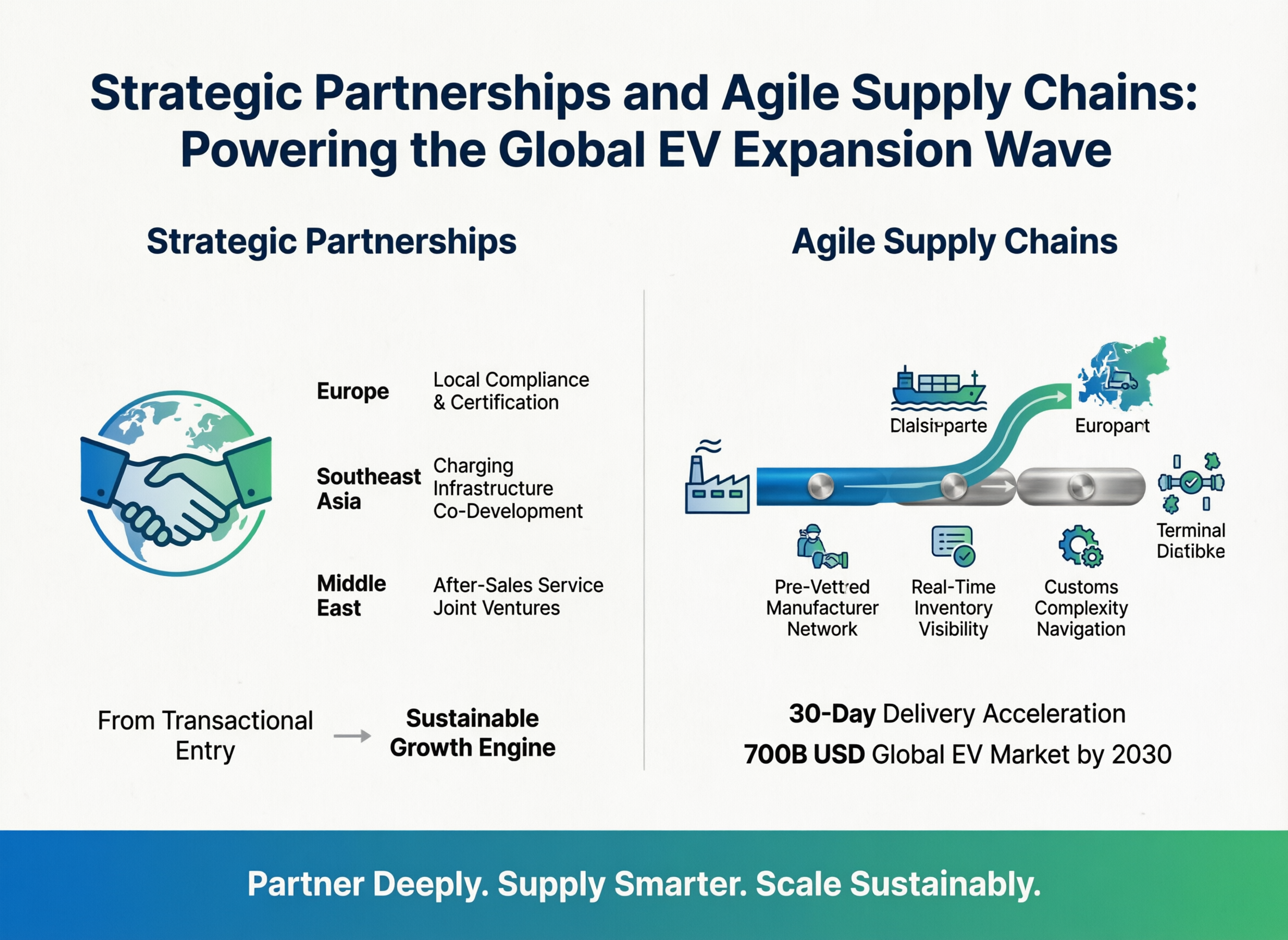 Strategic Partnerships and Agile Supply Chains: Powering the Global EV Expansion Wave
 Region-Specific EVs: The Strategic Engine Behind China’s Global Automotive Surge