Chinese EV Export Surge: Powering Global Mobility with Integrated Supply Chain Solutions
Introduction
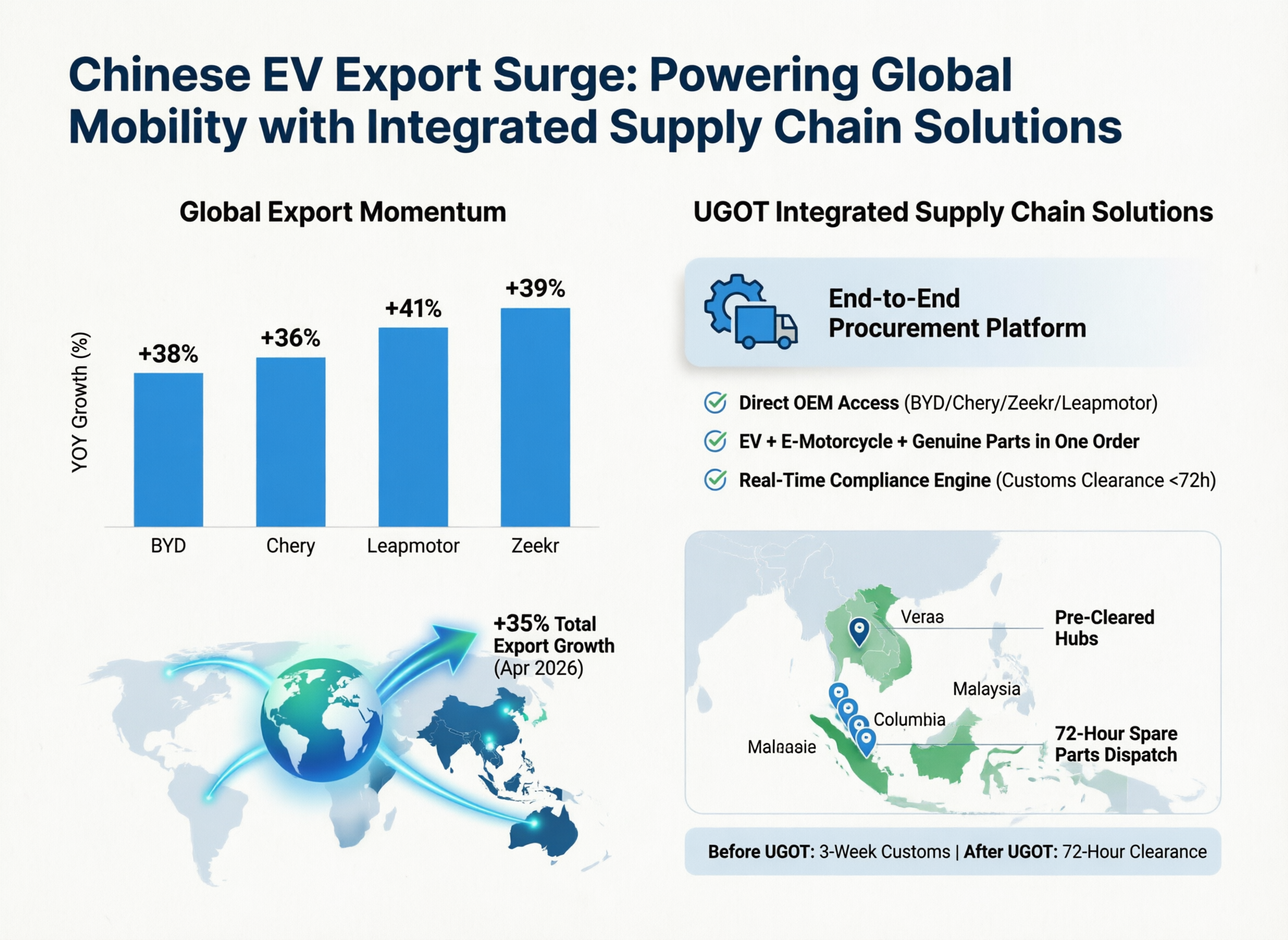
April 2026 marked a watershed moment for China’s electric vehicle (EV) industry, with manufacturers like BYD, Chery, Leapmotor, and Zeekr achieving record-breaking overseas sales. Driven by strategic partnerships and hyper-localized product development, Chinese EV exports grew by over 35% year-on-year, signaling a fundamental shift in global automotive dynamics. This momentum isn’t merely a rebound—it reflects a systemic transformation where emerging markets are rapidly adopting affordable, tailored EV solutions. As supply chains reconfigure and consumer preferences evolve, the industry faces both unprecedented opportunities and complex logistical hurdles.
The Acceleration of Global EV Adoption
China’s EV export boom stems from two converging trends. First, manufacturers are moving beyond generic exports to develop market-specific models—such as compact EVs for Southeast Asian urban corridors and ruggedized variants for African terrain. BYD’s partnership with Thai conglomerates and Chery’s localized assembly plants in Brazil exemplify this precision approach. Second, emerging economies are leapfrogging combustion engines entirely. Countries like Indonesia and Nigeria now prioritize EVs for public transport and last-mile delivery, drawn by lower total cost of ownership and sustainability mandates.
However, this expansion exposes critical friction points. Fragmented regulations across 50+ target markets, volatile shipping costs, and after-sales service gaps threaten scalability. A recent industry survey revealed that 68% of distributors in Africa and Latin America cite spare parts delays as their top barrier to EV adoption. Meanwhile, electric two-wheelers—a $15 billion adjacent market—are often overlooked in export strategies despite surging demand in high-density regions. Without integrated supply chains, even the most innovative vehicles risk stalling at port gates.
Enabling Seamless Global Trade
To convert this export momentum into sustainable growth, stakeholders require end-to-end solutions that bridge manufacturing prowess with on-ground realities. This is where specialized export ecosystems become indispensable. UGOT Global Automotive Export Solutions addresses these complexities through authorized partnerships with industry leaders like BYD and Chery, offering clients direct access to high-demand EV models without intermediary markups. Unlike conventional traders, UGOT integrates new and used vehicles, electric motorcycles, and genuine spare parts into a single procurement platform—ensuring stable supply even during demand spikes.
The platform’s strength lies in its regional agility. In Southeast Asia, UGOT’s pre-cleared inventory hubs in Vietnam and Malaysia slash delivery times by 40%, while its Africa-focused spare parts network guarantees 72-hour dispatch to 12 key countries. For distributors in the Middle East, bundled solutions—such as Zeekr sedans paired with Leapmotor e-scooters—unlock cross-selling opportunities previously hampered by fragmented suppliers. Crucially, UGOT’s embedded compliance engine automatically adapts documentation to local regulations, turning a 3-week customs process into a 72-hour clearance in markets like Saudi Arabia and Colombia.
The Road Ahead
As Chinese EV makers target 50% export growth by 2027, the winners will be those who master not just product innovation but ecosystem orchestration. Emerging markets will increasingly demand ‘mobility bundles’—combining passenger EVs, commercial fleets, and micro-mobility options—supported by bulletproof logistics. UGOT’s model exemplifies this shift: by unifying supply chain resilience with market-specific customization, it transforms export volatility into predictable growth. For global distributors, this means faster time-to-revenue; for manufacturers, it unlocks scalable pathways to 100+ new markets. In an industry where delivery speed and parts availability now dictate brand loyalty, such integration isn’t optional—it’s the engine of the next mobility revolution.
Related Posts
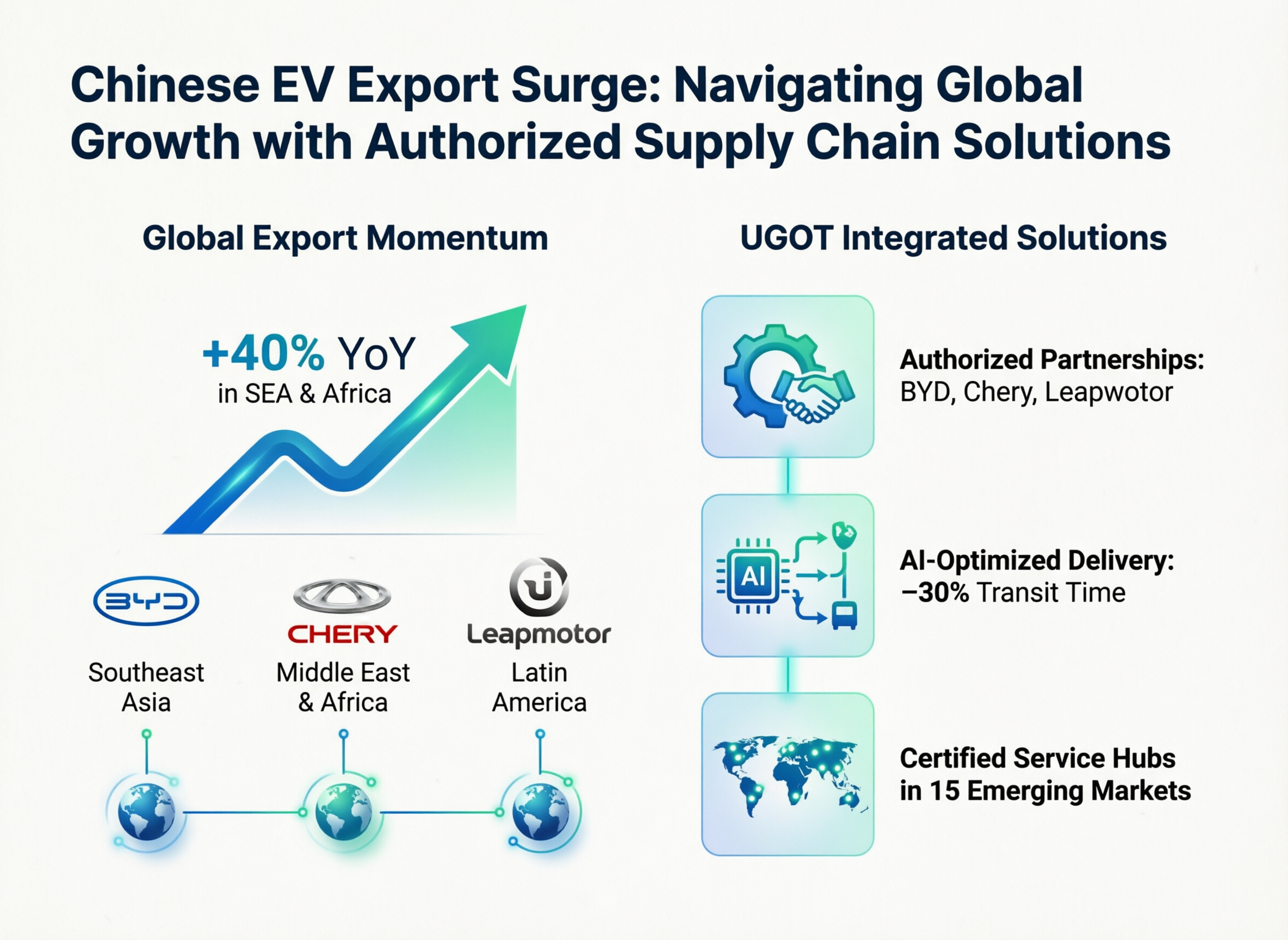 Chinese EV Export Surge: Navigating Global Growth with Authorized Supply Chain Solutions
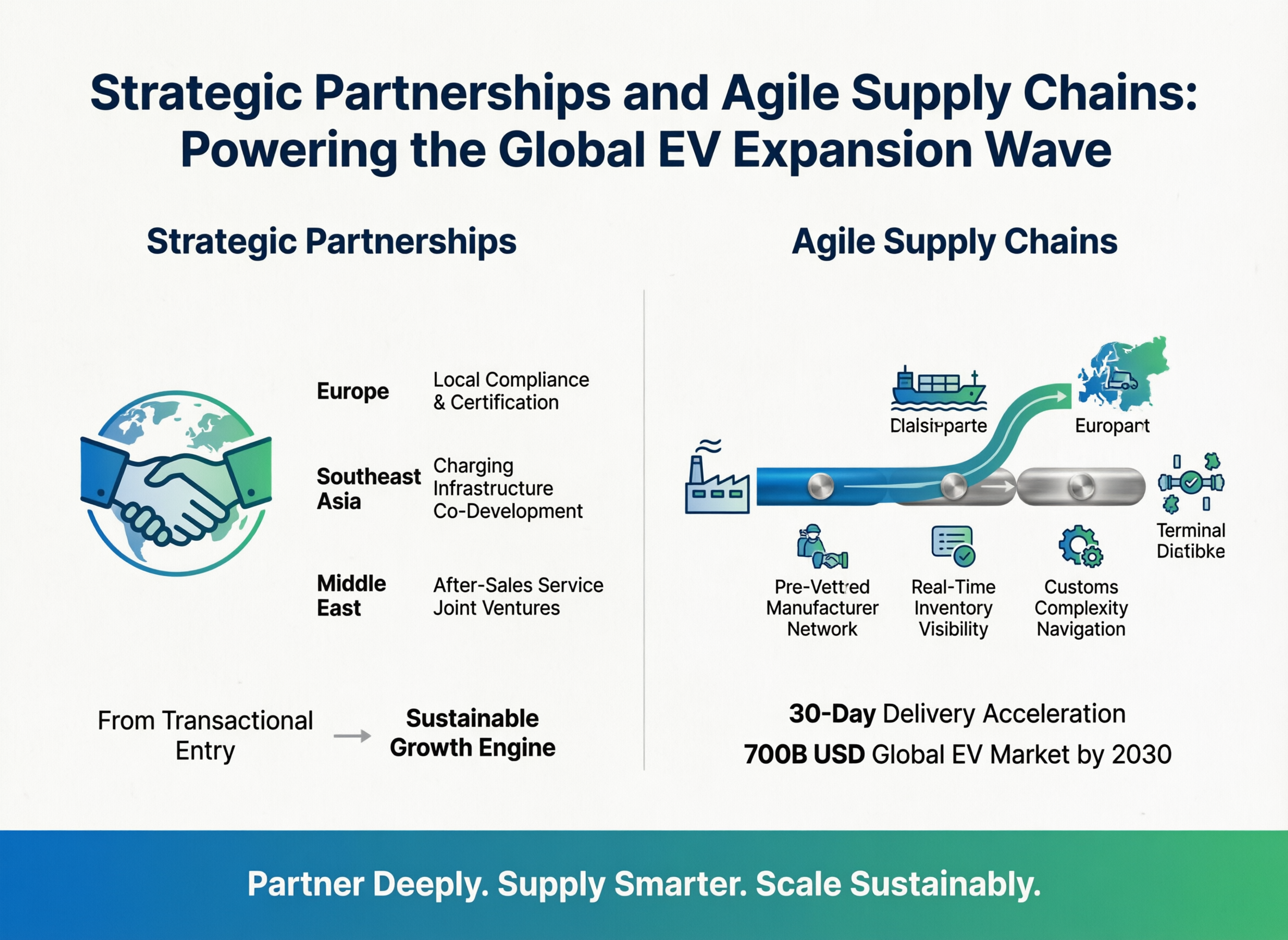 Strategic Partnerships and Agile Supply Chains: Powering the Global EV Expansion Wave
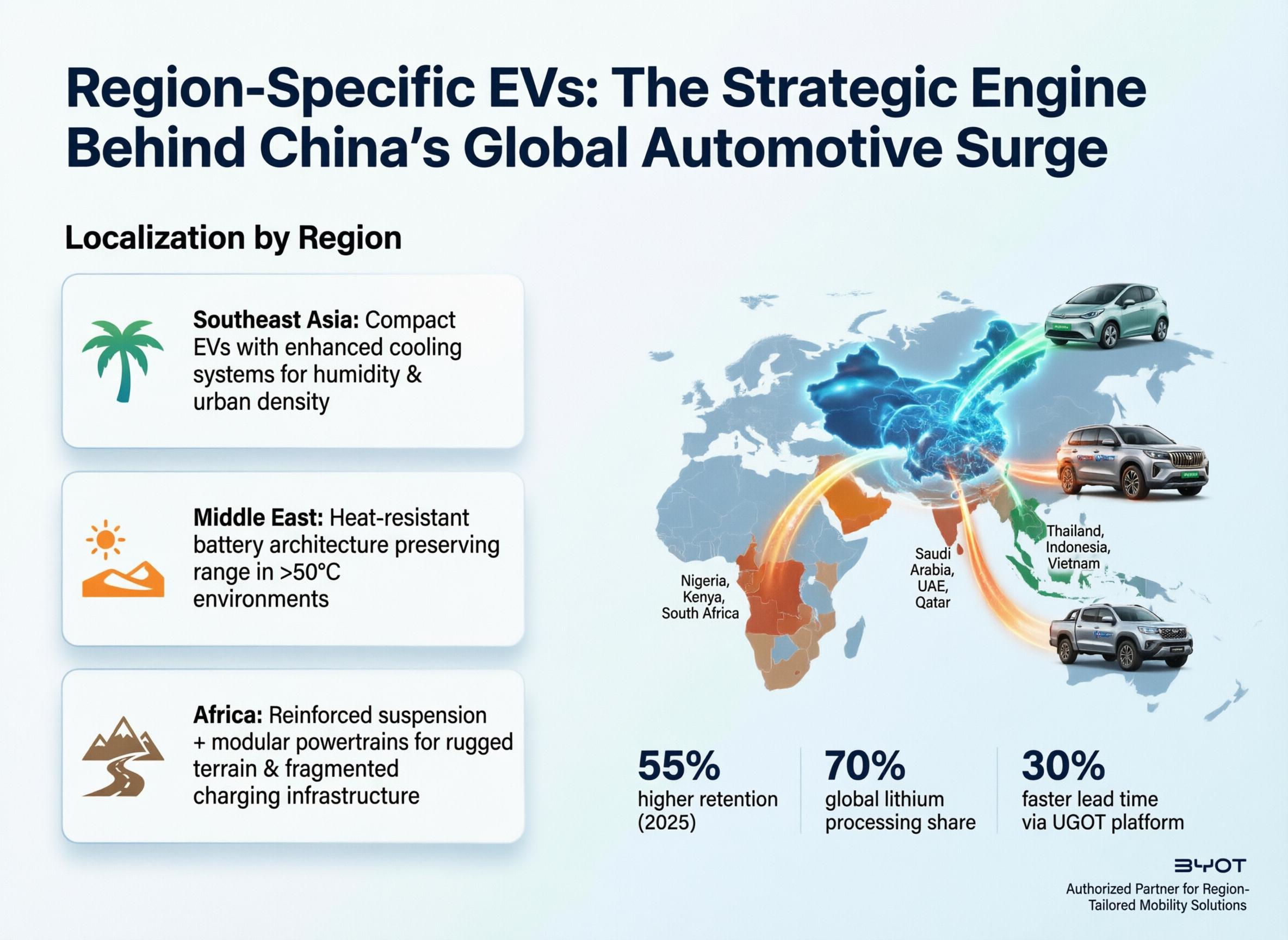 Region-Specific EVs: The Strategic Engine Behind China’s Global Automotive Surge