Region-Specific Vehicles: The Engine of Chinese Automakers’ Global Expansion and the Export Solutions Powering It
Introduction
The global automotive landscape is undergoing a strategic metamorphosis. Chinese automakers, leveraging their manufacturing prowess and cost efficiencies, are pivoting decisively toward developing region-specific vehicles—a move designed to replicate Toyota’s iconic ‘Yaris Moment’ and accelerate overseas market penetration. This shift transcends mere export volume growth; it represents a fundamental recalibration of global strategy, where deep localization—tailoring everything from powertrains to cabin features to regional preferences—becomes the cornerstone of competitiveness. As emerging markets from Southeast Asia to Africa demand solutions aligned with their unique infrastructure, climate, and consumer behavior, this trend is redefining how automotive globalization unfolds.
The Localization Imperative: Beyond Cost Advantage
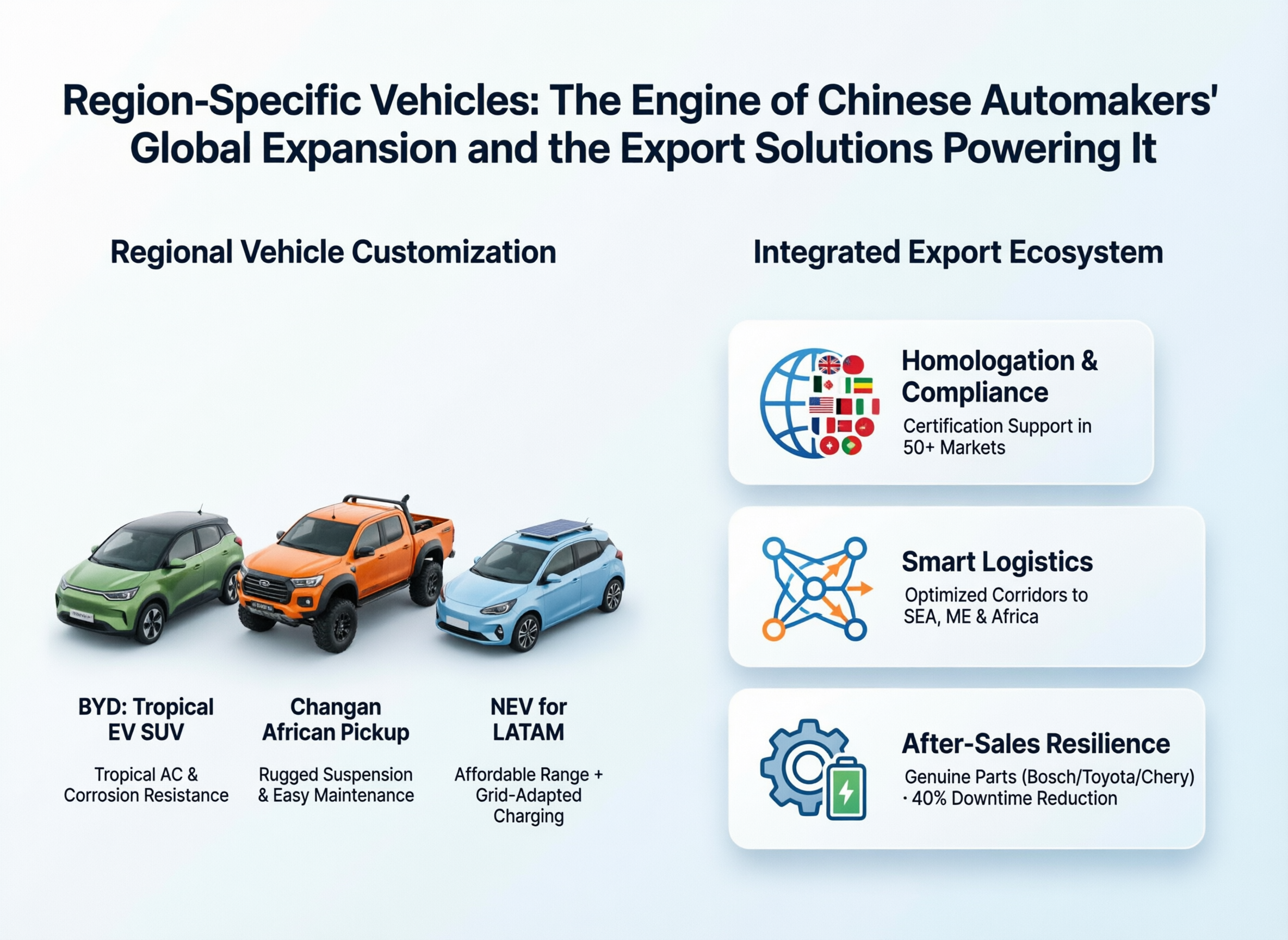
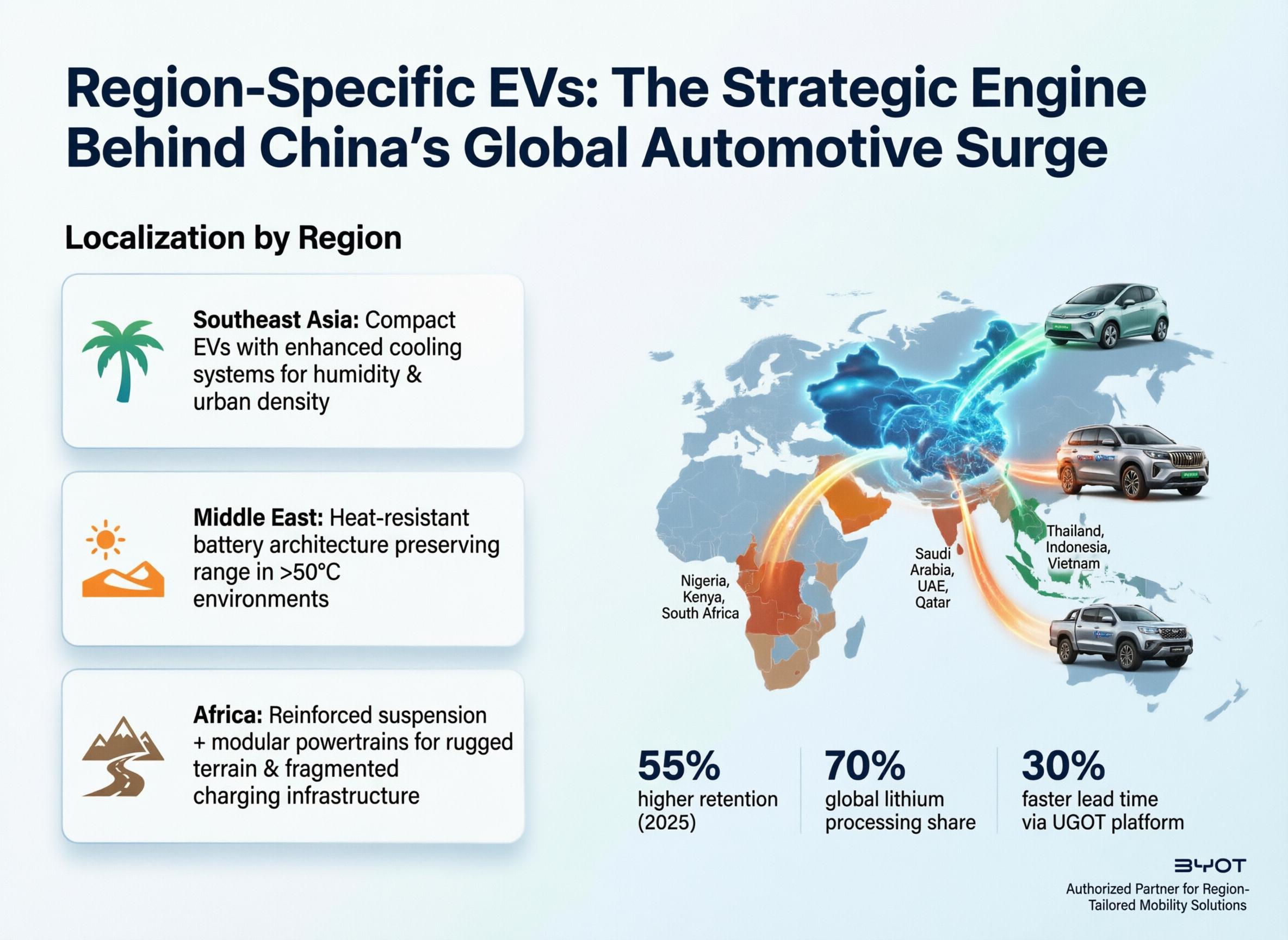
Historically, Chinese automotive exports relied heavily on price competitiveness. Today, industry leaders recognize that sustainable global growth requires nuanced adaptation. Consider Southeast Asia’s tropical climates and congested urban centers: vehicles here demand robust air conditioning, compact dimensions, and corrosion-resistant materials. In contrast, African markets prioritize rugged suspensions, high ground clearance, and simplified maintenance for challenging terrains. Meanwhile, Latin American consumers increasingly seek affordable new energy vehicles (NEVs) compatible with evolving charging infrastructures.
This hyper-localization strategy mirrors Toyota’s success with the Yaris—a model engineered specifically for European driving dynamics and regulatory frameworks, which became a benchmark for regional adaptation. Chinese OEMs like BYD and Changan are now applying similar principles, developing NEVs with extended battery ranges for Middle Eastern heat or reinforced chassis for African rural roads. Crucially, they combine these tailored designs with inherent cost advantages from integrated supply chains, creating a potent value proposition. However, this approach introduces complex challenges: fragmented regulatory compliance, volatile logistics, and the critical need for reliable after-sales ecosystems to maintain brand trust in distant markets.
Enabling Global Growth: The Role of Integrated Export Ecosystems
As customization intensifies, the industry’s success hinges not just on vehicle design but on the infrastructure supporting its global journey. Distributors in emerging markets face mounting pressure to source compliant, market-ready inventory swiftly while ensuring long-term serviceability—a gap where specialized export solutions prove indispensable.
This is where platforms like UGOT Global Vehicle Export Solutions bridge the strategy-execution divide. UGOT’s one-stop procurement ecosystem directly addresses the pain points of region-specific expansion. By partnering with leading Chinese manufacturers—including BYD for tropical-optimized electric SUVs and Changan for rugged, fuel-efficient pickups tailored to African conditions—UGOT streamlines access to vehicles engineered for local realities. Their platform handles end-to-end complexities: from navigating homologation requirements in 50+ countries to ensuring rapid delivery via optimized logistics corridors.
Equally vital is UGOT’s integrated after-sales framework. Recognizing that downtime erodes consumer confidence in new markets, they provide guaranteed access to genuine spare parts from Bosch, Toyota, and Chery—critical for maintaining the performance of specialized components like reinforced suspensions or high-heat battery systems. This ecosystem doesn’t just move vehicles; it sustains them, reducing service interruptions by up to 40% for distributors in Southeast Asia and the Middle East while building brand reliability where it matters most.
The Road Ahead: Collaboration as the Catalyst
The future of automotive globalization lies in symbiotic partnerships. As Chinese automakers deepen their localization strategies—projected to drive 65% of their export growth by 2030—the enablers of this expansion will be equally transformative. Solutions like UGOT exemplify how specialized export platforms can amplify OEM ambitions by converting regional insights into executable supply chains.
For industry stakeholders, the message is clear: winning globally requires thinking locally, but executing globally demands partners who master both dimensions. UGOT’s commitment to agile procurement, compliance assurance, and after-sales resilience positions it not merely as a vendor, but as a strategic ally in building sustainable automotive ecosystems worldwide. In this new era, the ‘Yaris Moment’ isn’t just about a single model—it’s about the entire infrastructure that turns regional vision into global reality.
Related Posts
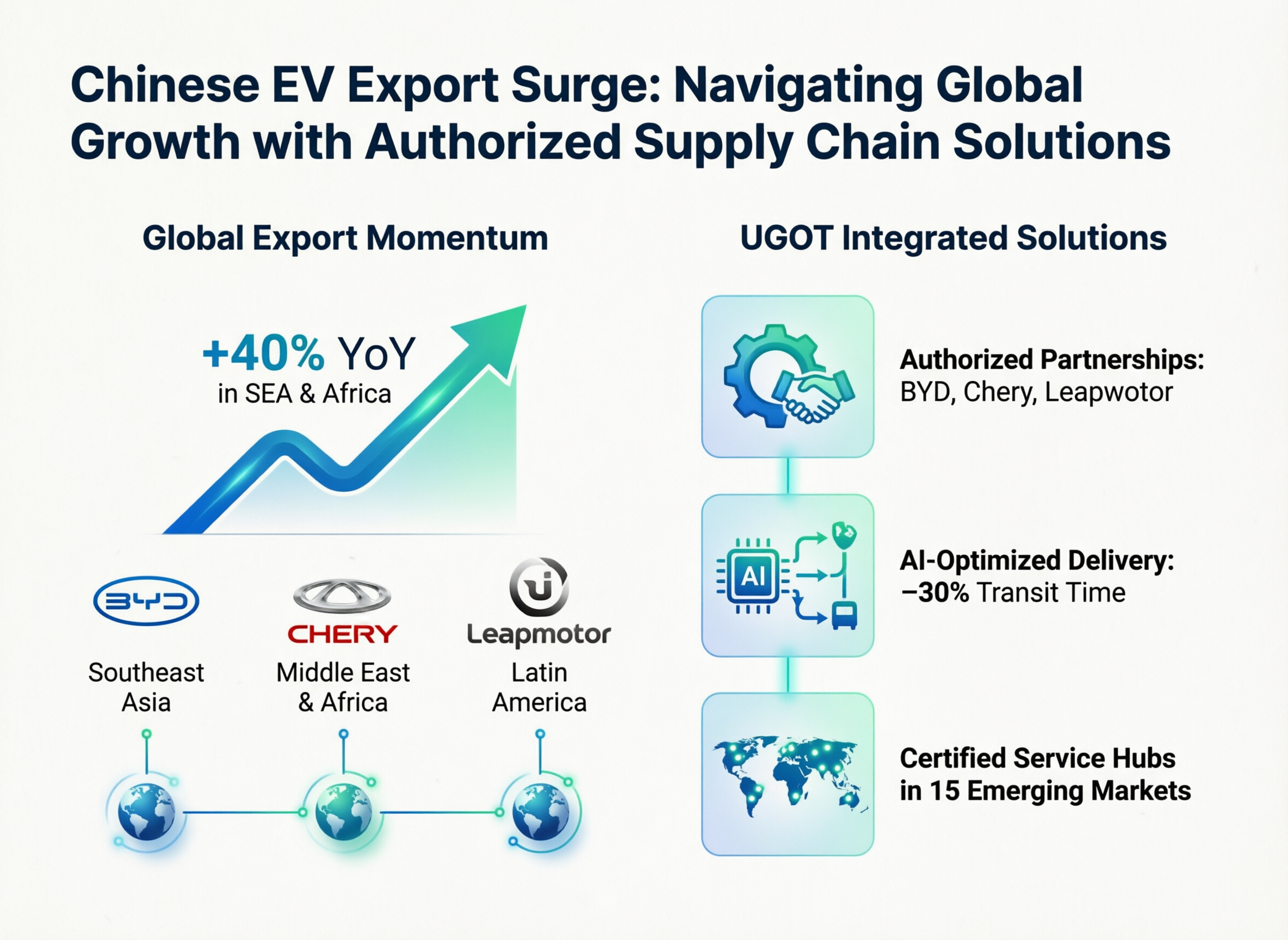 Chinese EV Export Surge: Navigating Global Growth with Authorized Supply Chain Solutions
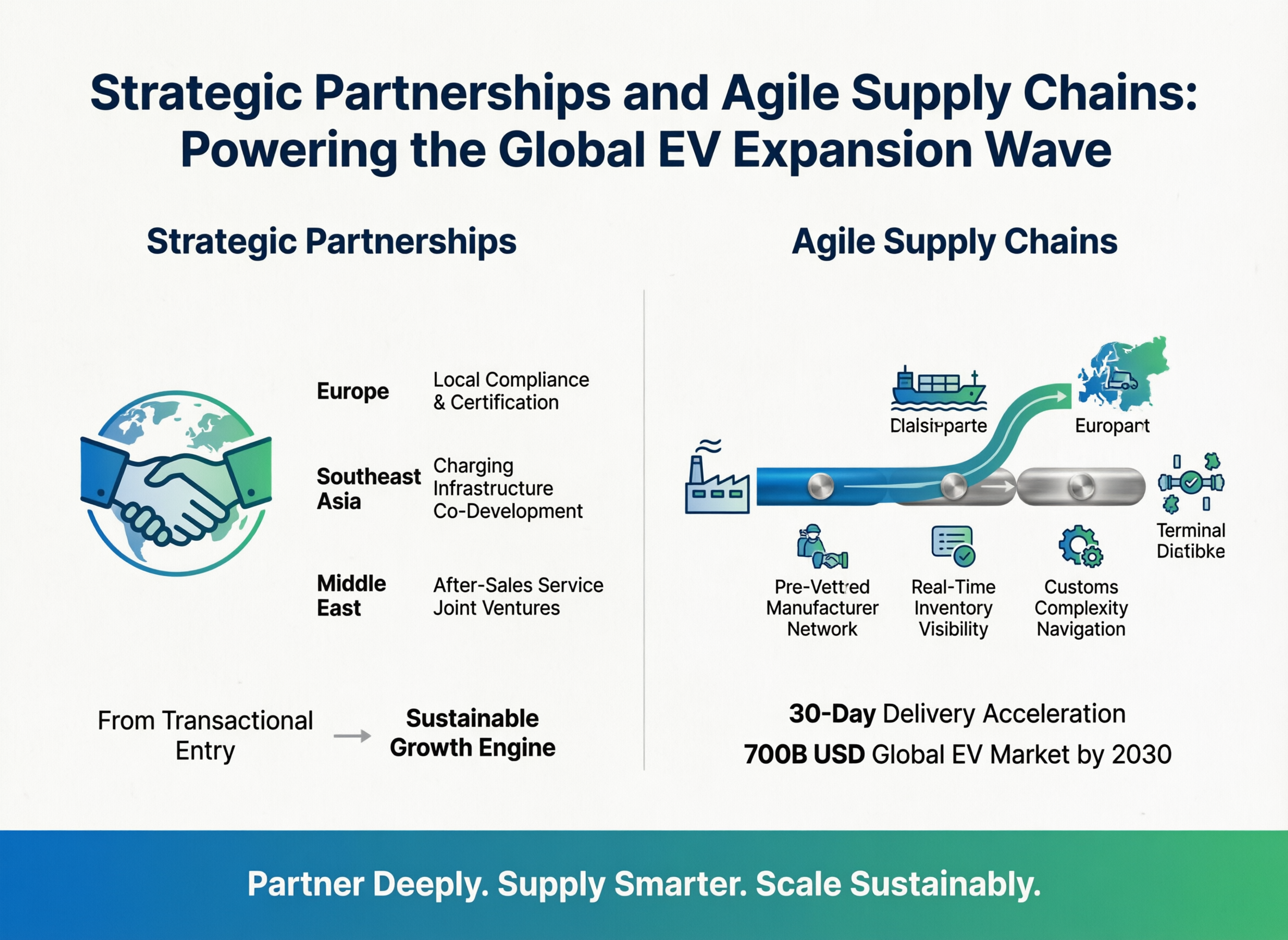 Strategic Partnerships and Agile Supply Chains: Powering the Global EV Expansion Wave
 Region-Specific EVs: The Strategic Engine Behind China’s Global Automotive Surge