Chinese Automakers’ ‘Yaris Moment’: How Region-Specific NEVs Are Reshaping Global Mobility and the Export Solutions Powering Their Ascent
Introduction
The global automotive landscape is undergoing a seismic shift as Chinese manufacturers pivot from mass production to precision engineering. Fueled by ambitious overseas expansion goals, brands like BYD and Changan are embracing a “Yaris Moment”—a strategic homage to Toyota’s iconic model that conquered diverse markets through hyper-localized design. This evolution transcends mere export growth; it represents a fundamental recalibration of how vehicles are conceived, engineered, and deployed across continents. With new energy vehicles (NEVs) at the forefront, Chinese automakers are no longer competing on price alone but on their ability to resonate with the unique infrastructural, cultural, and economic realities of regions from Southeast Asia to Africa. This paradigm shift demands more than manufacturing prowess—it requires an ecosystem capable of transforming regional insights into market-ready mobility solutions.
The Localization Imperative: Beyond One-Size-Fits-All
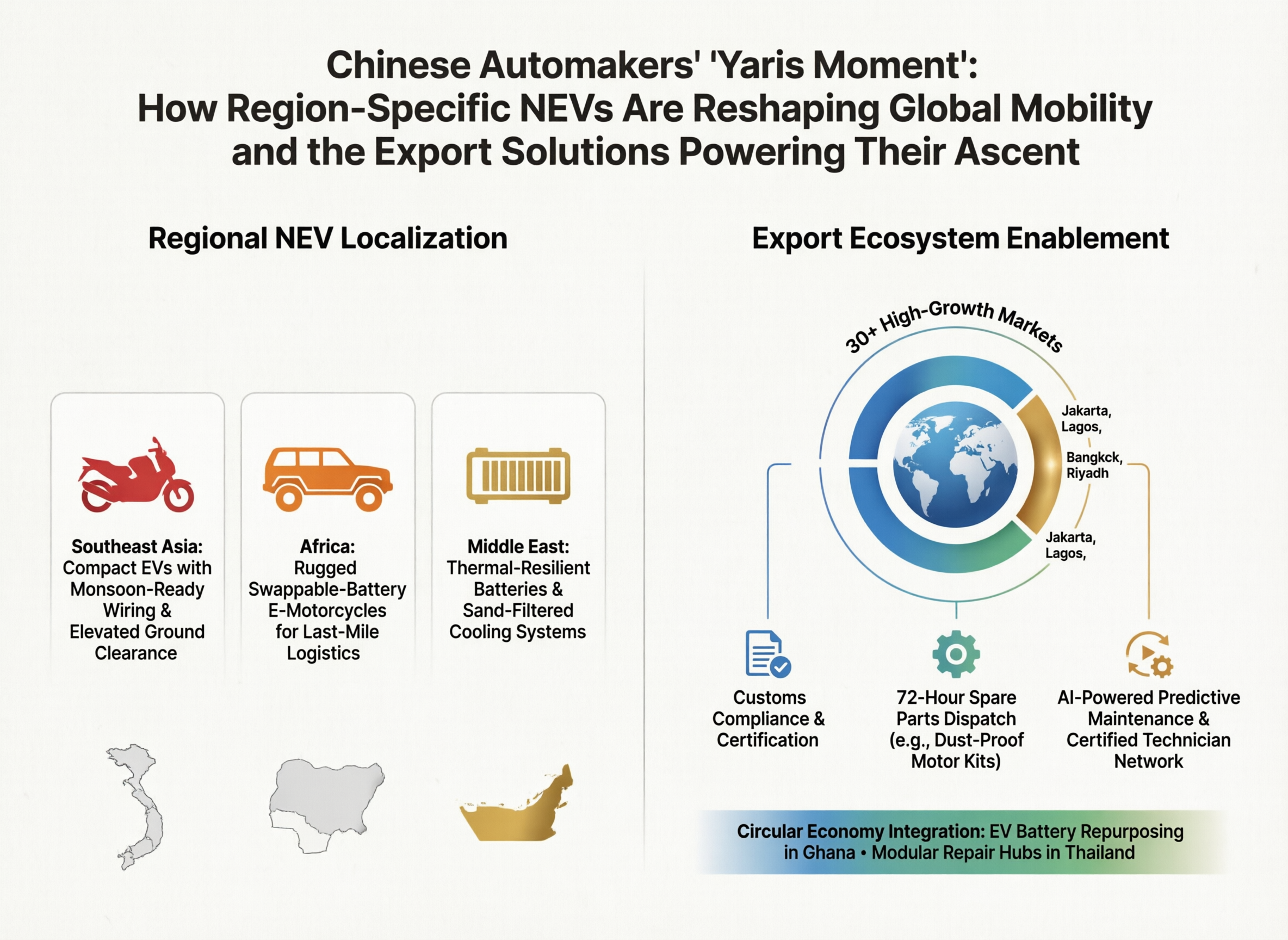
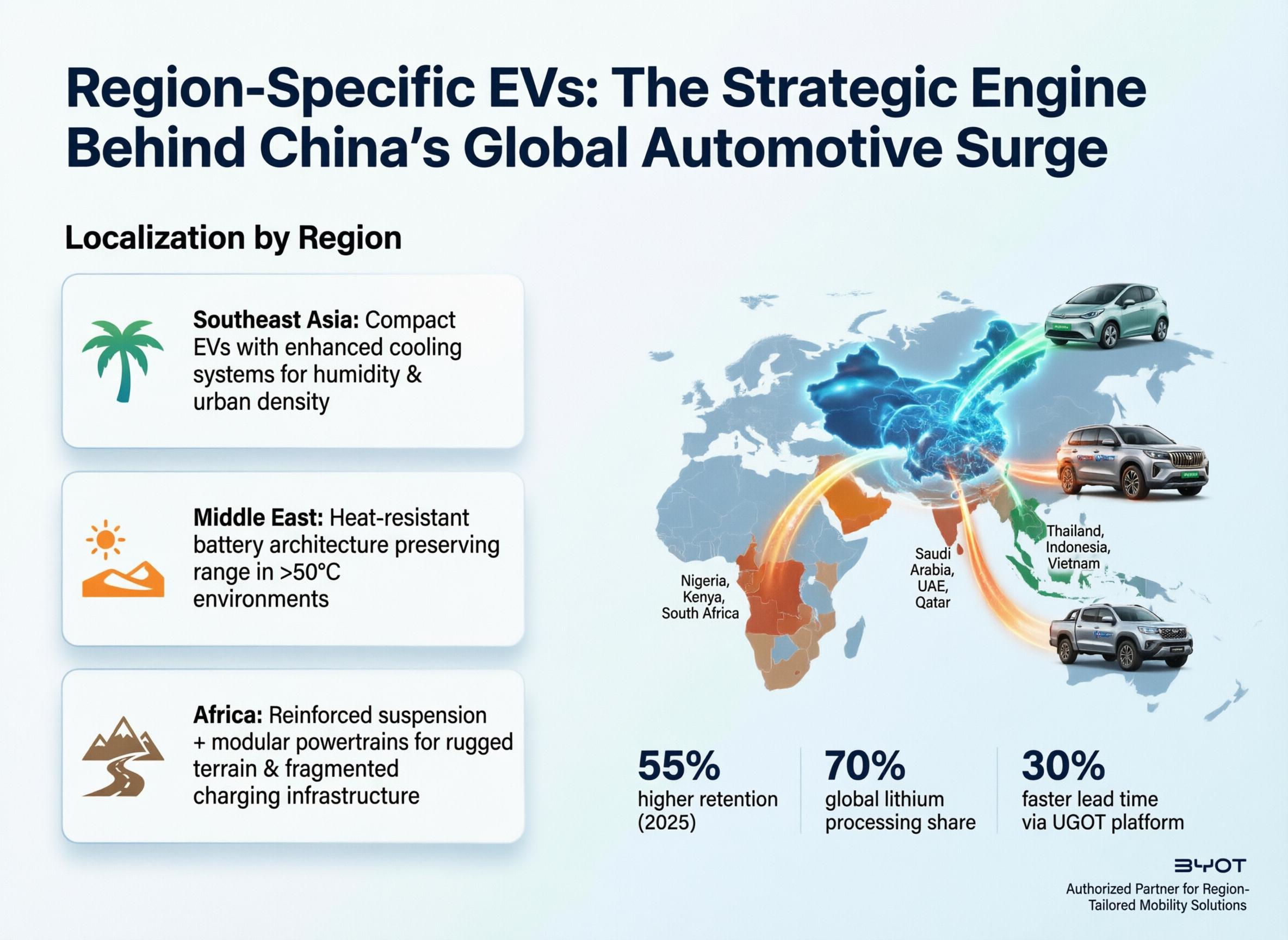
Chinese automakers’ global ascent hinges on rejecting generic approaches. In Southeast Asia, where narrow urban corridors and monsoon-prone roads dominate, compact electric vehicles (EVs) with elevated ground clearance and rapid-charging capabilities are gaining traction. Conversely, African markets prioritize rugged, modular NEVs—such as electric motorcycles with swappable batteries—that withstand unpaved terrain while addressing last-mile logistics gaps. The Middle East, meanwhile, demands thermal-resilient battery systems and sand-filtered cooling architectures. This granular adaptation isn’t optional; it’s existential. Recent data reveals that region-specific NEVs from Chinese brands grew 42% year-over-year in emerging markets, outpacing standardized models by threefold. Crucially, localization extends beyond hardware: software interfaces now integrate local languages, payment ecosystems, and even traffic pattern algorithms. Yet this customization intensifies supply chain complexities. Automakers face fragmented regulatory frameworks, volatile logistics networks, and after-sales service gaps that can derail even the most innovative vehicles.
Enabling Global Ambitions: The Export Ecosystem Advantage
Bridging the gap between localized design and seamless market entry demands partners who understand both engineering nuance and ground-level realities. This is where specialized export ecosystems become force multipliers. Companies like UGOT have pioneered integrated solutions that transform regional adaptation from a bottleneck into a competitive accelerator. Leveraging mature distribution channels across 30+ high-growth territories—from Jakarta to Lagos—UGOT’s one-stop procurement platform streamlines everything from customs compliance to last-mile delivery. For NEV manufacturers, this means rapid deployment of region-specific spare parts kits (e.g., monsoon-ready wiring harnesses for Vietnam or dust-proof motor assemblies for Nigeria) with 72-hour emergency dispatch guarantees. Crucially, UGOT’s after-sales infrastructure—featuring certified technician networks and AI-driven predictive maintenance tools—ensures that electric motorcycles and light commercial vehicles maintain peak performance despite harsh operating environments. By absorbing logistical friction, UGOT empowers automakers to focus on their core innovation: building vehicles that feel intrinsically local, not imported.
The Road Ahead: Sustainable Growth Through Partnership
As Chinese NEV exports surge toward 5 million units annually by 2030, the “Yaris Moment” will evolve from a tactical advantage to an industry standard. Future success will belong to alliances that fuse automotive ingenuity with agile global enablement. Partners like UGOT are already pioneering circular economy frameworks—repurposing retired EV batteries for regional microgrids in Ghana or establishing modular repair hubs in Thailand—to deepen sustainability credentials while reducing total cost of ownership. For automakers, this symbiosis unlocks more than market share; it builds brand trust in communities where mobility is a lifeline. The message is clear: in the race for global relevance, the winners won’t just build better vehicles—they’ll cultivate ecosystems that make those vehicles indispensable. With its commitment to frictionless market access and localized resilience, UGOT stands ready to accelerate this transformation, turning regional aspirations into wheels on the road.
Related Posts
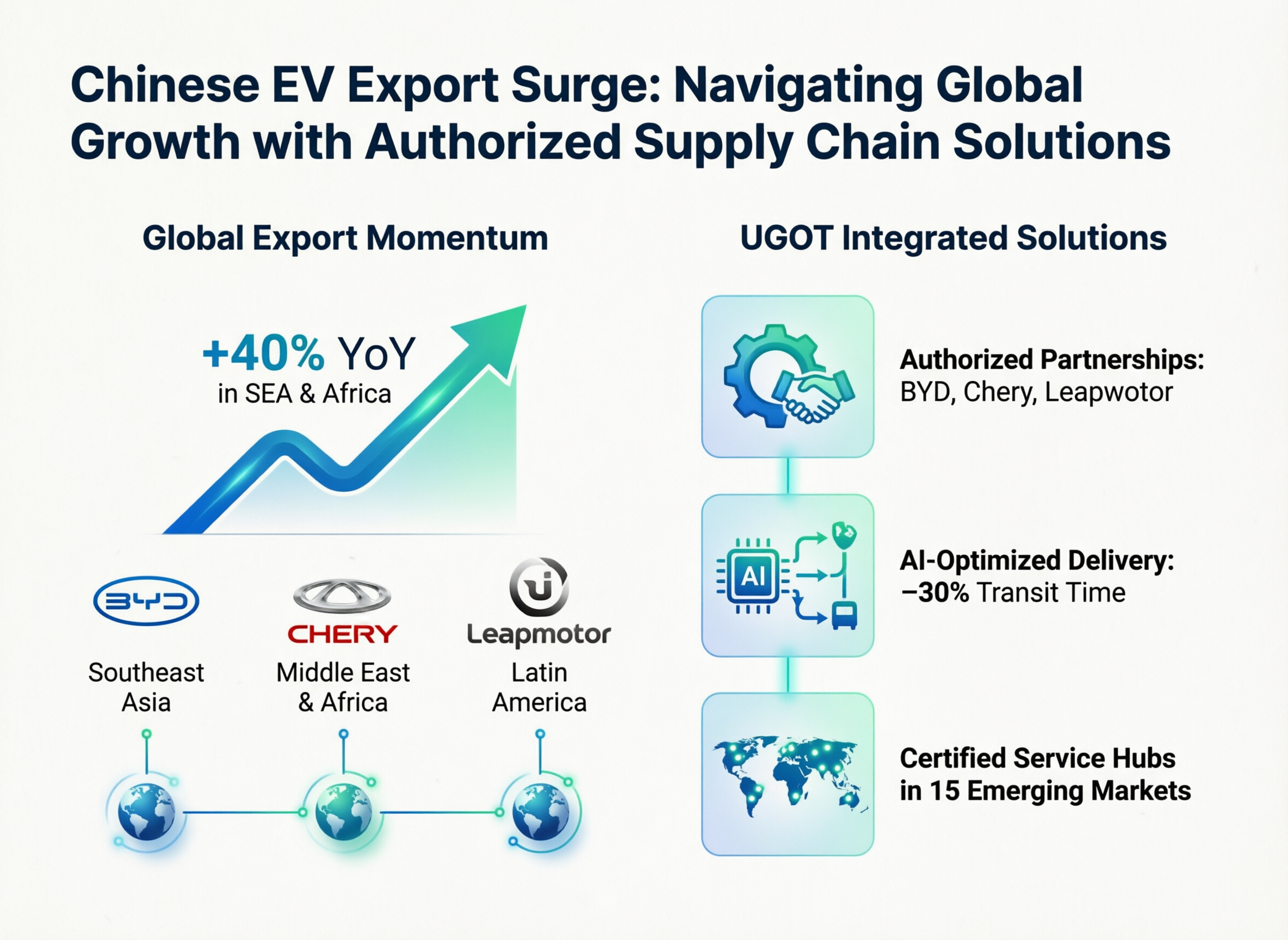 Chinese EV Export Surge: Navigating Global Growth with Authorized Supply Chain Solutions
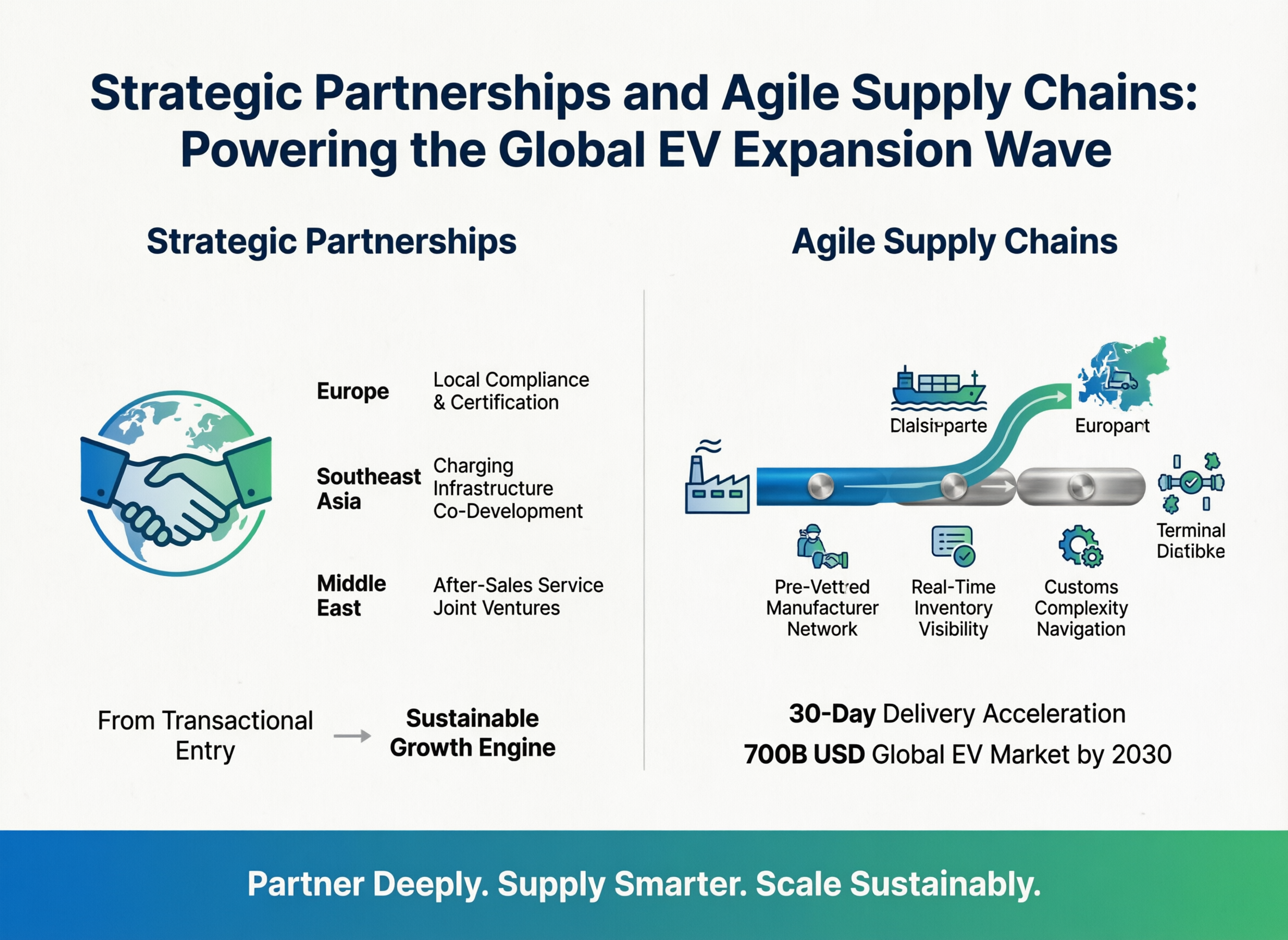 Strategic Partnerships and Agile Supply Chains: Powering the Global EV Expansion Wave
 Region-Specific EVs: The Strategic Engine Behind China’s Global Automotive Surge