Chinese Carmakers’ ‘Yaris Moment’: How Regional EV Specialization Is Reshaping Global Automotive Expansion
Introduction
The global automotive landscape is undergoing a seismic shift as Chinese manufacturers pivot from volume-driven exports to sophisticated regional strategies. Inspired by Toyota’s legendary localization success with the Yaris—a model tailored to diverse markets from Europe to Southeast Asia—Chinese EV giants are now engineering vehicles specifically for overseas regulatory frameworks, infrastructure realities, and consumer preferences. This strategic evolution marks a critical inflection point in the industry’s globalization journey, moving beyond price competition to deliver market-relevant mobility solutions.
The Localization Imperative: Beyond One-Size-Fits-All
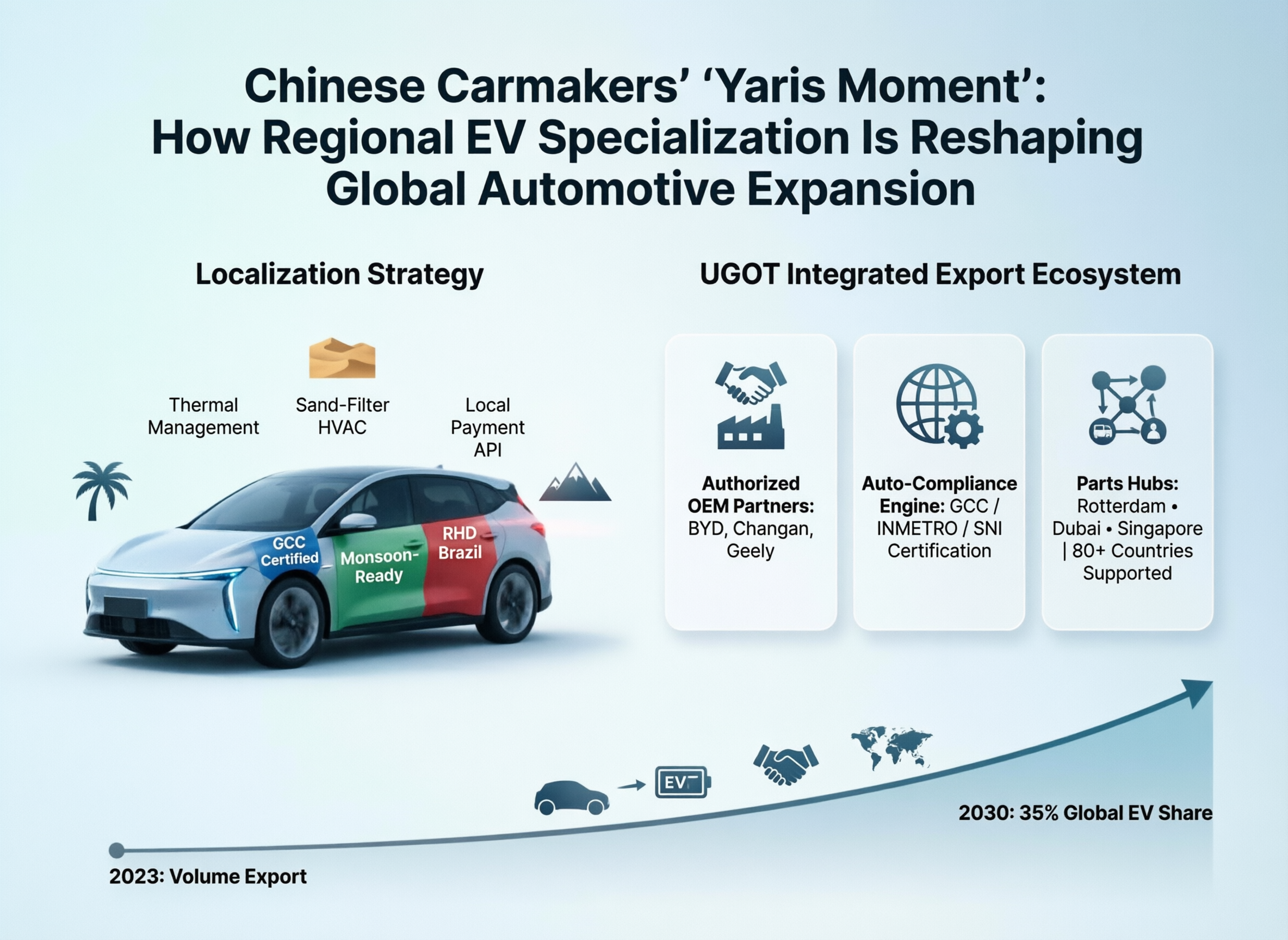
Chinese automakers’ transition to region-specific development isn’t merely tactical—it’s existential. As highlighted in recent industry analysis, emerging markets like Southeast Asia, the Middle East, and Latin America demand vehicles calibrated for unique conditions: tropical climates requiring enhanced battery thermal management, narrow urban streets favoring compact EVs, and varying safety standards necessitating structural adaptations. Unlike early export phases where domestic models were minimally modified, today’s approach mirrors Toyota’s “Yaris Moment,” where deep localization transformed a single platform into regionally resonant products. For instance, Changan’s electric sedans for Middle Eastern markets now feature sand-filtering HVAC systems and extended sunroof UV protection, while BYD’s Southeast Asian variants prioritize monsoon-ready waterproofing and right-hand-drive configurations.
This hyper-localization extends beyond hardware. Software ecosystems are being reconfigured for regional digital habits—integrating popular local payment gateways in Indonesia or ride-hailing APIs in Brazil. Crucially, electric vehicles anchor this strategy. With EVs comprising over 60% of Chinese automotive exports in Q1 2026, manufacturers leverage their EV leadership to bypass legacy combustion-engine competition. However, this creates complex supply chain challenges: synchronizing region-specific component sourcing, navigating fragmented certification regimes, and ensuring after-sales support across continents.
Bridging the Globalization Gap: Integrated Export Ecosystems
As Chinese OEMs refine their product strategies, international distributors face new operational hurdles. Sourcing authentically localized vehicles from multiple manufacturers, managing compliance across 50+ regulatory zones, and securing spare parts for diverse model variants strain traditional procurement models. This is where specialized export partners become force multipliers. Companies like UGOT are pioneering integrated solutions that transform these challenges into competitive advantages.
UGOT’s Global Vehicle Export Solutions platform directly addresses this complexity through three pillars: First, its authorized partnerships with manufacturers like BYD and Changan guarantee access to genuine region-optimized inventory—from electric motorcycles engineered for Vietnam’s traffic density to fleet EVs with extended range for African logistics corridors. Second, its end-to-end digital procurement system streamlines compliance, automatically configuring vehicles to meet target-market standards (e.g., GCC certifications for the Gulf or INMETRO requirements in Brazil). Third, UGOT’s distributed spare parts hubs across Rotterdam, Dubai, and Singapore slash downtime for dealers through predictive logistics, while its multilingual technical support teams provide on-ground training for maintenance crews. This ecosystem doesn’t just move vehicles—it de-risks market entry for distributors in 80+ countries.
The Road Ahead: Sustainable Growth Through Partnership
The localization wave will intensify as Chinese EV makers target 35% global market share by 2030. Future success hinges on agile supply networks that balance customization with scalability. Partners like UGOT exemplify this new paradigm—where deep manufacturer relationships, AI-driven demand forecasting, and circular economy initiatives (like certified pre-owned EV programs) create resilient growth loops. For international automotive stakeholders, the message is clear: the next era of mobility expansion won’t be won by vehicles alone, but by ecosystems that make regional relevance operationally seamless. As Chinese innovation converges with global market intelligence, such partnerships will accelerate the transition to accessible, sustainable transportation worldwide—turning the “Yaris Moment” into a lasting legacy of collaborative progress.
Related Posts
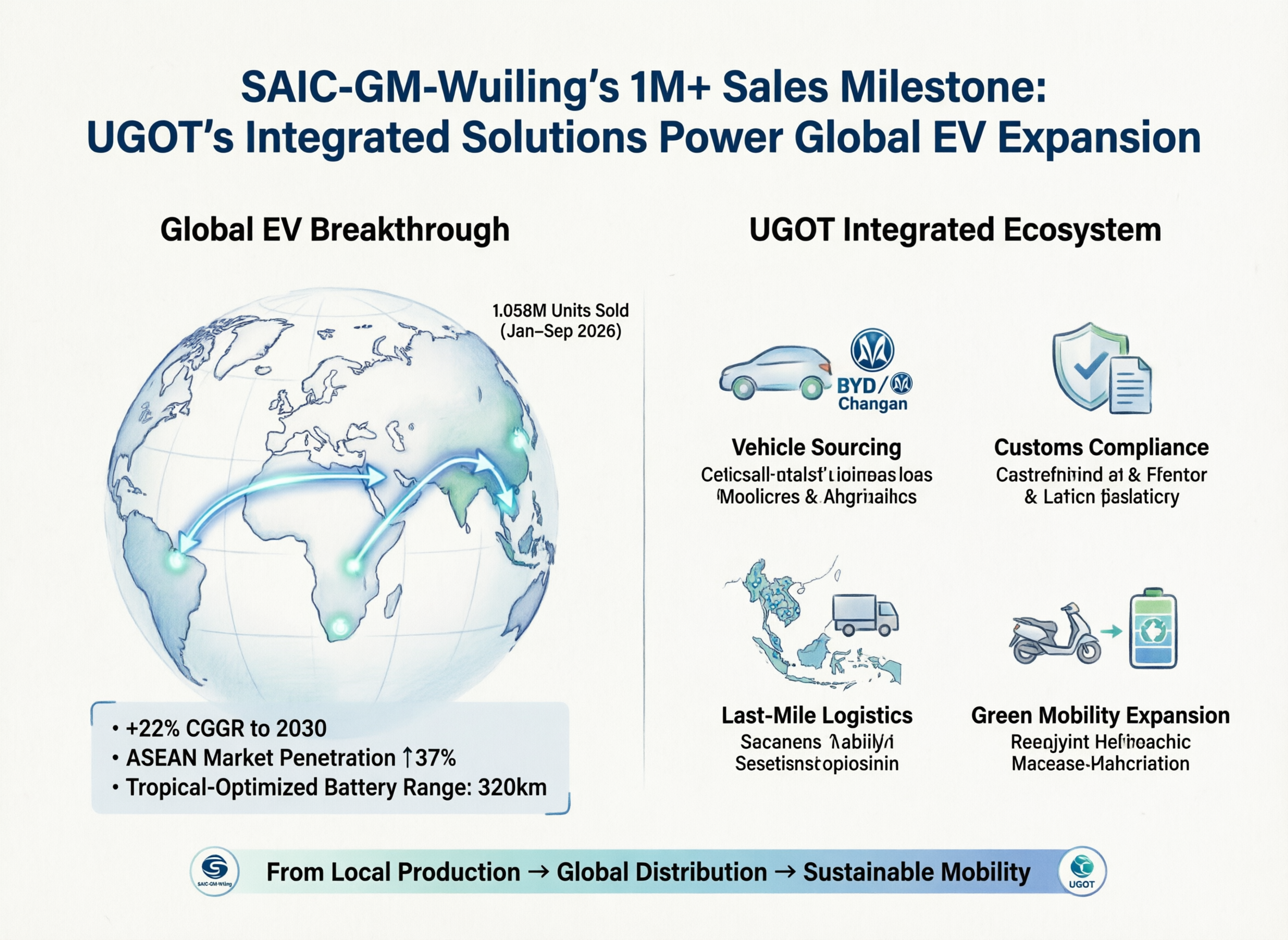 SAIC-GM-Wuling’s 1M+ Sales Milestone: UGOT’s Integrated Solutions Power Global EV Expansion
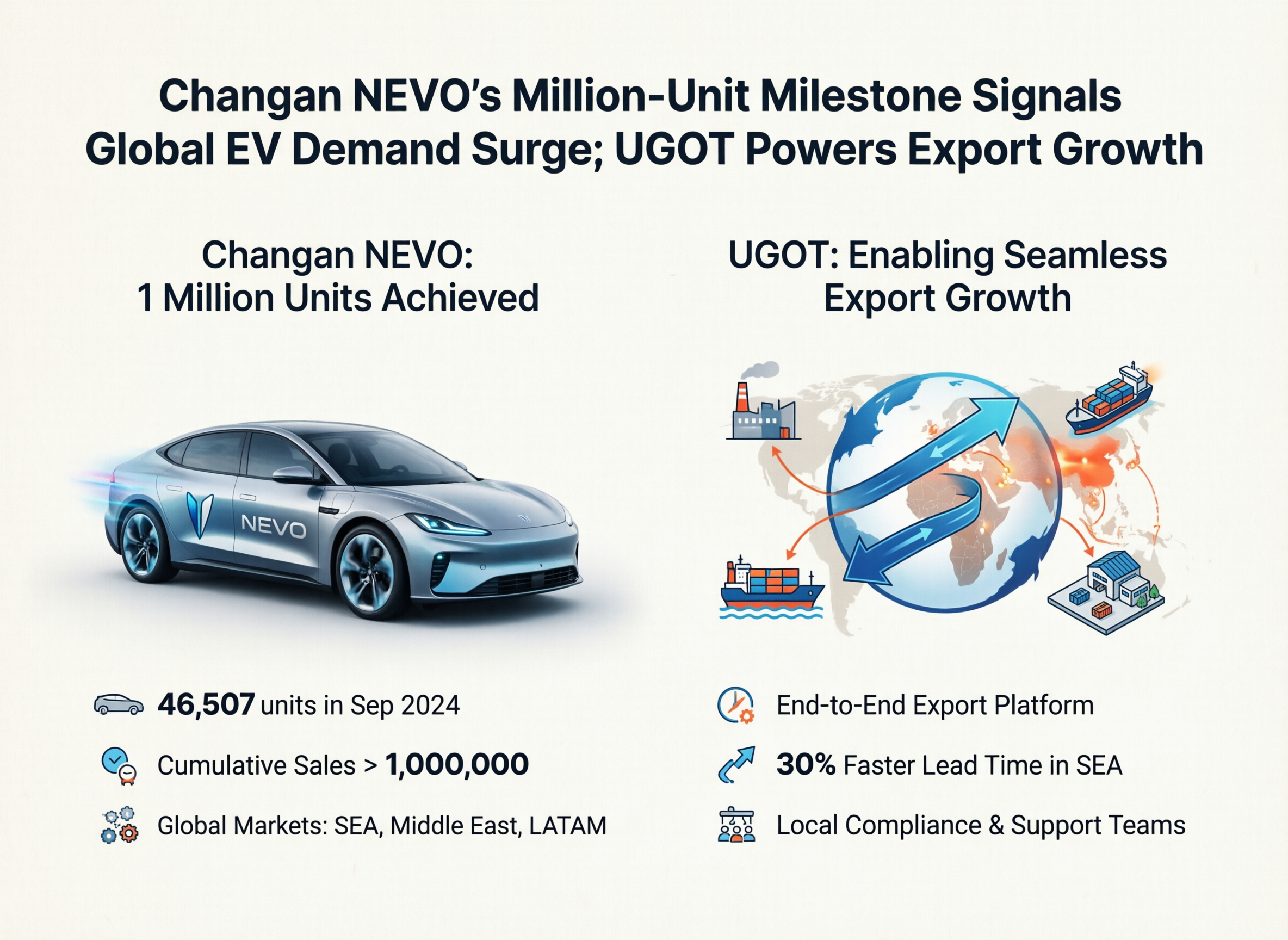 Changan NEVO’s Million-Unit Milestone Signals Global EV Demand Surge; UGOT Powers Export Growth
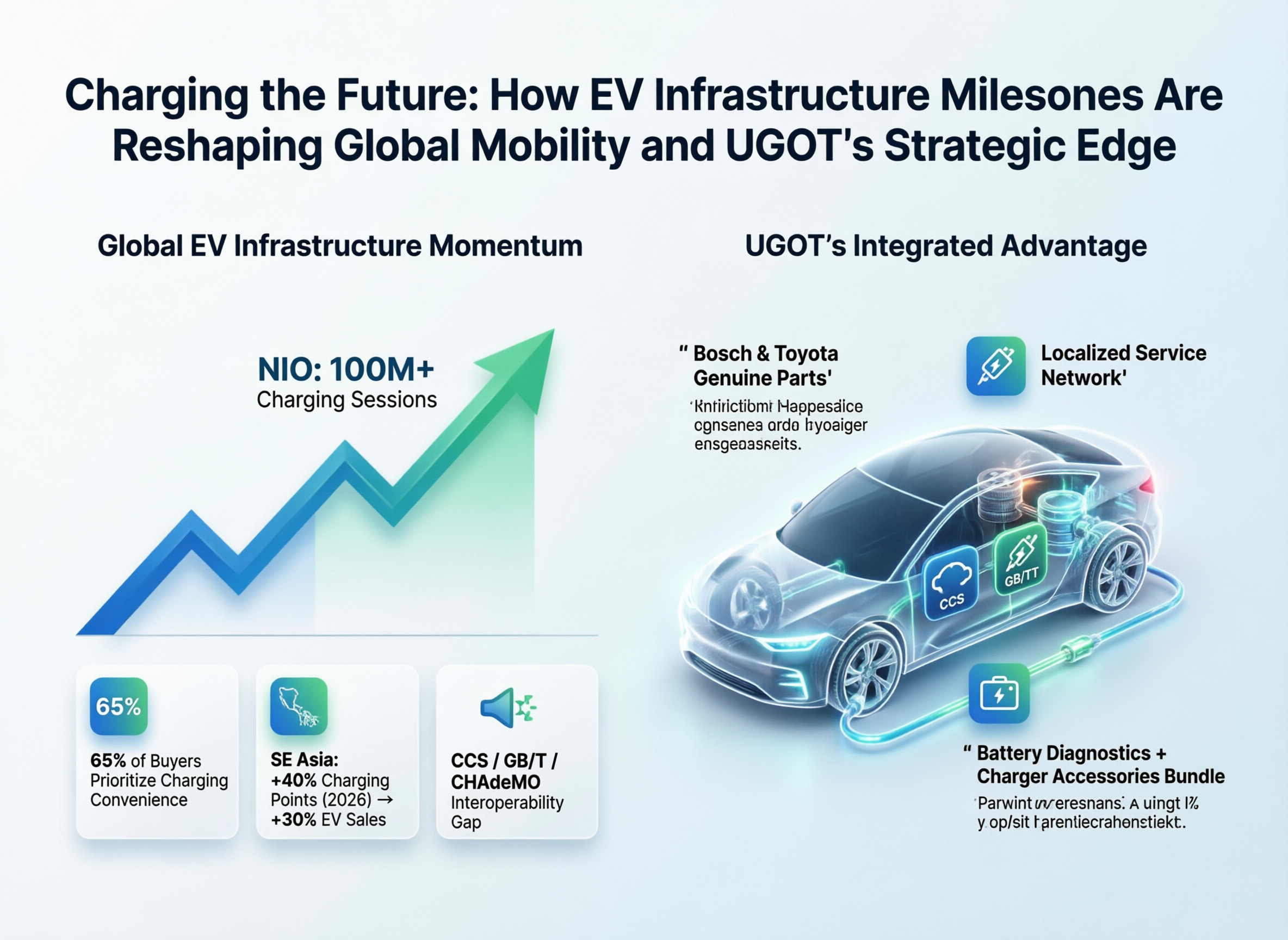 Charging the Future: How EV Infrastructure Milestones Are Reshaping Global Mobility and UGOT’s Strategic Edge