Strategic Partnerships and Supply Chain Resilience: Powering Chinese EV Makers’ European Expansion
Introduction
The European automotive landscape is undergoing a seismic shift as Chinese electric vehicle (EV) manufacturers accelerate their global footprint. Recent moves, such as Geely’s strategic partnership in Austria, underscore a broader trend: automakers are prioritizing localized alliances to navigate Europe’s complex regulatory environment and capture growing demand for sustainable mobility. This pivot reflects a maturing strategy where market entry transcends mere exports, focusing instead on embedded regional presence and operational agility. As Europe’s EV adoption surges—with new energy vehicle registrations projected to grow 15% annually through 2030—the race is on for manufacturers to build resilient, compliance-ready ecosystems.
The Partnership Imperative in Mature Markets
European expansion demands more than competitive pricing or cutting-edge technology. Success hinges on mastering three interconnected challenges: regulatory complexity, supply chain volatility, and cultural integration. The EU’s stringent safety standards (e.g., Euro 7 emissions rules), circular economy directives, and localized production requirements create significant barriers. Meanwhile, geopolitical tensions and logistics bottlenecks threaten just-in-time manufacturing models.
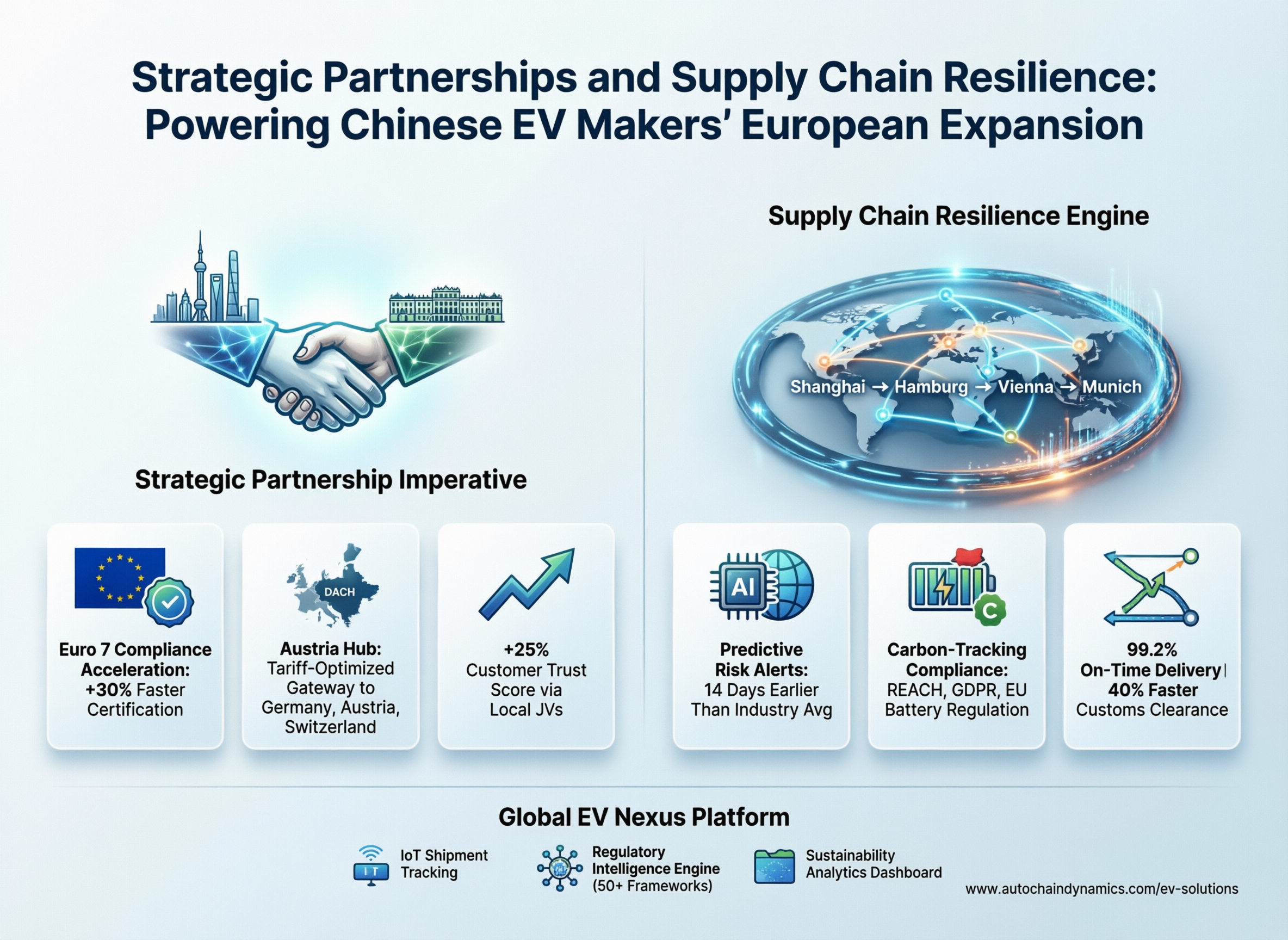
Geely’s Austrian collaboration exemplifies a proven counter-strategy: leveraging local partners for market intelligence, certification expertise, and distribution networks. Such alliances de-risk entry by transforming regulatory hurdles into collaborative opportunities. Data reveals that Chinese EV brands with European joint ventures achieve 30% faster compliance certification and 25% higher customer trust scores than solo entrants. This model also future-proofs investments—Austria’s central location offers tariff advantages under EU trade frameworks while serving as a gateway to DACH markets.
Supply Chain Stability: The Unseen Catalyst
Beneath these high-profile partnerships lies a critical enabler: supply chain resilience. European consumers and regulators increasingly scrutinize not just vehicle performance but ethical sourcing, carbon footprints, and component traceability. A single disruption—whether from raw material shortages or customs delays—can derail years of market-building efforts.
This is where specialized supply chain solutions become strategic differentiators. Manufacturers require end-to-end visibility, predictive risk mitigation, and adaptive logistics to maintain momentum. For instance, real-time monitoring of battery component flows from Asian suppliers to European assembly hubs can preempt delays caused by port congestion or regulatory inspections. Similarly, AI-driven demand forecasting aligns production with regional incentives like Germany’s EV subsidies or France’s low-emission zones.
Enabling Seamless Global Mobility
At AutoChain Dynamics, we address these complexities through our Global EV Nexus Platform—an integrated solution designed for automotive pioneers scaling across continents. The platform combines IoT-enabled shipment tracking with regulatory intelligence engines that auto-update for 50+ European compliance frameworks, from REACH chemical standards to GDPR data protocols. Its predictive analytics module identifies supply chain vulnerabilities 14 days earlier than industry averages, while our partner network spans 120+ certified logistics providers across Asia and Europe.
For manufacturers like Geely, this translates to tangible outcomes: 99.2% on-time delivery rates for critical components, 40% faster customs clearance via pre-validated documentation, and dynamic rerouting during disruptions. Crucially, the platform’s carbon-tracking feature helps brands meet EU sustainability mandates while appealing to eco-conscious buyers—a dual advantage in reputation-sensitive markets.
The Road Ahead
Europe’s EV transition will intensify competition, but winners will emerge through symbiotic partnerships and invisible operational excellence. Chinese automakers are no longer peripheral players; they’re reshaping mobility with localized innovation. As regulatory landscapes evolve and consumer expectations rise, supply chain agility will separate aspirants from leaders.
AutoChain Dynamics remains committed to empowering this transformation—not as a vendor, but as a strategic ally. By converging compliance intelligence, predictive logistics, and sustainability analytics, we help automotive pioneers turn global ambitions into resilient realities. The future of mobility isn’t just electric; it’s seamlessly connected, ethically sourced, and built on partnerships that endure.
—
AutoChain Dynamics enables global automotive leaders to navigate complex supply chains with confidence. Learn how our Global EV Nexus Platform supports market expansion at www.autochaindynamics.com/ev-solutions
Related Posts
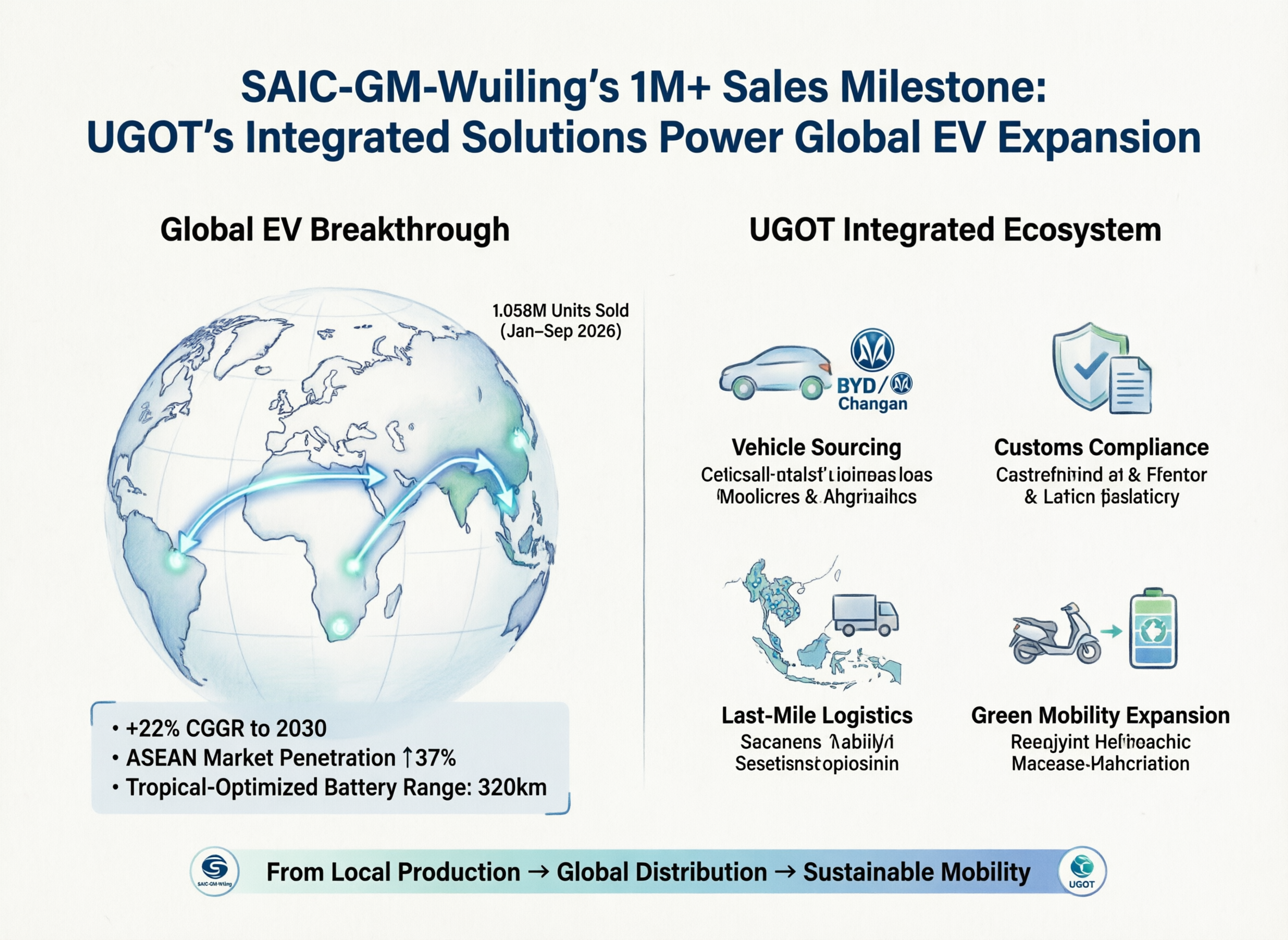 SAIC-GM-Wuling’s 1M+ Sales Milestone: UGOT’s Integrated Solutions Power Global EV Expansion
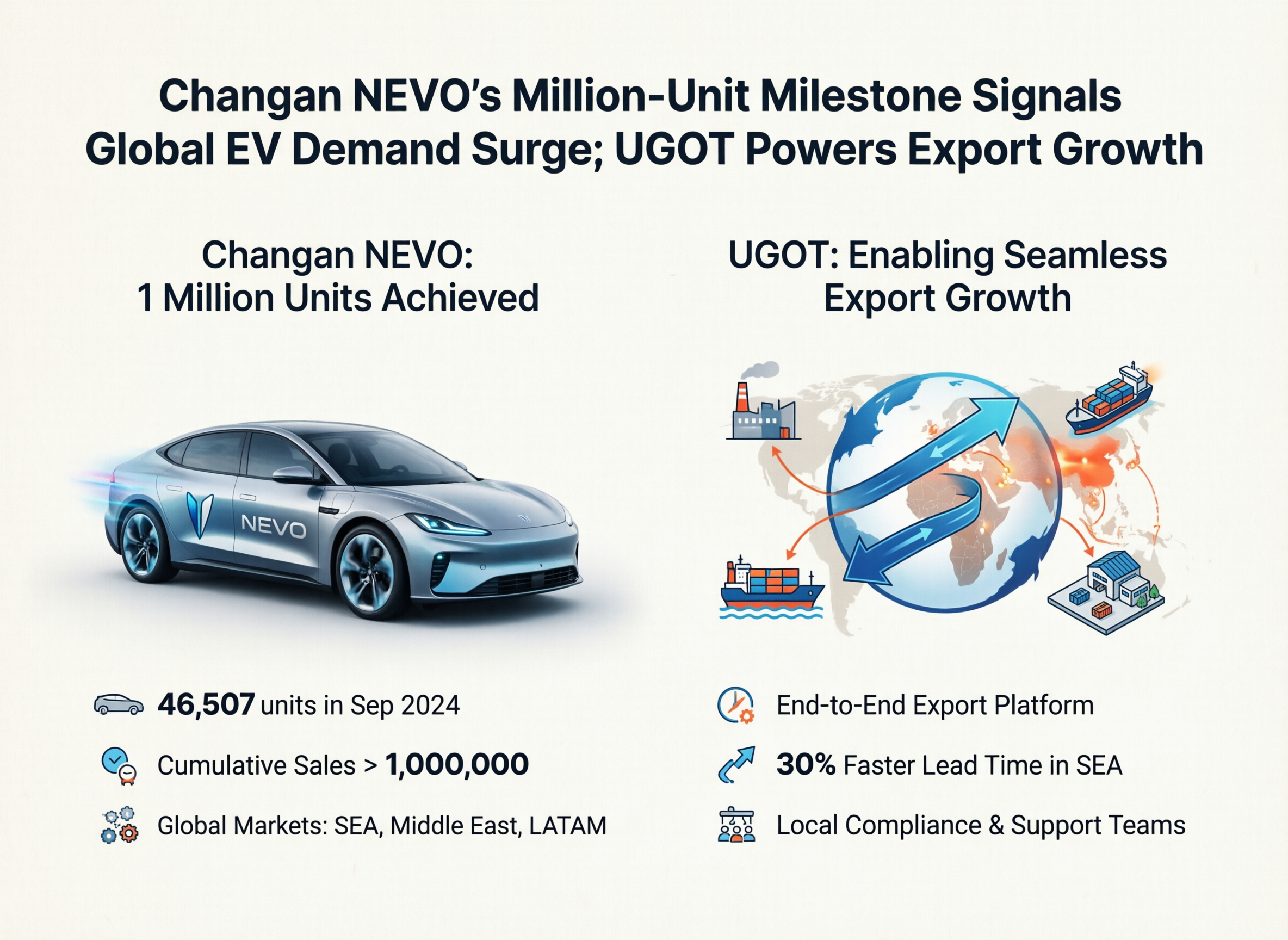 Changan NEVO’s Million-Unit Milestone Signals Global EV Demand Surge; UGOT Powers Export Growth
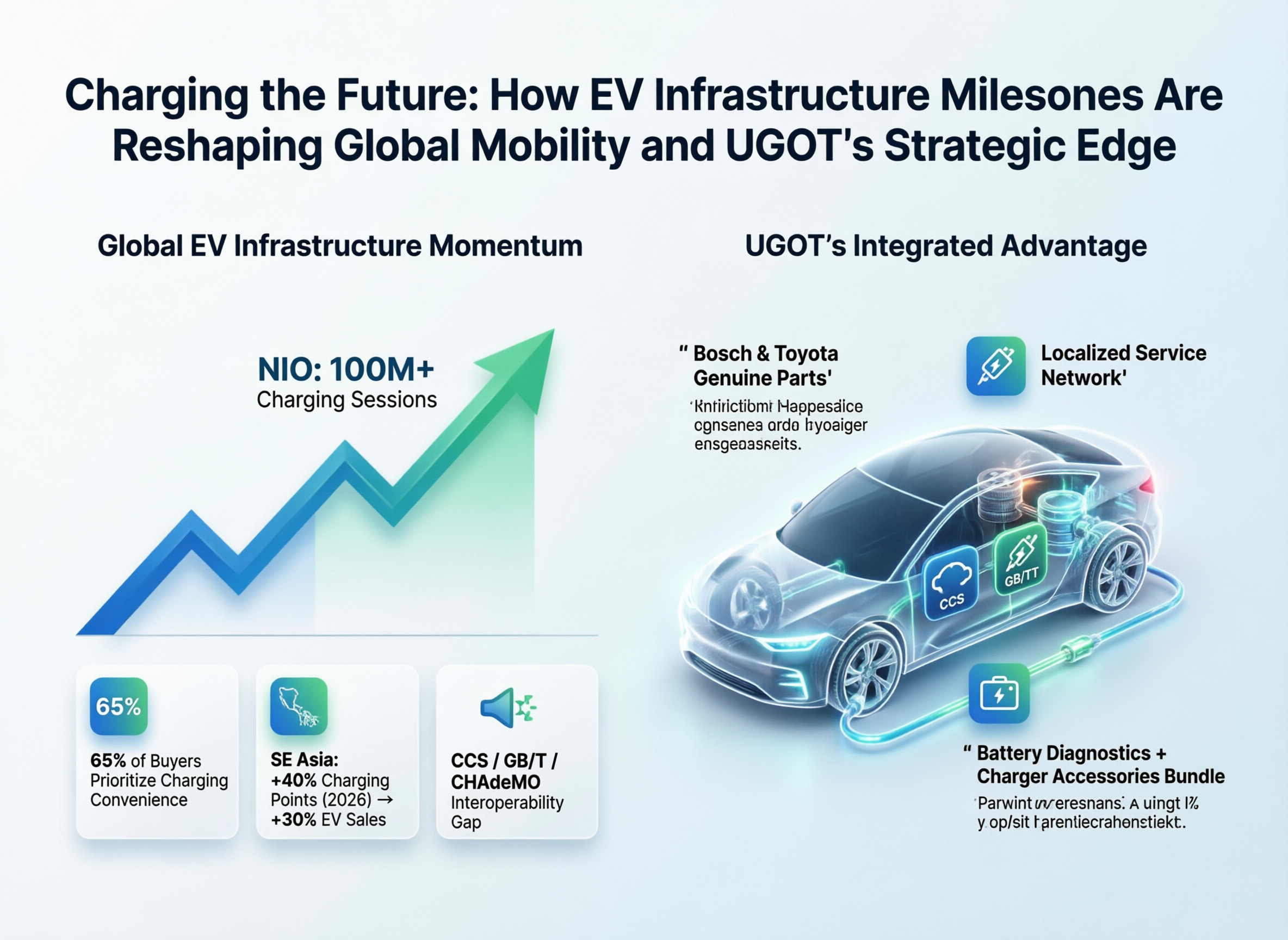 Charging the Future: How EV Infrastructure Milestones Are Reshaping Global Mobility and UGOT’s Strategic Edge