Mastering China’s 180-Day Rule: Strategic Pathways for New Vehicle Exporters in 2026
Introduction
The global automotive landscape is undergoing a seismic shift as Chinese vehicle exports surge toward record volumes. However, navigating China’s regulatory framework—particularly the pivotal 180-day rule—has become a make-or-break factor for international distributors. This regulation, mandating that new vehicles remain registered and operational within China for six months prior to export, introduces complex compliance hurdles that reshape supply chain strategies. As demand for cost-competitive, high-quality Chinese automobiles intensifies across emerging markets, understanding and adapting to this rule is no longer optional but a strategic imperative.
Decoding the 180-Day Rule and Its Industry Impact
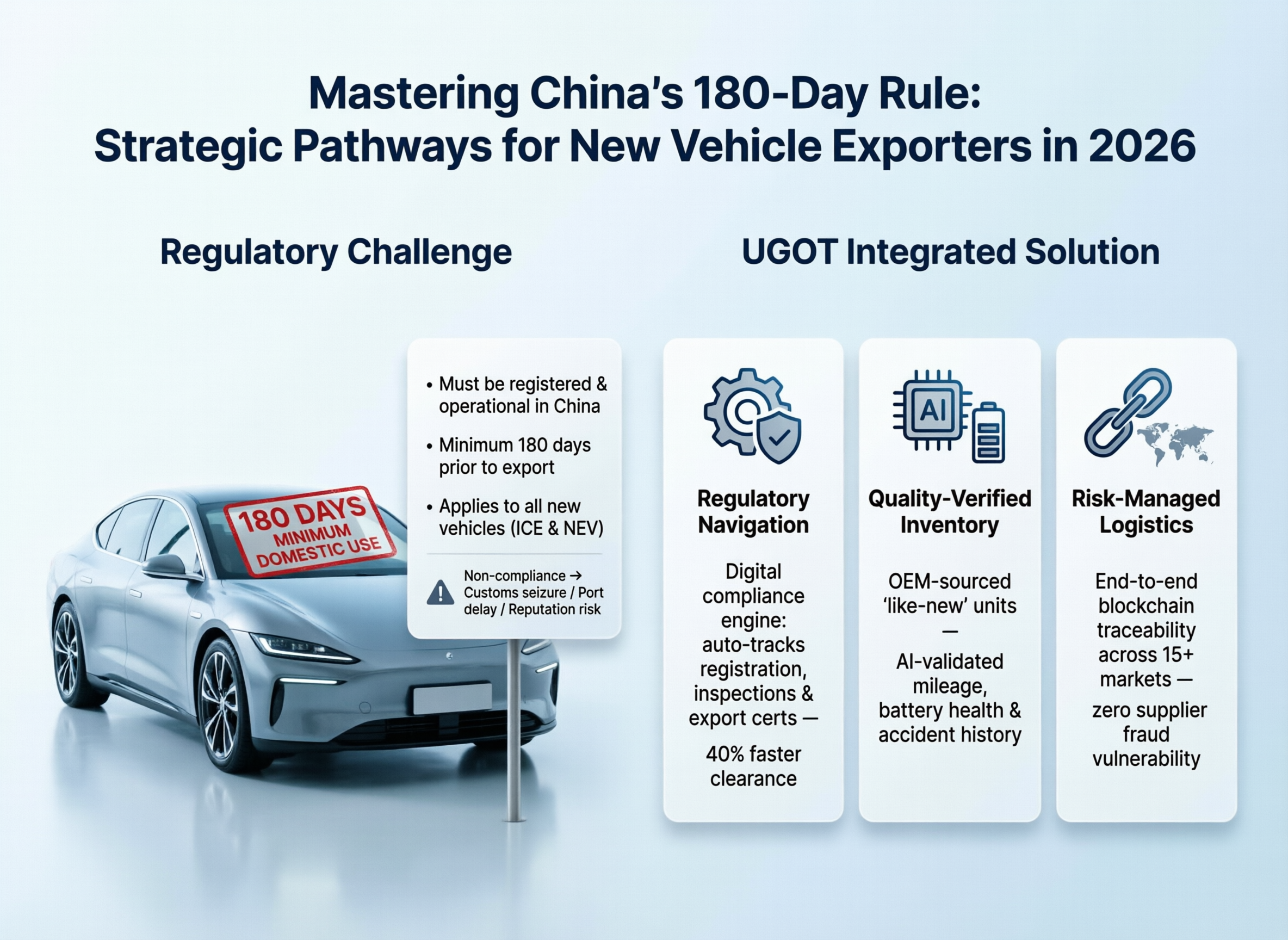
The 180-day rule exists to prioritize domestic market stability while allowing controlled export flows. For exporters, this creates a dual challenge: extended inventory holding periods increase capital expenditure, while market volatility risks depreciation. Consequently, industry players are pivoting toward ‘like-new’ vehicles—low-mileage units that have already fulfilled the 180-day requirement—as a viable workaround. These vehicles offer near-factory condition at optimized price points, bridging the gap between regulatory compliance and market agility.
Yet this strategy introduces significant risks. Unverified suppliers may present tampered odometers, concealed accident histories, or non-compliant documentation. A single documentation error can trigger customs seizures, port delays, or reputational damage in target markets like Southeast Asia and the Middle East. Recent industry data indicates that over 30% of export delays in Q4 2025 stemmed from regulatory non-compliance, underscoring the need for systemic risk mitigation.
Integrated Solutions for Sustainable Export Growth
Addressing these challenges demands more than tactical adjustments—it requires end-to-end supply chain partners with embedded regulatory expertise. This is where specialized export platforms transform constraints into competitive advantages. UGOT, as an authorized export partner for leading Chinese OEMs including BYD, Changan, and JMC, has engineered a compliance-first ecosystem that neutralizes the 180-day rule’s friction points. Their solution integrates three critical layers:
Regulatory Navigation: UGOT’s digital compliance engine automates the 180-day tracking process, managing vehicle registration, mandatory inspections, and export certification through a single interface. This reduces clearance timelines by 40% compared to industry averages.
Quality-Verified Inventory: Leveraging direct OEM relationships, UGOT sources exclusively from factory-certified channels, deploying AI-powered diagnostics to validate ‘like-new’ status—ensuring mileage authenticity, battery health (for NEVs), and accident-free histories.
Risk-Managed Logistics: Their blockchain-tracked supply chain provides real-time documentation transparency, from Chinese customs clearance to final-mile delivery across 15+ high-growth markets, eliminating supplier fraud vulnerabilities.
By converting regulatory complexity into operational efficiency, UGOT enables distributors to access premium Chinese vehicles—both electric and combustion-engine—with guaranteed compliance and accelerated time-to-market.
The Road Ahead
As China solidifies its position as the world’s largest automotive exporter, the 180-day rule will evolve from a barrier into a strategic filter, separating agile operators from stagnant players. Forward-thinking exporters will prioritize partnerships that embed compliance into their core workflows rather than treating it as a peripheral cost center. With its OEM-authorized infrastructure and data-driven risk management, UGOT exemplifies how specialized intermediaries can unlock sustainable growth in this new era. For global automotive distributors, the path to capturing China’s export potential no longer lies in circumventing regulations—but in mastering them through intelligent collaboration.
Related Posts
 SAIC-GM-Wuling’s 1M+ Sales Milestone: UGOT’s Integrated Solutions Power Global EV Expansion
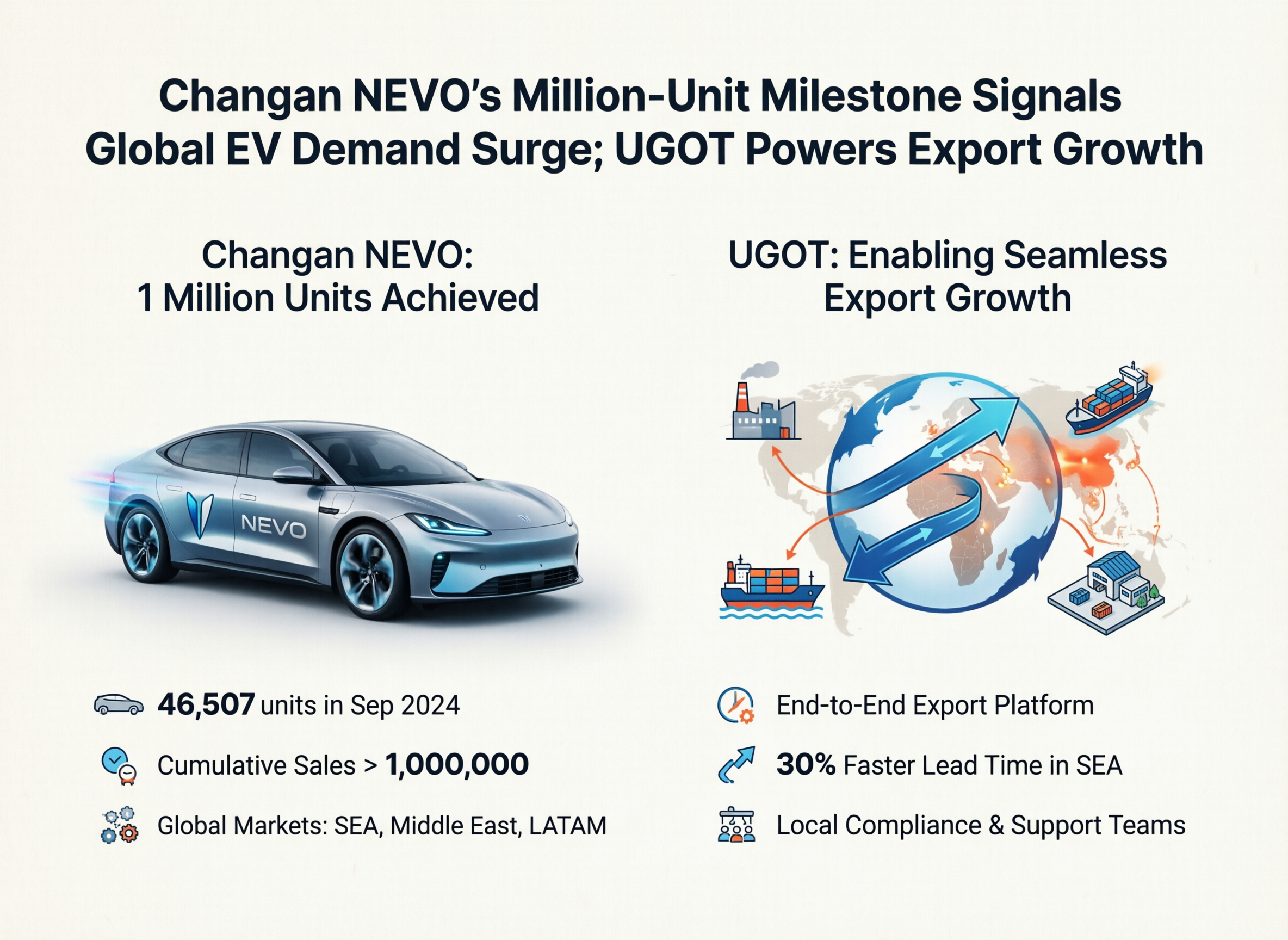 Changan NEVO’s Million-Unit Milestone Signals Global EV Demand Surge; UGOT Powers Export Growth
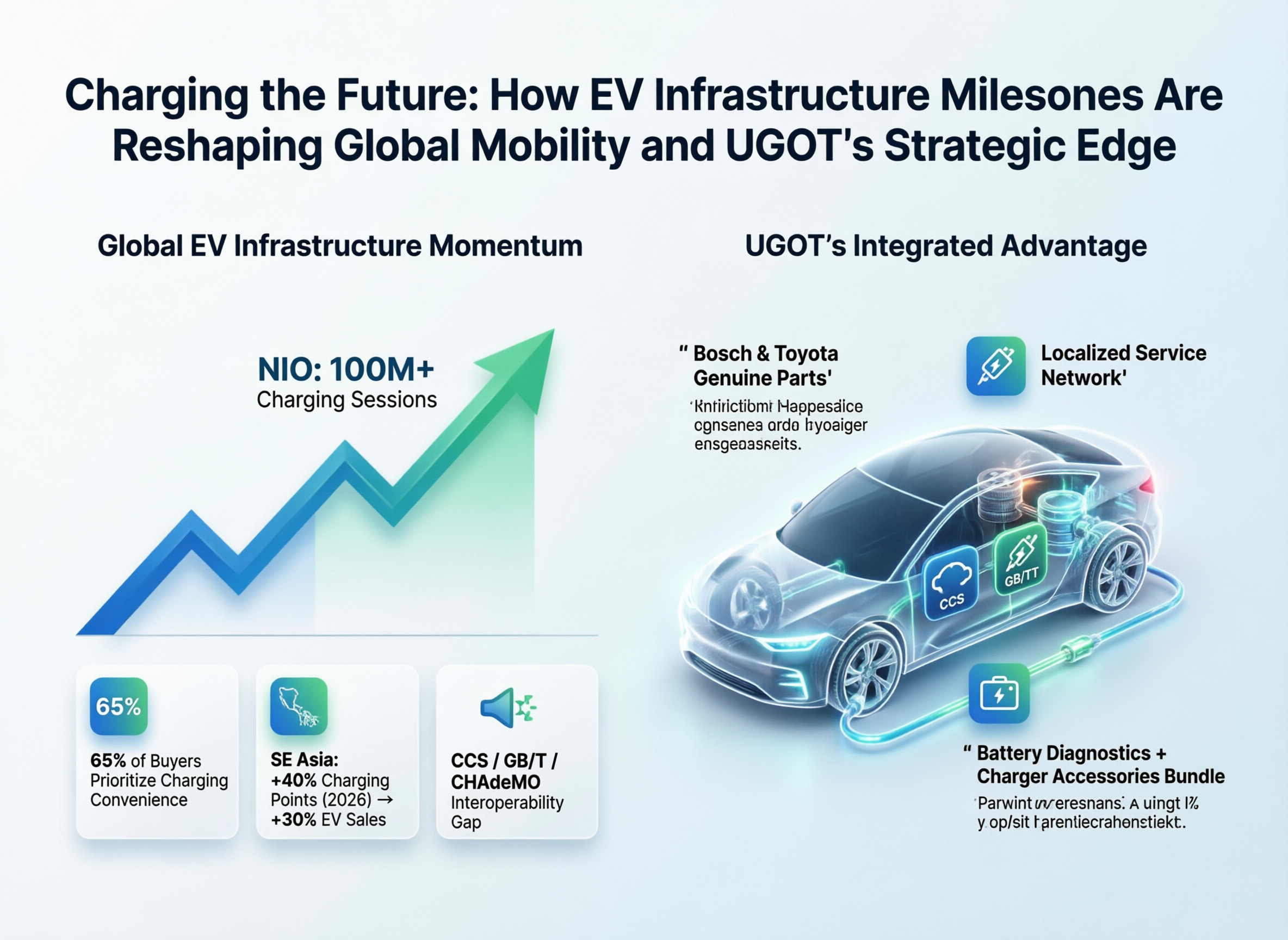 Charging the Future: How EV Infrastructure Milestones Are Reshaping Global Mobility and UGOT’s Strategic Edge