The ‘Yaris Moment’: How Chinese Automakers Are Reshaping Global Mobility Through Hyper-Localization
Introduction
The global automotive landscape is undergoing a seismic shift as Chinese manufacturers pivot from volume-driven exports to sophisticated, region-specific strategies. Inspired by Toyota’s iconic Yaris—which dominated markets through meticulous localization—Chinese brands are now engineering vehicles tailored to unique climatic, regulatory, and cultural contexts. This evolution marks a strategic inflection point, transforming how emerging economies experience mobility while accelerating China’s ascent as an automotive innovation hub.
The Localization Imperative: Beyond One-Size-Fits-All
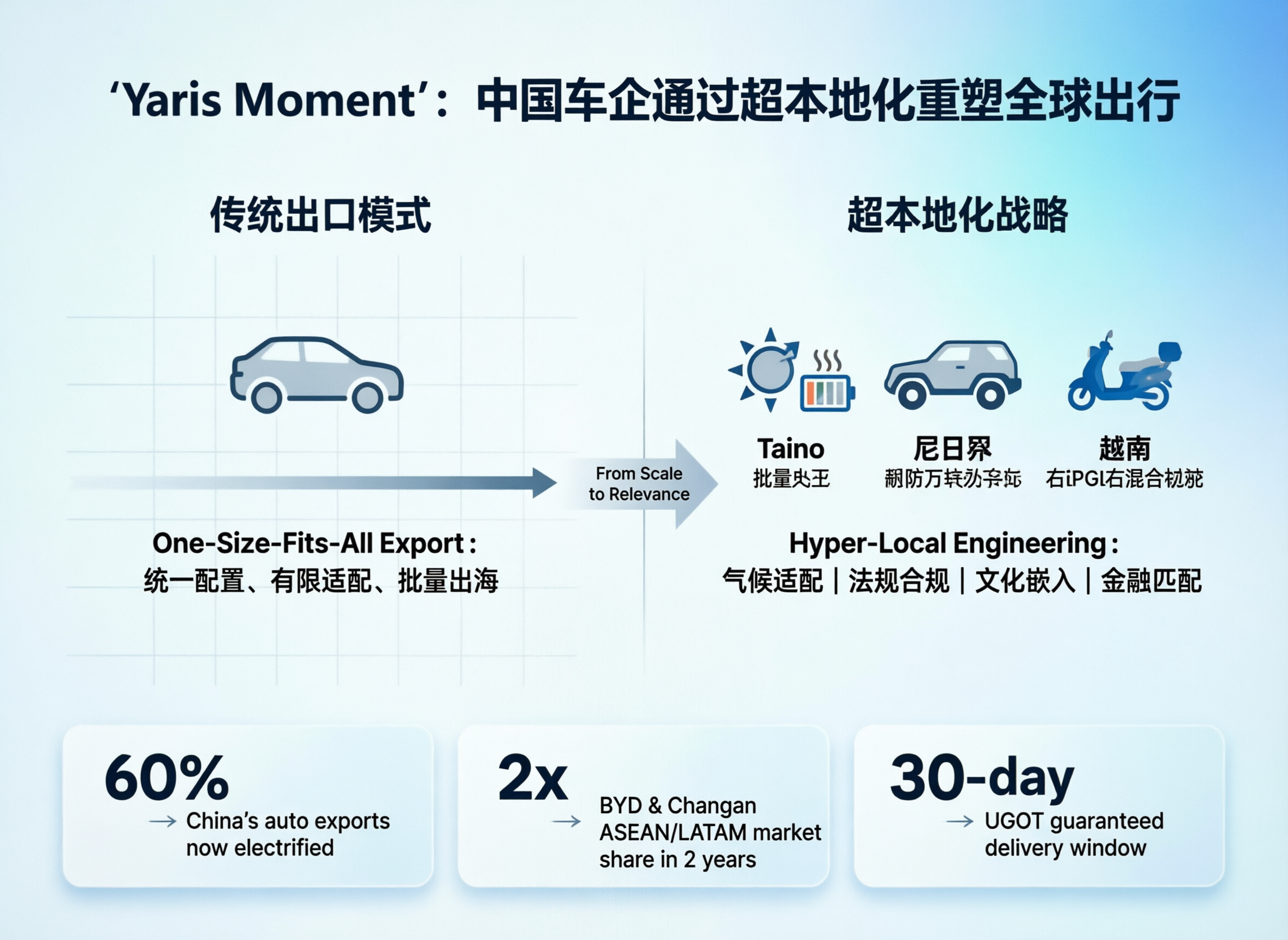
Historically, emerging markets received standardized vehicle models with minimal adaptation. Today, Chinese automakers recognize that success in diverse regions like Southeast Asia’s humid megacities or Africa’s rugged terrains demands radical customization. For instance, EVs destined for Thailand undergo battery thermal management recalibration to withstand 40°C+ temperatures, while pickup variants for Nigeria feature reinforced suspensions and dust-proof electronics. This hyper-local approach extends beyond hardware: infotainment systems integrate region-specific apps, safety features align with local traffic patterns, and financing models adapt to purchasing behaviors.
The “Yaris Moment” metaphor captures this paradigm perfectly. Just as Toyota’s compact car conquered Europe through granular market understanding, Chinese OEMs leverage digital twin simulations and AI-driven consumer analytics to preempt regional needs. Crucially, this strategy converges with the EV revolution. With 60% of China’s auto exports now electrified, manufacturers embed localization into sustainable mobility frameworks—developing swappable batteries for regions with sparse charging infrastructure or solar-integrated roofs for off-grid communities. The result? Brands like BYD and Changan have doubled their market share in ASEAN and Latin America within two years, proving that relevance trumps scale.
Enabling Global Partnerships Through Agile Supply Chains
As distributors worldwide seek to capitalize on this trend, they face complex challenges: navigating certification hurdles, securing inventory aligned with micro-market demands, and ensuring post-sale support. This is where specialized export partners become indispensable. Companies like UGOT bridge the gap between Chinese OEM innovation and global market readiness. With authorized partnerships across BYD, Changan, and JMC’s portfolios, UGOT offers a curated selection of region-optimized vehicles—from compact EVs engineered for Southeast Asian urban density to all-terrain electric SUVs built for African logistics corridors.
UGOT’s one-stop procurement platform eliminates traditional fragmentation. Its AI-powered demand forecasting matches distributors with precisely configured models (e.g., right-hand-drive electric motorcycles for Vietnam or LPG-compatible hybrids for Middle Eastern markets), while integrated logistics guarantee 30-day delivery windows. Crucially, UGOT’s after-sales ecosystem—spanning localized technician training and spare parts hubs in 15 countries—mitigates the reliability concerns that once plagued emerging-market EV adoption. This end-to-end orchestration transforms localization from a theoretical advantage into executable strategy.
The Road Ahead: Sustainable Growth Through Co-Creation
The localization wave will intensify as AI and modular platforms enable real-time vehicle adaptation. Chinese automakers are already piloting “configurator” systems allowing overseas dealers to co-design features like cargo space or energy recovery modes. For global partners, success hinges on agility: those who leverage specialized supply chain allies will capture disproportionate value in this new era.
UGOT exemplifies this collaborative future. By fusing deep OEM relationships with granular market intelligence, it empowers distributors to turn regional nuances into competitive moats. As the automotive industry converges toward sustainable, human-centric mobility, such partnerships won’t just move vehicles—they’ll accelerate equitable access to next-generation transportation worldwide.
Related Posts
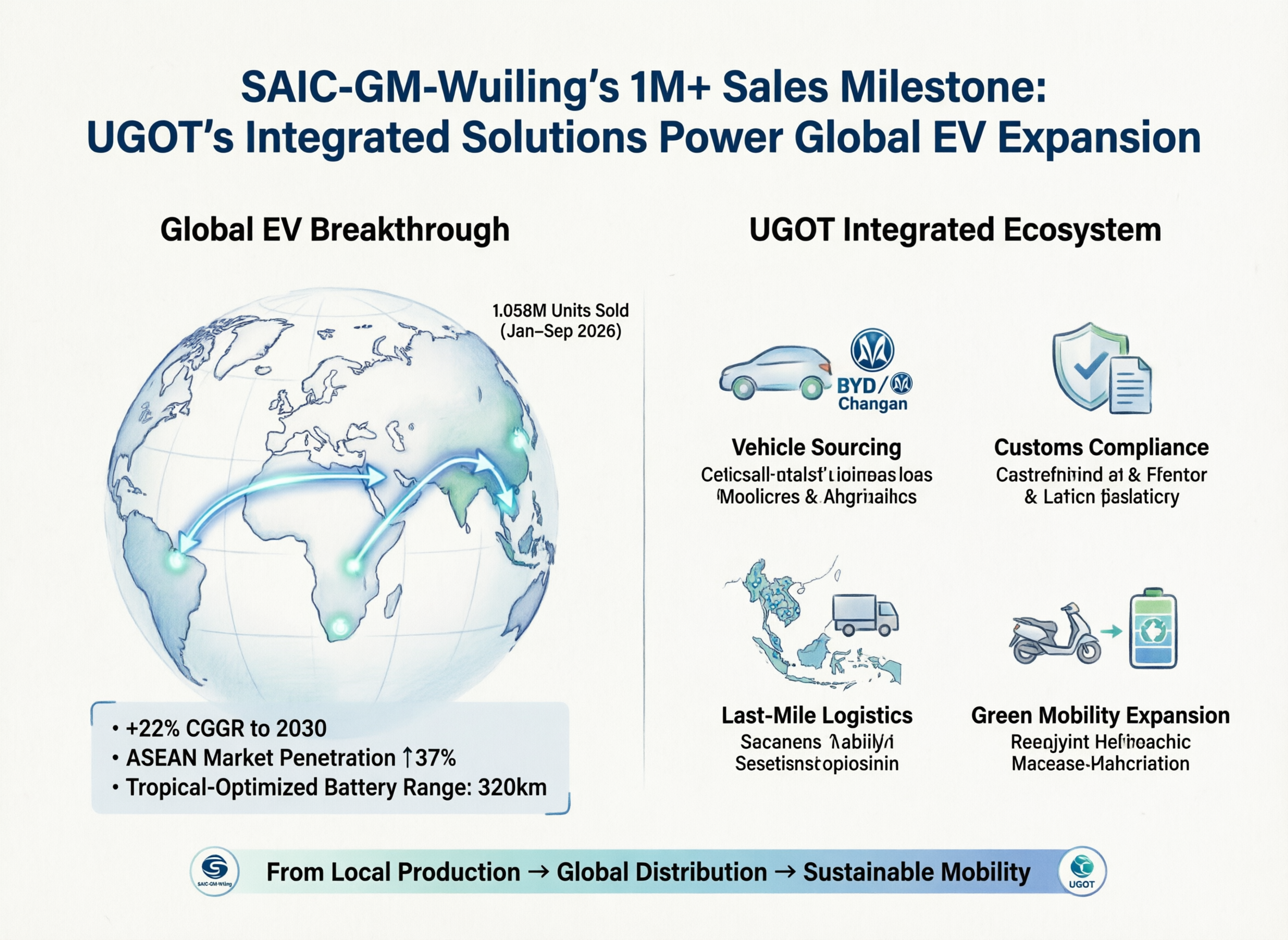 SAIC-GM-Wuling’s 1M+ Sales Milestone: UGOT’s Integrated Solutions Power Global EV Expansion
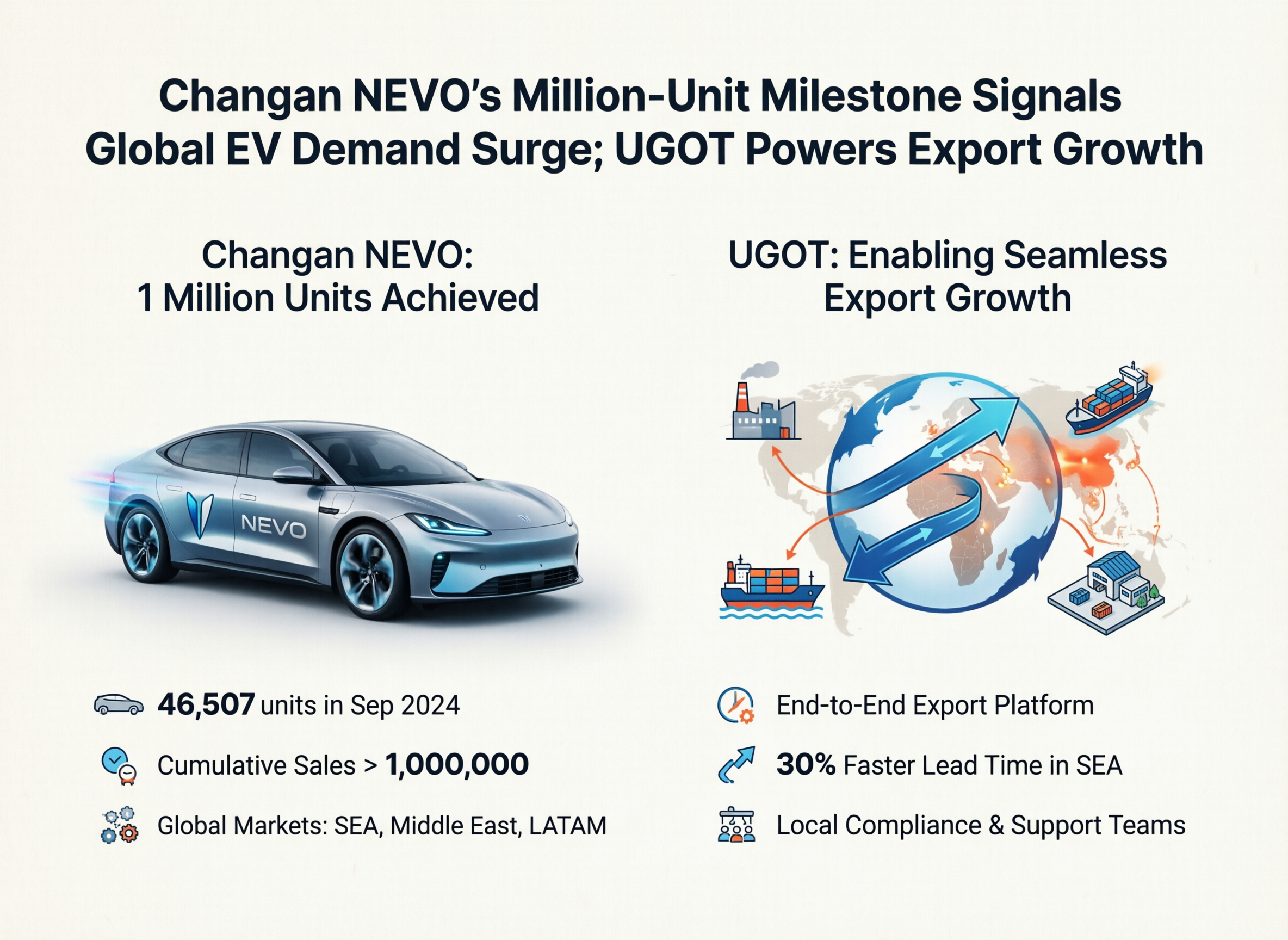 Changan NEVO’s Million-Unit Milestone Signals Global EV Demand Surge; UGOT Powers Export Growth
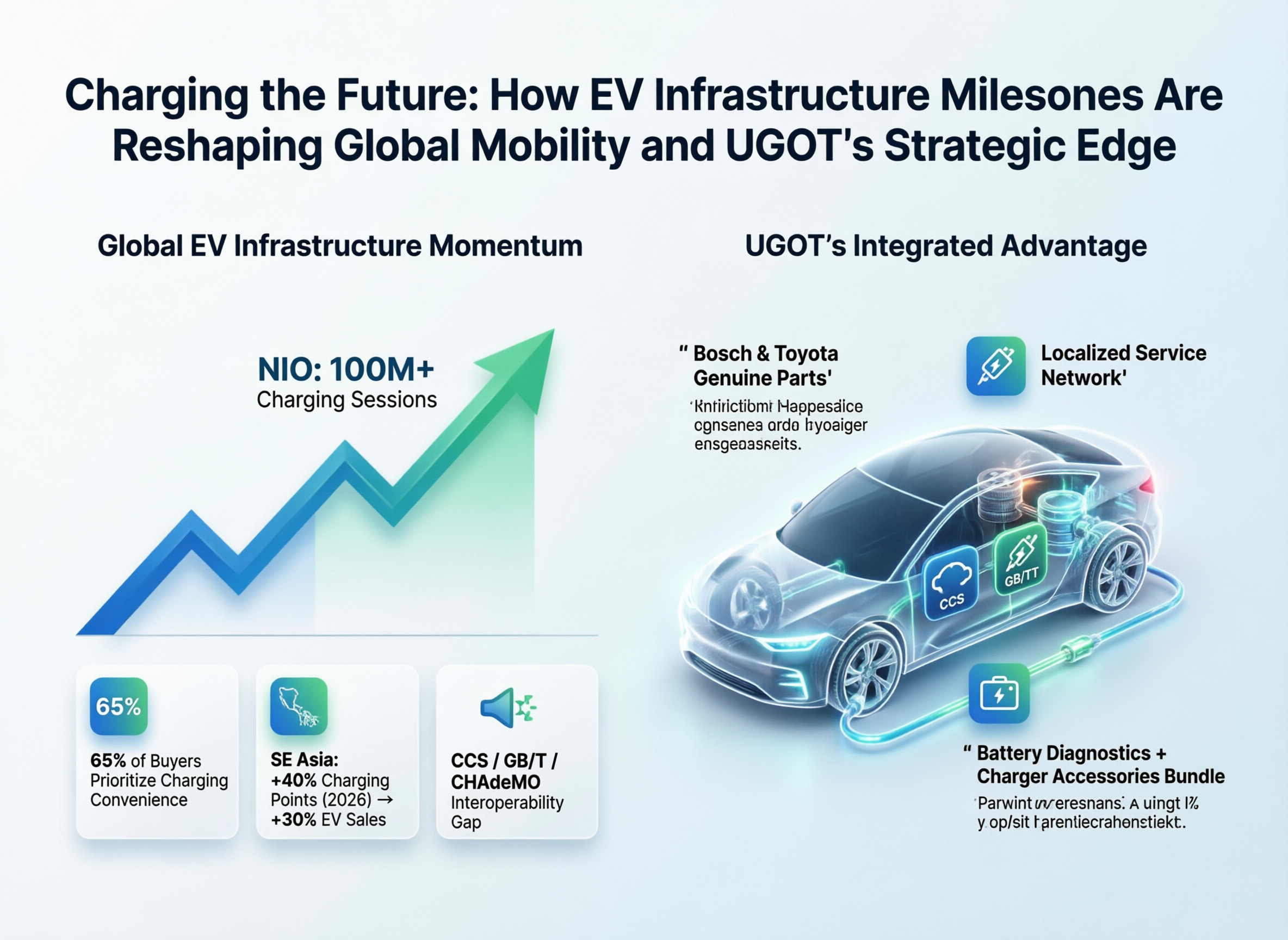 Charging the Future: How EV Infrastructure Milestones Are Reshaping Global Mobility and UGOT’s Strategic Edge