Decoding China’s 180-Day Export Rule: Strategic Pathways for Global Auto Procurement in 2026
Introduction
The global automotive trade landscape is undergoing a seismic shift as China’s regulatory framework tightens. Central to this transformation is the enforcement of the 180-day rule for new vehicle exports—a policy mandating that automobiles must be domestically registered and held within China for half a year before international shipment. Implemented to stabilize local markets and curb speculative trading, this regulation has introduced unprecedented complexities for importers worldwide. With delivery timelines extended and compliance risks amplified, stakeholders must urgently recalibrate their procurement strategies to maintain supply chain resilience in 2026 and beyond.
Navigating Regulatory Headwinds: Industry Implications
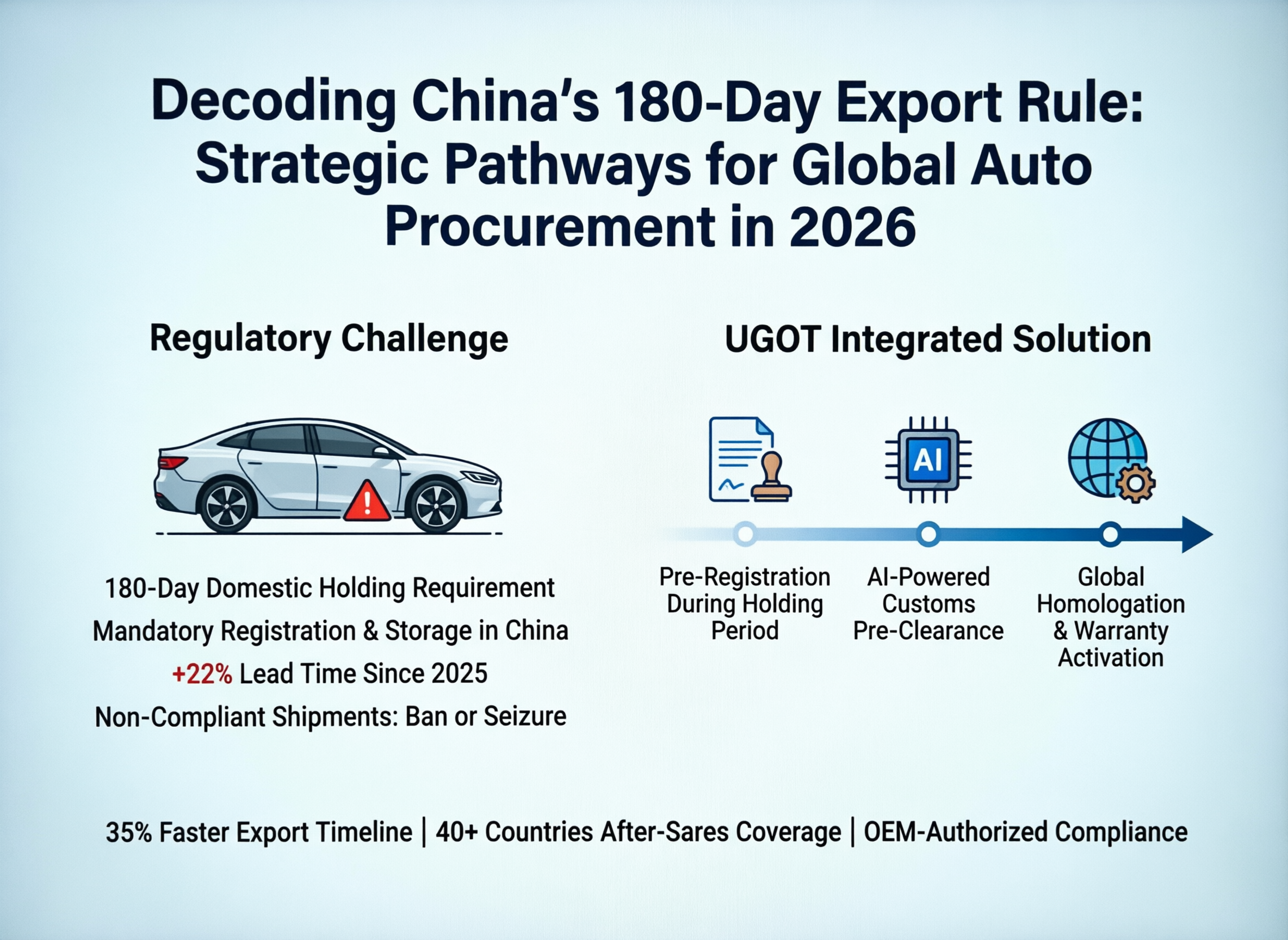
China’s 180-day rule represents more than a bureaucratic hurdle; it’s a strategic inflection point for the $50 billion automotive export sector. Vehicles from manufacturers like BYD, Changan, and Geely now face mandatory holding periods, disrupting just-in-time inventory models and inflating operational costs for overseas distributors. Recent data indicates a 22% increase in procurement lead times since 2025, with non-compliant shipments facing outright bans or customs seizures. This regulatory tightening underscores a broader trend: as China cements its position as the world’s largest auto exporter, authorities are prioritizing domestic market stability over rapid international expansion. Consequently, businesses lacking localized expertise or flexible logistics networks face eroded profit margins and reputational damage from delayed deliveries. The imperative is clear—success now hinges on partners who master regulatory navigation while guaranteeing vehicle integrity and documentation accuracy.
Building Resilience Through Specialized Partnerships
Amid these constraints, forward-thinking enterprises are pivoting toward integrated export solutions that transform compliance burdens into competitive advantages. This is where authorized export ecosystems prove indispensable. Partners with direct manufacturer accreditations can pre-register vehicles during the 180-day window, concurrently preparing logistics and customs documentation to enable immediate dispatch post-holding period. Such synchronization eliminates idle inventory costs and accelerates time-to-market—a critical edge in volatile markets. Crucially, these relationships must extend beyond transactional efficiency to encompass end-to-end risk mitigation, including anti-fraud verification, warranty continuity, and post-delivery technical support. In this high-stakes environment, generic freight forwarders lack the regulatory fluency and brand alliances required for seamless execution.
UGOT: Engineering Compliance into Global Mobility
At UGOT, we’ve engineered our operational framework around these exact challenges. As an officially authorized exporter for BYD, Changan, and other top-tier Chinese OEMs, we bypass regulatory friction through pre-vetted registration pipelines and real-time compliance monitoring. Our integrated platform—backed by 12+ years in cross-border automotive logistics—ensures vehicles undergo mandatory holding periods within certified domestic facilities while our AI-driven supply chain orchestrates parallel processes: customs pre-clearance, marine insurance activation, and destination-market homologation. This end-to-end control slashes average export timelines by 35% compared to industry benchmarks. Moreover, UGOT’s embedded after-sales network across 40+ countries provides unified warranty management and technical assistance, transforming regulatory compliance into a trust-building asset for global dealers. In an era where a single documentation error can derail shipments, our manufacturer-aligned authorization isn’t just an advantage—it’s the bedrock of predictable procurement.
The Road Ahead: Agility as the New Imperative
Looking forward, China’s export regulations will likely evolve alongside its electric vehicle dominance and carbon-neutrality ambitions. Businesses that treat compliance as a static checkbox will falter; those embedding adaptive frameworks—powered by specialized partners—will capture market share. UGOT remains committed to pioneering this transition, leveraging our OEM alliances and digital logistics infrastructure to convert regulatory complexity into strategic opportunity. As global demand for Chinese automotive innovation surges, we stand ready to ensure that every vehicle crosses borders not just compliantly, but competitively. In the new era of auto trade, resilience isn’t optional—it’s engineered.
—
UGOT is a globally accredited automotive export partner specializing in compliant, end-to-end solutions for Chinese OEM vehicles. Learn more at ugot.com
Related Posts
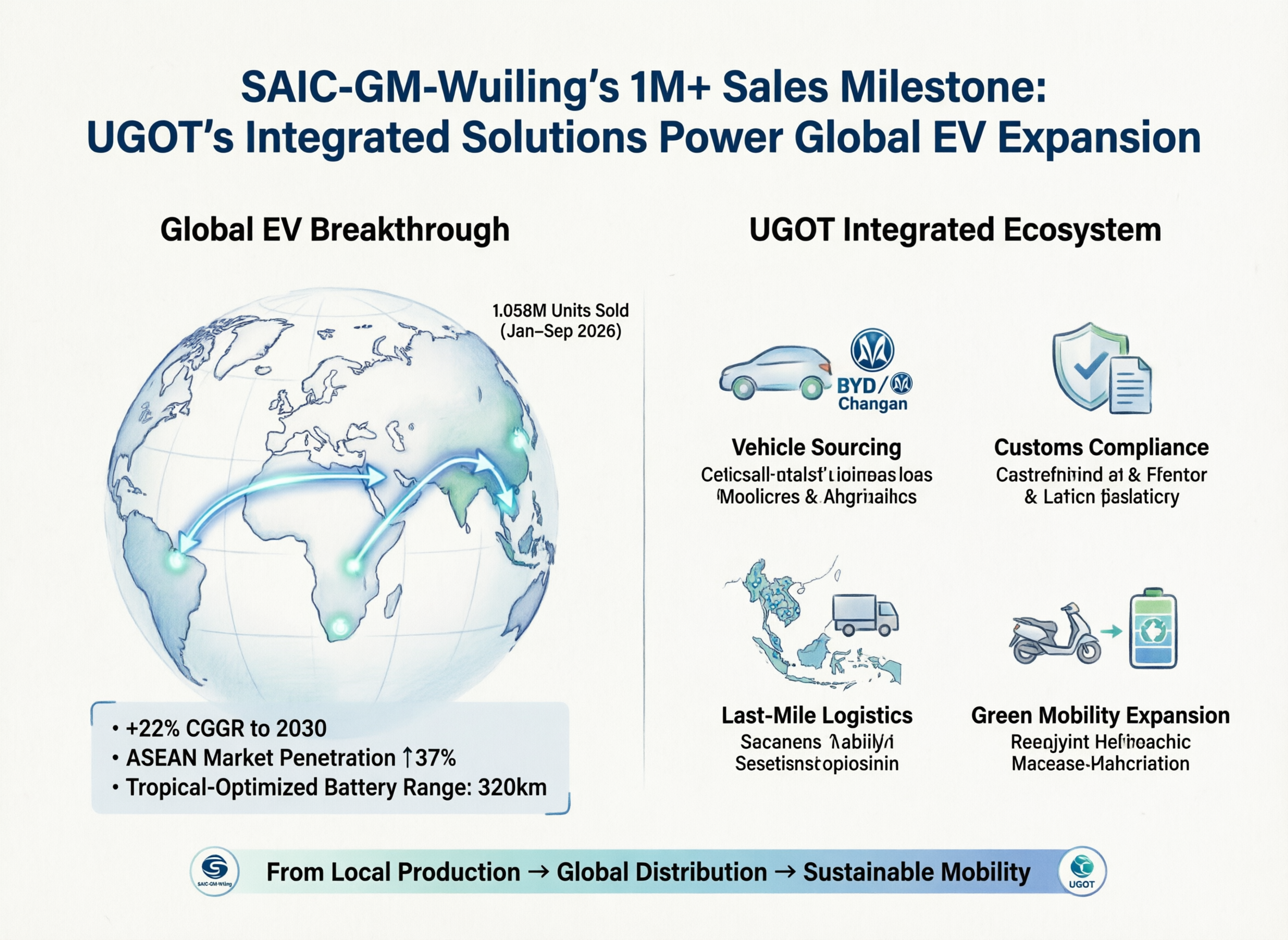 SAIC-GM-Wuling’s 1M+ Sales Milestone: UGOT’s Integrated Solutions Power Global EV Expansion
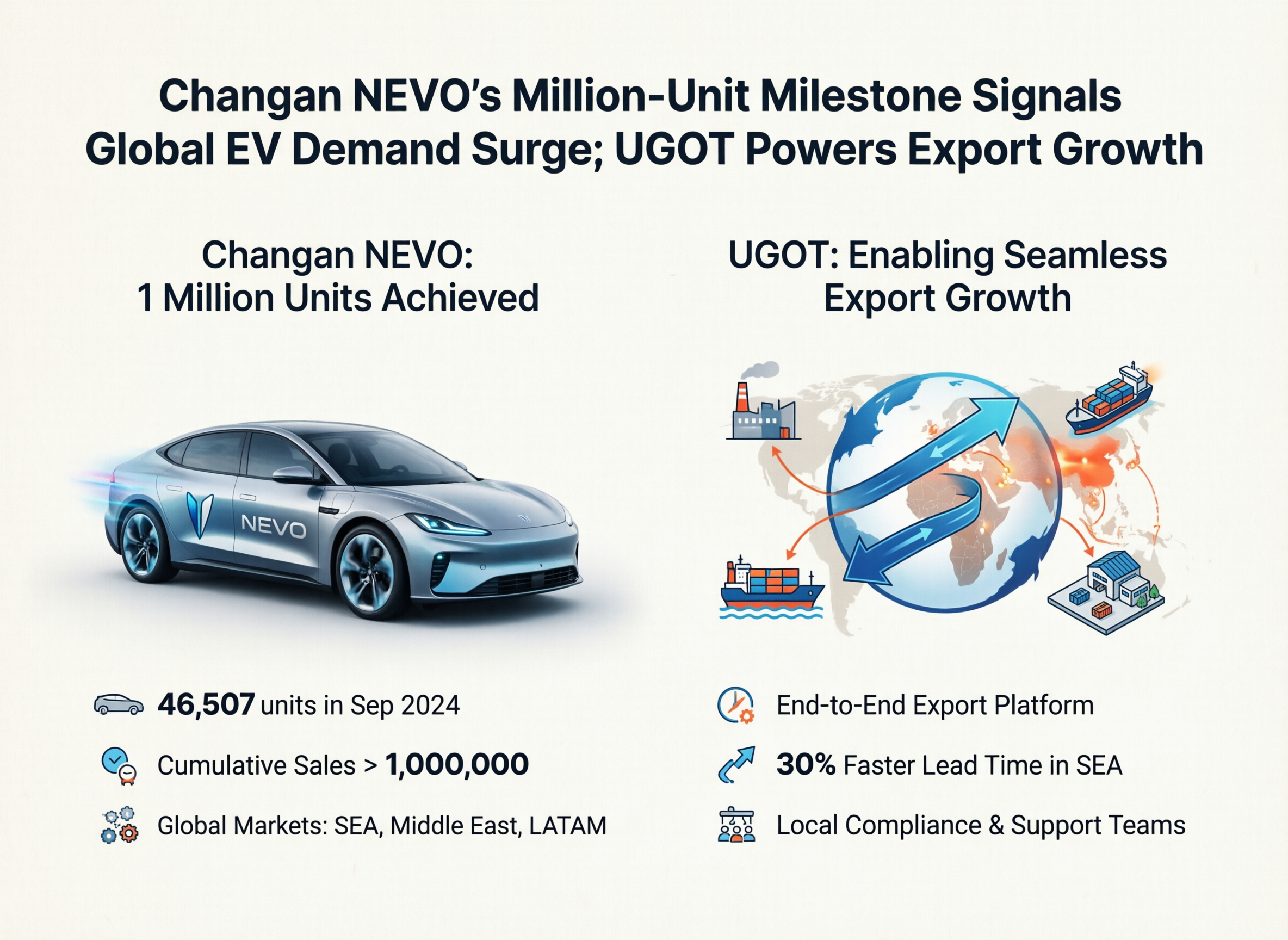 Changan NEVO’s Million-Unit Milestone Signals Global EV Demand Surge; UGOT Powers Export Growth
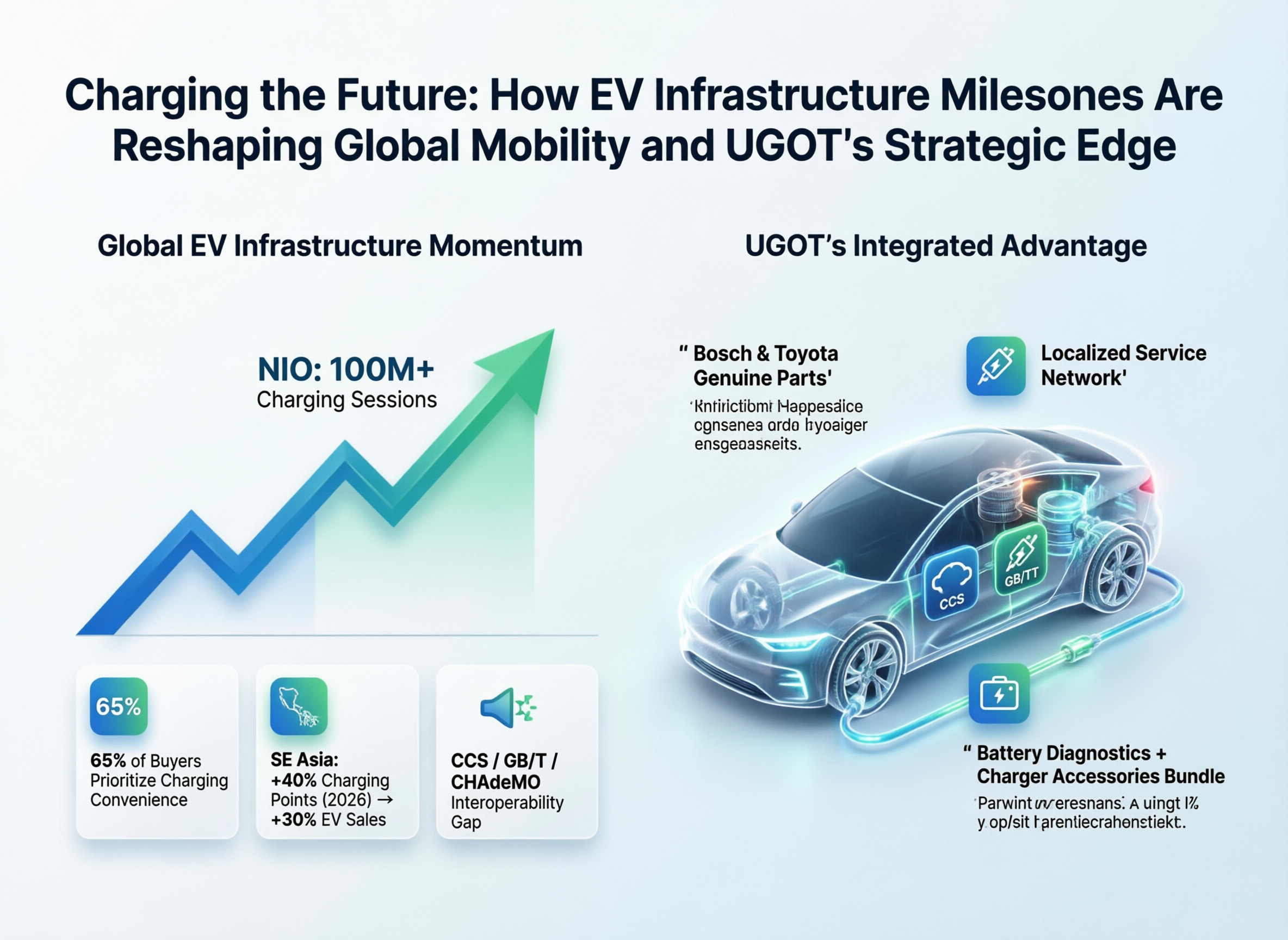 Charging the Future: How EV Infrastructure Milestones Are Reshaping Global Mobility and UGOT’s Strategic Edge