Accelerating Global Reach: How Chinese Carmakers’ ‘Yaris Moment’ Fuels Export Innovation
Introduction
The automotive landscape is undergoing a seismic shift as Chinese manufacturers pivot toward region-specific vehicle development to capture international markets. Inspired by Toyota’s iconic ‘Yaris Moment’—where localized adaptations drove explosive growth in emerging economies—brands like BYD and Changan are now tailoring electric and new energy vehicles (NEVs) to diverse regional needs. This strategic evolution, highlighted in recent industry reports, underscores a broader trend: global expansion is no longer about exporting standardized models but about embedding deep market intelligence into product design. As Sarah Chen’s analysis notes, this approach is accelerating China’s footprint across Southeast Asia, the Middle East, and beyond, transforming competition dynamics in the $3 trillion automotive sector.
Industry Trends and Strategic Shifts
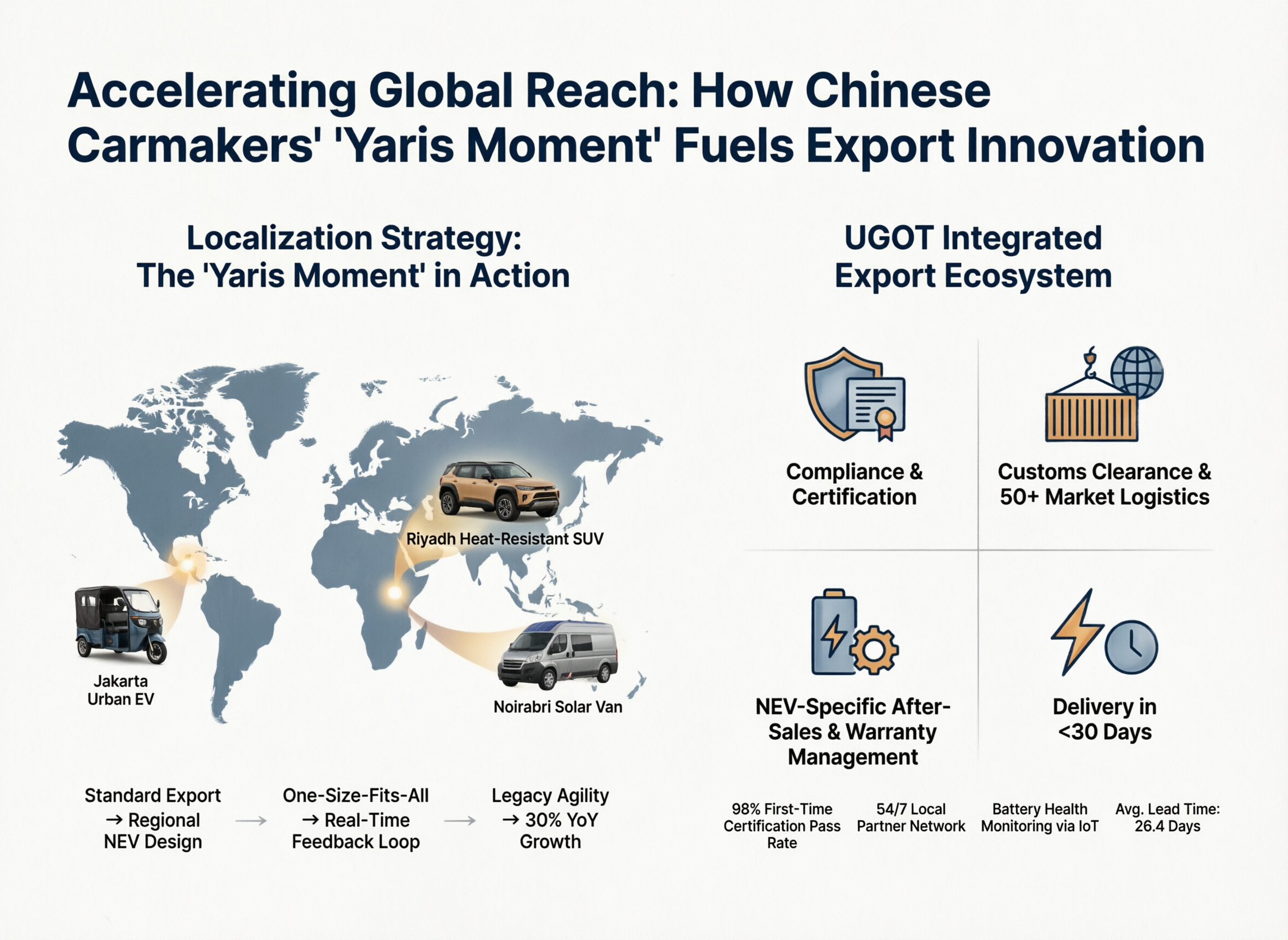
Chinese automakers are leveraging their NEV expertise to address hyper-local demands. For instance, in Southeast Asia, compact electric three-wheelers optimized for urban congestion are replacing conventional sedans, while Middle Eastern markets see surging interest in rugged, heat-resistant EVs with extended battery life. This customization isn’t merely aesthetic; it’s a response to regulatory pressures, infrastructure gaps, and consumer preferences. Data reveals that region-specific NEVs now account for over 40% of China’s overseas automotive exports, with growth rates exceeding 30% year-over-year in Africa and Latin America. Crucially, the ‘Yaris Moment’ strategy—rapid iteration based on real-time market feedback—enables Chinese brands to outpace legacy automakers in agility. However, this success hinges on overcoming supply chain fragmentation. Many manufacturers struggle with certification complexities, logistics bottlenecks, and after-sales support in volatile markets, risking delays that erode competitive edges.
Integrated Solutions for Seamless Globalization
Bridging this gap requires export ecosystems that marry speed with reliability. This is where specialized partners step in, offering end-to-end frameworks that turn regional ambitions into tangible outcomes. UGOT Global Vehicle Export Solutions exemplifies this evolution. As an authorized exporter for industry leaders like BYD and Changan, UGOT streamlines the entire export journey—from compliance certification and customs clearance to last-mile delivery and warranty management. Its platform integrates a stable supply chain with mature distribution channels across 50+ emerging markets, ensuring that a custom electric scooter designed for Jakarta’s streets or a solar-powered van for Saudi Arabia’s deserts reaches dealers in under 30 days. By consolidating vehicles, spare parts, and NEV-specific support into a single workflow, UGOT eliminates traditional friction points, allowing automakers to focus on innovation rather than operational headaches.
Future Outlook and Strategic Value
Looking ahead, the convergence of localization and digitalization will define automotive globalization. Chinese OEMs are projected to capture 25% of emerging market EV sales by 2030, but only if export infrastructures scale intelligently. UGOT’s model—prioritizing adaptability through AI-driven demand forecasting and modular logistics—positions it as a catalyst for this transition. Beyond efficiency, it empowers sustainable growth: by enabling rapid deployment of affordable NEVs, UGOT helps reduce carbon footprints while democratizing mobility access. For global dealers and traders, this represents not just a logistical advantage but a strategic partnership in reshaping how the world moves. As the ‘Yaris Moment’ evolves from a tactic to an industry standard, UGOT’s commitment to seamless, end-to-end solutions will remain pivotal in turning regional insights into worldwide impact.
Related Posts
 SAIC-GM-Wuling’s 1M+ Sales Milestone: UGOT’s Integrated Solutions Power Global EV Expansion
 Changan NEVO’s Million-Unit Milestone Signals Global EV Demand Surge; UGOT Powers Export Growth
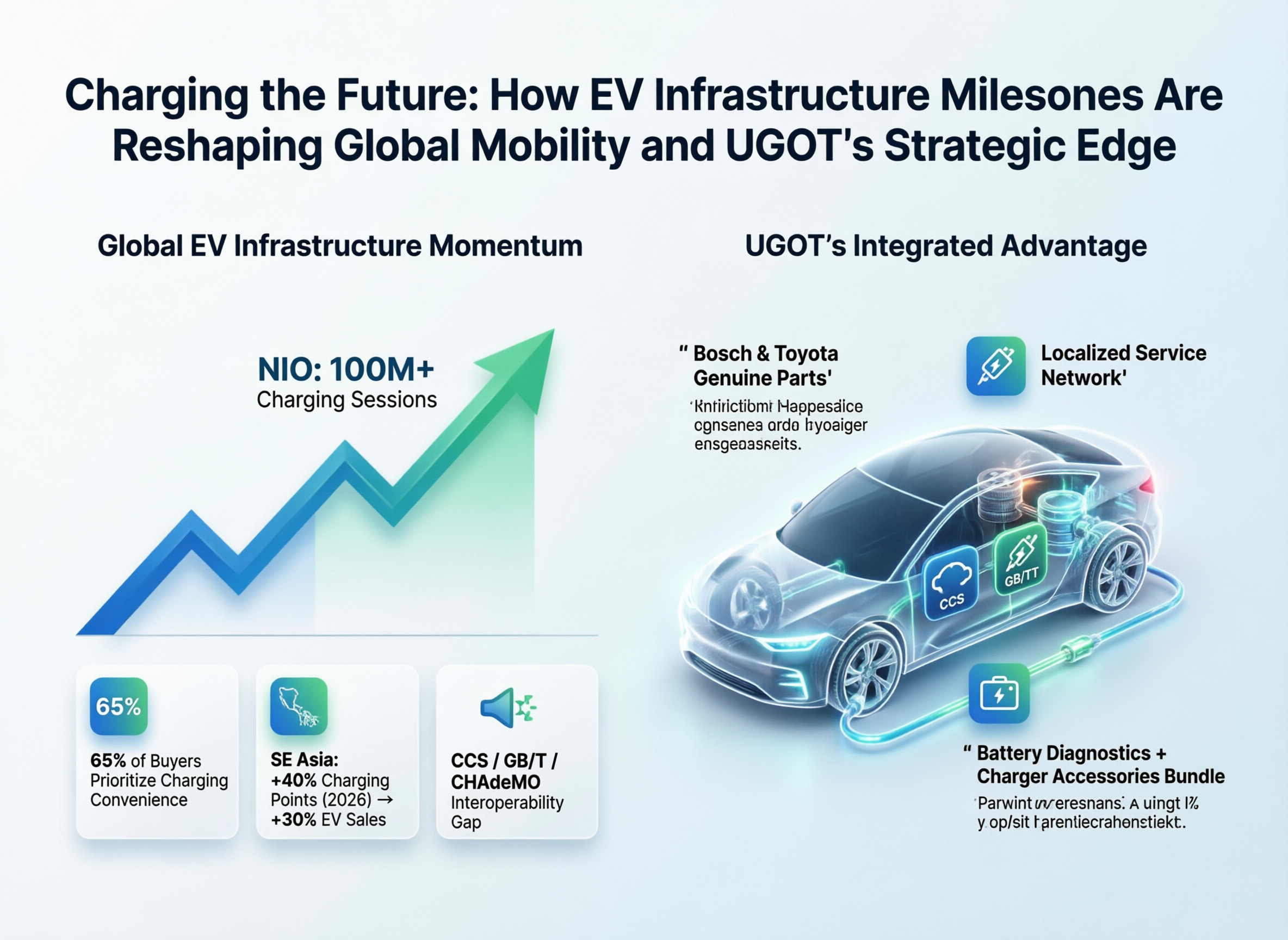 Charging the Future: How EV Infrastructure Milestones Are Reshaping Global Mobility and UGOT’s Strategic Edge