Region-Specific Vehicles: The Strategic Engine Behind Chinese Automakers’ Global EV Surge
Introduction
Chinese automotive manufacturers are undergoing a paradigm shift in their global expansion strategies. Moving beyond generic export models, they are now prioritizing region-specific vehicle development to penetrate diverse international markets—from Europe’s regulatory-intensive landscapes to emerging economies demanding affordability and adaptability. This localized approach, inspired by historical successes like Toyota’s iconic “Yaris Moment” in Europe, is accelerating their overseas growth while intensifying competition in the electric vehicle (EV) arena. As new energy vehicles become central to this ambition, the industry faces complex challenges in supply chain agility, regulatory compliance, and after-sales support.
The Localization Imperative: Beyond One-Size-Fits-All
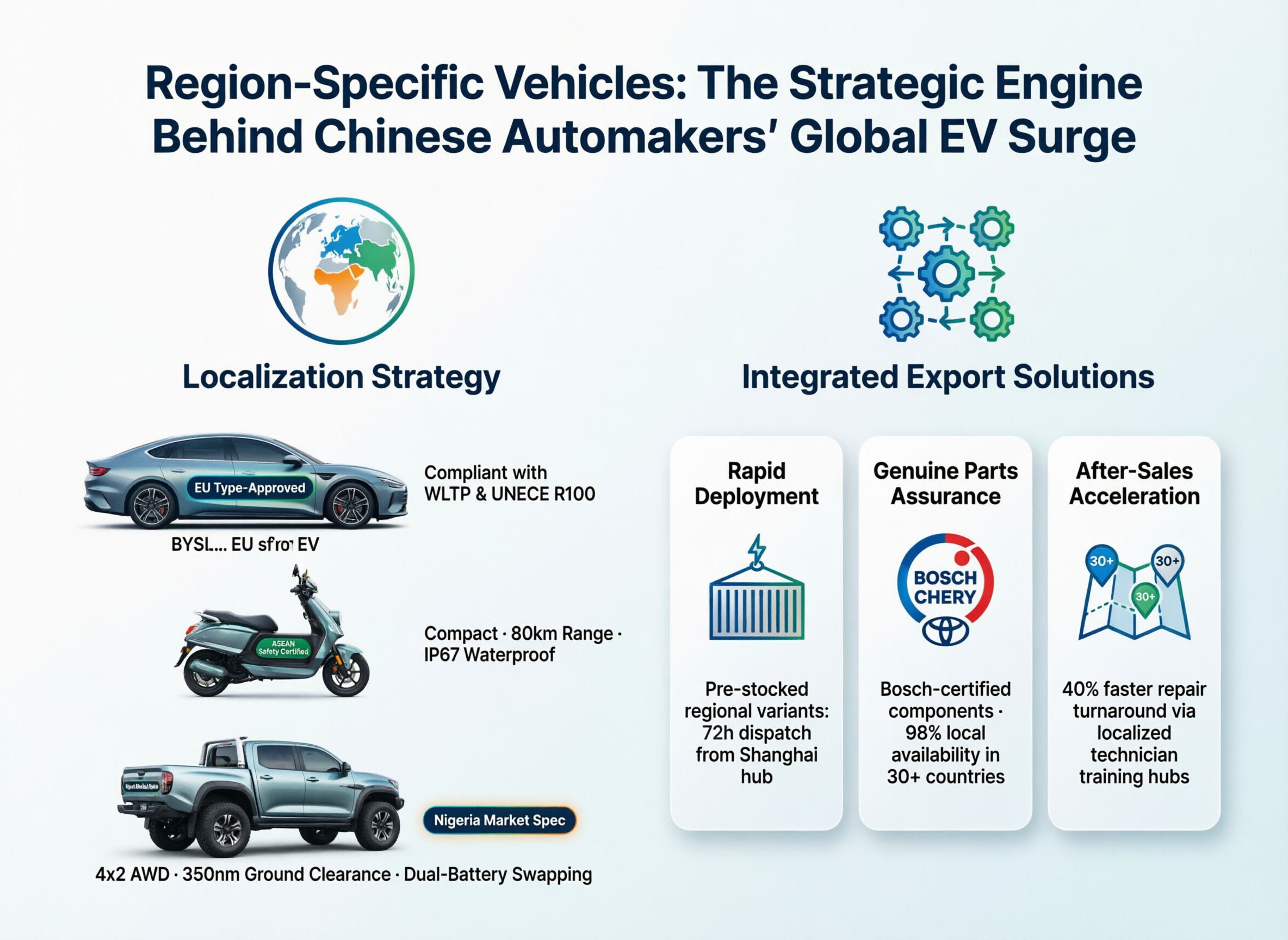
The “Yaris Moment” exemplifies how hyper-localized design—tailoring vehicles to regional preferences, infrastructure, and regulations—can unlock market dominance. Chinese automakers are now replicating this playbook with surgical precision. In Europe, brands like BYD and NIO are engineering EVs that align with stringent emissions standards and consumer expectations for premium tech integration. Meanwhile, in Southeast Asia and Africa, manufacturers focus on compact electric motorcycles and rugged, affordable EVs suited for short-distance urban mobility and challenging terrain. This dual-track strategy addresses a critical reality: global expansion is no longer about exporting domestic products but embedding regional DNA into vehicle development from inception.
However, localization introduces significant operational hurdles. Adapting to fragmented regulatory frameworks—such as Europe’s type-approval certifications or ASEAN’s safety protocols—requires rapid iteration cycles. Simultaneously, volatile demand in emerging markets necessitates flexible supply chains capable of scaling production without compromising quality. Crucially, after-sales support gaps can erode brand trust overnight, especially where service networks are underdeveloped. These challenges underscore a truth: vehicle customization alone is insufficient without an ecosystem that ensures seamless delivery, parts availability, and customer retention.
Integrated Export Solutions: Powering Localization at Scale
To transform regional strategies into sustainable growth, automakers need partners who bridge the gap between localized design and global execution. This is where specialized export ecosystems prove indispensable. UGOT’s One-stop Vehicle and Spare Parts Export Solutions address these complexities by combining authorized partnerships with China’s top EV manufacturers—including BYD, Changan, and JMC—with granular market intelligence. For instance, UGOT enables rapid deployment of region-optimized inventory: electric motorcycles engineered for Southeast Asia’s dense traffic corridors, or cold-weather EV variants for Eastern European winters. Its integrated supply chain guarantees stable access to genuine spare parts from Bosch, Toyota, and Chery, while localized after-sales hubs across 30+ countries slash repair downtime by 40%.
This model directly supports automakers’ localization ambitions. When a distributor in Nigeria requires affordable, high-ground-clearance EVs for rural fleets, UGOT coordinates end-to-end sourcing, customs clearance, and technician training. Similarly, for European dealers navigating complex homologation processes, UGOT’s pre-certified vehicle batches accelerate time-to-market by 30%. By absorbing logistical friction, UGOT empowers manufacturers to focus on core innovation while ensuring their region-specific vehicles deliver consistent performance and reliability worldwide.
Conclusion: The Road Ahead
The future of automotive globalization hinges on hyper-localization—where vehicles are not merely sold but culturally and functionally embedded in each market. Chinese automakers, leveraging EV technology as their spearhead, are poised to redefine industry leadership through this lens. Partners like UGOT will be pivotal enablers, transforming regional insights into executable supply chain advantages. As this synergy matures, we anticipate accelerated market penetration, stronger brand equity, and a new benchmark for how automotive ecosystems operate across borders. For global distributors and fleet operators, the message is clear: success lies not just in choosing the right vehicles, but in aligning with partners who master the art of localized execution.
Related Posts
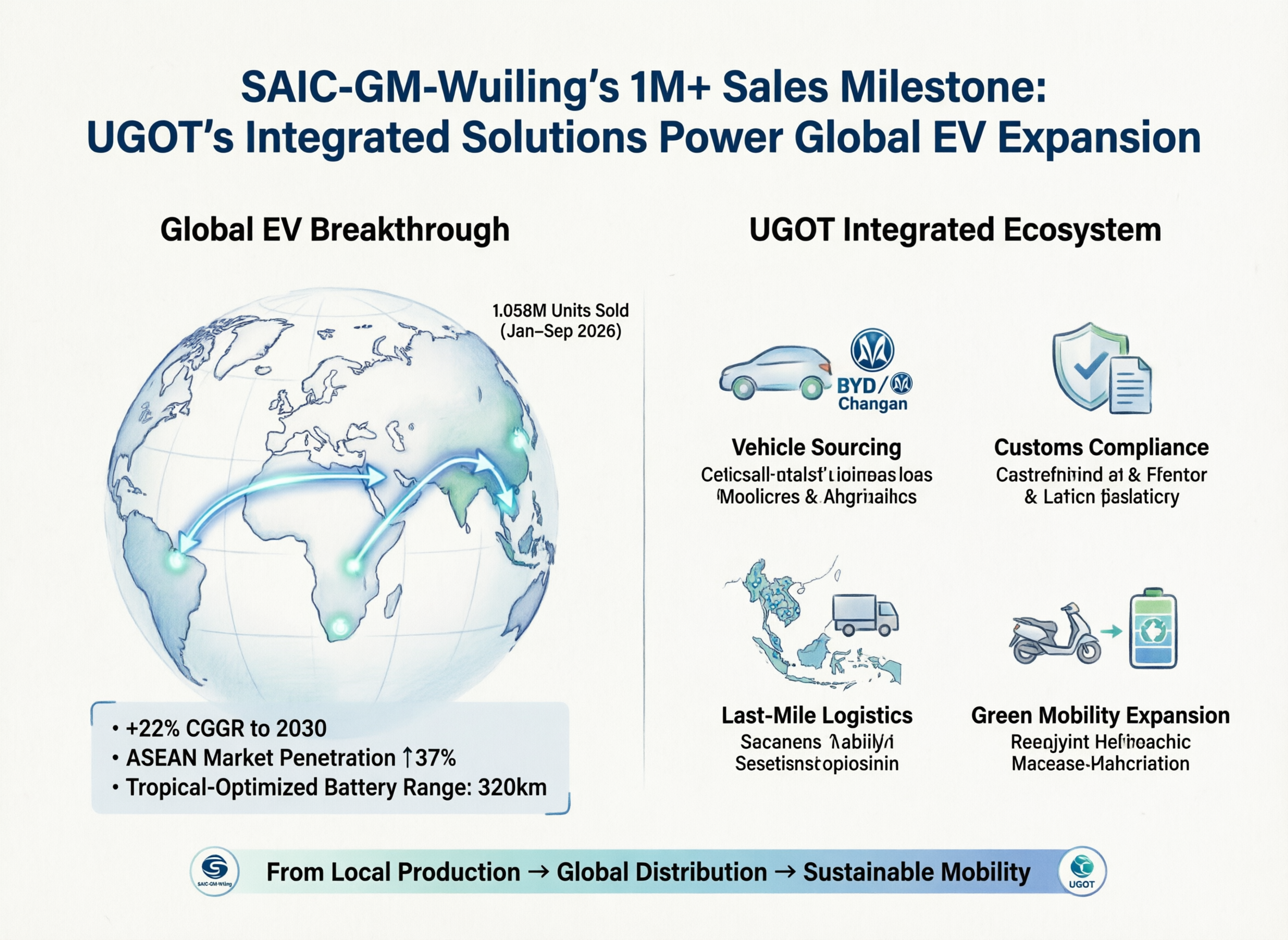 SAIC-GM-Wuling’s 1M+ Sales Milestone: UGOT’s Integrated Solutions Power Global EV Expansion
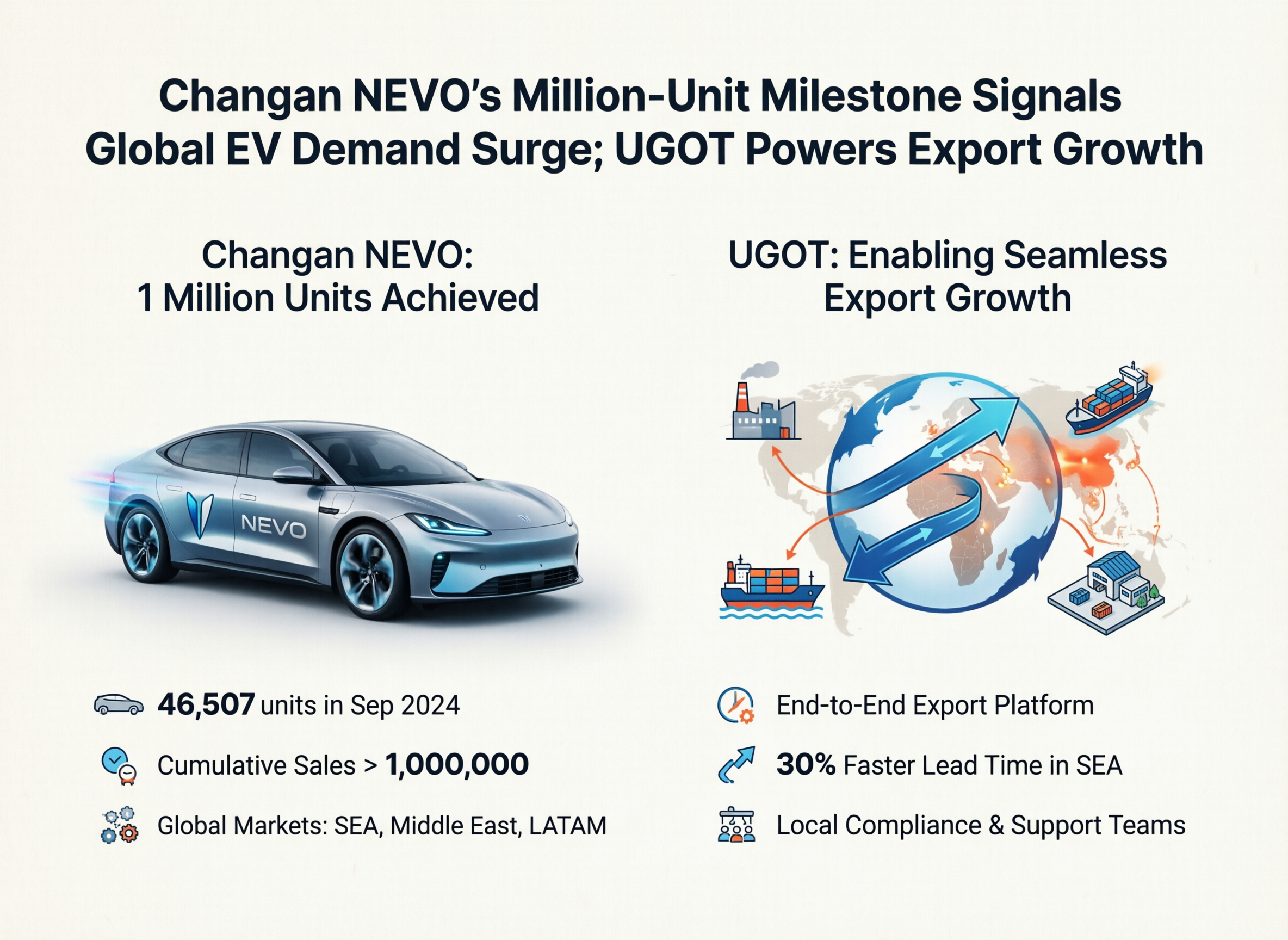 Changan NEVO’s Million-Unit Milestone Signals Global EV Demand Surge; UGOT Powers Export Growth
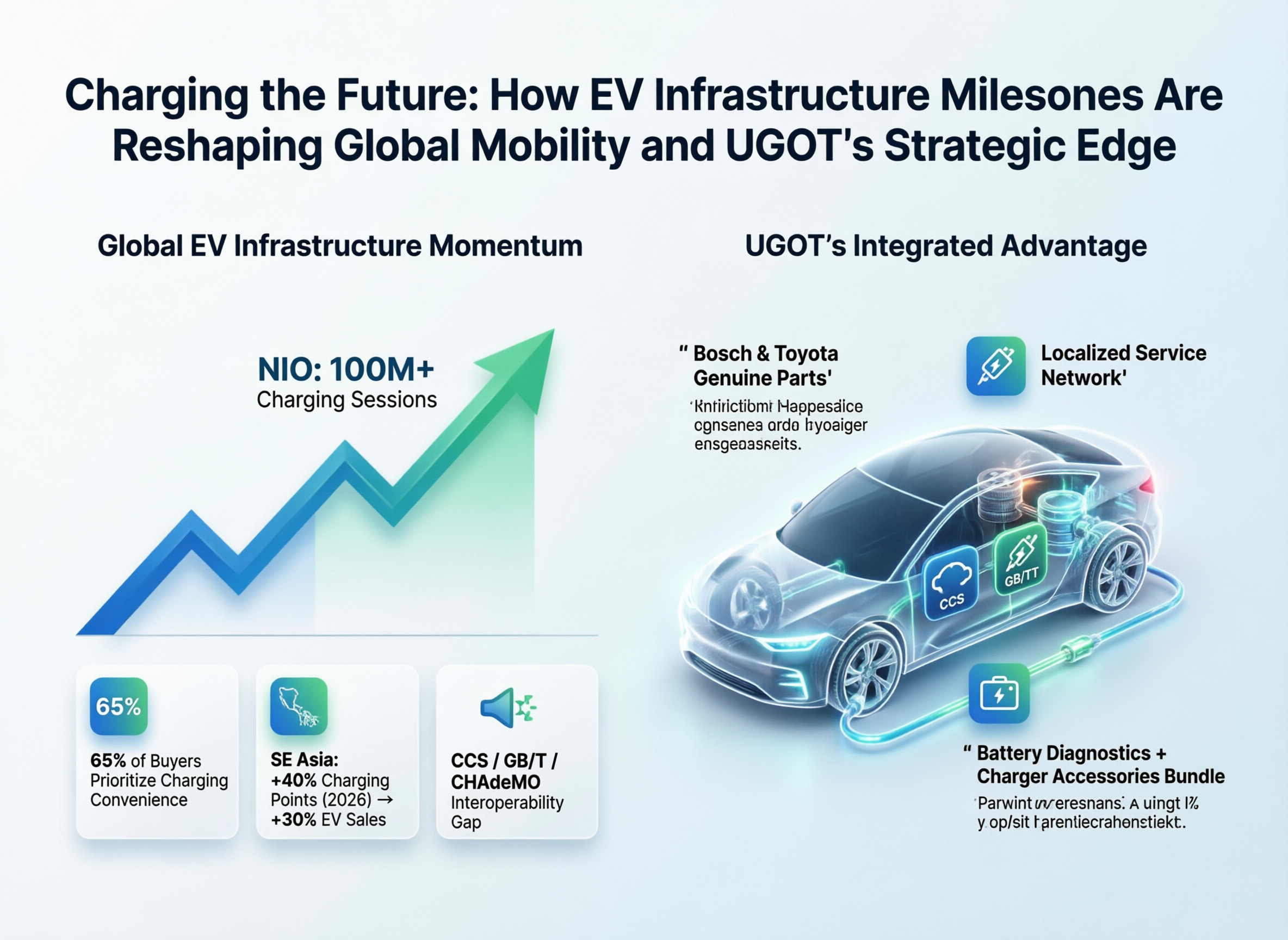 Charging the Future: How EV Infrastructure Milestones Are Reshaping Global Mobility and UGOT’s Strategic Edge