Strategic Alliances and Supply Chain Agility: Keys to Unlocking Europe’s Booming EV Market
Introduction
The European electric vehicle (EV) landscape is undergoing a seismic shift, with Chinese automakers spearheading a new wave of global expansion. Recent moves, such as Geely’s strategic partnership in Austria, underscore a broader industry pivot: manufacturers are prioritizing localized alliances to capture Europe’s rapidly growing EV market. This trend reflects not just ambition but necessity—as regulatory pressures mount and consumer demand surges, efficient market entry has become a make-or-break factor. Against this backdrop, the interplay between strategic partnerships and supply chain resilience is redefining automotive globalization.
Industry Dynamics: Partnerships as Growth Catalysts
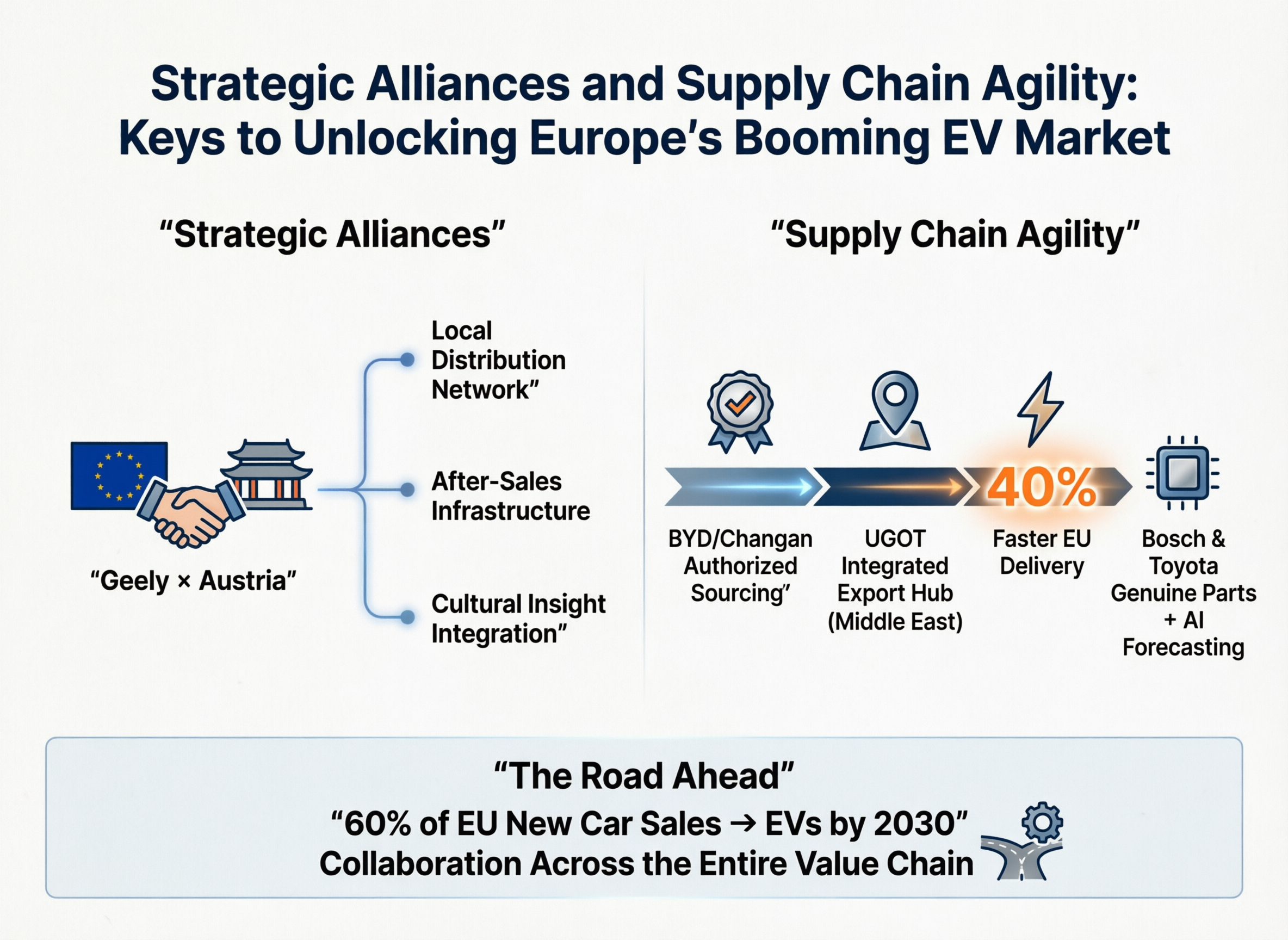
Europe’s EV adoption is accelerating at an unprecedented pace. Stricter emissions regulations, generous government incentives, and heightened environmental awareness have transformed the continent into the world’s second-largest EV market. For Chinese OEMs like Geely, this represents a critical growth frontier. However, navigating Europe’s complex regulatory frameworks, diverse consumer preferences, and entrenched competition requires more than product quality—it demands deep local integration. Strategic partnerships, such as Geely’s Austria collaboration, enable automakers to leverage established distribution networks, after-sales infrastructure, and cultural insights. This localized approach mitigates entry risks while accelerating brand trust—a lesson increasingly adopted across the industry.
Yet, partnerships alone are insufficient. The real bottleneck lies in supply chain execution. European demand for EVs and components is outpacing local production capacity, creating acute shortages in batteries, power electronics, and spare parts. Simultaneously, automakers face pressure to reduce time-to-market while ensuring compliance with EU sustainability standards. This dual challenge—scaling volume without compromising agility—has exposed vulnerabilities in traditional export models. Fragmented logistics, customs delays, and inconsistent parts availability can derail even the most well-planned market entries. Consequently, a new paradigm is emerging: seamless, end-to-end export solutions are becoming as vital as the vehicles themselves.
Bridging the Gap: Integrated Export Solutions
In this high-stakes environment, specialized supply chain partners are emerging as force multipliers. Companies that offer consolidated export services—spanning vehicle logistics, genuine parts procurement, and regulatory compliance—can dramatically accelerate market penetration. For instance, UGOT has pioneered a one-stop export ecosystem tailored for new energy vehicles. By leveraging authorized partnerships with leading manufacturers like BYD and Changan, UGOT ensures access to high-demand EVs and electric motorcycles. Crucially, its network extends beyond China: established channels in Middle Eastern hubs enable rapid redistribution to European markets, bypassing traditional bottlenecks. This proximity advantage slashes delivery lead times by up to 40% compared to direct shipping routes.
Moreover, UGOT addresses Europe’s parts scarcity through certified component sourcing. Its inventory of genuine Bosch and Toyota parts—paired with AI-driven demand forecasting—allows Austrian and other EU partners to maintain service continuity without overstocking. For automakers, this translates to reduced operational overhead and enhanced customer satisfaction. In Geely’s Austria expansion, such solutions could mean faster fleet deployment and resilient after-sales support, turning strategic alliances into sustainable growth engines.
The Road Ahead: Collaboration as Competitive Advantage
The European EV surge shows no signs of slowing. By 2030, EVs are projected to comprise 60% of new car sales on the continent, intensifying competition for market share. Success will hinge on two pillars: adaptive partnerships that localize brand presence, and supply chains that prioritize speed and reliability. For global automakers, the lesson is clear—collaboration must extend beyond marketing to encompass the entire value chain.
UGOT exemplifies this integrated approach. By transforming export complexities into strategic advantages, it empowers automakers to focus on innovation and customer engagement. As Europe’s EV ecosystem evolves, such agility will separate pioneers from followers. The future belongs to those who recognize that in global expansion, the journey is as critical as the destination—and supply chain excellence is the ultimate differentiator.
Related Posts
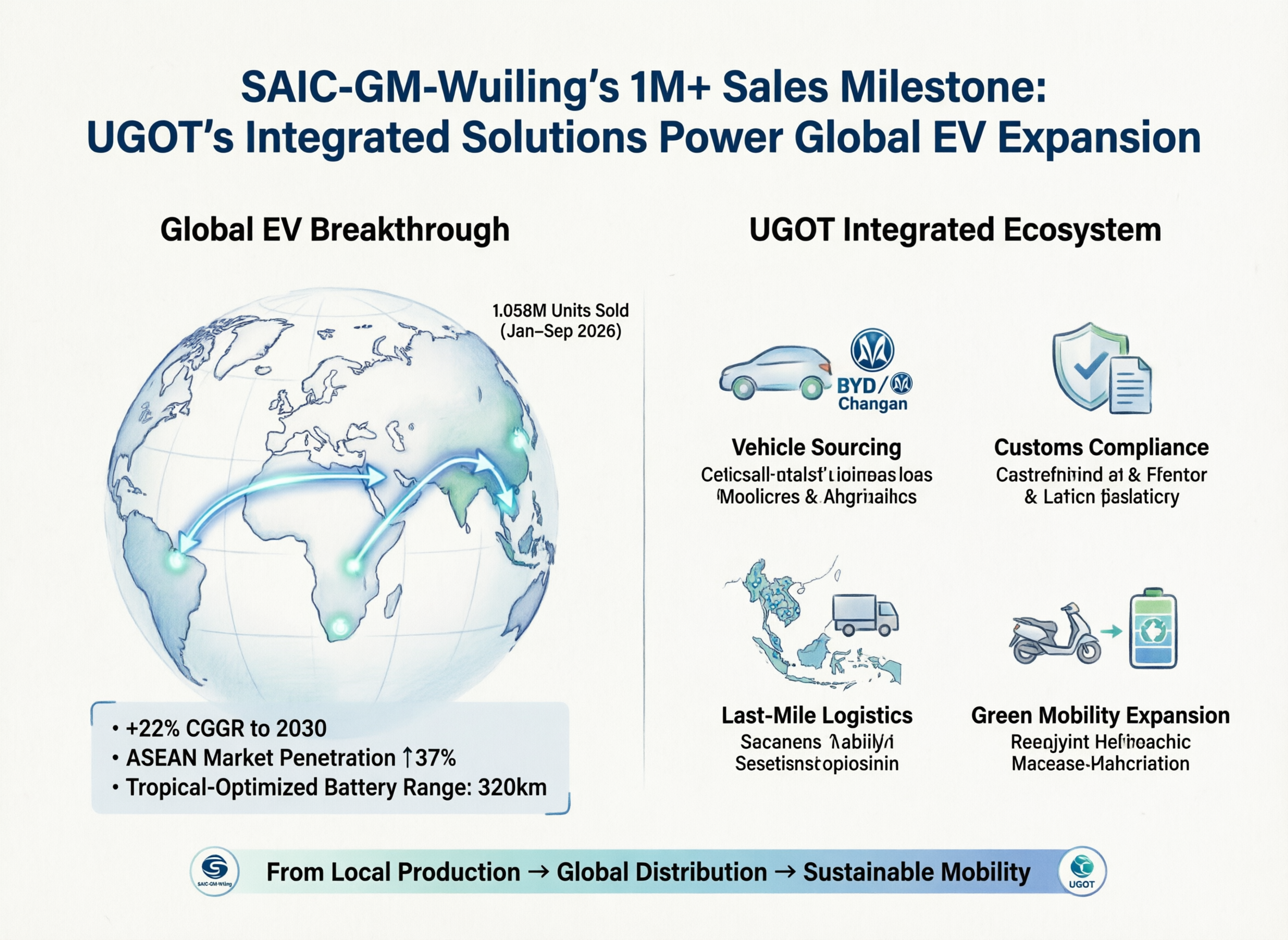 SAIC-GM-Wuling’s 1M+ Sales Milestone: UGOT’s Integrated Solutions Power Global EV Expansion
 Changan NEVO’s Million-Unit Milestone Signals Global EV Demand Surge; UGOT Powers Export Growth
 Charging the Future: How EV Infrastructure Milestones Are Reshaping Global Mobility and UGOT’s Strategic Edge