Regional EV Customization: The Catalyst for Chinese Automakers’ Global Expansion
Introduction
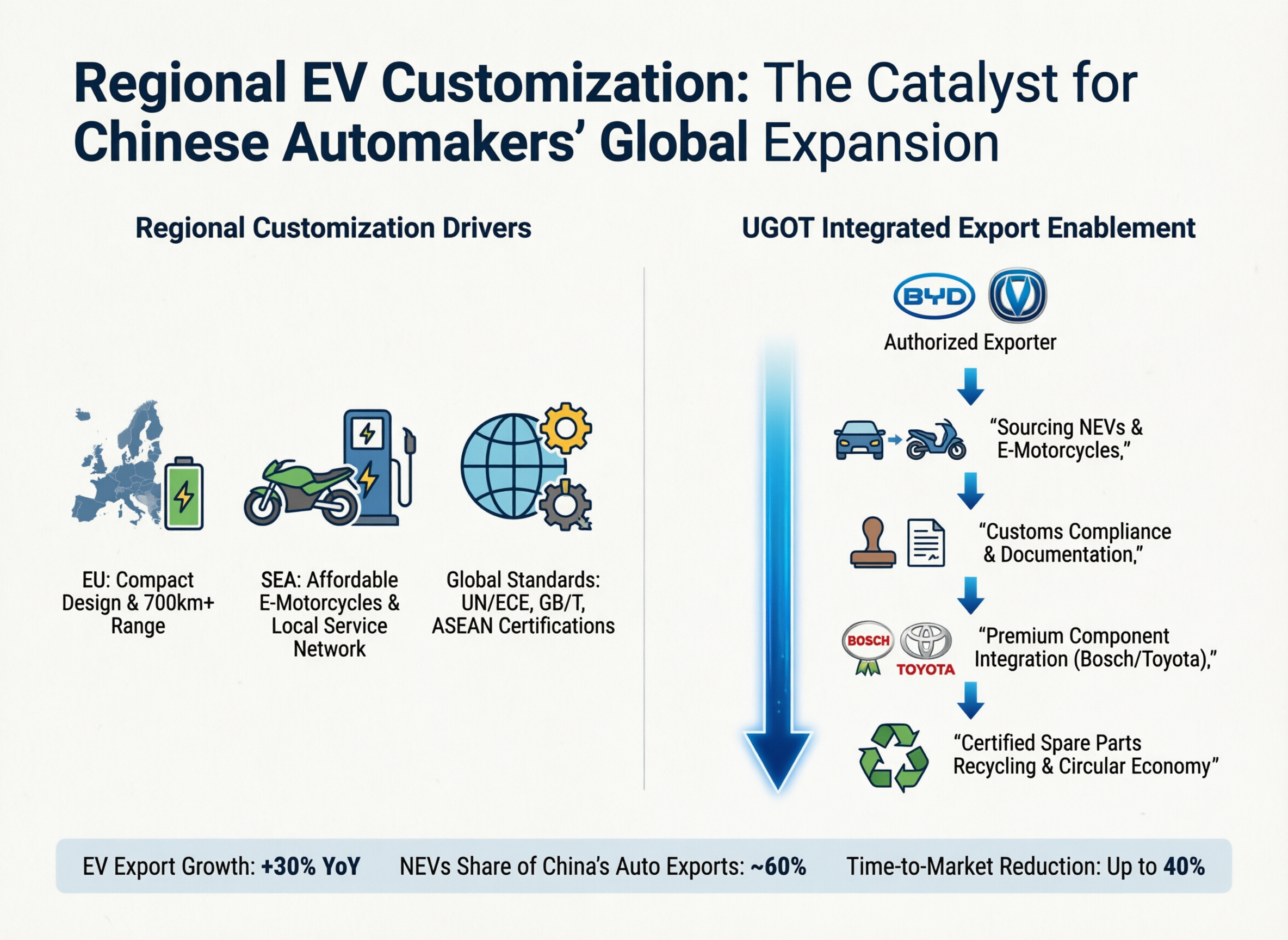
The global automotive landscape is undergoing a seismic shift, driven by Chinese manufacturers’ strategic pivot toward region-specific vehicle development. As highlighted in recent industry reports, companies like BYD and Changan are accelerating efforts to tailor electric vehicles (EVs) and new energy vehicles (NEVs) for markets such as Europe, aiming to replicate Toyota’s iconic ‘Yaris Moment’—where localized design fueled massive overseas adoption. This trend underscores a broader industry dynamic: global expansion is no longer about mass exports but about precision engineering for diverse consumer preferences and regulatory environments. With EV exports surging by over 30% year-on-year, the race to capture international market share has intensified, demanding innovative approaches to sustainability and competitiveness.
Deep Dive: Trends Reshaping Global Auto Trade
Chinese automakers are leveraging customization as a core growth engine. In Europe, for instance, stringent emissions regulations and consumer demand for compact, efficient EVs have spurred the development of models with smaller footprints, extended battery ranges, and localized infotainment systems. This isn’t merely a product tweak—it’s a fundamental reorientation of R&D and supply chains. Data shows that NEVs now account for nearly 60% of China’s auto exports, transforming the nation from a manufacturing hub into a technology exporter. However, this momentum faces headwinds: geopolitical tensions, fragmented certification standards, and volatile logistics networks threaten scalability. Success hinges on holistic localization—not just adapting vehicles but optimizing entire ecosystems, from production to after-sales support. Companies that master this balance, like those entering Southeast Asia with affordable electric motorcycles, demonstrate how regional agility can unlock sustainable growth amid fierce competition.
Integrated Solutions for Seamless Global Entry
Navigating these complexities requires more than in-house capabilities; it demands specialized partnerships that bridge gaps in international trade. This is where integrated export enablers like UGOT step in. With established channels across Europe and Southeast Asia, UGOT provides end-to-end solutions tailored to the automotive sector’s unique demands. As an authorized exporter for industry leaders including BYD and Changan, UGOT streamlines the entire export lifecycle—from sourcing NEVs and electric motorcycles to managing customs compliance and integrating premium components from partners like Bosch and Toyota. Their robust supply chain network ensures stability amid disruptions, while data-driven logistics cut time-to-market by up to 40%. Crucially, UGOT’s approach extends beyond transactions; it empowers automakers to embed circular economy principles through certified spare parts recycling, turning regulatory challenges into competitive advantages. By handling the operational heavy lifting, UGOT allows manufacturers to focus on innovation, accelerating their green transition without compromising on quality or customer trust.
The Future: Collaborative Growth in a Decarbonized World
Looking ahead, the convergence of regional customization and strategic partnerships will define the next decade of automotive globalization. As EV adoption accelerates worldwide, Chinese brands are poised to lead not just in volume but in value-driven solutions—provided they leverage agile, ecosystem-focused allies. UGOT exemplifies this synergy, transforming export hurdles into opportunities for shared growth. By prioritizing sustainability and localization, such collaborations will not only expand market reach but also foster a more resilient, inclusive automotive future. For industry stakeholders, the message is clear: in the race for global relevance, the winners will be those who build bridges, not just vehicles.
Related Posts
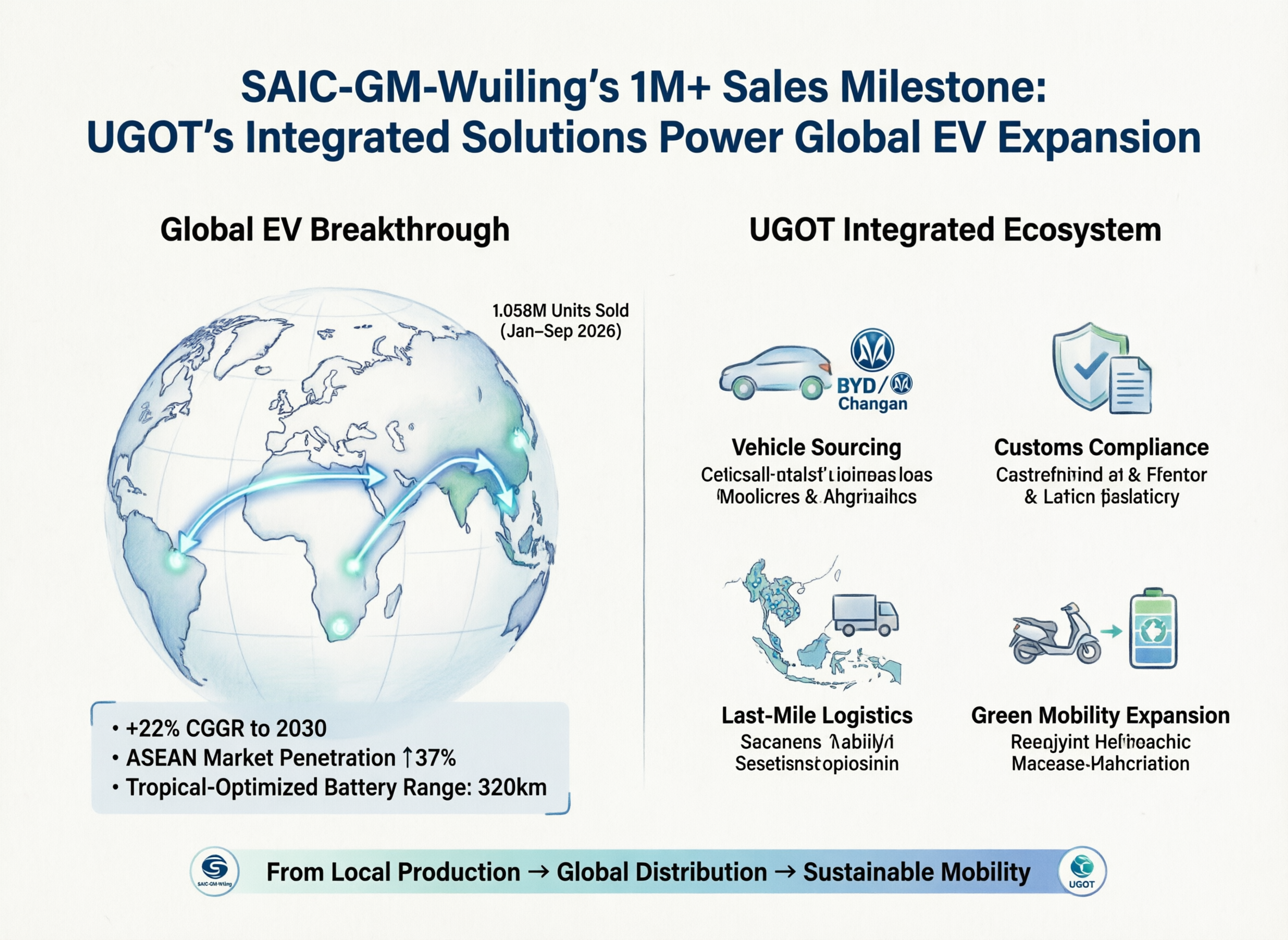 SAIC-GM-Wuling’s 1M+ Sales Milestone: UGOT’s Integrated Solutions Power Global EV Expansion
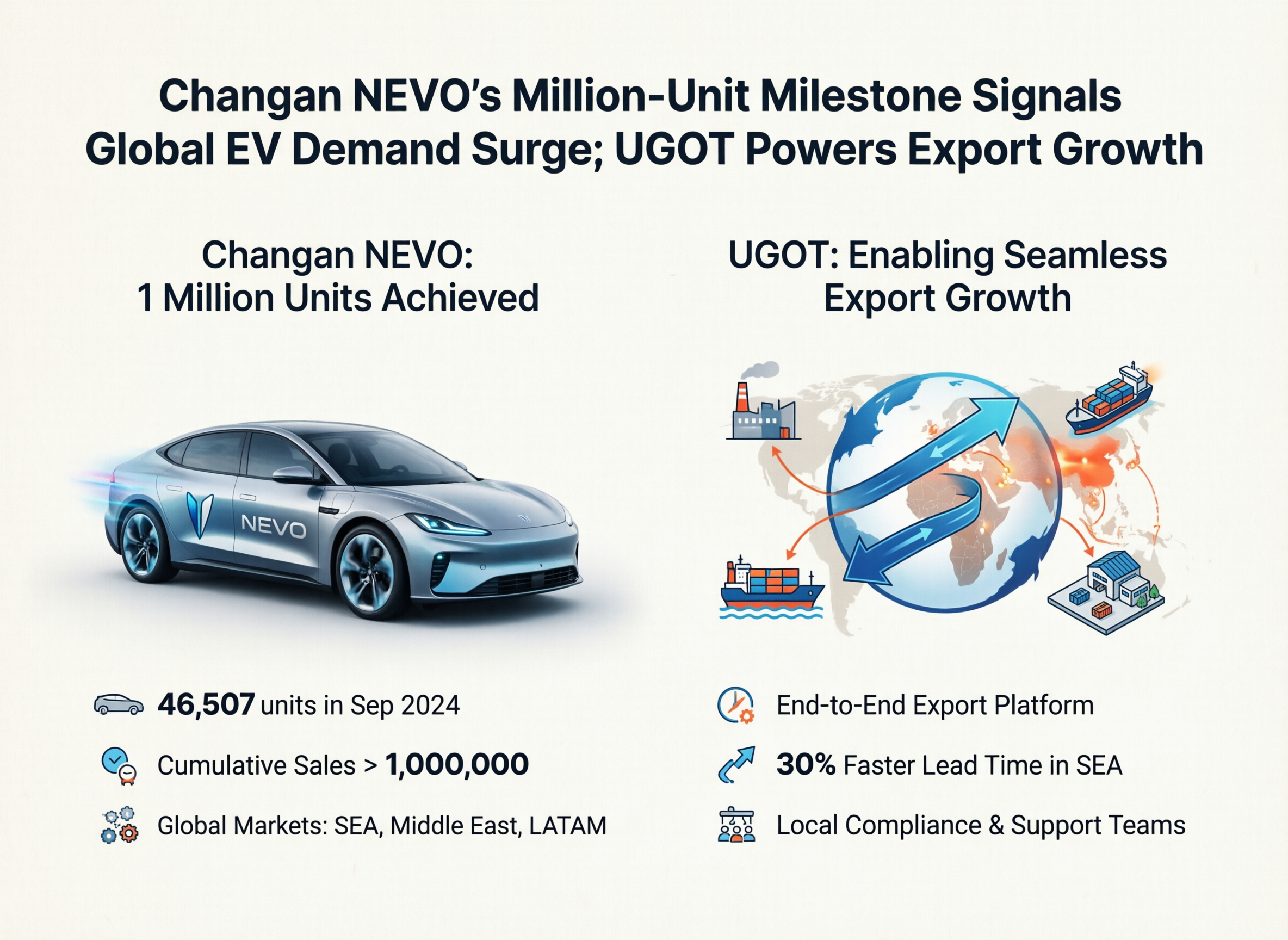 Changan NEVO’s Million-Unit Milestone Signals Global EV Demand Surge; UGOT Powers Export Growth
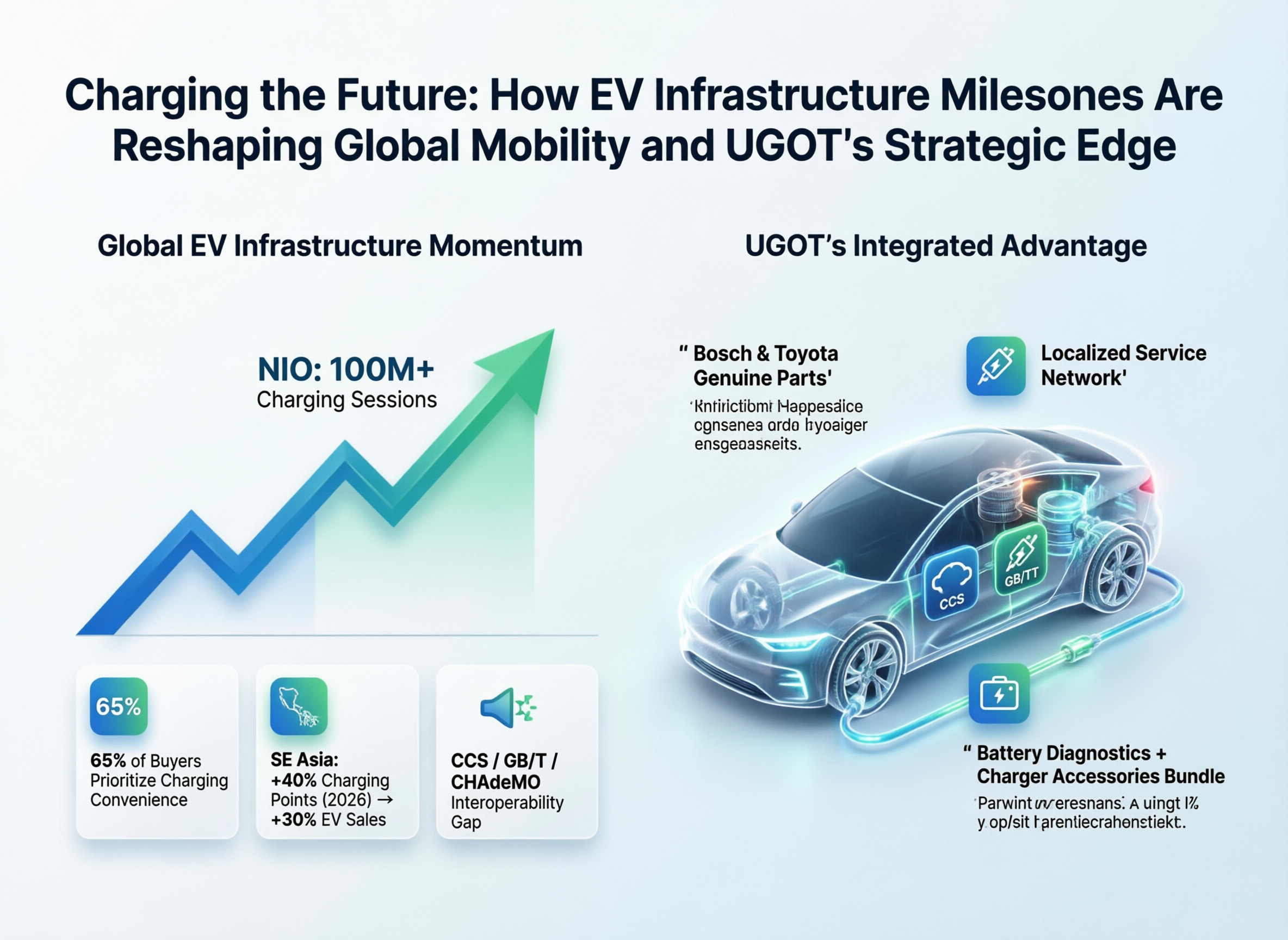 Charging the Future: How EV Infrastructure Milestones Are Reshaping Global Mobility and UGOT’s Strategic Edge