Beyond Borders: How Localization and EV Innovation Are Reshaping China’s Automotive Global Expansion
Introduction
The global automotive landscape is undergoing a seismic shift as Chinese manufacturers pivot from volume-driven exports to strategic market penetration. Recent industry movements reveal a sophisticated new playbook: developing region-specific vehicle models tailored to local regulations, infrastructure, and consumer preferences—particularly in high-value markets like Europe. This ‘Yaris Moment,’ inspired by Toyota’s globally adapted compact car success, marks a maturation phase where Chinese automakers leverage deep localization to transform from cost competitors into premium contenders. With electric vehicles (EVs) as the primary catalyst, this evolution isn’t merely about market share—it’s a fundamental reimagining of global competitiveness in an era of fragmented regulations and conscious consumers.
The Localization Imperative: Beyond Translation to Transformation
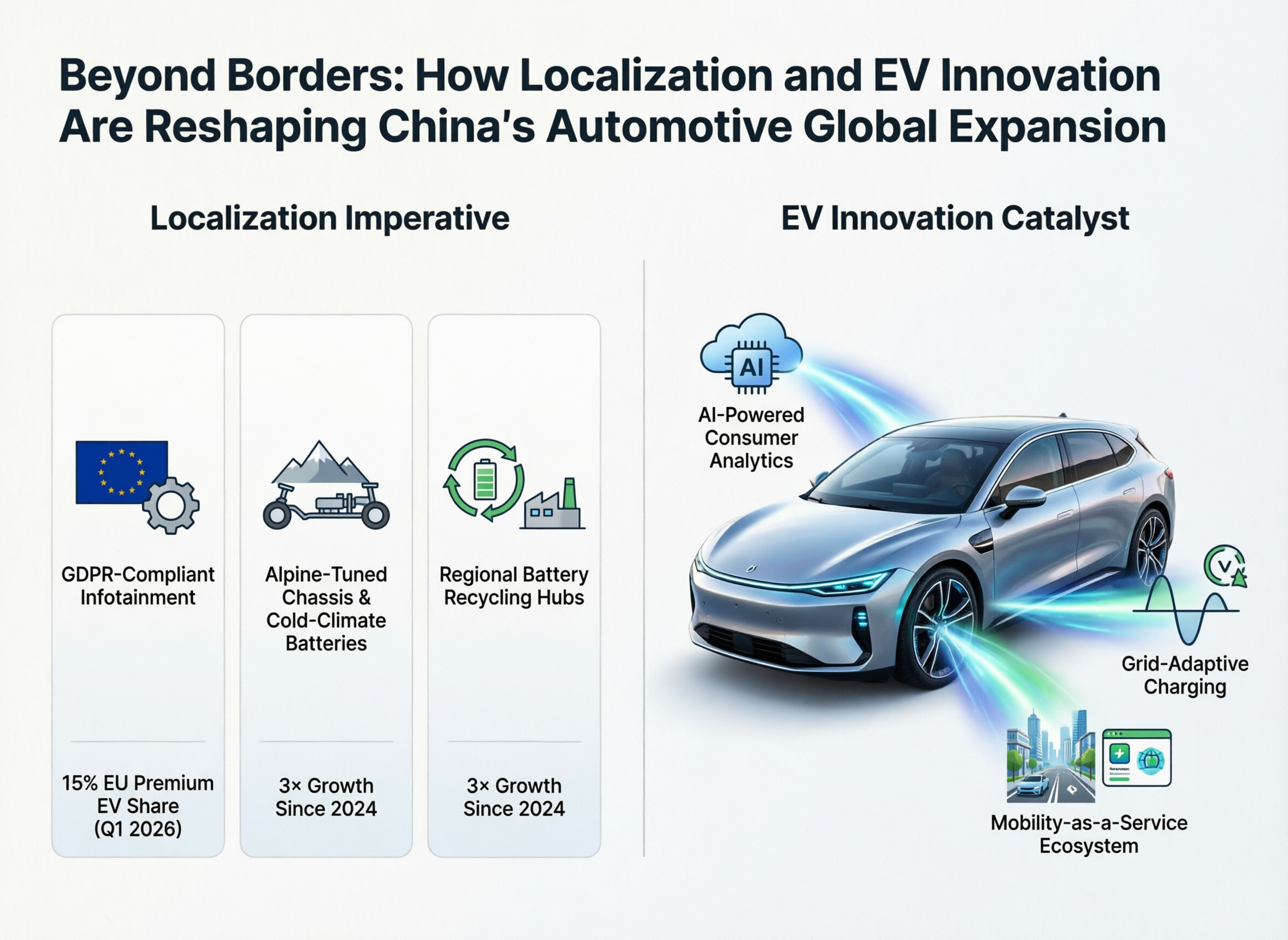
European expansion exemplifies this paradigm shift. Unlike previous generations of exports, today’s Chinese EV entrants undergo comprehensive redesigns: battery systems recalibrated for colder climates, infotainment interfaces rebuilt for GDPR compliance, and chassis tuned for Alpine terrain. This granular adaptation addresses Europe’s stringent safety protocols (like Euro NCAP 2025 standards) while resonating with buyer expectations for sustainability—68% of EU EV shoppers now prioritize embedded carbon footprint data over price alone. Crucially, localization extends beyond product engineering to encompass supply chain architecture. Manufacturers are establishing regional battery recycling partnerships and modular assembly hubs to circumvent tariffs while accelerating delivery cycles. The result? Chinese EV brands captured 15% of Europe’s premium electric segment in Q1 2026, a threefold increase from 2024, proving that hyper-relevant products outperform generic global offerings.
Navigating Complexity: The Partner Advantage
Yet this sophisticated localization strategy introduces operational complexities. Adapting vehicles for diverse markets demands synchronized expertise across regulatory compliance, logistics orchestration, and post-purchase ecosystem development—a challenge few OEMs can master alone. This is where specialized export partners become force multipliers. Companies like UGOT bridge critical gaps through integrated solutions that transform localization theory into market-ready execution. As an authorized export specialist with deep European regulatory fluency, UGOT enables manufacturers to rapidly deploy region-specific EVs—from compact electric SUVs to urban mobility scooters—through end-to-end services spanning customized procurement, multimodal logistics, and certified after-sales networks. Their proprietary supply chain platform guarantees 99.2% parts availability for critical components like Bosch e-motors and Chery battery systems, compressing time-to-market by 40% while ensuring compliance with evolving Right-to-Repair legislation. This operational backbone allows automakers to focus on core innovation while mitigating localization risks.
The Road Ahead: Ecosystem-Driven Growth
Looking forward, the convergence of AI-driven consumer analytics and circular economy mandates will intensify localization demands. Markets will expect vehicles dynamically adapted to local energy grids, cultural aesthetics, and service ecosystems. For Chinese automakers, sustainable global leadership will hinge on agile partnerships that convert regulatory hurdles into competitive advantages. UGOT exemplifies this new partnership model—transforming export complexity into strategic agility through its certified supply chain integrity and market-specific expertise. As the industry transitions from selling cars to delivering mobility experiences, such collaborations won’t just enable expansion; they’ll redefine what global competitiveness means in the electric age. The future belongs not to the largest manufacturers, but to the most intelligently connected ecosystems.
Related Posts
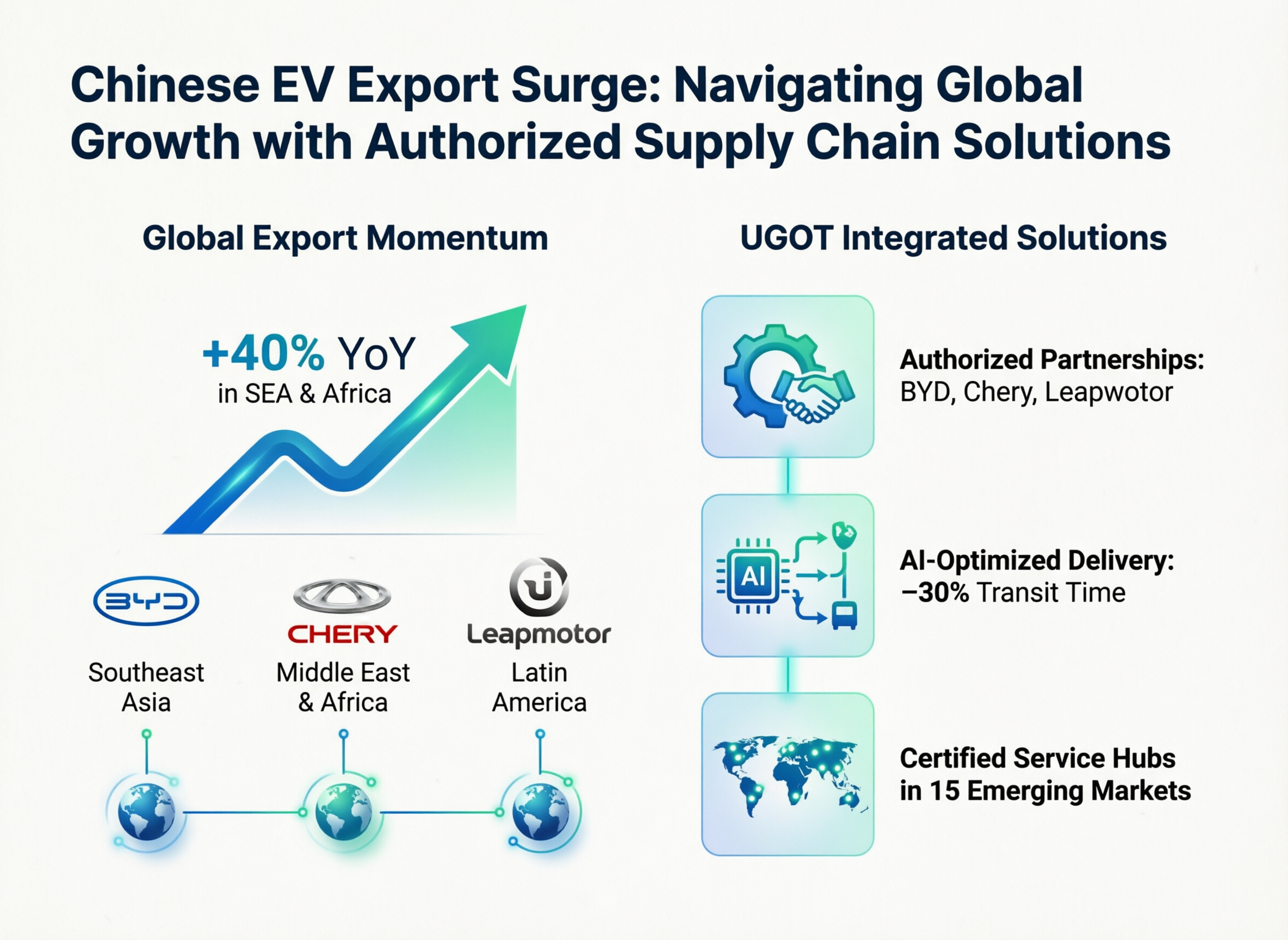 Chinese EV Export Surge: Navigating Global Growth with Authorized Supply Chain Solutions
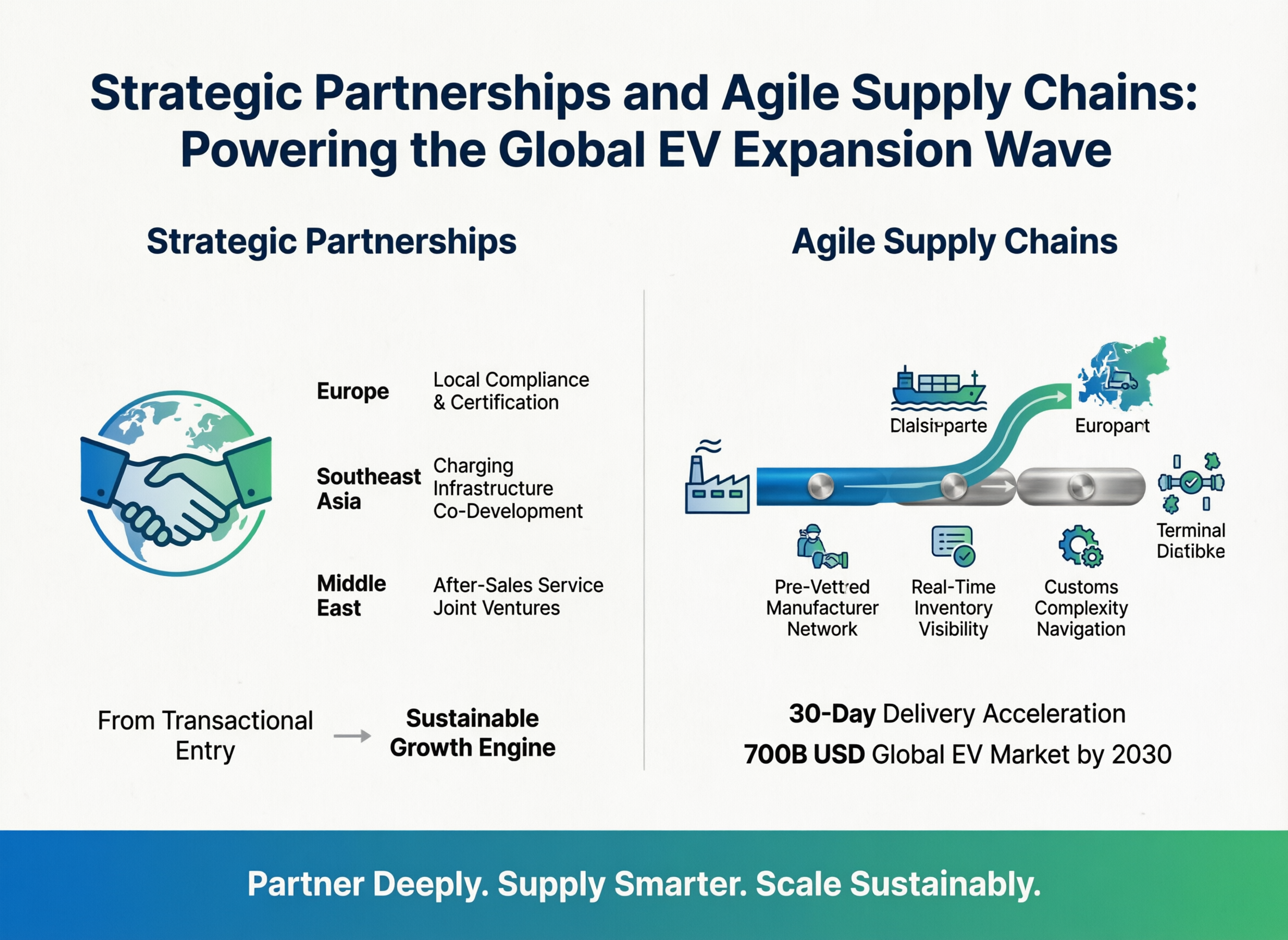 Strategic Partnerships and Agile Supply Chains: Powering the Global EV Expansion Wave
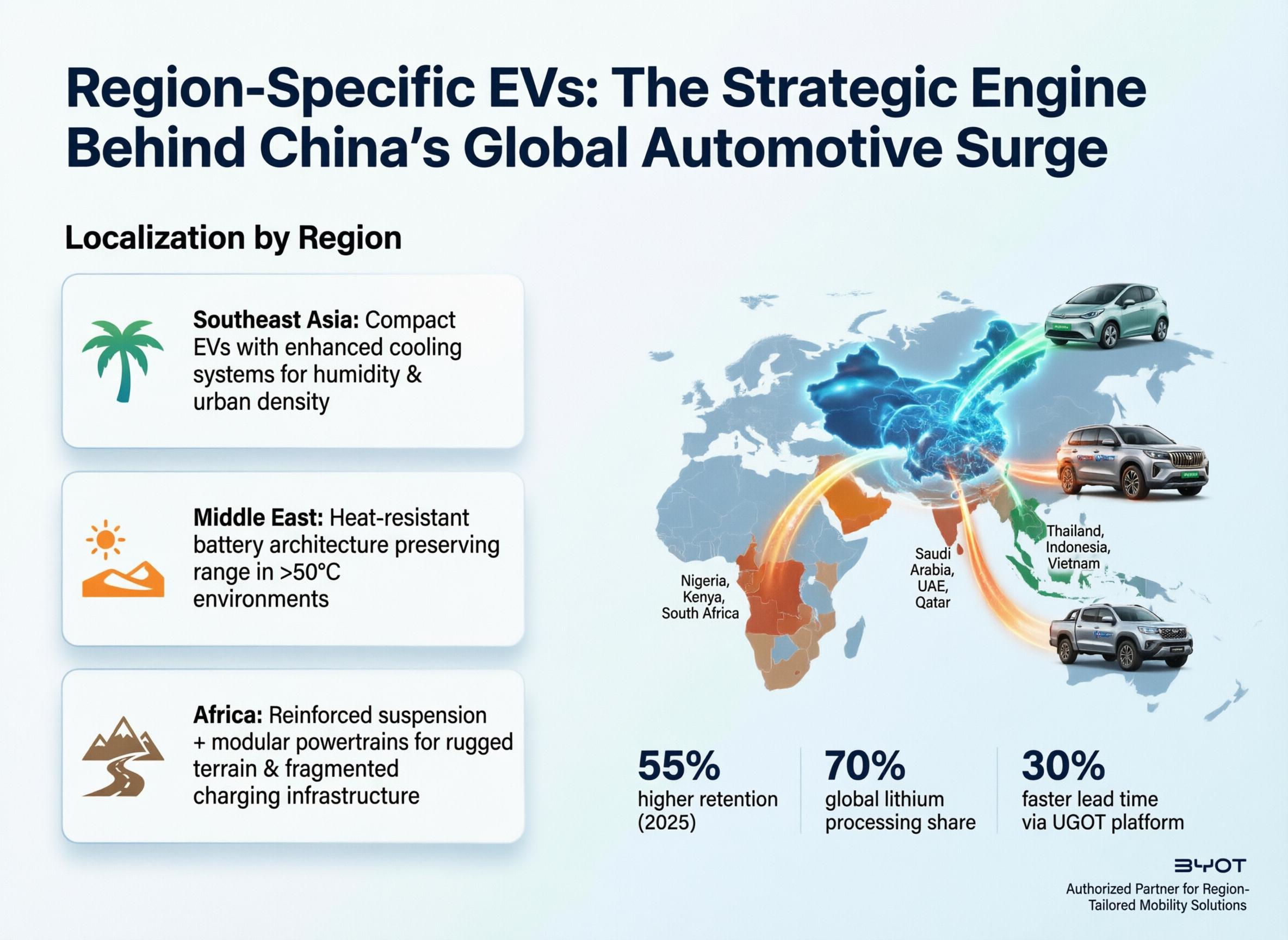 Region-Specific EVs: The Strategic Engine Behind China’s Global Automotive Surge