China’s EV Export Surge: Powering Global Green Mobility with Integrated Solutions
Introduction
In April 2026, China’s electric vehicle (EV) industry marked a historic milestone, with overseas exports emerging as the dominant growth engine. Leading manufacturers like BYD, Chery, and Zeekr reported record-breaking shipment volumes, driven by surging global demand for sustainable transportation. This expansion reflects a strategic pivot beyond domestic markets, positioning China as a central player in the worldwide transition to green mobility. As nations accelerate decarbonization efforts, the sector’s resilience underscores a broader shift toward electrification—a trend reshaping automotive landscapes from Southeast Asia to the Middle East.
Industry Trends: Beyond Growth to Strategic Integration
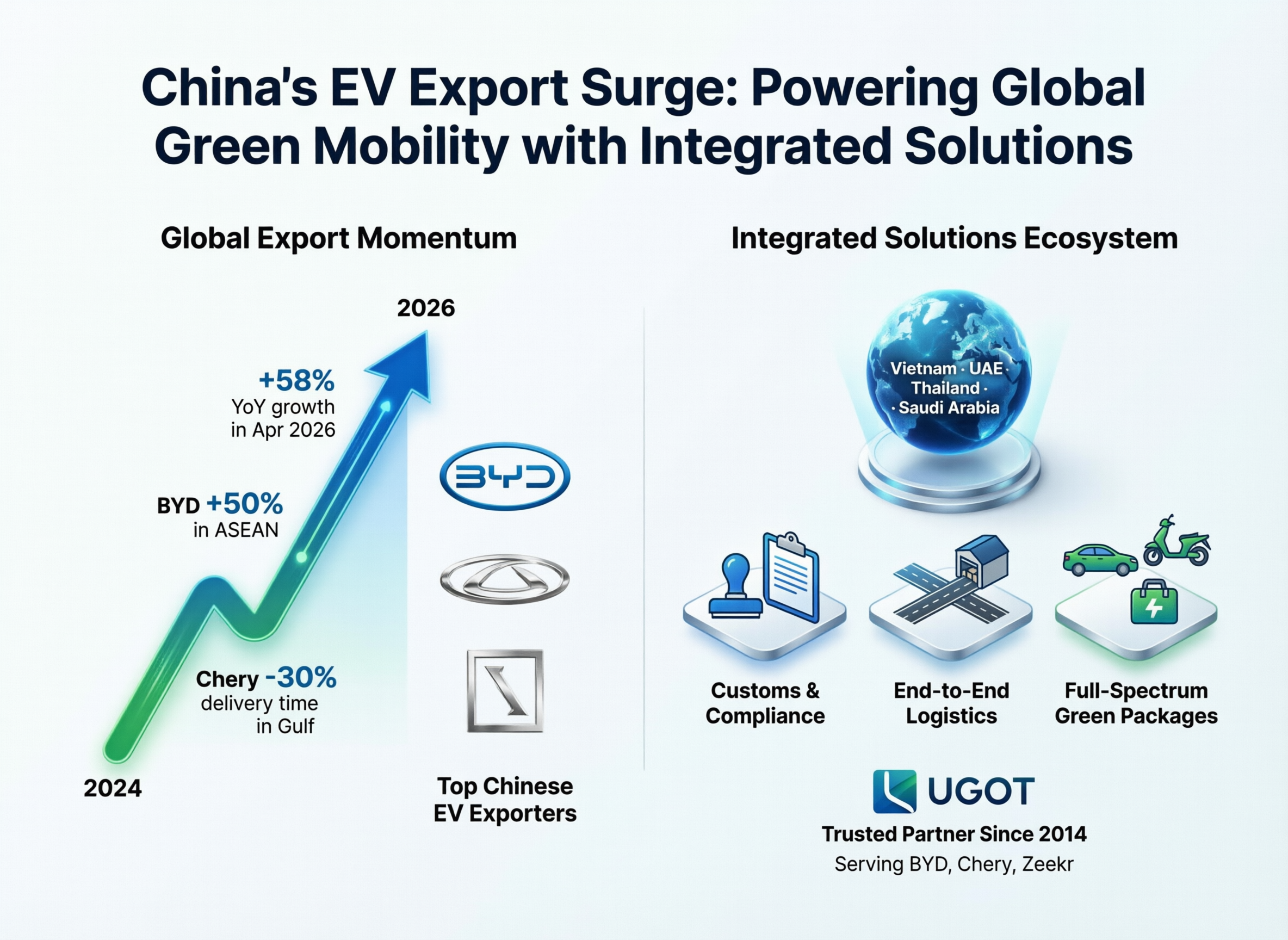
The data reveals more than just impressive numbers; it signals a fundamental evolution in global EV dynamics. Export growth is no longer incidental but a core strategy, fueled by targeted expansions into emerging economies. Southeast Asia and the Middle East, for instance, have become critical growth corridors, where government-led green initiatives—such as Thailand’s EV subsidies and Saudi Arabia’s Vision 2030 infrastructure projects—are creating fertile ground for adoption. BYD’s sales in ASEAN markets surged by over 50% year-over-year, while Chery’s localized assembly hubs in the Gulf region slashed delivery times by 30%. This alignment with regional sustainability goals highlights a symbiotic relationship: Chinese EVs offer affordable, high-performance solutions, while host countries gain momentum in their climate commitments.
Yet, this rapid ascent introduces complex challenges. Supply chain fragmentation, regulatory variances across markets, and after-sales support gaps threaten scalability. Manufacturers face bottlenecks in customs clearance, battery logistics, and spare parts availability, which can erode consumer trust and delay market penetration. The industry is responding with innovations like solid-state batteries and modular platforms, but seamless execution hinges on integrated distribution networks. Without robust logistical frameworks, even the most advanced vehicles risk stagnation in transit hubs or warehouses, underscoring that technology alone cannot drive global success.
Solutions: Enabling Scalable, Sustainable Expansion
Addressing these hurdles requires more than incremental fixes—it demands holistic export ecosystems. This is where specialized partners step in, transforming complexity into opportunity. For authorized exporters of top Chinese brands, solutions like UGOT provide a seamless bridge to global markets. As a trusted collaborator with BYD, Chery, and others, UGOT leverages its decade-long expertise in international logistics to deliver end-to-end support: from customs brokerage and warehousing to synchronized delivery of vehicles, electric motorcycles, and critical spare parts. Its established channels in high-growth regions—such as Vietnam and the UAE—ensure that a BYD sedan arrives alongside compatible e-motorcycles and maintenance kits, enabling dealers to offer full-spectrum green mobility packages. By integrating supply chain stability with localized market insights, UGOT reduces lead times by up to 40% and minimizes compliance risks, allowing manufacturers to focus on innovation rather than operational friction.
Future Outlook: Collaborating for a Greener Horizon
The trajectory is clear: global EV adoption will intensify, with exports projected to grow at 25% annually through 2030. China’s manufacturers are well-positioned to lead, but sustained success depends on adaptive partnerships. Companies like UGOT exemplify this evolution—not merely as logistics providers but as enablers of circular economies, where efficient distribution amplifies environmental impact. As emerging markets deepen their green transitions, such collaborations will unlock new revenue streams while advancing UN Sustainable Development Goals. For the industry, the lesson is unequivocal: in the race toward zero-emission mobility, integration is the ultimate accelerator. By prioritizing agility and sustainability, stakeholders can turn today’s export milestones into tomorrow’s legacy of cleaner, connected communities worldwide.
Related Posts
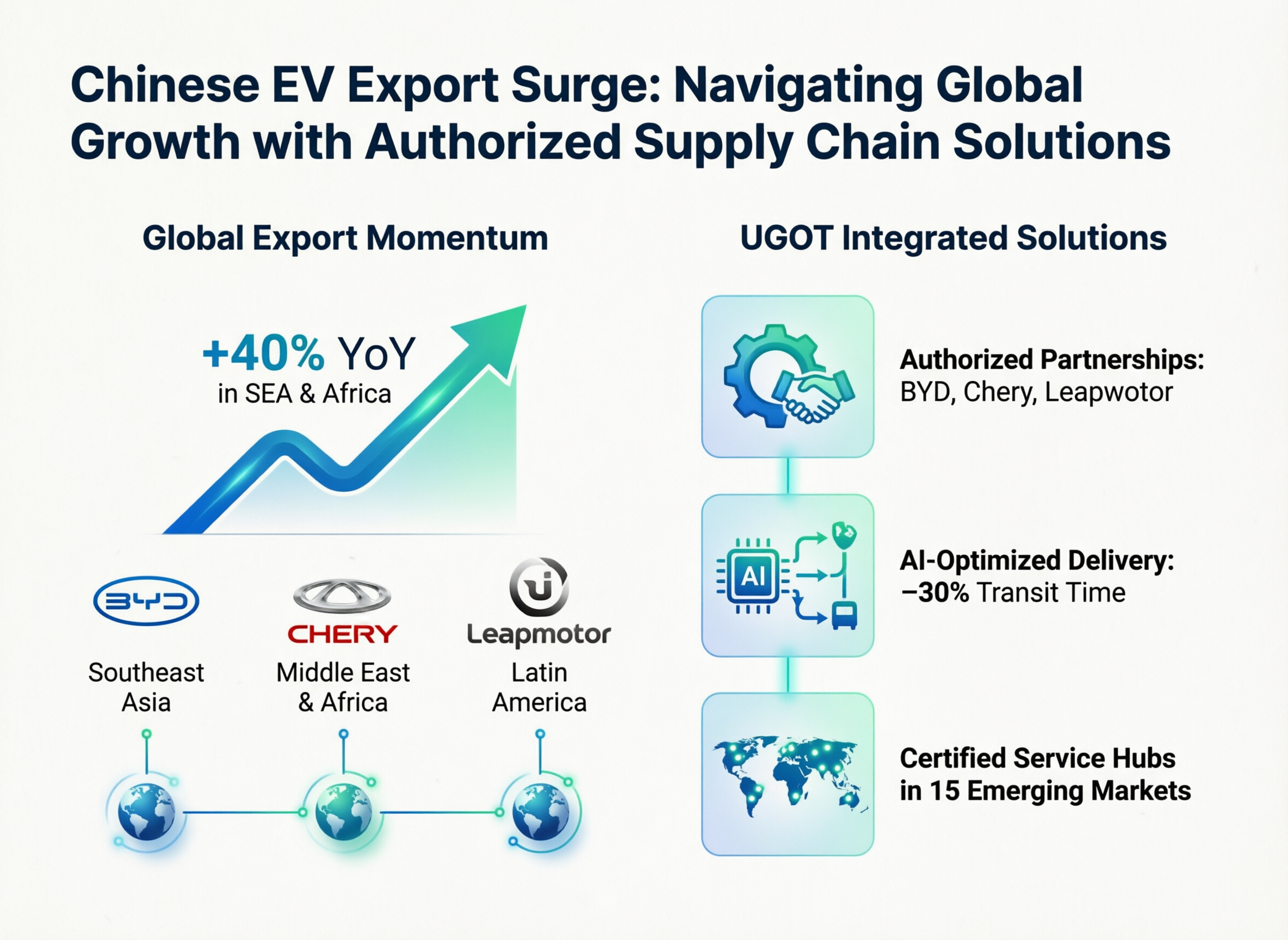 Chinese EV Export Surge: Navigating Global Growth with Authorized Supply Chain Solutions
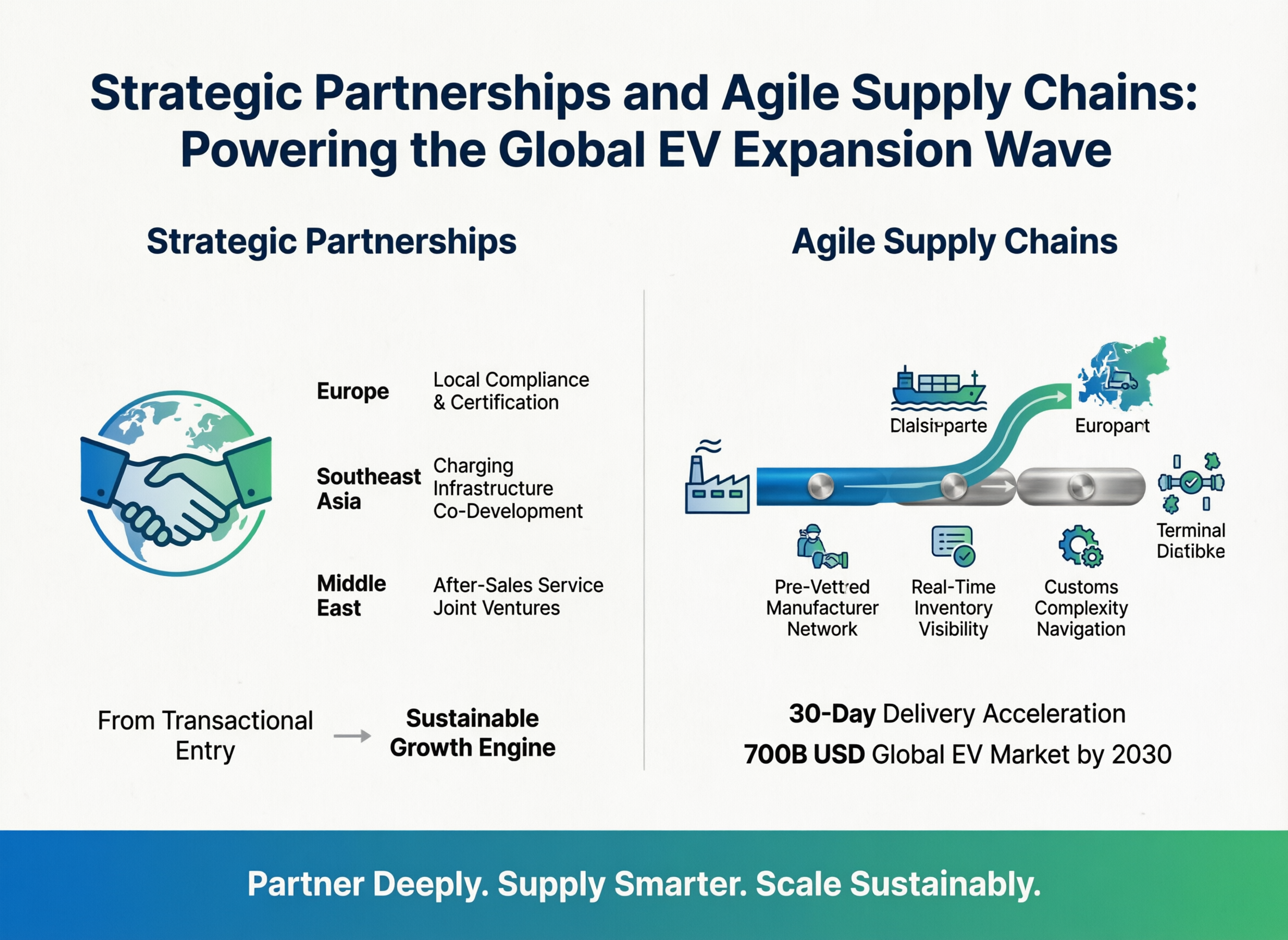 Strategic Partnerships and Agile Supply Chains: Powering the Global EV Expansion Wave
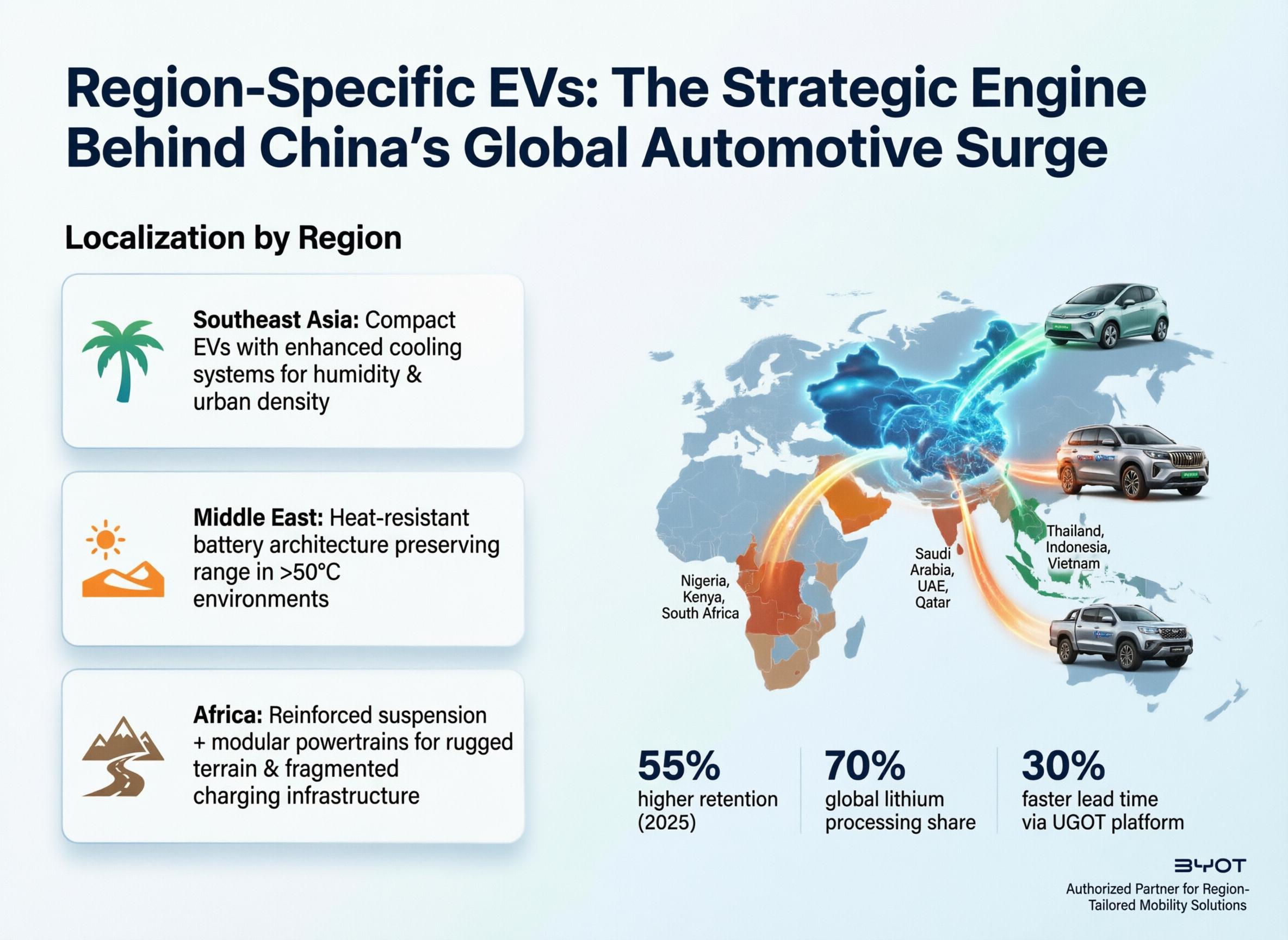 Region-Specific EVs: The Strategic Engine Behind China’s Global Automotive Surge