
Accelerating European EV Expansion: The Strategic Power of Localized Supply Chains
Introduction
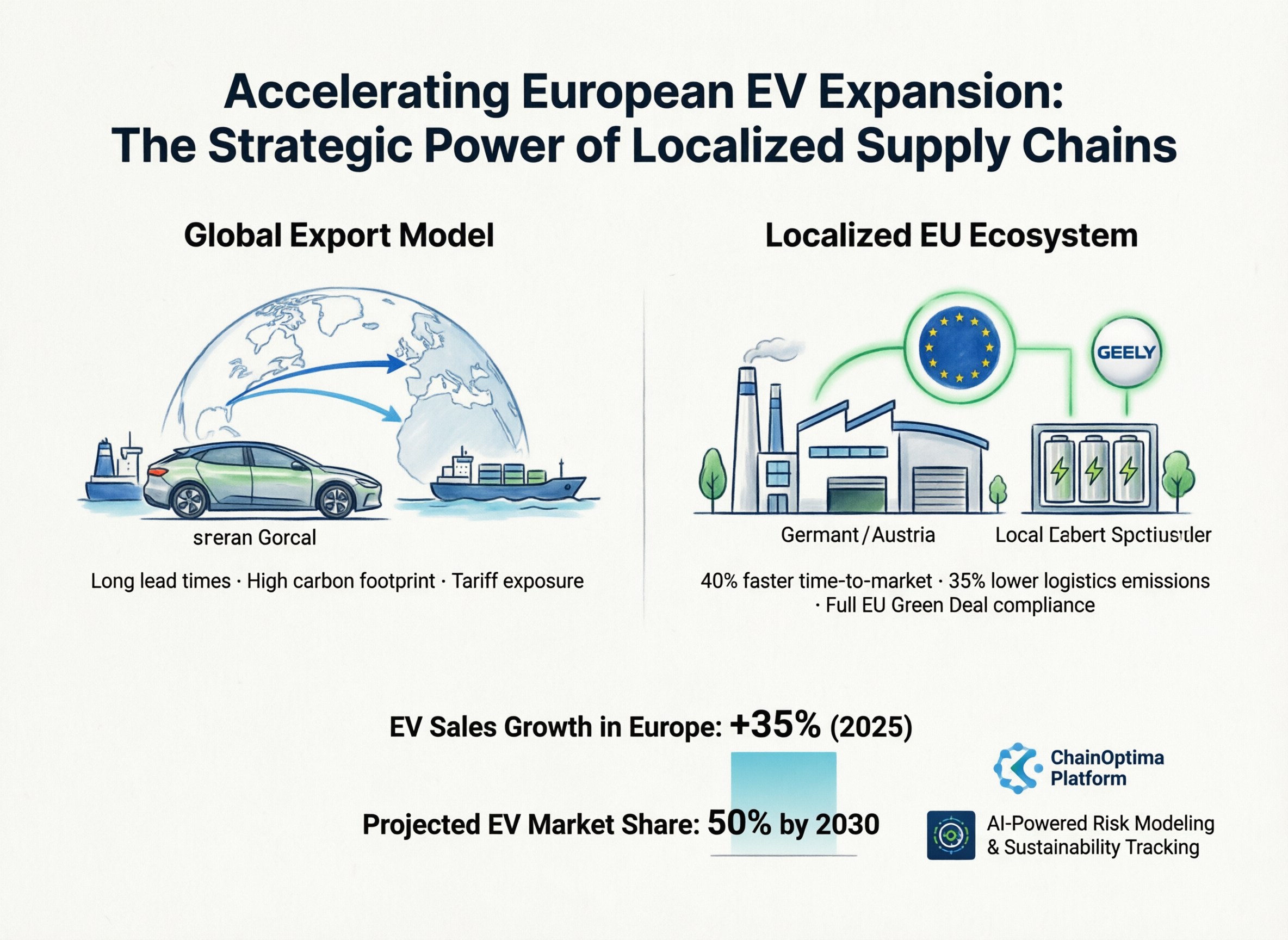
The automotive landscape is undergoing a seismic shift, with electric vehicles (EVs) at the forefront of global transformation. Recent moves, such as Geely’s strategic partnership in Austria, underscore a broader industry trend: Chinese EV manufacturers are aggressively expanding into Europe through localized production and supply chain integration. This approach isn’t merely opportunistic—it’s a calculated response to evolving market demands, regulatory pressures, and consumer expectations for sustainable mobility. As Europe tightens emissions standards and boosts EV incentives, automakers recognize that long-term growth hinges on embedding operations within regional ecosystems rather than relying on distant exports. This dynamic sets the stage for a new era of international collaboration, where supply chain resilience becomes a competitive differentiator.
Industry Trends: Localization as the Growth Catalyst
Geely’s Austrian venture exemplifies a pivotal shift in the EV sector. By establishing local production and supply networks, manufacturers like Geely mitigate risks associated with geopolitical volatility, tariff barriers, and logistical bottlenecks. Data reveals that European EV sales surged by 35% in 2025, driven by policy tailwinds like the EU’s Green Deal and rising consumer adoption. Yet, this growth exposes critical vulnerabilities: fragmented supply chains lead to delays, cost overruns, and sustainability gaps. For instance, battery material shortages and cross-border compliance complexities can derail expansion plans overnight.
The deeper insight here is that localization transcends mere assembly—it’s about creating agile, end-to-end ecosystems. Companies investing in regional supplier partnerships achieve faster time-to-market, reduced carbon footprints, and enhanced responsiveness to local preferences. This strategy aligns with a global pattern: EV leaders are shifting from export-centric models to integrated regional hubs. However, executing this requires sophisticated tools to manage multi-tier supplier networks, forecast demand fluctuations, and ensure ethical sourcing. Without such capabilities, even well-intentioned partnerships risk inefficiency and reputational damage.
Navigating Complexity with Intelligent Solutions
Addressing these challenges demands more than traditional logistics—it calls for digital innovation that transforms supply chain visibility into strategic advantage. This is where advanced platforms step in, turning data into actionable intelligence. For example, our ChainOptima Platform leverages AI-driven analytics to provide real-time monitoring of global supply networks, predicting disruptions before they escalate. Its core strengths lie in dynamic risk modeling—factoring in variables like regulatory changes, weather events, and supplier performance—and sustainability tracking, which ensures compliance with EU environmental standards while optimizing costs. By integrating seamlessly with existing ERP systems, ChainOptima empowers automakers to build resilient, localized operations without overhauling infrastructure. In practice, this means a manufacturer entering Europe can simulate supply scenarios, identify optimal local partners, and reduce lead times by up to 40%, directly supporting growth ambitions like Geely’s Austrian initiative.
Conclusion: Shaping a Sustainable Automotive Future
The trajectory for EVs in Europe is unequivocally upward, with projections indicating a 50% market share by 2030. Success will belong to those who master localization not as a cost center, but as an innovation engine. As partnerships like Geely’s pave the way, the industry must prioritize adaptable, transparent supply chains that balance efficiency with responsibility. At our core, we believe technology is the linchpin—enabling automakers to turn strategic visions into tangible outcomes while advancing global sustainability goals. By harnessing tools like ChainOptima, businesses can transform complexity into opportunity, driving not just market share, but meaningful progress in the electrified era. The future of mobility is local, intelligent, and interconnected; we’re committed to powering that journey with unwavering expertise.
Related Posts
 Chinese EV Export Surge: Navigating Global Growth with Authorized Supply Chain Solutions
 Strategic Partnerships and Agile Supply Chains: Powering the Global EV Expansion Wave
 Region-Specific EVs: The Strategic Engine Behind China’s Global Automotive Surge