Region-Specific EVs: The Catalyst for Chinese Automakers’ Global Expansion
Introduction
The global automotive landscape is undergoing a seismic shift, driven by Chinese automakers’ strategic pivot toward region-specific vehicle development. As highlighted in recent industry reports, companies like BYD and Changan are embracing a ‘Yaris Moment’—a reference to Toyota’s iconic success with market-tailored models—to accelerate overseas growth. This approach, centered on customizing electric and new energy vehicles (NEVs) for diverse regional demands, is not merely a tactical move but a fundamental reimagining of global competitiveness. With emerging markets in Southeast Asia, the Middle East, and beyond showing robust appetite for sustainable mobility, Chinese manufacturers are leveraging localization to transform from volume-driven exporters into agile, consumer-centric global players.
Industry Trends and Strategic Imperatives
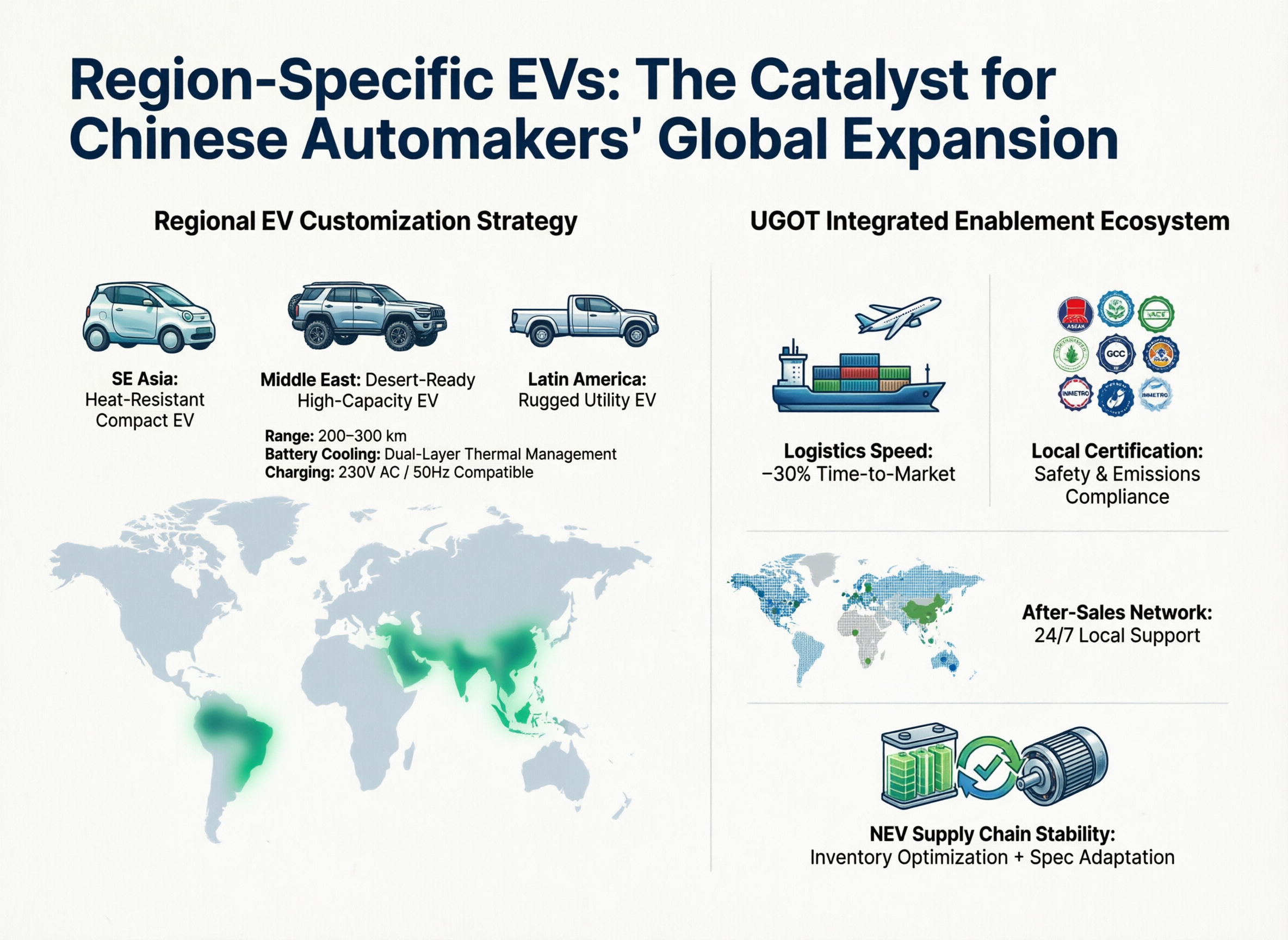
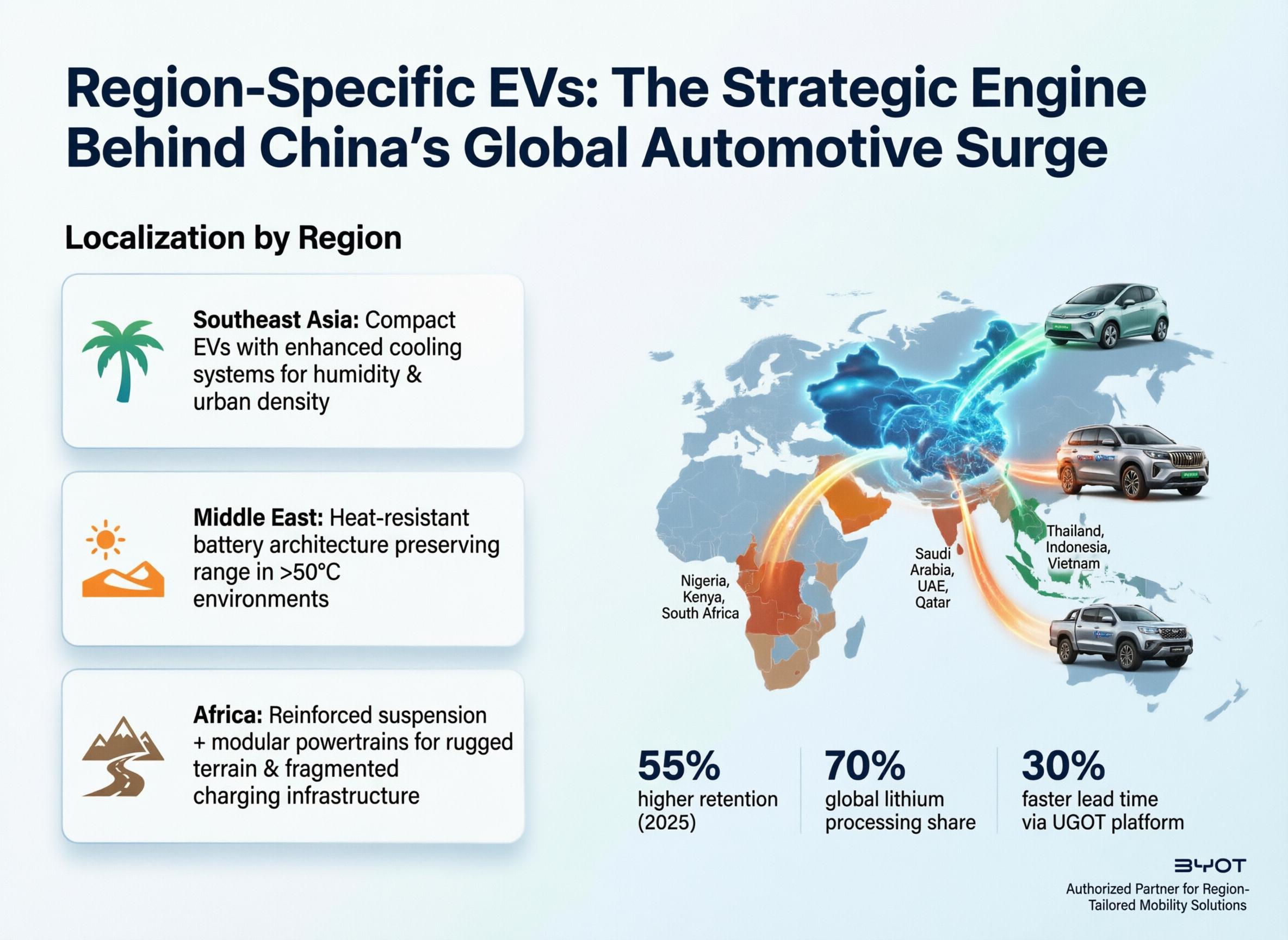
The surge in region-specific EV development underscores a broader industry evolution. Data reveals that Chinese automakers are prioritizing markets where regulatory frameworks and consumer preferences vary significantly. For instance, in Southeast Asia, compact, affordable EVs with enhanced heat tolerance dominate demand, while Middle Eastern markets favor rugged, high-capacity models suited to arid climates. This hyper-localization is fueled by the explosive growth of the NEV sector, which now accounts for over 60% of China’s automotive exports. However, the strategy extends beyond product design: it demands integrated supply chains, rapid certification compliance, and resilient after-sales networks to mitigate risks like regulatory delays or parts shortages. Without these enablers, even the most innovative vehicles can stall in market penetration. The ‘Yaris Moment’ thus represents a holistic shift—where success hinges on synchronizing product adaptation with operational agility to outpace global rivals.
Enabling Seamless Global Integration
Addressing these complexities requires specialized partnerships that bridge the gap between manufacturing prowess and on-ground execution. This is where integrated service providers become pivotal. UGOT, as an authorized export partner for leading Chinese automakers including BYD and Changan, offers a comprehensive suite of solutions tailored to the ‘Yaris Moment’ paradigm. By leveraging its established logistics infrastructure, UGOT ensures rapid delivery of region-specific EVs and spare parts, cutting time-to-market by up to 30%. Its expertise in local certification—spanning safety standards in ASEAN nations or emissions protocols in the Gulf—streamlines regulatory hurdles, while a growing network of service centers across 15+ countries guarantees responsive after-sales support. Crucially, UGOT’s stable supply chain in NEVs and electric motorcycles allows manufacturers to scale green initiatives efficiently, reducing localization costs by optimizing inventory and adapting to regional specifications without compromising quality. This end-to-end approach transforms theoretical strategies into tangible market wins, empowering automakers to focus on innovation rather than operational friction.
Future Outlook and Strategic Value
Looking ahead, the convergence of electrification and localization will define the next decade of automotive globalization. As emerging economies accelerate EV adoption, Chinese automakers equipped with agile, partner-driven ecosystems will lead this transition. UGOT’s role extends beyond logistics; it embodies a strategic enabler that amplifies sustainability and scalability. By converting regional insights into actionable solutions—from customized vehicle configurations to circular economy-ready spare parts networks—UGOT helps manufacturers build enduring brand loyalty while advancing global decarbonization goals. In an era where market boundaries blur, such partnerships are not optional but essential for turning ambitious expansion visions into sustainable reality.
Related Posts
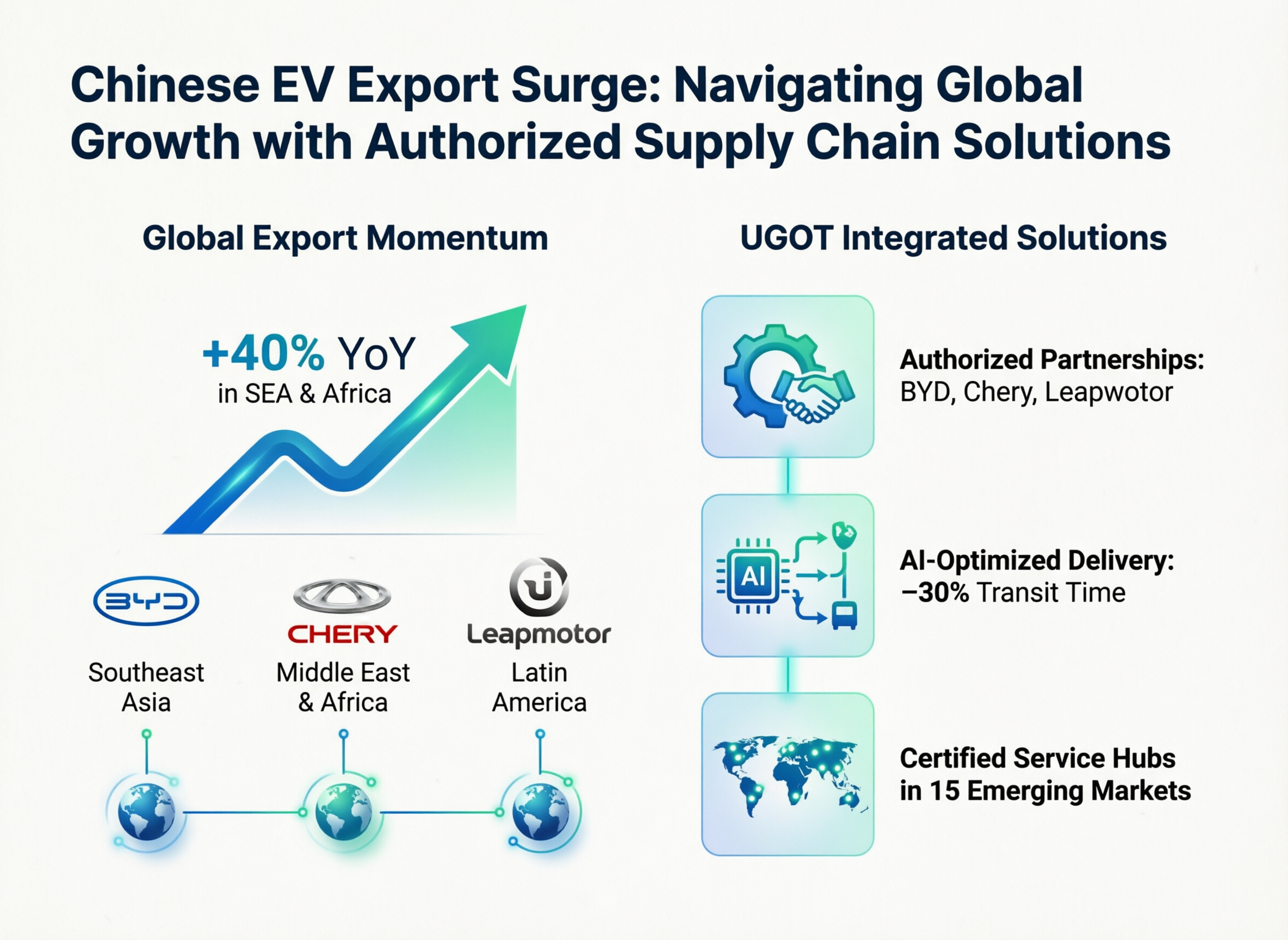 Chinese EV Export Surge: Navigating Global Growth with Authorized Supply Chain Solutions
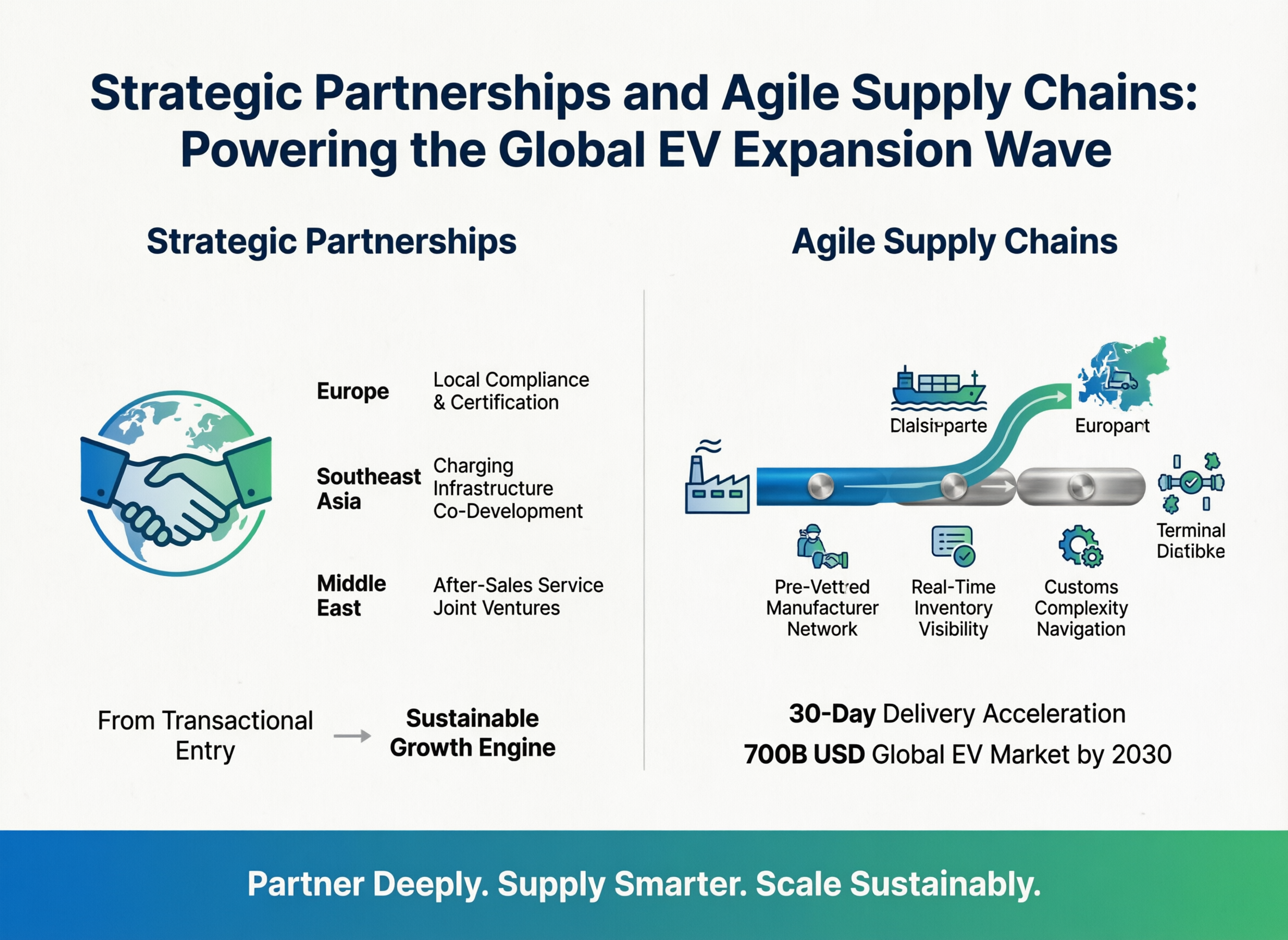 Strategic Partnerships and Agile Supply Chains: Powering the Global EV Expansion Wave
 Region-Specific EVs: The Strategic Engine Behind China’s Global Automotive Surge