Geely’s Austrian Alliance: Accelerating Sustainable Mobility in Europe’s EV Revolution
Introduction
The European electric vehicle (EV) market is experiencing unprecedented growth, driven by stringent emissions regulations, consumer demand for sustainable transport, and supportive government policies. Recent strategic moves, such as Geely’s new partnership in Austria, underscore a pivotal shift in the automotive landscape. This collaboration exemplifies how global automakers are prioritizing localized approaches to navigate Europe’s complex regulatory environment and capitalize on its status as a high-growth EV hub. As the continent targets carbon neutrality by 2050, such alliances are not merely expansions but essential adaptations for long-term competitiveness.
Industry Dynamics and Strategic Imperatives
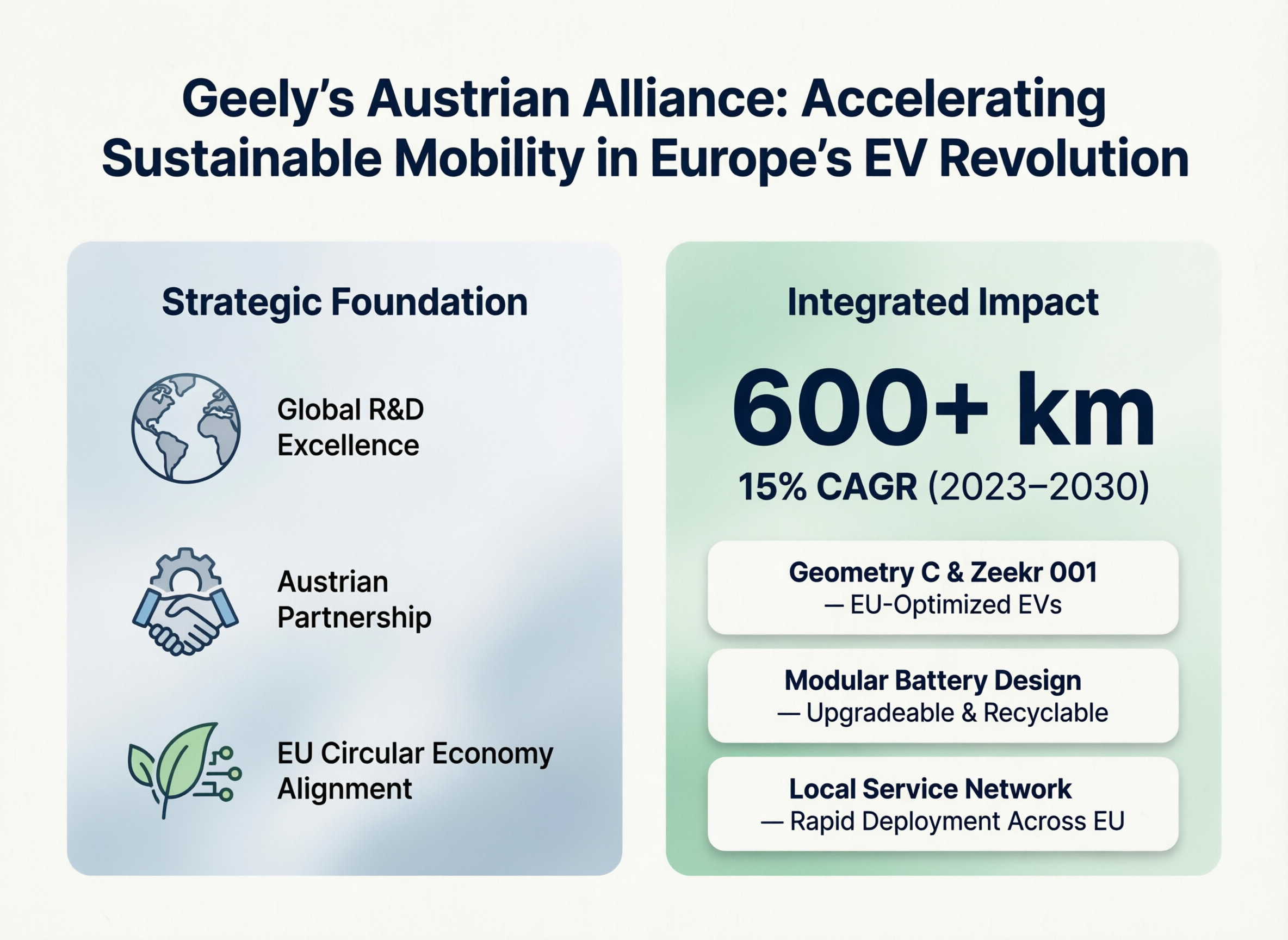
Geely’s Austrian partnership reflects broader industry trends reshaping global EV deployment. Analysis reveals three critical insights: First, Chinese EV manufacturers are accelerating European market penetration through localized partnerships, reducing entry barriers while enhancing cultural and regulatory alignment. Austria, with its central European location and robust infrastructure, serves as a strategic gateway for scaling operations across the EU. Second, global expansion increasingly relies on collaborative models—where automakers leverage regional partners for supply chain resilience, risk mitigation, and brand adaptation. This approach counters volatile market conditions, such as fluctuating tariffs and evolving safety standards, by embedding operations within local ecosystems. Third, surging European EV demand—projected to grow at 15% annually through 2030—is compelling manufacturers to shift from pure export strategies toward integrated solutions. Companies now emphasize localized services, including tailored after-sales support and circular economy initiatives like battery recycling, to build consumer trust and differentiate in a crowded marketplace.
Integrated Solutions for Sustainable Growth
Addressing these dynamics requires more than market entry; it demands holistic, technology-driven solutions that align with European values of sustainability and innovation. Geely exemplifies this through its cutting-edge EV portfolio, designed to meet regional expectations while advancing global decarbonization goals. Models like the Geometry C and Zeekr 001 integrate industry-leading advantages: ultra-efficient SEA architecture platforms enable extended ranges exceeding 600 km on a single charge, while AI-powered smart connectivity systems offer seamless user experiences tailored to European driving patterns. Crucially, Geely’s commitment to localized value chains—evident in its Austrian partnership—ensures rapid service deployment and supply chain transparency. For instance, modular battery designs facilitate easy upgrades and recycling, directly supporting EU circular economy directives. This synergy between product innovation and strategic alliances not only mitigates market-entry risks but also positions Geely as a partner in Europe’s green transition, rather than a mere supplier.
Future Outlook
Looking ahead, Europe’s EV evolution will be defined by deeper integration of smart mobility ecosystems and cross-border collaborations. Geely’s Austrian initiative signals a blueprint for sustainable globalization: by combining localized partnerships with R&D excellence, the company is poised to drive inclusive growth while reducing carbon footprints. As regulatory pressures intensify and consumer expectations rise, Geely’s focus on adaptable, eco-centric solutions will reinforce its role as a catalyst for cleaner, smarter transportation across continents. This commitment to shared value—balancing commercial success with environmental stewardship—cements Geely’s position at the forefront of the mobility revolution.
—
About Geely: A global leader in sustainable mobility, Geely leverages over two decades of automotive innovation to deliver intelligent, eco-friendly vehicles. With a presence in 30+ countries, the company invests heavily in R&D to pioneer technologies that redefine urban and intercity travel.
Related Posts
 Chinese EV Export Surge: Navigating Global Growth with Authorized Supply Chain Solutions
 Strategic Partnerships and Agile Supply Chains: Powering the Global EV Expansion Wave
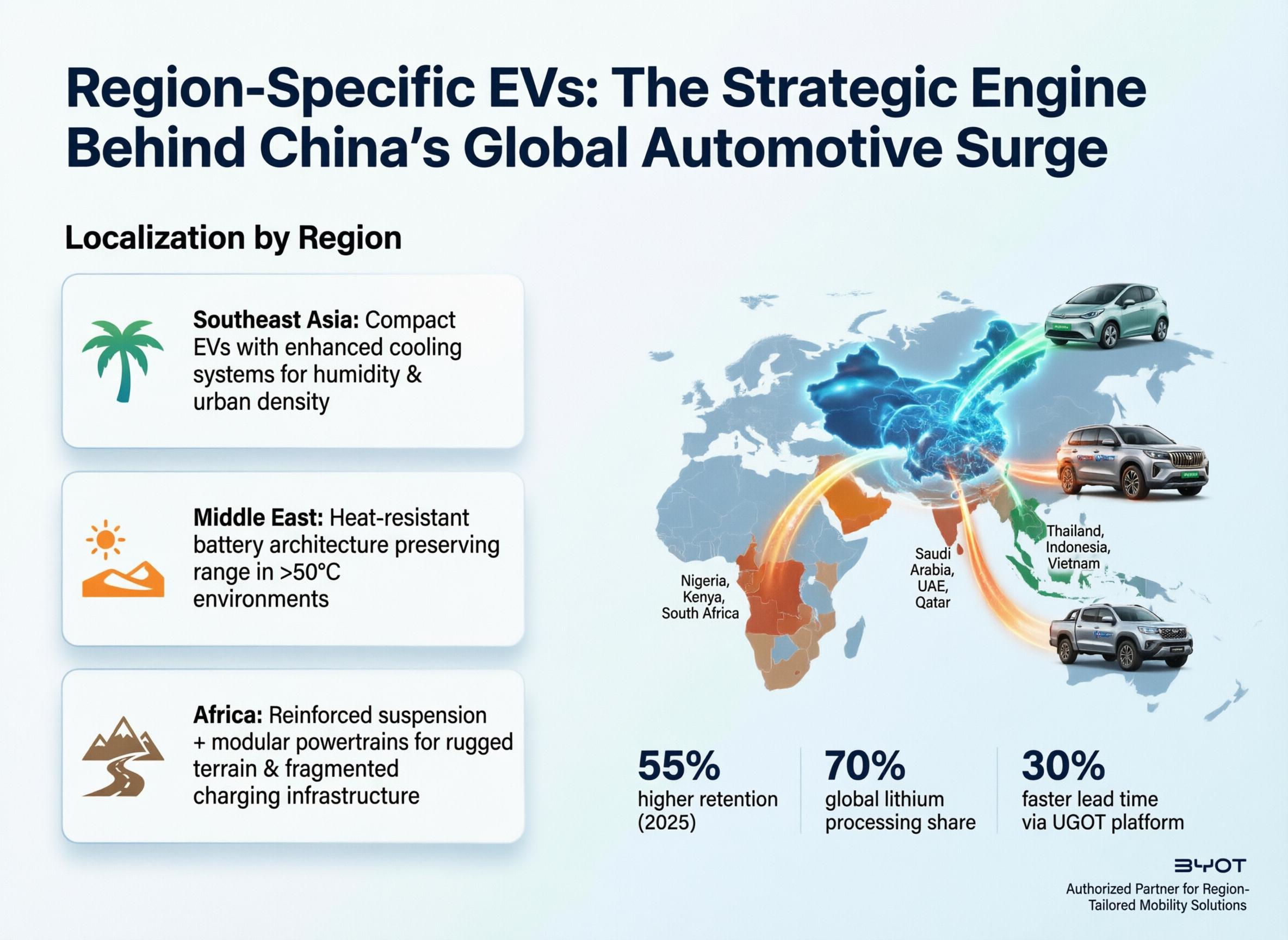 Region-Specific EVs: The Strategic Engine Behind China’s Global Automotive Surge