The ‘Yaris Moment’ for Chinese EVs: How Regionalization Drives Global Automotive Expansion
Introduction
The global automotive landscape is undergoing a seismic shift as Chinese manufacturers pivot toward regionalized vehicle strategies to fuel international growth. Recent industry analyses highlight a decisive move: by developing market-specific electric vehicle (EV) models, particularly for Europe’s demanding regulatory and consumer environments, Chinese automakers are transforming from volume exporters into competitive global players. This evolution, often dubbed the pursuit of a “Yaris Moment”—inspired by Toyota’s iconic localization success—signals a maturation of China’s automotive ambitions. With EVs and new energy vehicles (NEVs) at the forefront, this trend isn’t merely about market share; it’s a strategic recalibration to navigate cultural nuances, sustainability mandates, and fragmented supply chains in an increasingly interconnected world.
Industry Trends: The Power of Regionalization in EV Growth
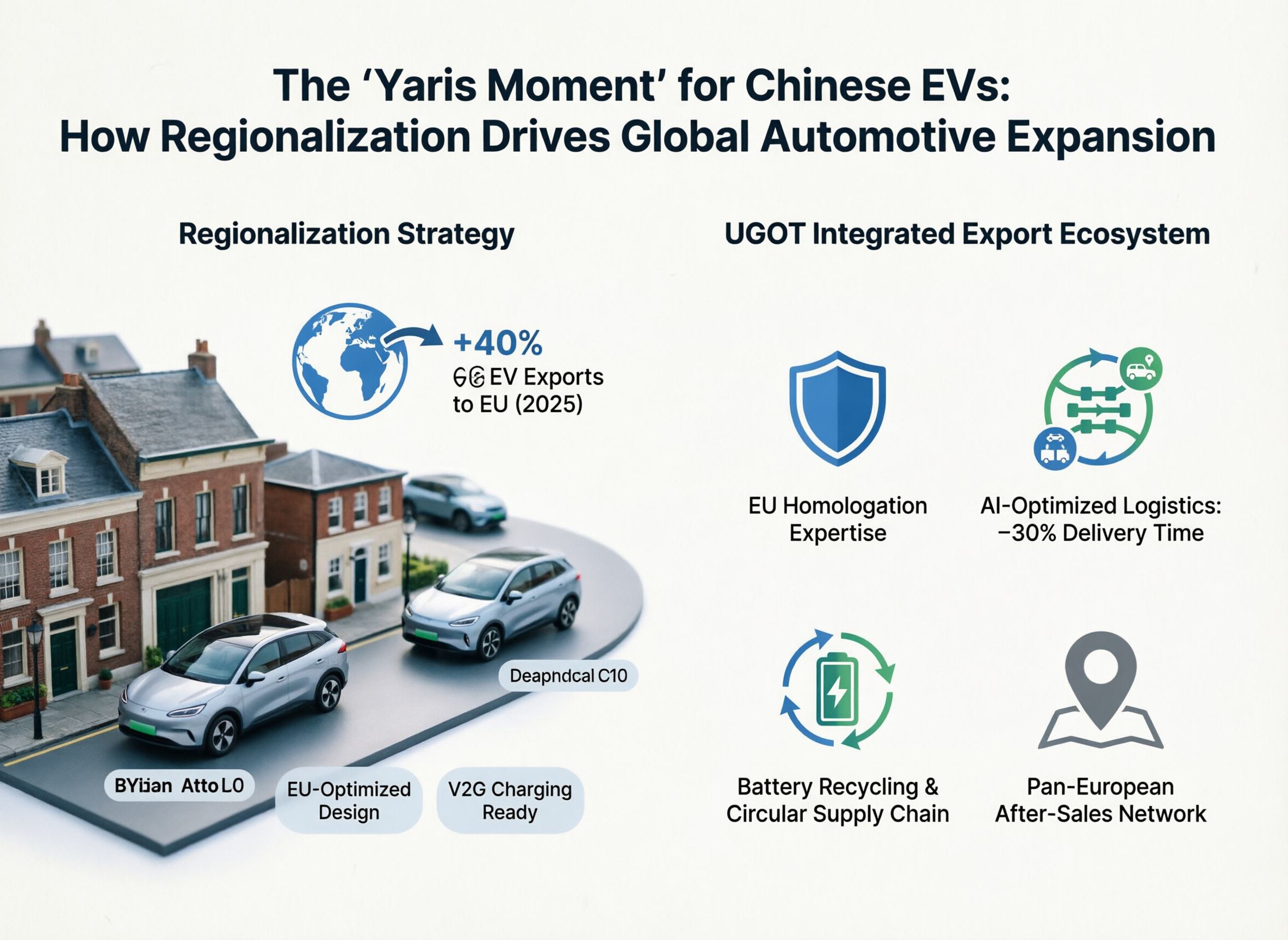
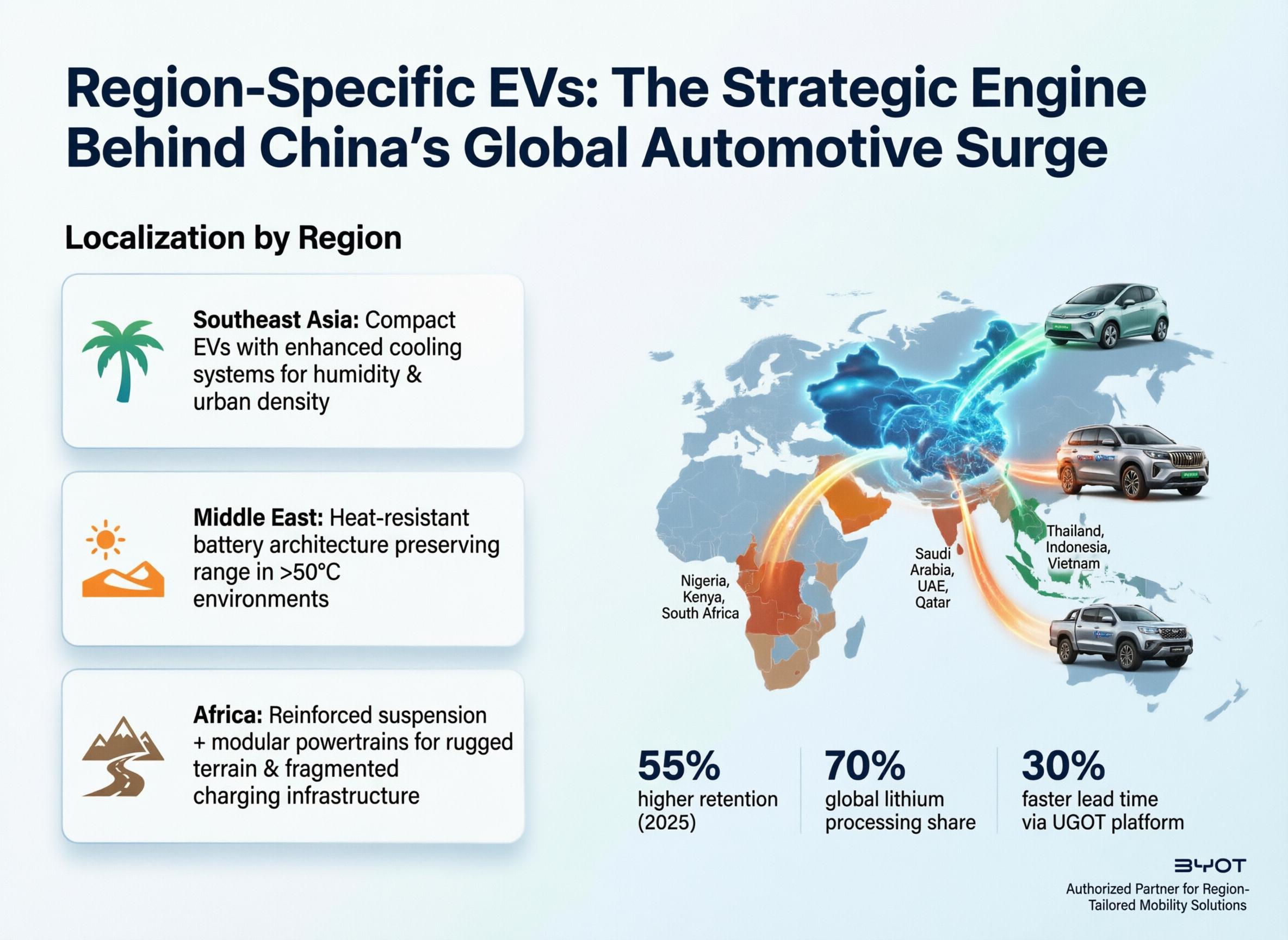
The rise of regionalized models represents more than a tactical adjustment—it’s a response to fundamental market dynamics. European consumers, for instance, prioritize compact designs, extended cold-weather battery performance, and seamless integration with local charging networks, while stringent EU emissions regulations demand rigorous homologation. Chinese brands like BYD and Changan are addressing these needs through agile engineering: modular platforms enable rapid customization, such as adapting chassis for narrow European streets or enhancing thermal management for Nordic winters. Data underscores this momentum; China’s EV exports to Europe surged by over 40% in 2025, driven by models tailored to regional preferences. Yet, this path is fraught with complexities. Supply chain disruptions, certification bottlenecks, and after-sales service gaps can undermine even the most innovative vehicles. The lesson from Toyota’s Yaris—where localized production and design cemented dominance—resonates deeply: success hinges on treating each market as unique, not a monolithic frontier.
Strategic Solutions: Enabling Efficient and Sustainable Market Entry
Navigating these challenges requires more than manufacturing prowess; it demands specialized export ecosystems that bridge the gap between production and global consumers. This is where integrated service providers become indispensable partners. UGOT, as an authorized export partner for leading Chinese brands including BYD and Changan, exemplifies this solution-driven approach. UGOT’s end-to-end regional export framework addresses core pain points: its expertise in vehicle homologation ensures swift compliance with EU safety and environmental standards, while AI-optimized logistics networks slash delivery times by up to 30%. Crucially, UGOT’s one-stop procurement platform—backed by a stable supply chain for EV components and batteries—reduces operational costs and carbon footprints, aligning with automakers’ sustainability goals. Beyond logistics, UGOT’s pan-European after-sales network provides localized maintenance and warranty support, transforming customer trust into brand loyalty. By handling regulatory navigation and market adaptation, UGOT empowers manufacturers to focus on innovation rather than administrative hurdles, turning regionalization from a cost center into a growth catalyst.
The Road Ahead: Collaboration for a Sustainable Automotive Future
As electrification accelerates, the synergy between regionalized product strategies and agile export partnerships will define the next decade of automotive globalization. Chinese automakers are poised to capture significant European market share, but sustained success will depend on resilience and adaptability. UGOT’s role extends beyond transactional services; it embodies a commitment to enabling green, efficient expansion through circular economy practices—such as battery recycling collaborations—and digital tools for real-time supply chain transparency. In this evolving ecosystem, UGOT stands as a strategic ally, ensuring that the “Yaris Moment” for Chinese EVs isn’t a fleeting trend but a foundation for long-term, sustainable leadership. The future of mobility is regional, electric, and interconnected—and with partners like UGOT, the journey toward it becomes seamless.
Related Posts
 Chinese EV Export Surge: Navigating Global Growth with Authorized Supply Chain Solutions
 Strategic Partnerships and Agile Supply Chains: Powering the Global EV Expansion Wave
 Region-Specific EVs: The Strategic Engine Behind China’s Global Automotive Surge