
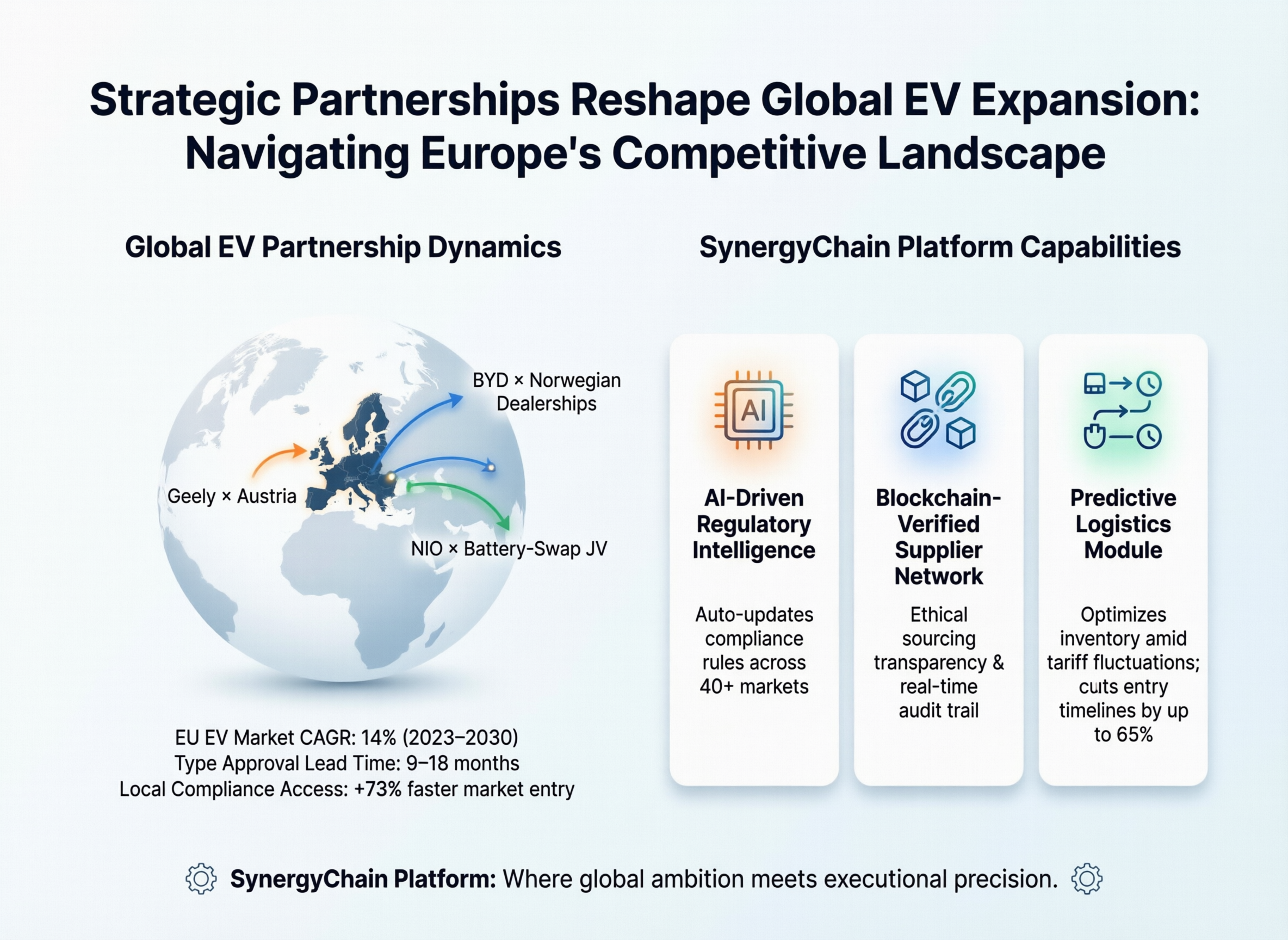
Strategic Partnerships Reshape Global EV Expansion: Navigating Europe’s Competitive Landscape
Introduction
The electric vehicle (EV) industry is witnessing a paradigm shift as Chinese automakers accelerate their global footprint through targeted alliances. Geely’s recent partnership in Austria exemplifies this trend, signaling a strategic pivot toward localized market entry in Europe. This move underscores a broader industry evolution: as regulatory complexities intensify and consumer demand surges, partnerships—not just product innovation—are becoming the cornerstone of sustainable international growth for EV manufacturers. With Europe’s EV market projected to grow at 14% CAGR through 2030, such collaborations are no longer optional but essential for navigating fragmented regulatory landscapes and capturing emerging opportunities.
The Partnership Imperative in EV Globalization
Geely’s Austria expansion highlights a critical industry strategy: leveraging local partnerships to overcome barriers that have historically hindered global automakers. Europe’s stringent regulatory frameworks—from type approvals to battery sustainability directives—demand deep regional expertise. By aligning with established Austrian entities, Geely gains immediate access to compliance networks, distribution infrastructure, and consumer trust, bypassing years of organic market development. This model is rapidly becoming the blueprint for Chinese EV brands; BYD’s collaborations with Norwegian dealerships and NIO’s battery-swap joint ventures in Germany follow similar logic.
Beyond regulatory navigation, these partnerships address a fundamental challenge: supply chain resilience. Europe’s push for localized production (e.g., the EU’s Net-Zero Industry Act) pressures manufacturers to reconfigure global supply networks. As Chinese automakers establish European assembly hubs, they simultaneously create ripple effects across emerging markets. Component suppliers in Southeast Asia and Latin America now face unprecedented demand for specialized parts, from thermal management systems to recycled battery materials. This dynamic transforms regional exporters into strategic nodes in a rapidly decentralizing EV ecosystem, where agility and compliance transparency dictate competitive advantage.
Enabling Seamless Global Integration
Amid this complexity, automotive players require intelligent frameworks to orchestrate cross-border partnerships and supply chains efficiently. Traditional approaches—reliant on manual due diligence and fragmented logistics—struggle with Europe’s evolving compliance landscape and volatile material flows. This is where integrated digital ecosystems become indispensable. Our SynergyChain Platform addresses these pain points through three core capabilities: AI-driven regulatory intelligence that auto-updates compliance requirements across 40+ markets, blockchain-verified supplier networks ensuring ethical sourcing transparency, and predictive logistics modules that optimize inventory allocation amid tariff fluctuations. For instance, when a manufacturer enters a new EU market via partnership, SynergyChain’s real-time compliance engine instantly flags certification gaps while its supplier-matching algorithm identifies pre-vetted local component vendors—compressing market-entry timelines by up to 65%.
The Road Ahead
The future of EV globalization hinges on symbiotic relationships. As European consumers increasingly prioritize sustainability credentials alongside performance, partnerships will evolve from market-entry tactics to innovation accelerators—co-developing region-specific features like cold-weather battery systems or circular-economy recycling programs. For suppliers in emerging economies, this signals a shift from transactional exports to embedded roles in value-driven ecosystems. Companies that master this interplay between localization and global scalability will define the next decade of mobility. At our core, we empower this transition not through isolated tools, but through adaptive intelligence that turns regulatory and supply chain complexities into strategic advantages—ensuring that expansion fuels resilience, not risk.
SynergyChain Platform: Where global ambition meets executional precision.
Related Posts
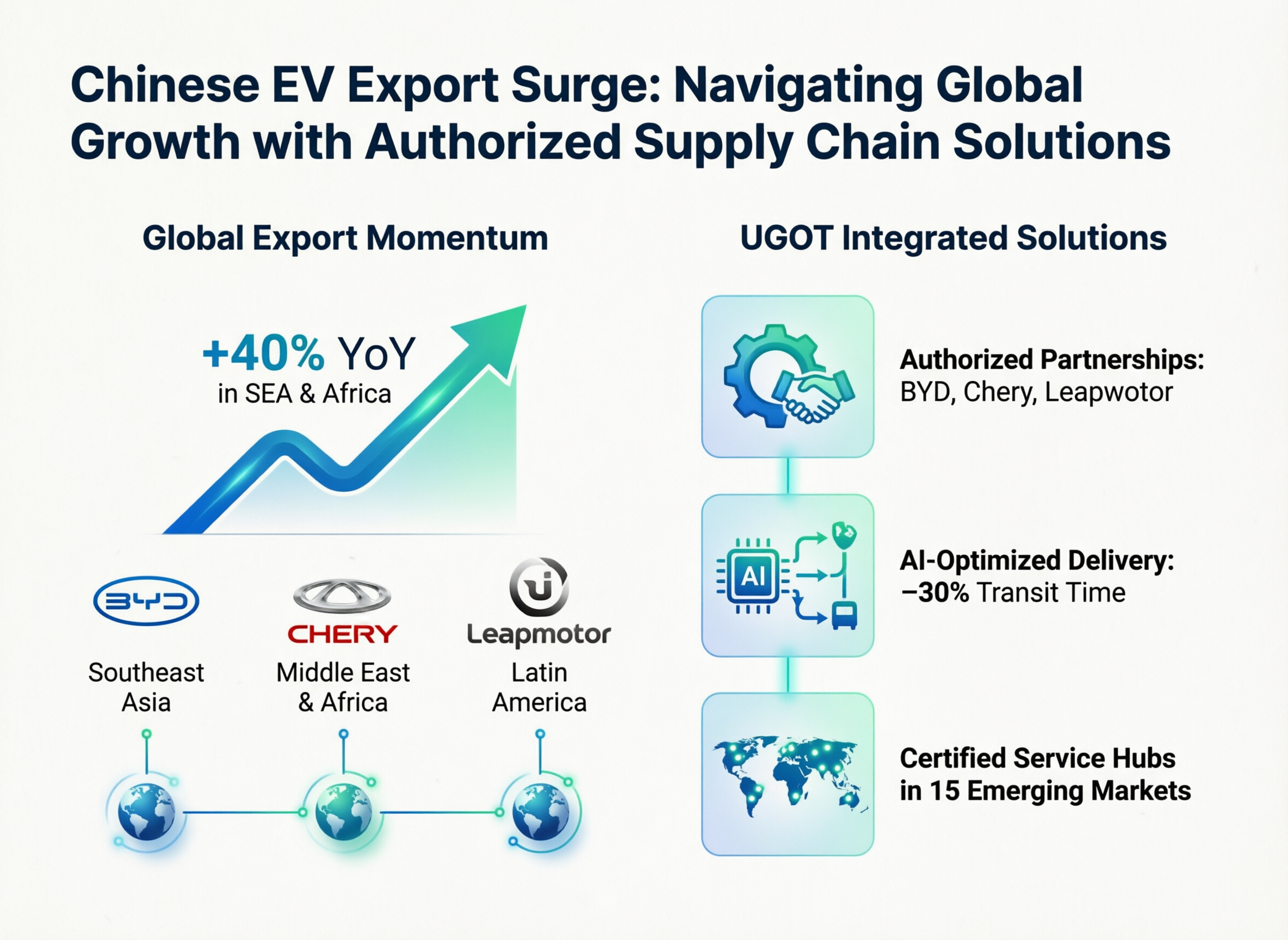 Chinese EV Export Surge: Navigating Global Growth with Authorized Supply Chain Solutions
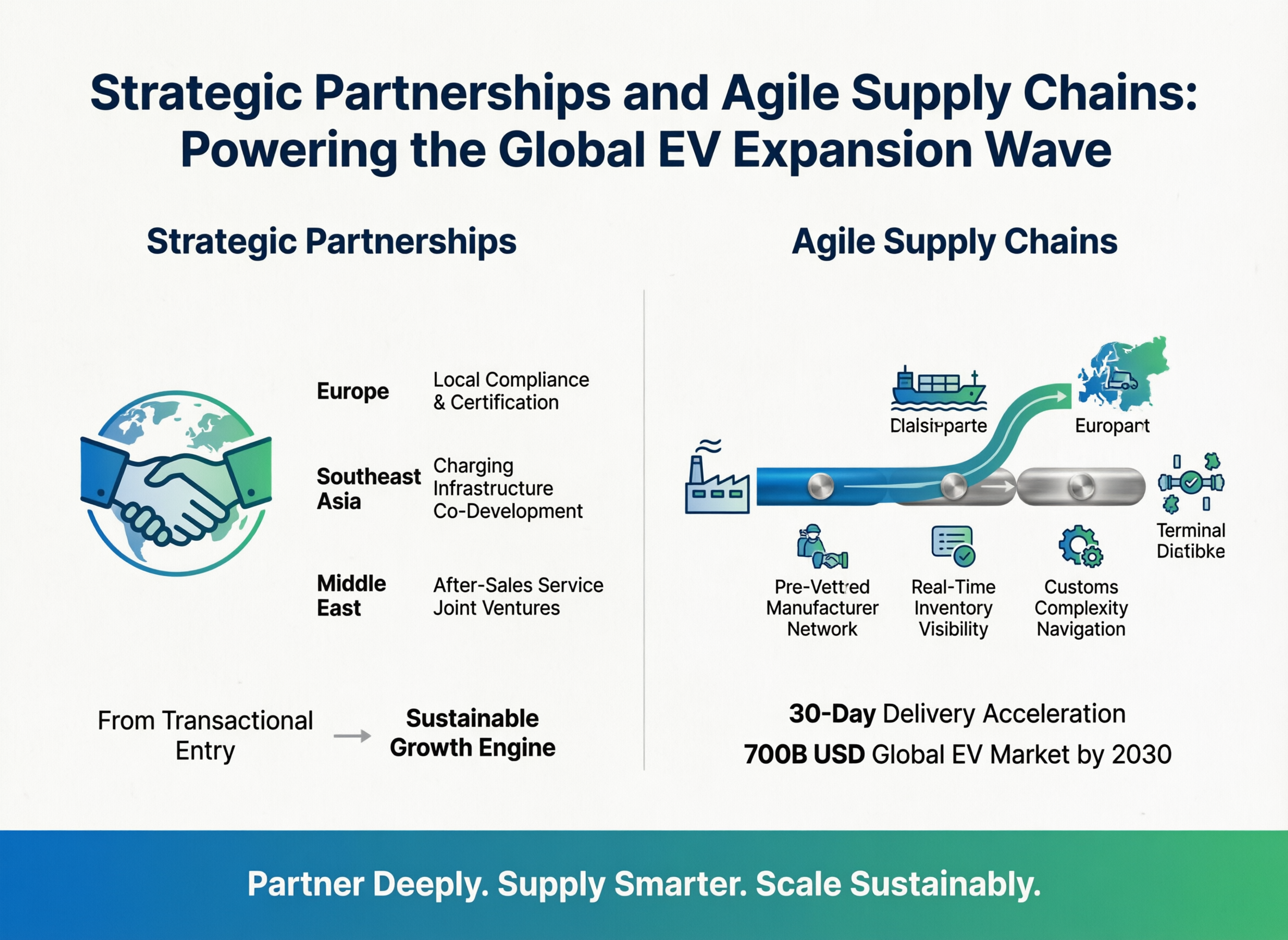 Strategic Partnerships and Agile Supply Chains: Powering the Global EV Expansion Wave
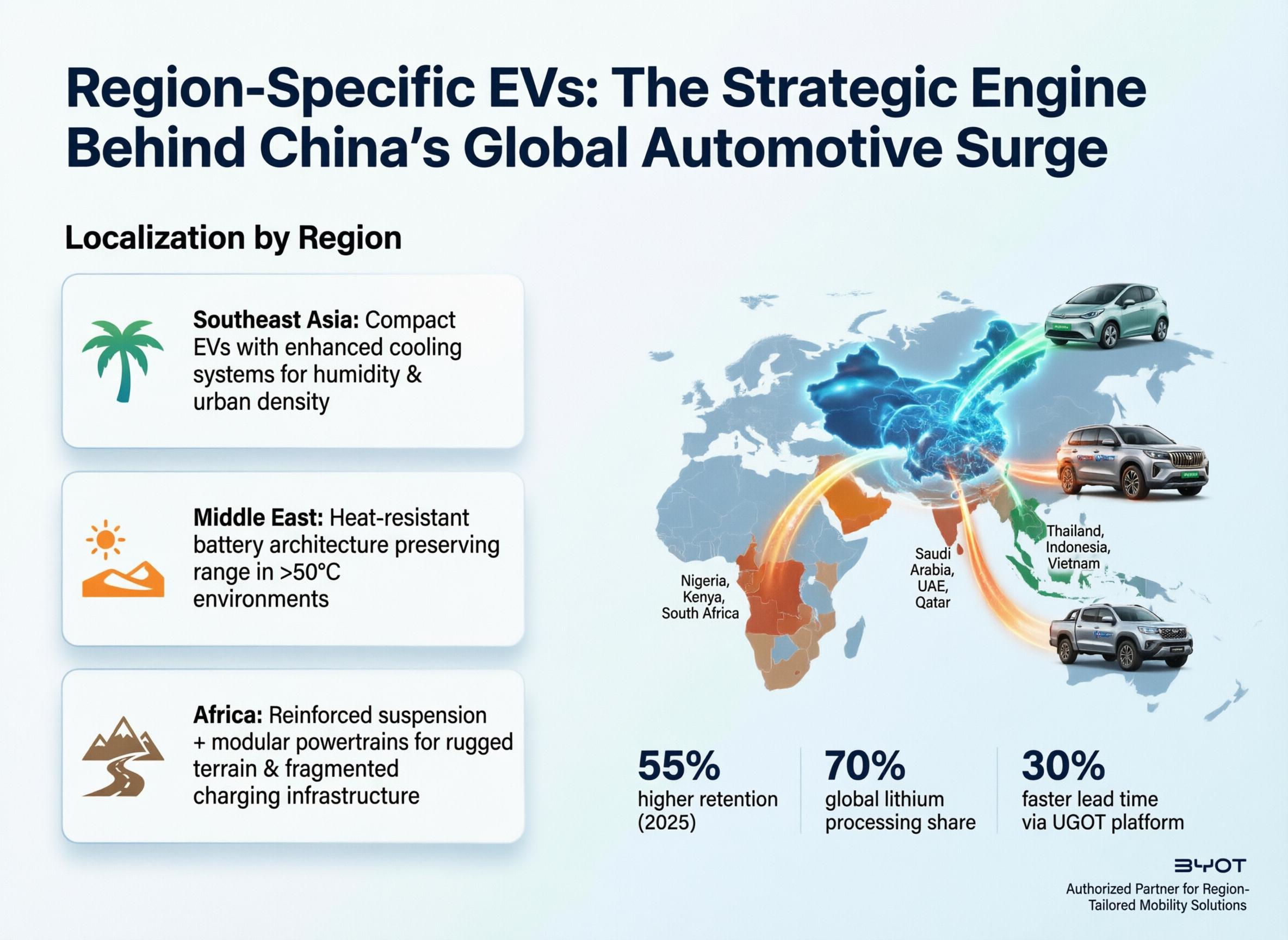 Region-Specific EVs: The Strategic Engine Behind China’s Global Automotive Surge