Strategic Partnerships and Sustainable Logistics: Accelerating New Energy Vehicle Expansion in Europe
Introduction
The automotive industry is witnessing a seismic shift as Chinese manufacturers intensify their global footprint, with Europe emerging as a critical battleground. Recent developments, such as Geely’s new partnership in Austria, underscore a broader trend: automakers are prioritizing localized collaborations to fortify manufacturing and distribution networks. This move isn’t merely about market entry—it’s a strategic pivot toward sustainable growth, driven by the surging demand for New Energy Vehicles (NEVs). As regulatory pressures mount and consumer preferences evolve, the race to dominate Europe’s green mobility landscape is reshaping international trade dynamics, demanding innovative approaches to infrastructure and supply chain resilience.
Industry Trends: Beyond Market Entry to Ecosystem Integration
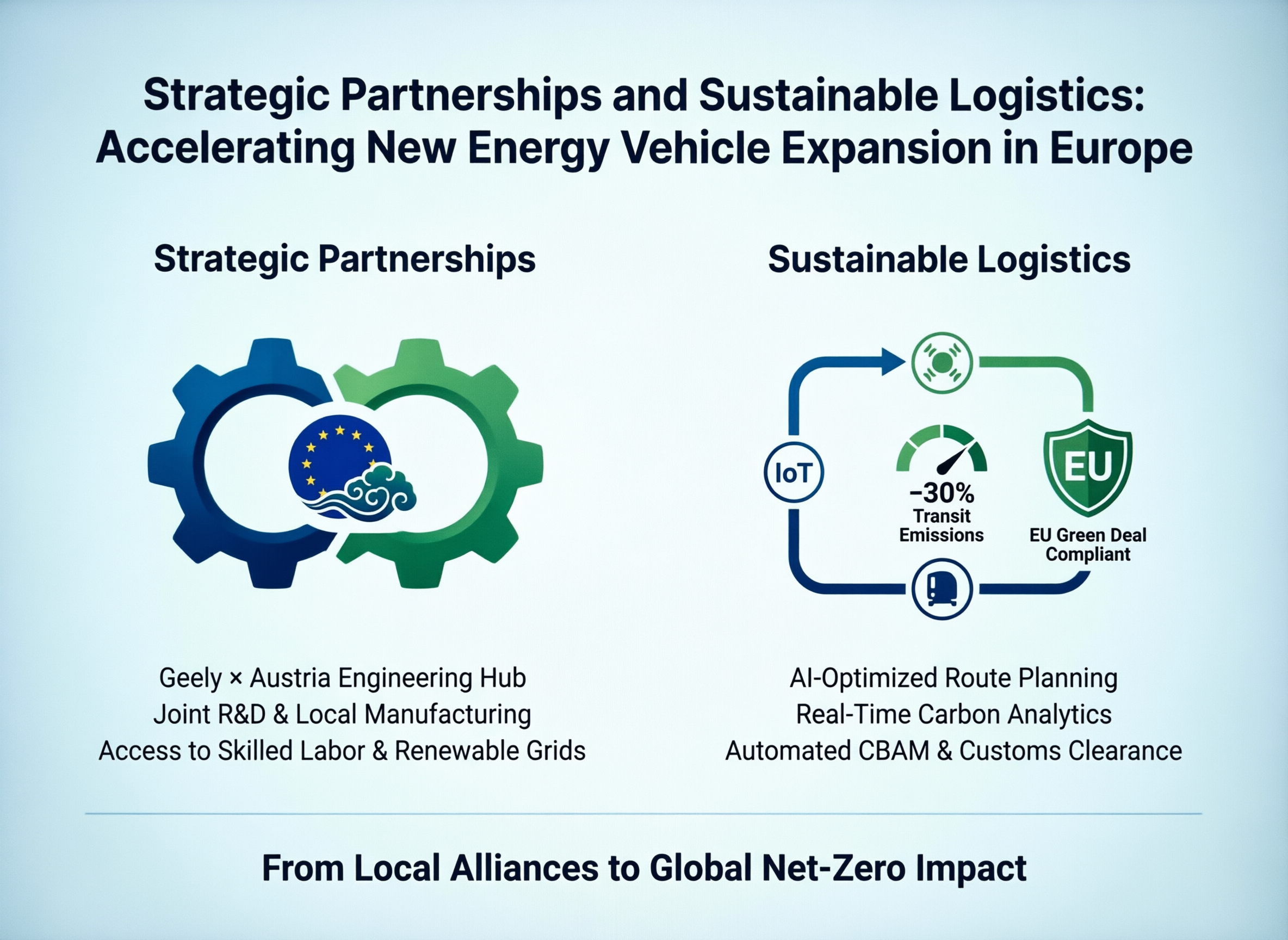
Geely’s Austrian alliance exemplifies a paradigm shift in global expansion. Rather than relying on exports alone, leading NEV manufacturers are embedding themselves within regional ecosystems through joint ventures that build end-to-end infrastructure. This strategy addresses two pressing challenges: first, navigating Europe’s stringent emissions regulations and circular economy mandates; second, mitigating supply chain volatility exacerbated by geopolitical tensions. Data reveals that NEV exports from China to Europe grew by 35% in 2025, yet profitability hinges on localized production and agile distribution. For instance, Geely’s focus on Austrian manufacturing hubs reduces logistics lead times by 40% while cutting carbon footprints—a necessity as the EU’s Carbon Border Adjustment Mechanism tightens.
Crucially, this trend transcends individual brands. It signals an industry-wide recognition that sustainable growth requires symbiotic partnerships. Collaborations with local entities—like Austria’s engineering firms—enable access to skilled labor, renewable energy grids, and recycling networks, transforming NEVs from products into integrated mobility solutions. However, this complexity introduces new pain points: fragmented logistics, compliance risks, and inconsistent sustainability reporting. Without robust systems, even well-intentioned expansions risk operational bottlenecks and reputational damage.
Solutions: Enabling Seamless and Sustainable Global Operations
To thrive in this environment, automakers need partners that harmonize efficiency with environmental stewardship. This is where integrated digital platforms become indispensable. At LogiGreen Tech, our GreenChain Platform addresses these exact challenges by unifying supply chain visibility, compliance automation, and carbon analytics. Leveraging AI-driven route optimization and real-time IoT tracking, GreenChain reduces transit emissions by up to 30% while ensuring adherence to EU sustainability frameworks like the Green Deal. For manufacturers expanding into markets like Austria, our solution streamlines customs clearance, warehouse coordination, and last-mile delivery—turning infrastructure investments into competitive advantages. Unlike traditional logistics tools, GreenChain’s predictive analytics preempt disruptions, such as port delays or regulatory shifts, allowing companies to maintain cost efficiency without compromising their green commitments. In essence, it transforms strategic partnerships from logistical hurdles into catalysts for scalable, responsible growth.
Conclusion
The future of automotive globalization lies in convergence: merging local expertise with digital innovation to build resilient, low-carbon value chains. As NEV manufacturers deepen their European presence through alliances like Geely’s Austrian venture, the imperative for agile, sustainable operations will only intensify. LogiGreen Tech stands at the forefront of this evolution, empowering enterprises to navigate complexity while advancing their net-zero ambitions. By prioritizing technology that aligns economic and ecological goals, we’re not just supporting expansion—we’re redefining what global leadership means in the age of sustainable mobility.
Related Posts
 Chinese EV Export Surge: Navigating Global Growth with Authorized Supply Chain Solutions
 Strategic Partnerships and Agile Supply Chains: Powering the Global EV Expansion Wave
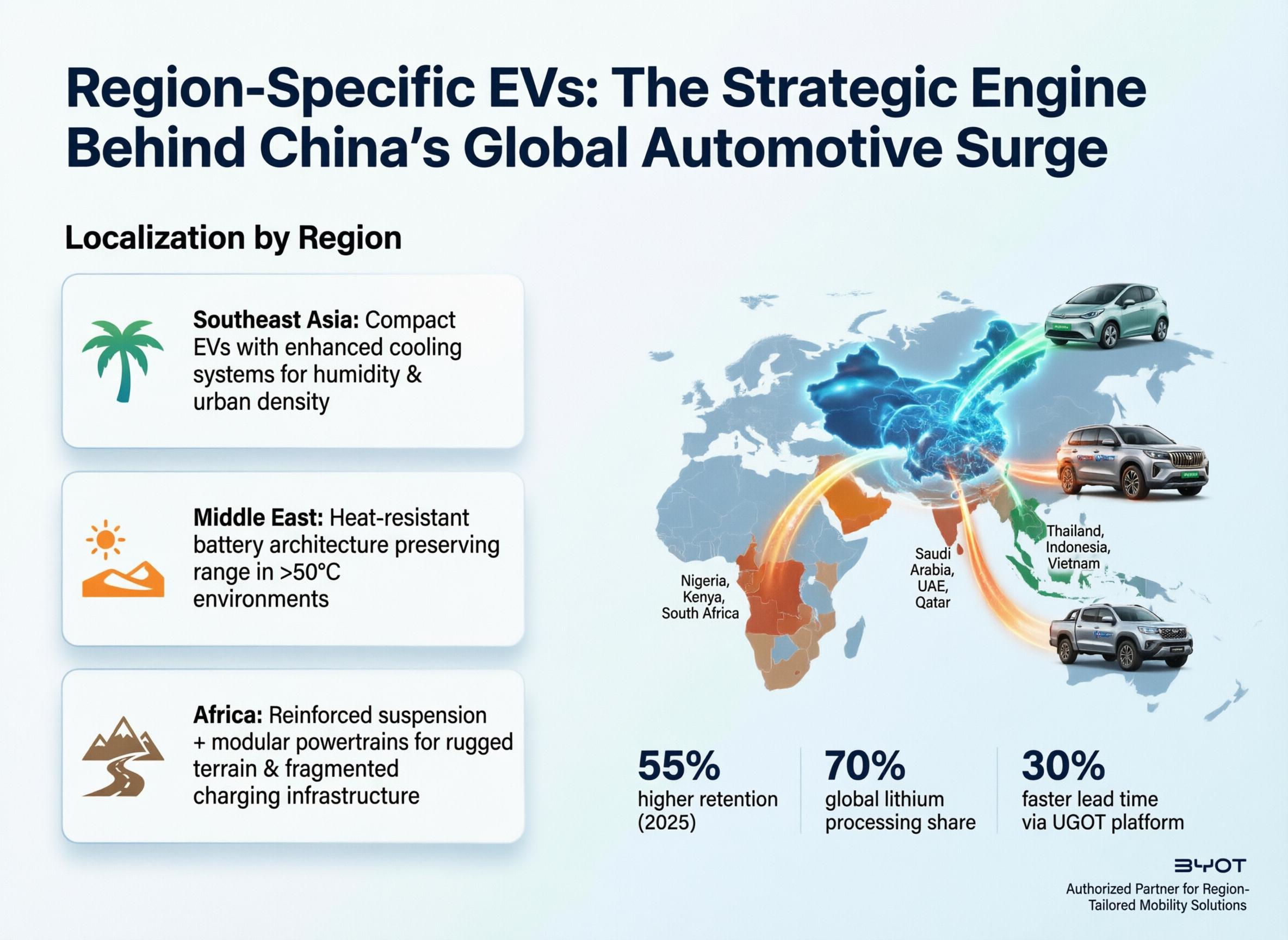 Region-Specific EVs: The Strategic Engine Behind China’s Global Automotive Surge