
BYD’s Historic Overtake of Tesla Reshapes Global EV Landscape: Strategic Pathways for Emerging Markets
Introduction
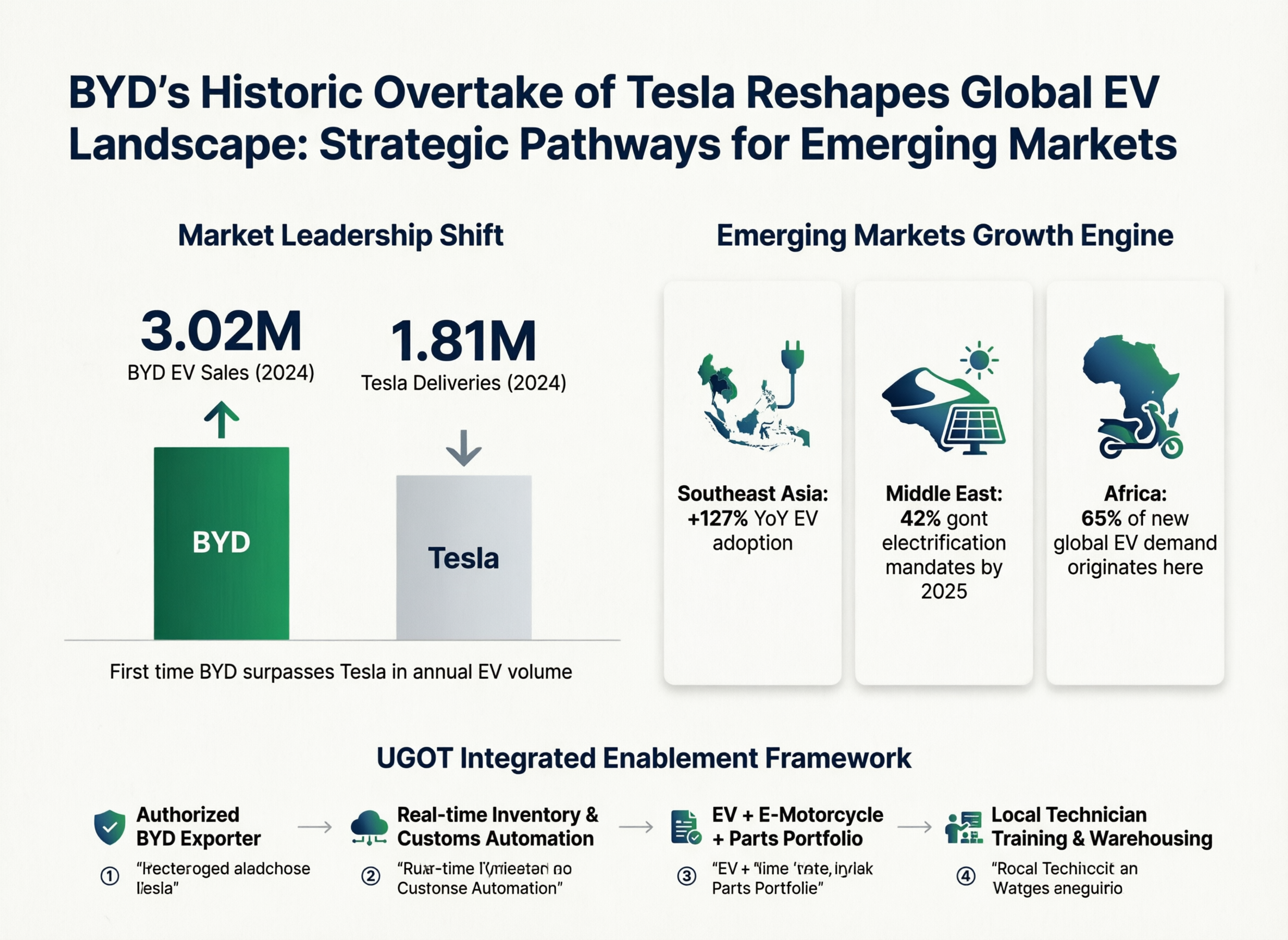
In a watershed moment for the automotive industry, Chinese manufacturer BYD has officially dethroned Tesla as the world’s largest electric vehicle (EV) producer. With 3.02 million EVs sold globally in 2024—surpassing Tesla’s 1.81 million deliveries—this milestone signals more than a shift in market leadership. It underscores a fundamental transformation in how EV innovation, supply chain agility, and emerging market demand are converging to redefine global mobility. As traditional automotive hierarchies dissolve, businesses must navigate this new terrain with strategic foresight.
The New Dynamics of Global EV Competition
BYD’s ascent is no accident. It reflects a calculated fusion of vertical integration—spanning batteries, semiconductors, and manufacturing—and aggressive localization strategies tailored to price-sensitive regions. Unlike Tesla’s premium-focused approach, BYD has dominated volume segments through models like the Seagull and Dolphin, which balance affordability with advanced blade battery technology. This strategy resonates powerfully in emerging economies, where 65% of new EV demand now originates. Southeast Asia, the Middle East, and Africa are experiencing explosive growth, driven by urbanization, government electrification mandates, and a hunger for sustainable yet accessible transport. Consequently, Chinese automakers now command over 60% of global EV exports, leveraging economies of scale that Western rivals struggle to match.
Critically, this isn’t merely a volume game. BYD’s ecosystem approach—integrating passenger EVs, commercial vehicles, and energy storage—creates cross-market synergies that accelerate adoption. For distributors and fleet operators, this means unprecedented access to diversified product portfolios. Yet it also intensifies pressure on supply chain resilience. As demand surges, fragmented logistics, customs complexities, and after-sales gaps threaten to bottleneck growth, particularly in regions with underdeveloped infrastructure.
Bridging the Supply Chain Gap: Integrated Solutions for Scalable Growth
For international businesses seeking to capitalize on this shift, partnering with agile intermediaries is no longer optional—it’s existential. This is where specialized export enablers transform market potential into tangible growth. As an official authorized exporter for BYD, UGOT provides end-to-end procurement solutions that de-risk entry into high-velocity markets. We streamline access to BYD’s entire EV lineup—from best-selling SUVs like the Atto 3 to fleet-ready sedans—guaranteeing priority allocation, competitive pricing, and rapid containerized shipping from Chinese ports. Our digital platform offers real-time inventory visibility and customs documentation automation, compressing delivery timelines by up to 40% compared to traditional channels.
Beyond passenger vehicles, UGOT leverages BYD’s ecosystem dominance to deliver holistic new energy solutions. Our portfolio includes electric motorcycles for last-mile logistics in congested urban corridors, alongside certified spare parts and modular service kits designed for remote maintenance. In markets like Thailand and Nigeria, where 70% of EV buyers cite after-sales support as a purchase barrier, our localized technician training programs and warehousing networks ensure operational continuity. This full-spectrum approach turns supply chain vulnerabilities into competitive advantages, empowering partners to scale without compromising reliability.
The Road Ahead: Collaboration as the Catalyst for Sustainable Electrification
The BYD-Tesla reversal is a harbinger of deeper industry realignment. By 2030, emerging markets will drive 80% of global EV sales growth, demanding solutions that prioritize adaptability over legacy prestige. For forward-looking enterprises, success hinges on aligning with partners who blend manufacturer authority with on-ground execution expertise. UGOT embodies this nexus—transforming BYD’s production might into accessible, future-proof mobility for diverse economies. As the EV revolution accelerates beyond traditional strongholds, our commitment to seamless integration and ecosystem resilience will remain pivotal in building a truly inclusive electric future.
Related Posts
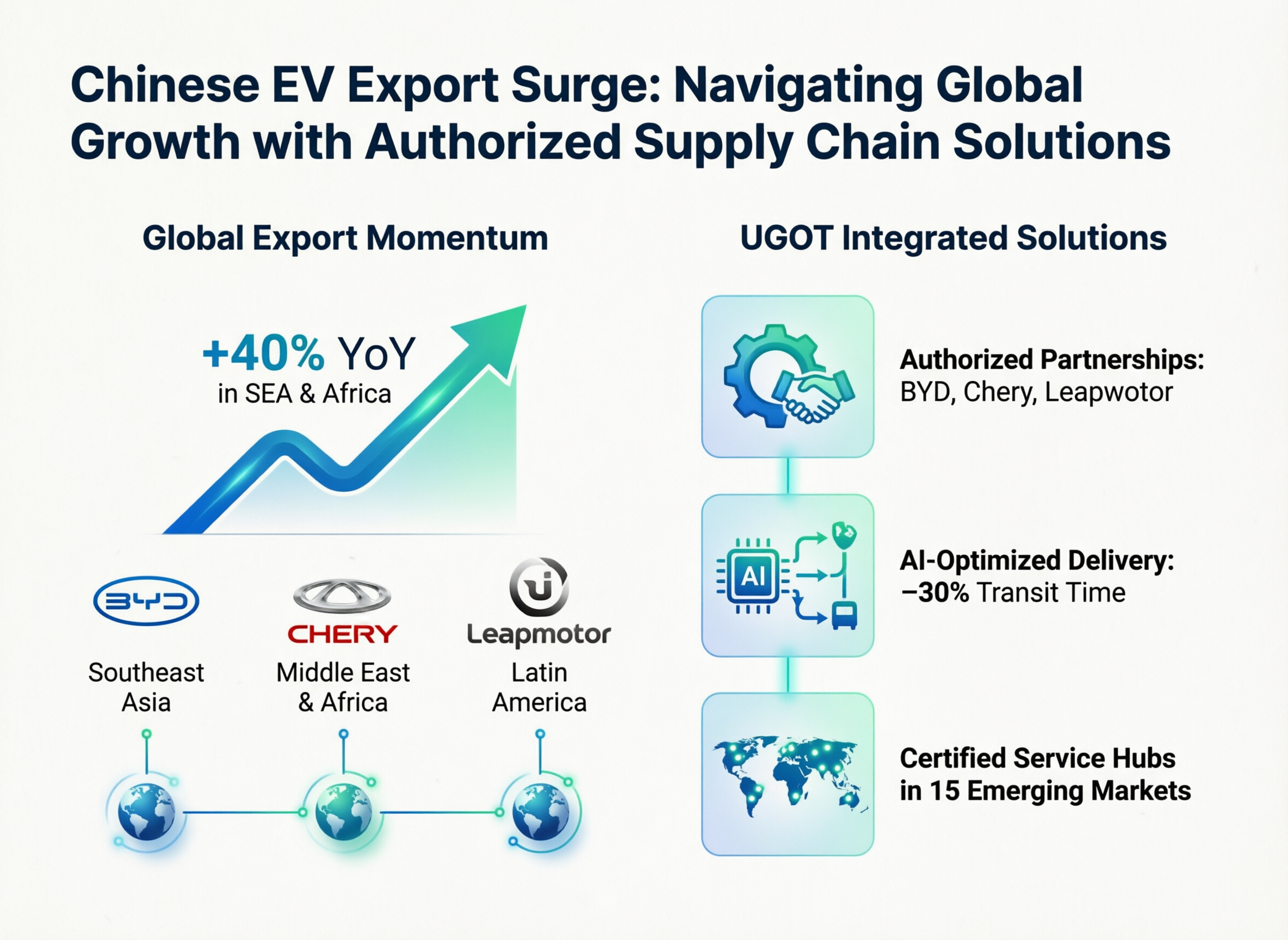 Chinese EV Export Surge: Navigating Global Growth with Authorized Supply Chain Solutions
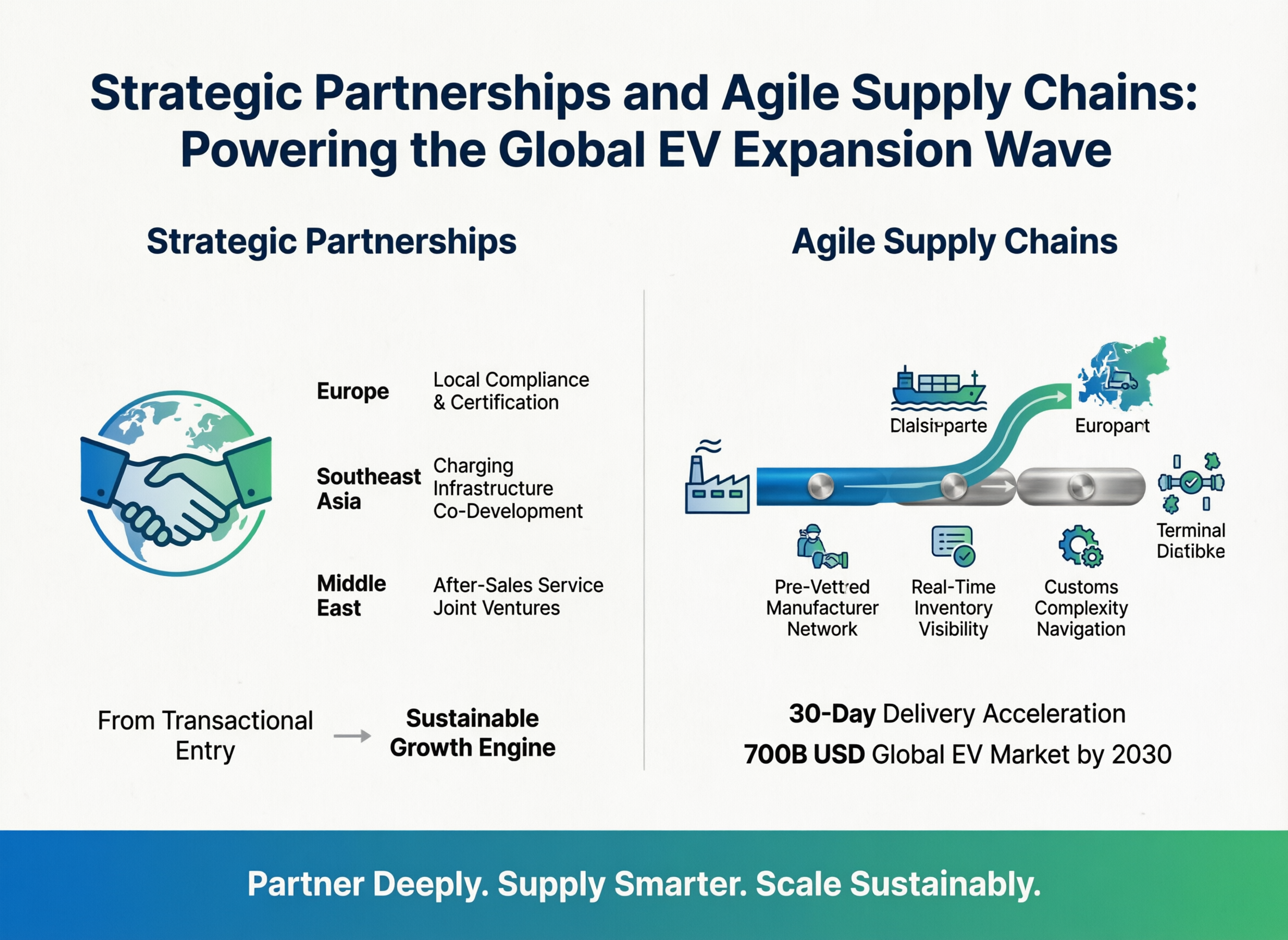 Strategic Partnerships and Agile Supply Chains: Powering the Global EV Expansion Wave
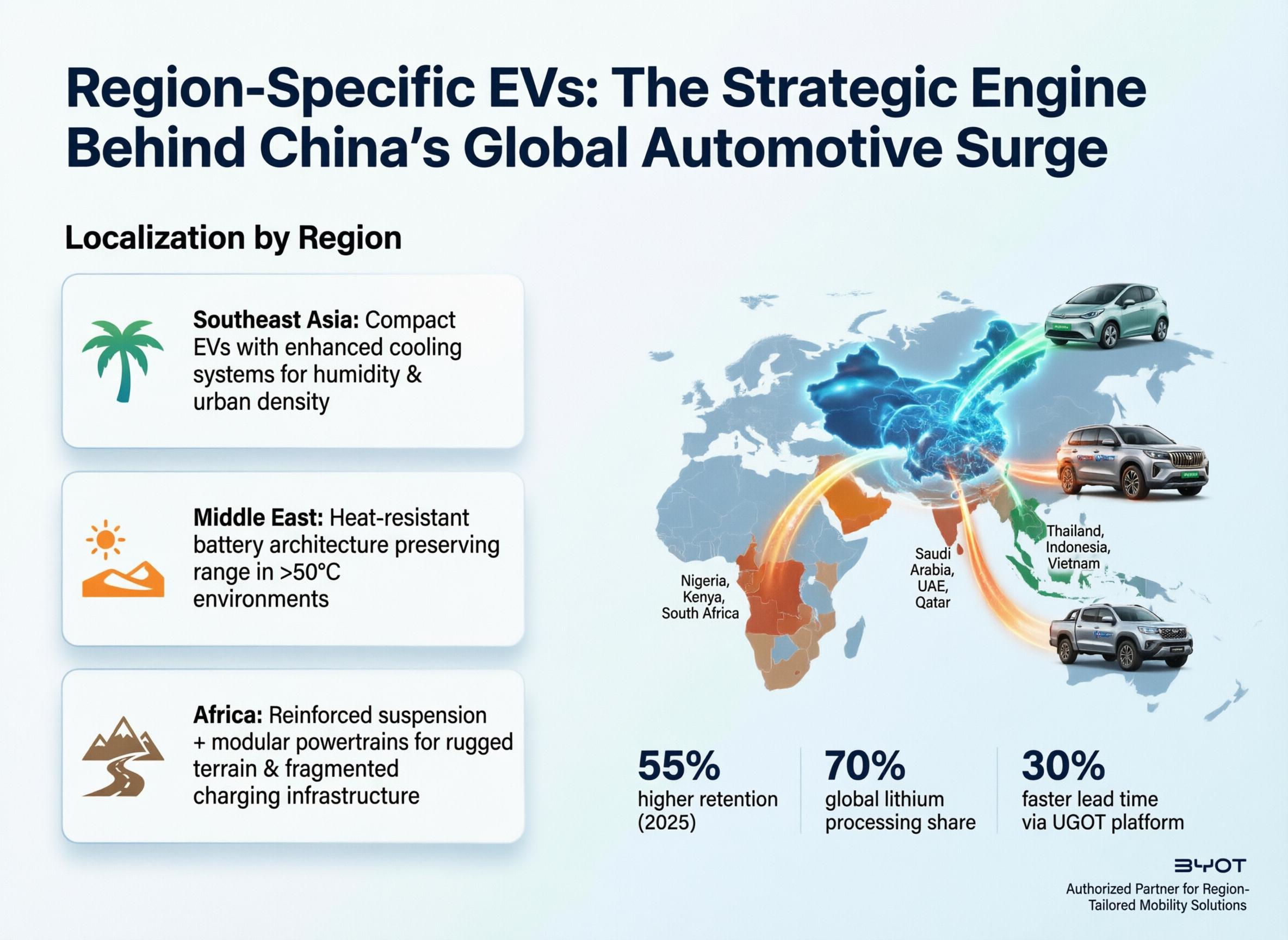 Region-Specific EVs: The Strategic Engine Behind China’s Global Automotive Surge