BYD’s EV Leadership Reshapes Global Markets: Strategic Export Solutions for Emerging Economies
Introduction
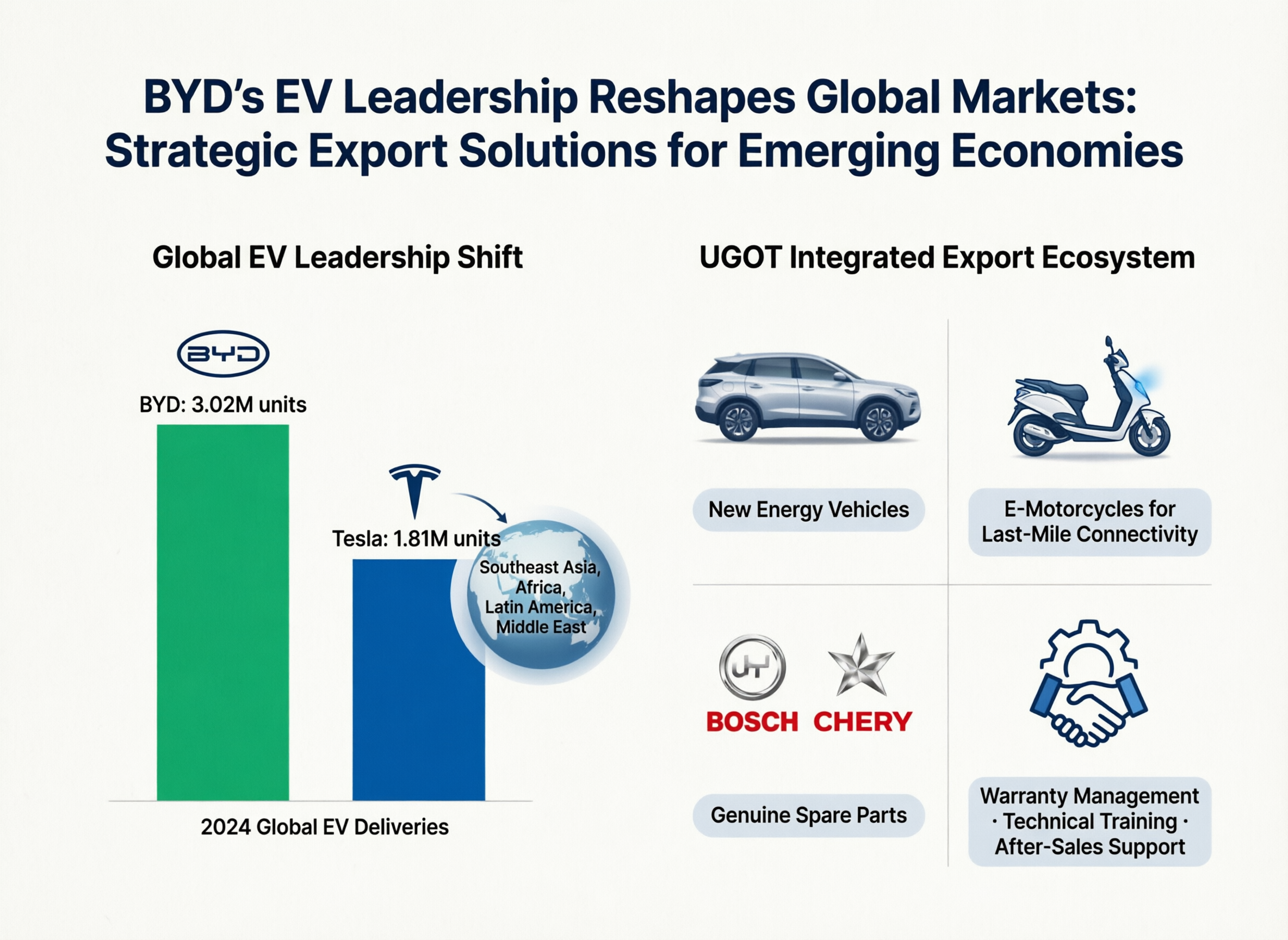
The automotive industry has witnessed a historic pivot in 2024, as Chinese automaker BYD officially surpassed Tesla to become the world’s largest electric vehicle (EV) manufacturer. With over 3.02 million EVs sold globally this year—compared to Tesla’s 1.81 million deliveries—this milestone underscores a profound shift in market dynamics. BYD’s ascent reflects not only China’s growing dominance in sustainable mobility but also a broader realignment of global supply chains and consumer preferences. As emerging economies accelerate their transition to electrified transport, this development signals both unprecedented opportunities and complex challenges for stakeholders worldwide.
Industry Trends: A New Era of Electrification
BYD’s leadership is emblematic of three critical trends reshaping the EV landscape. First, the center of gravity for EV innovation and production is shifting decisively toward Asia, driven by cost-efficient manufacturing, rapid technological iteration, and aggressive expansion into affordable segments. This has democratized access to electric mobility, particularly in price-sensitive regions like Southeast Asia, Africa, and Latin America, where demand for budget-friendly EVs is surging. Second, the global EV market is experiencing explosive growth, with 2024 sales figures revealing a stark divergence: while premium brands focus on high-end models, mass-market adoption is being fueled by versatile, durable vehicles tailored to diverse terrains and infrastructures. Third, this boom is catalyzing a supply chain revolution. As Chinese OEMs like BYD scale production, they are forging new export corridors that bypass traditional automotive hubs, creating openings for agile intermediaries to streamline cross-border logistics, compliance, and after-sales support. However, fragmented distribution networks and inconsistent service standards remain barriers to seamless market entry, especially in regions with underdeveloped EV ecosystems.
Navigating the Shift: Integrated Export Solutions
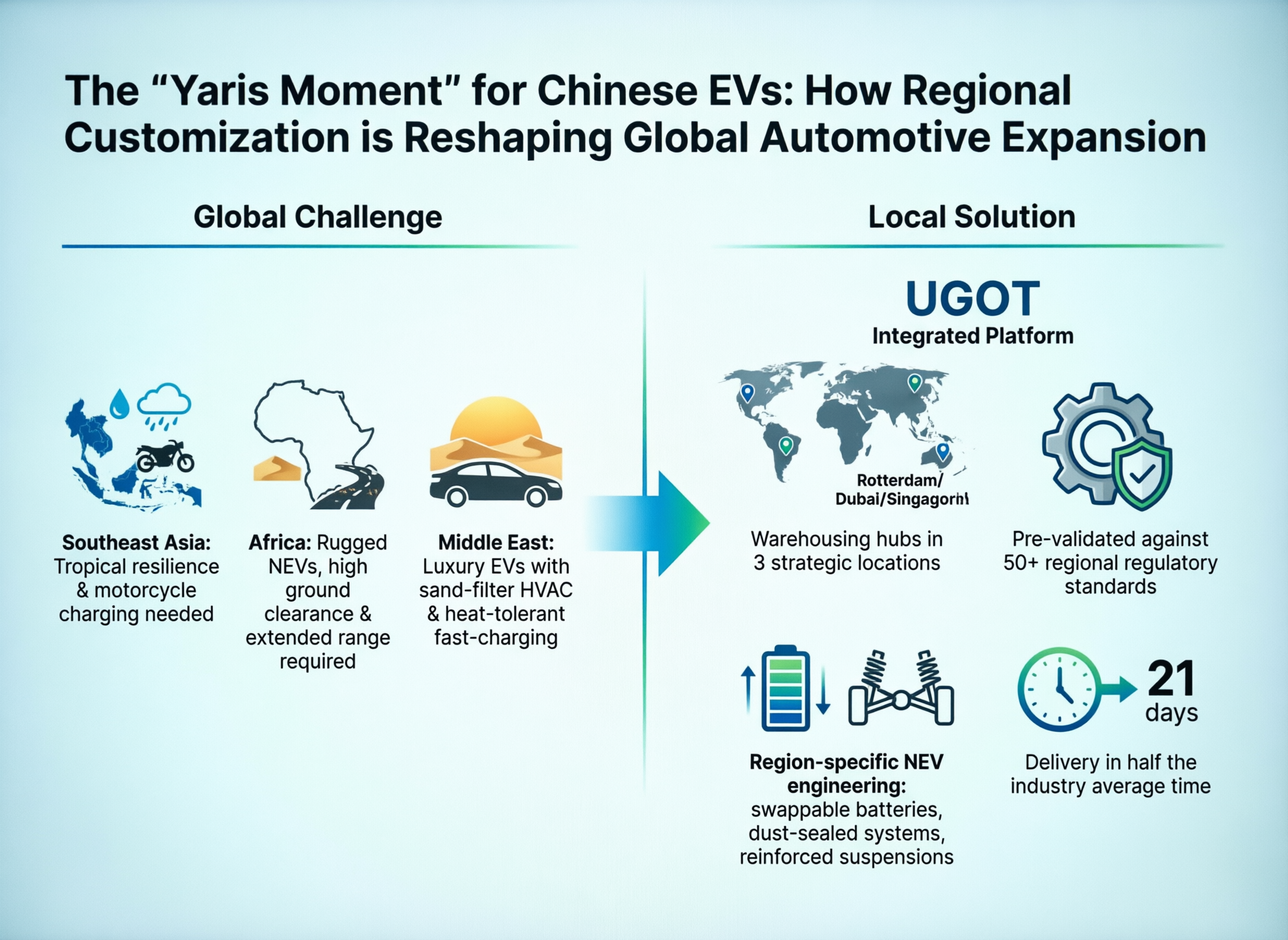
Amid this transformation, businesses in emerging markets require partners who can translate global EV momentum into localized success. This is where specialized export solutions bridge the gap between supply and demand. For instance, authorized exporters with direct OEM relationships ensure access to high-volume, reliable inventory—such as BYD’s full portfolio of SUVs, sedans, and commercial EVs—while mitigating risks like delivery delays or counterfeit parts. Crucially, a holistic approach extends beyond vehicle shipments to encompass complementary mobility needs. Companies like UGOT exemplify this model, leveraging their status as a BYD-authorized partner to deliver end-to-end export services. UGOT’s Global Vehicle and Parts Export Solutions integrate new energy vehicles, electric motorcycles for last-mile connectivity, and genuine spare parts from trusted brands like Bosch and Chery. Backed by a stable supply chain and dedicated after-sales support, this ecosystem empowers dealers, fleet operators, and traders in Southeast Asia, the Middle East, Africa, and South America to deploy comprehensive green mobility strategies without operational friction. By offering rapid fulfillment, warranty management, and technical training, UGOT turns market volatility into a competitive advantage, enabling clients to capture growth while ensuring sustainability and customer trust.
Conclusion: Accelerating a Sustainable Future
Looking ahead, BYD’s triumph is not an endpoint but a catalyst for deeper global electrification. Emerging markets will drive the next wave of EV adoption, demanding adaptable, resilient partnerships that prioritize both scalability and service excellence. UGOT is positioned at this forefront, transforming industry shifts into tangible value through its integrated export framework. By harmonizing supply chain efficiency with localized expertise, UGOT doesn’t just facilitate transactions—it fosters long-term transitions toward cleaner, more inclusive transportation. As the world moves beyond the Tesla-BYD rivalry, the true winners will be those who build bridges across continents, turning today’s disruptions into tomorrow’s sustainable mobility revolutions.
Related Posts
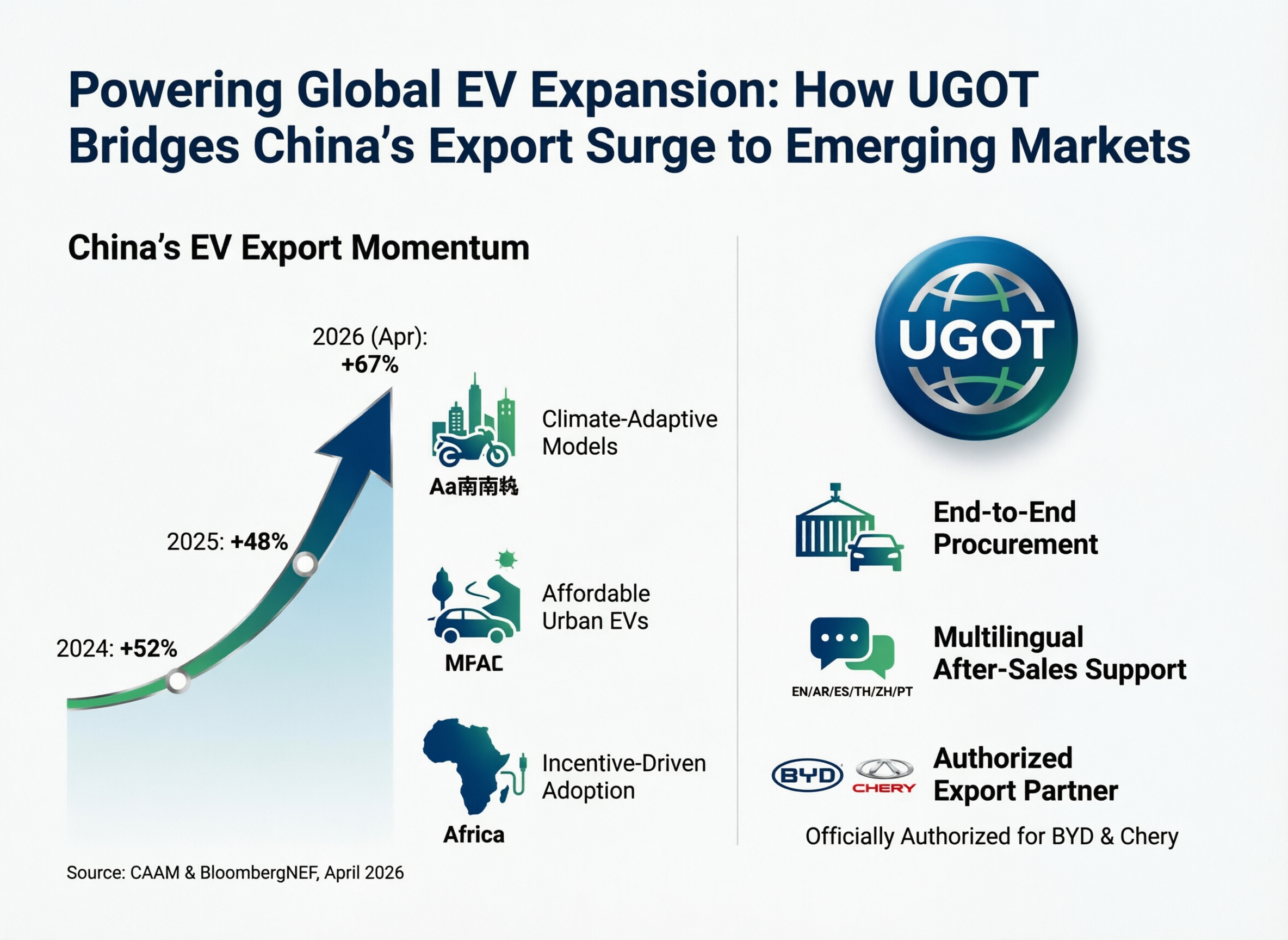 Powering Global EV Expansion: How UGOT Bridges China’s Export Surge to Emerging Markets
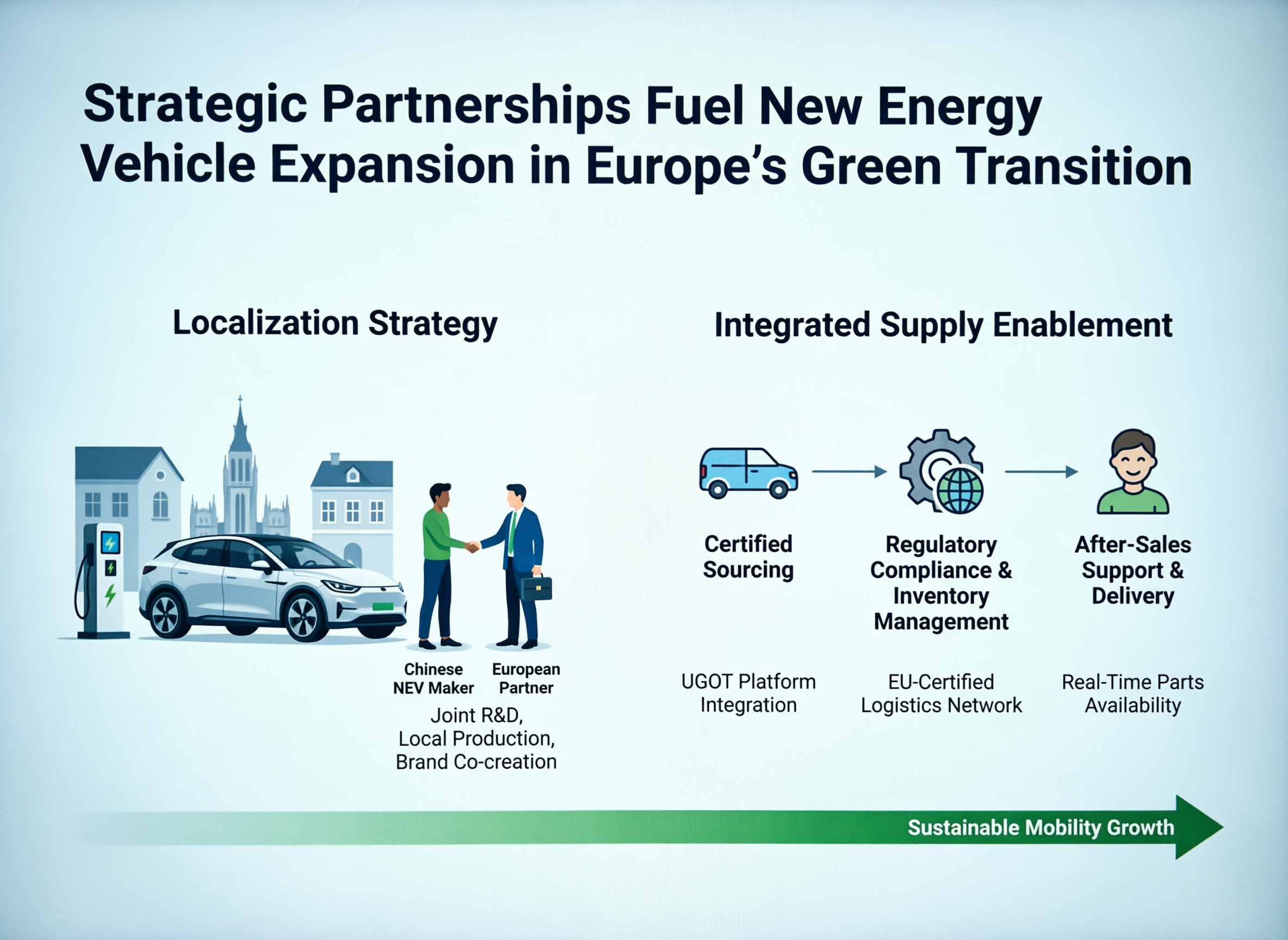 Strategic Partnerships Fuel New Energy Vehicle Expansion in Europe’s Green Transition
 The ‘Yaris Moment’ for Chinese EVs: How Regional Customization is Reshaping Global Automotive Expansion