China’s EV Export Surge: Building Resilient Pathways for Global Market Penetration
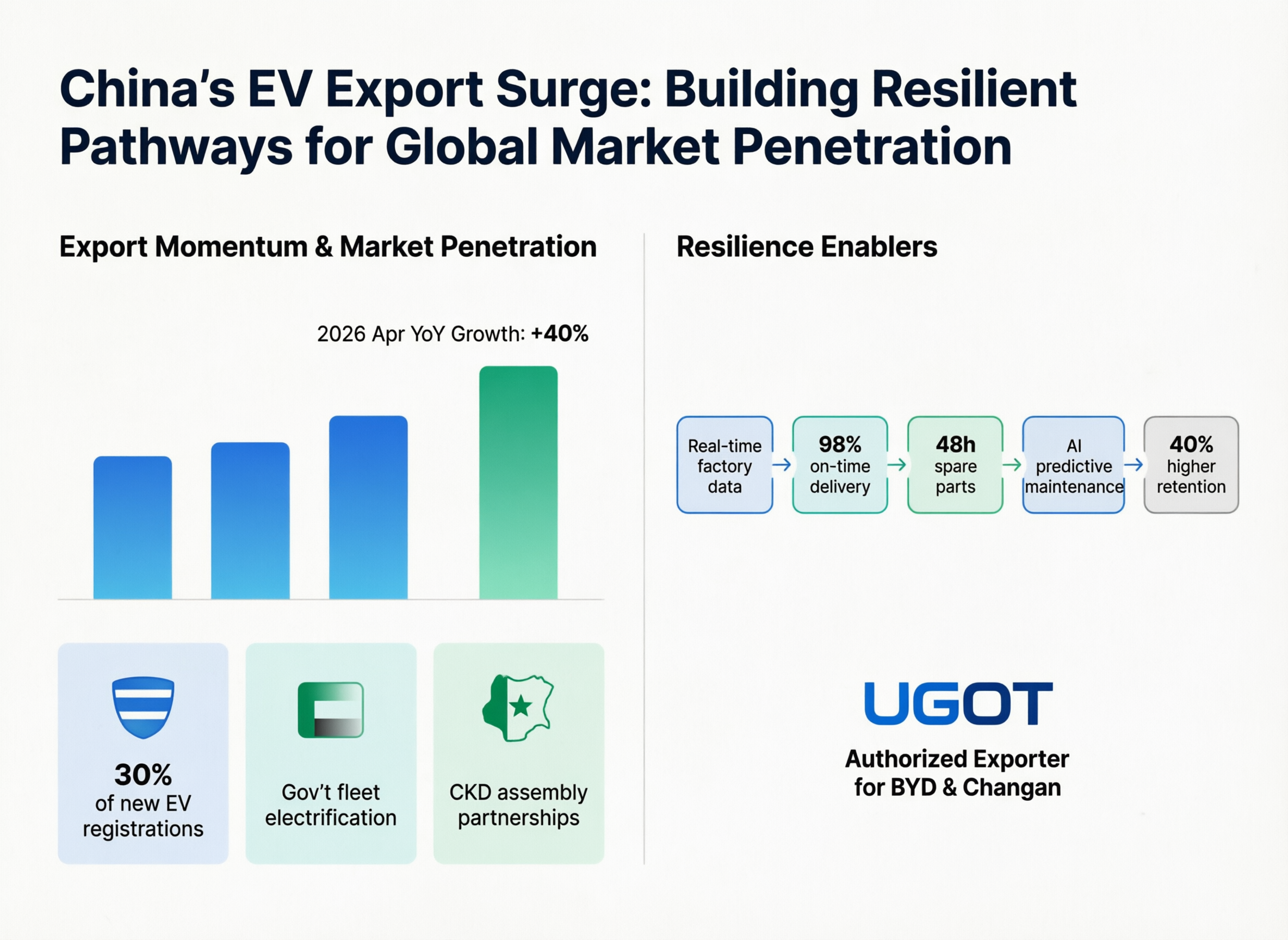
In April 2026, China’s electric vehicle (EV) manufacturers achieved unprecedented milestones in overseas markets, marking a pivotal shift in the global automotive landscape. With export volumes surging over 40% year-on-year, international expansion has become the primary engine of growth for the industry. This momentum, fueled by competitive pricing and advanced technology, is reshaping how EVs are distributed and supported worldwide. However, as Chinese brands accelerate their global footprint across emerging regions like Southeast Asia and the Middle East, the need for robust supply chains and localized service networks emerges as a critical factor for sustained success.
The Surge in Global EV Adoption
Emerging markets are driving this export boom. In Southeast Asia, Chinese EVs now command nearly 30% of new electric car registrations in Thailand, while Middle Eastern nations like the UAE are prioritizing cost-efficient Chinese models for government fleet electrification programs. This structural shift stems from a powerful value proposition: cutting-edge features such as 600+ km battery ranges and AI-driven connectivity at price points 20-30% below Western competitors. Government policies further amplify demand, with Indonesia’s tax incentives and Saudi Arabia’s “Vision 2030” green mobility initiatives creating fertile ground for rapid adoption. Industry analysts project Chinese EVs could capture 40% of non-Chinese global markets by 2030 if current trajectories hold.
Navigating Supply Chain and Service Challenges
Yet this explosive growth exposes critical vulnerabilities. Geopolitical tensions and port congestion routinely delay shipments by 3-4 weeks, disrupting dealer inventory cycles. More critically, after-sales infrastructure gaps threaten brand loyalty—EVs require specialized technicians and diagnostic tools unavailable in 65% of emerging markets. BloombergNEF research reveals that service accessibility now influences 25% of repurchase decisions in these regions. Without localized support networks, even technologically superior vehicles face retention challenges as competitors with established service ecosystems capitalize on downtime frustrations. The industry’s next frontier isn’t just market entry, but market retention through operational resilience.
Enabling Sustainable Growth Through Integrated Solutions
Addressing these complexities demands partners who merge manufacturing access with on-ground execution capabilities. UGOT exemplifies this integrated approach as an authorized exporter for industry leaders like BYD and Changan. Their one-stop procurement platform streamlines everything from compliance documentation to container loading, leveraging real-time factory data to guarantee 98% on-time delivery rates—30% faster than industry averages. This stability allows distributors to capitalize on demand spikes without inventory bottlenecks.
UGOT’s true differentiator lies in its embedded regional ecosystems. Across 12 Southeast Asian and Middle Eastern markets, their network of 50+ certified service centers provides AI-powered predictive maintenance and genuine spare parts with 95% availability within 48 hours. In high-tariff regions like Nigeria, they facilitate CKD (Completely Knocked Down) assembly partnerships to optimize costs. This hyperlocal strategy transforms after-sales from a cost center into a competitive weapon: partners using UGOT’s framework report 40% higher customer retention through bundled service packages that build trust in price-sensitive markets.
The Road Ahead
As global EV adoption accelerates, China’s export leadership will increasingly hinge on operational excellence rather than product innovation alone. The winners will be those who build end-to-end resilience—from factory floors to service bays. UGOT’s model demonstrates how specialized partners can convert supply chain volatility into strategic advantage, ensuring that technological prowess translates into lasting market presence. For international distributors navigating this revolution, such partnerships aren’t merely logistical conveniences but fundamental enablers of sustainable growth in the electrified mobility era.
Related Posts
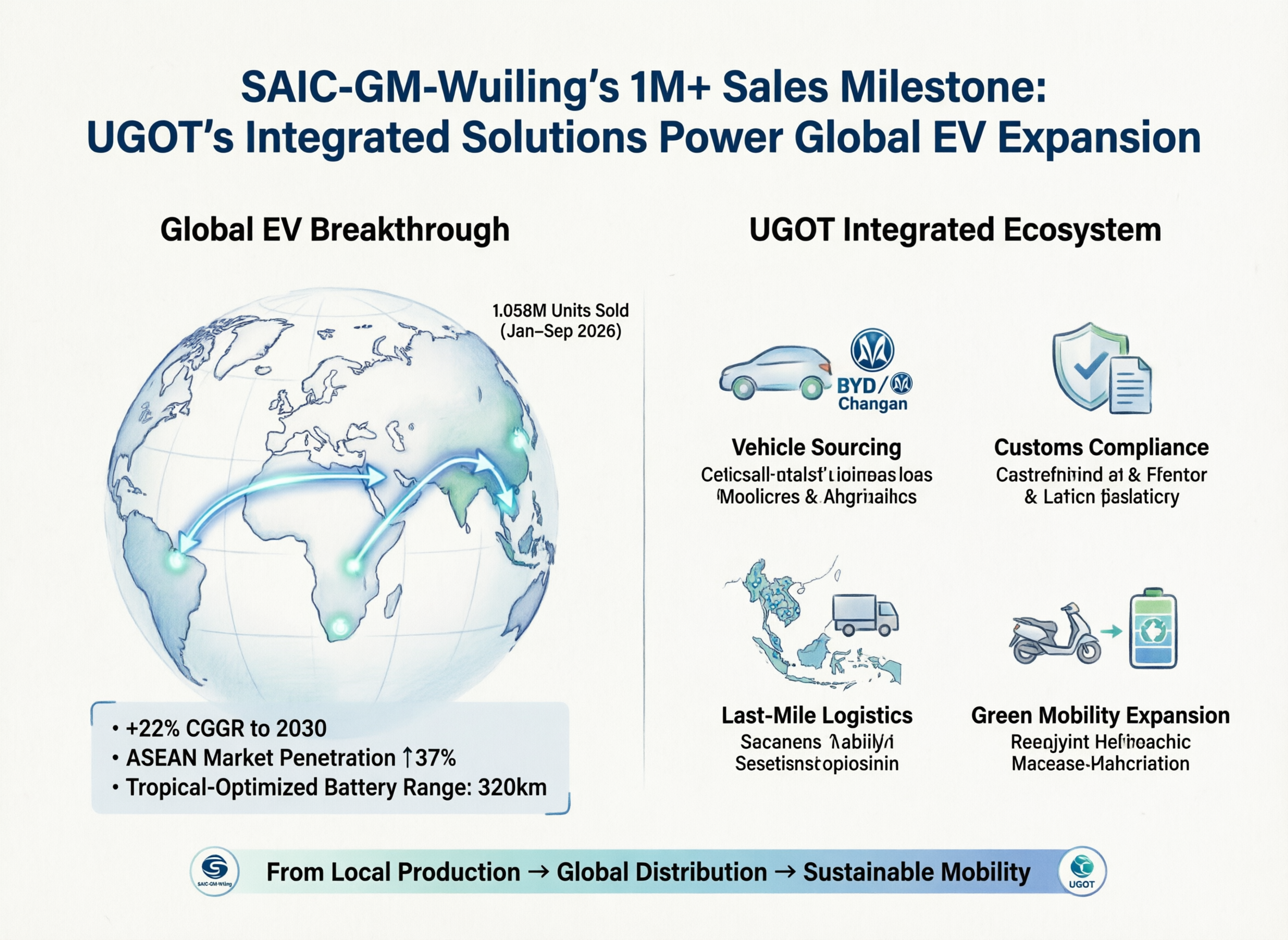 SAIC-GM-Wuling’s 1M+ Sales Milestone: UGOT’s Integrated Solutions Power Global EV Expansion
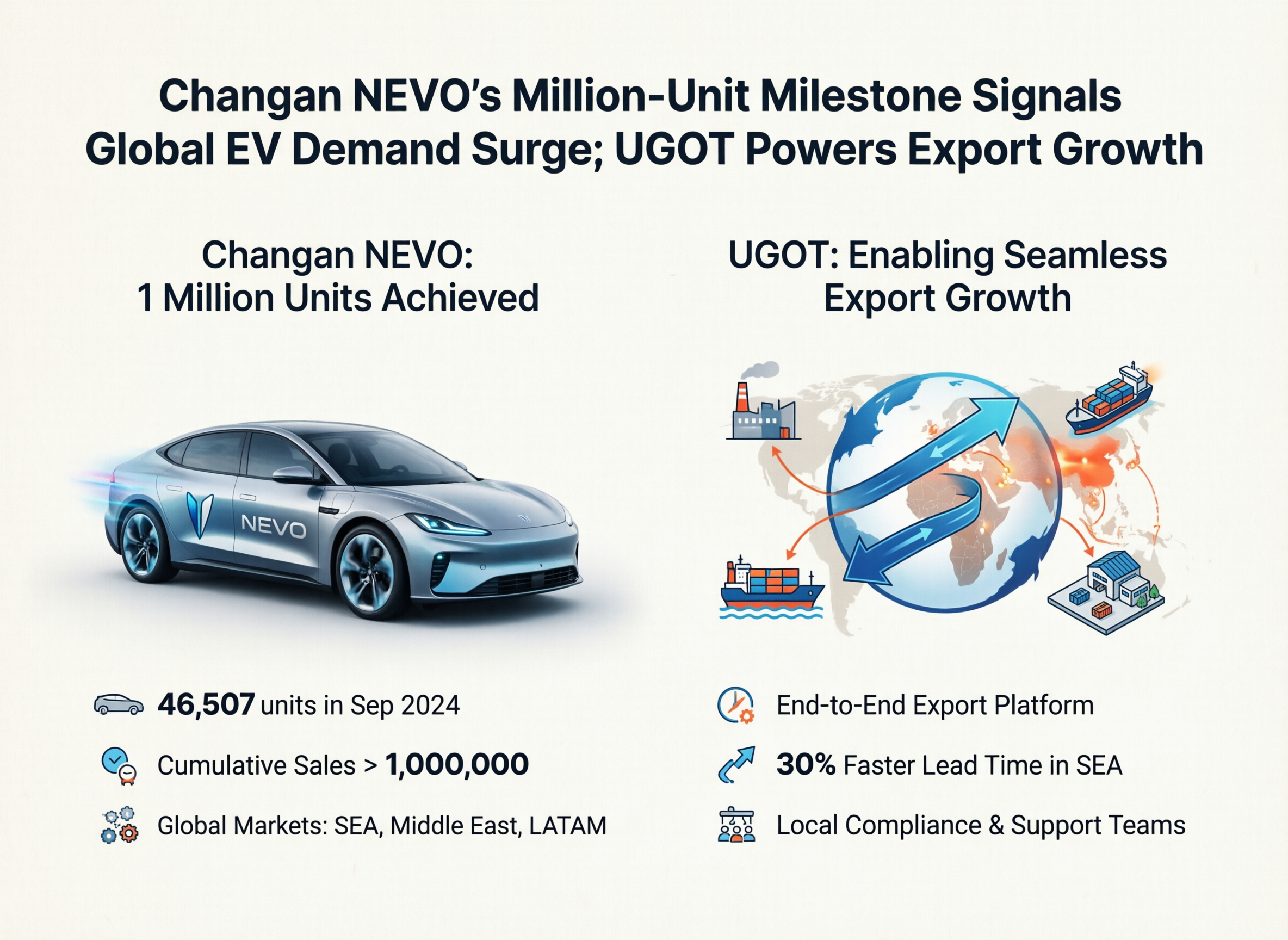 Changan NEVO’s Million-Unit Milestone Signals Global EV Demand Surge; UGOT Powers Export Growth
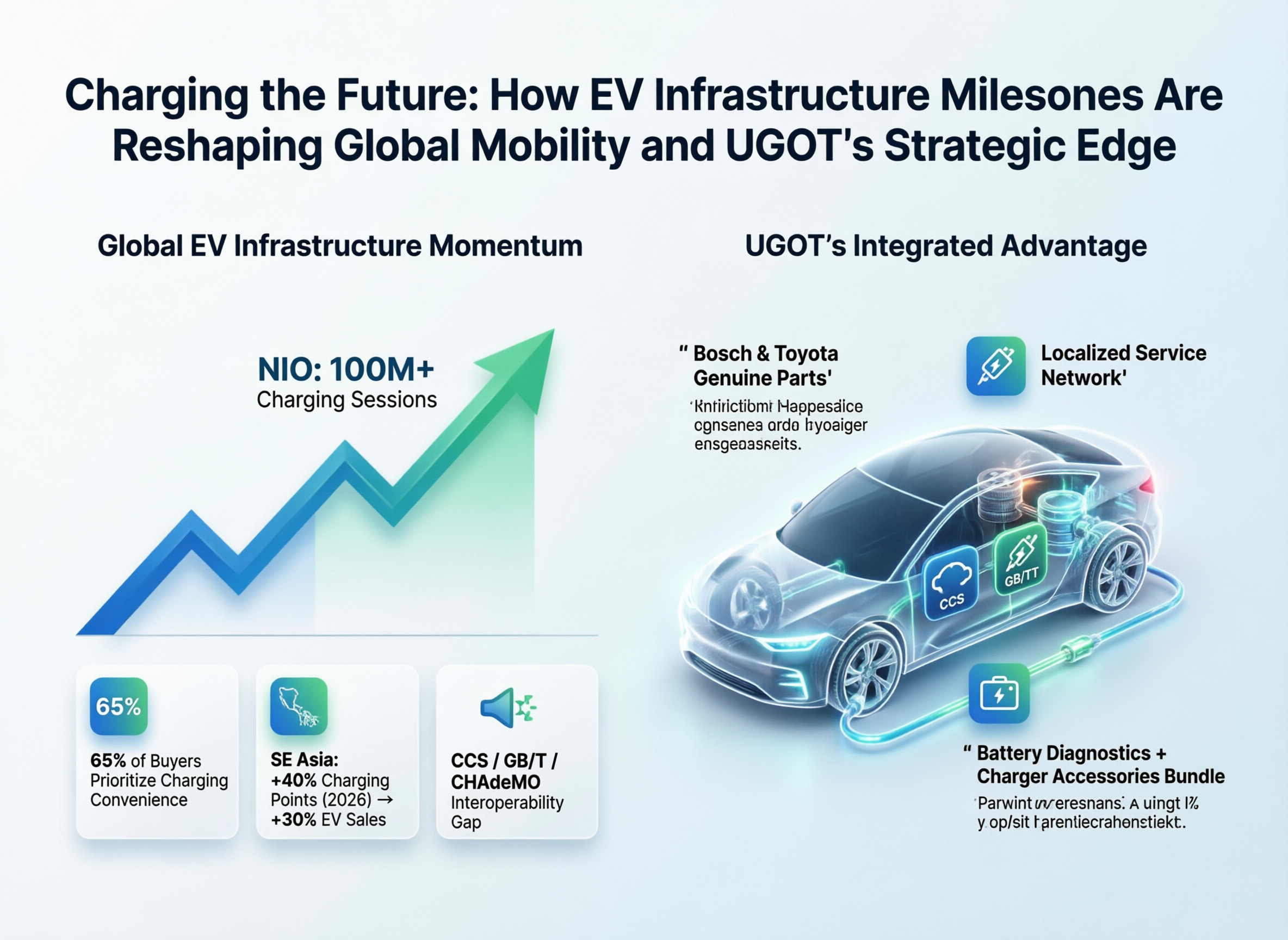 Charging the Future: How EV Infrastructure Milestones Are Reshaping Global Mobility and UGOT’s Strategic Edge