
Regionalization Revolution: How Chinese EV Makers Are Accelerating Global Expansion
Introduction
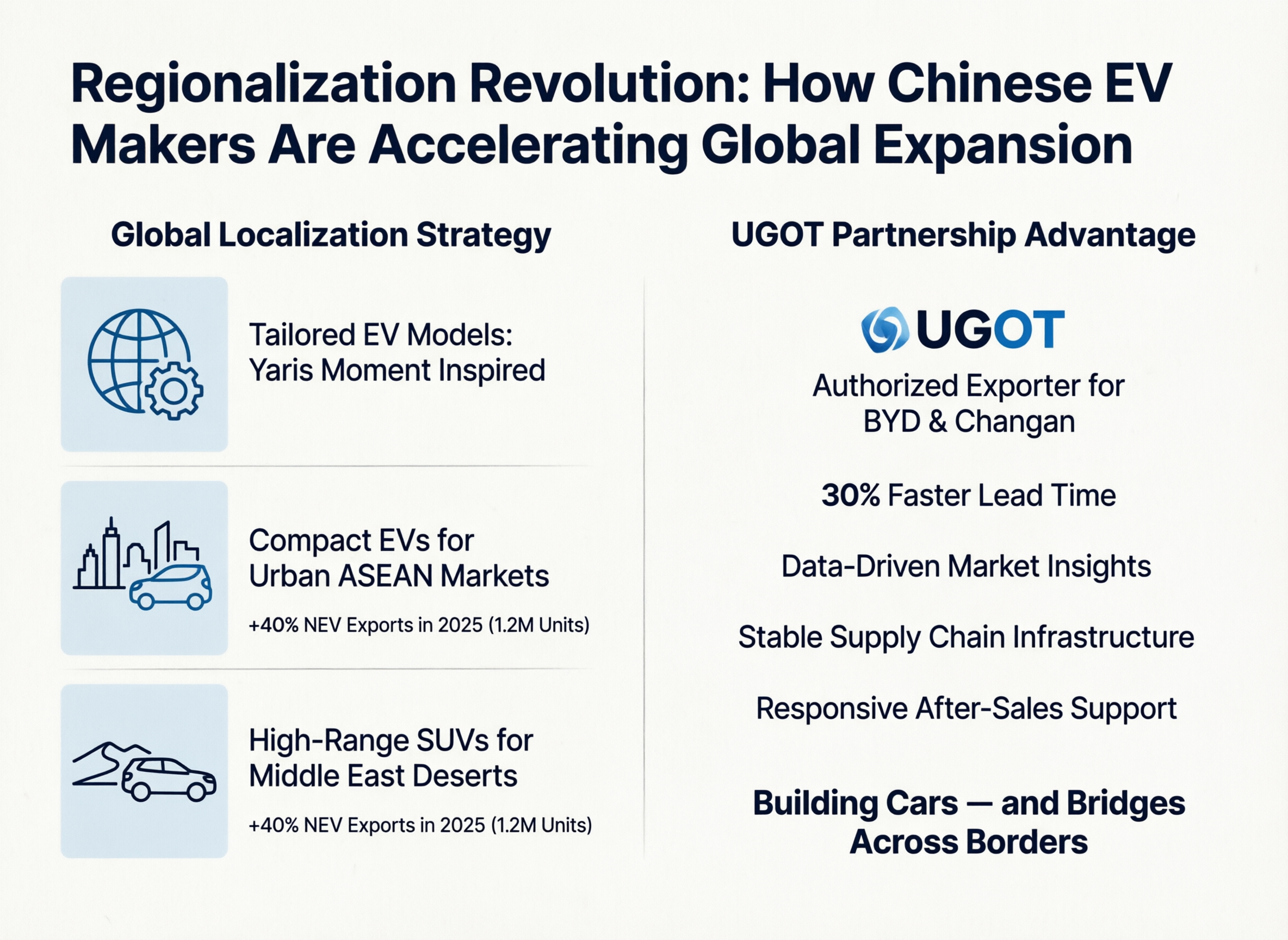
The global automotive landscape is undergoing a seismic shift as Chinese automakers pivot toward region-specific vehicle development to fuel international growth. Inspired by Toyota’s iconic ‘Yaris Moment’—where tailored models drove massive overseas success—brands like BYD and Changan are now prioritizing localized electric vehicles (EVs) to capture diverse markets. This strategic evolution, highlighted in recent industry reports, underscores a broader trend: China’s EV sector is no longer just exporting products but adapting them to resonate with regional preferences, from rugged terrain in Africa to urban mobility needs in Southeast Asia. As competition intensifies, this approach is proving critical for sustainable global expansion.
Industry Trends: The Rise of Hyper-Localized EV Strategies
Chinese automakers are rapidly embracing regionalization as a core growth engine. Data reveals a surge in market-specific EV variants, such as compact models for congested Southeast Asian cities and high-range SUVs for Middle Eastern deserts. This shift is driven by three key dynamics. First, EVs have become the primary vehicle for overseas ambitions, with China exporting over 1.2 million new energy vehicles in 2025 alone—a 40% year-on-year increase. Second, emerging markets like Indonesia and Saudi Arabia demand affordable, adaptable solutions that balance performance with local infrastructure constraints, such as limited charging networks. Third, supply chain pressures are forcing manufacturers to optimize logistics; delays in parts delivery or mismatched specifications can erode margins and brand trust. Consequently, companies that master regional customization—integrating everything from climate-specific battery tech to culturally aligned design—are gaining a decisive edge in market share and consumer loyalty.
Solutions: Enabling Seamless Regionalization Through Expert Partnerships
Executing this complex strategy demands more than just product innovation; it requires agile export ecosystems that mitigate risks while accelerating time-to-market. This is where specialized partners step in to bridge the gap between Chinese manufacturers and global demand. For instance, UGOT—authorized exporter for leading brands including BYD and Changan—provides end-to-end regional customization solutions. By leveraging its established distribution networks across Southeast Asia and the Middle East, UGOT ensures rapid delivery of both EVs and critical spare parts, reducing lead times by up to 30%. Its integrated platform also offers data-driven market insights, helping automakers fine-tune vehicle specifications for local regulations and consumer behavior. Crucially, UGOT’s stable supply chain infrastructure minimizes export bottlenecks, while its responsive after-sales support enhances customer retention in volatile markets. This holistic approach transforms regionalization from a logistical challenge into a scalable competitive advantage.
Conclusion: The Road Ahead for Global EV Leadership
As the EV race accelerates, regionalization will remain a cornerstone of China’s automotive globalization. Forecasts suggest emerging markets could absorb 60% of Chinese EV exports by 2030, but success hinges on partners who can navigate cultural, regulatory, and operational complexities. UGOT exemplifies this new paradigm, empowering automakers to focus on innovation while ensuring their vehicles thrive in diverse environments. By combining deep regional expertise with supply chain resilience, such collaborations will not only drive growth but also redefine standards for sustainable, customer-centric mobility worldwide. The future belongs to those who build not just cars, but bridges across borders.
Related Posts
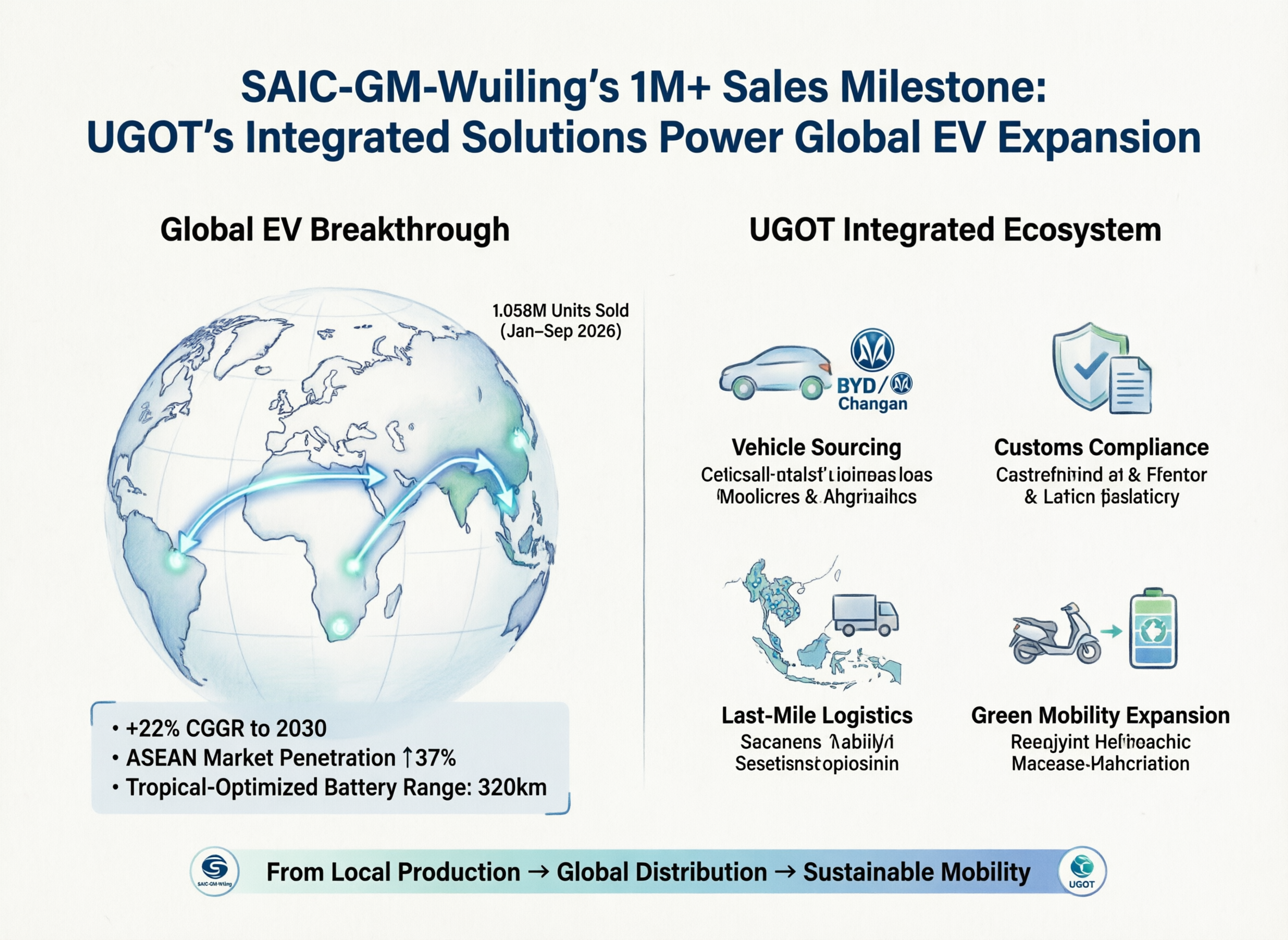 SAIC-GM-Wuling’s 1M+ Sales Milestone: UGOT’s Integrated Solutions Power Global EV Expansion
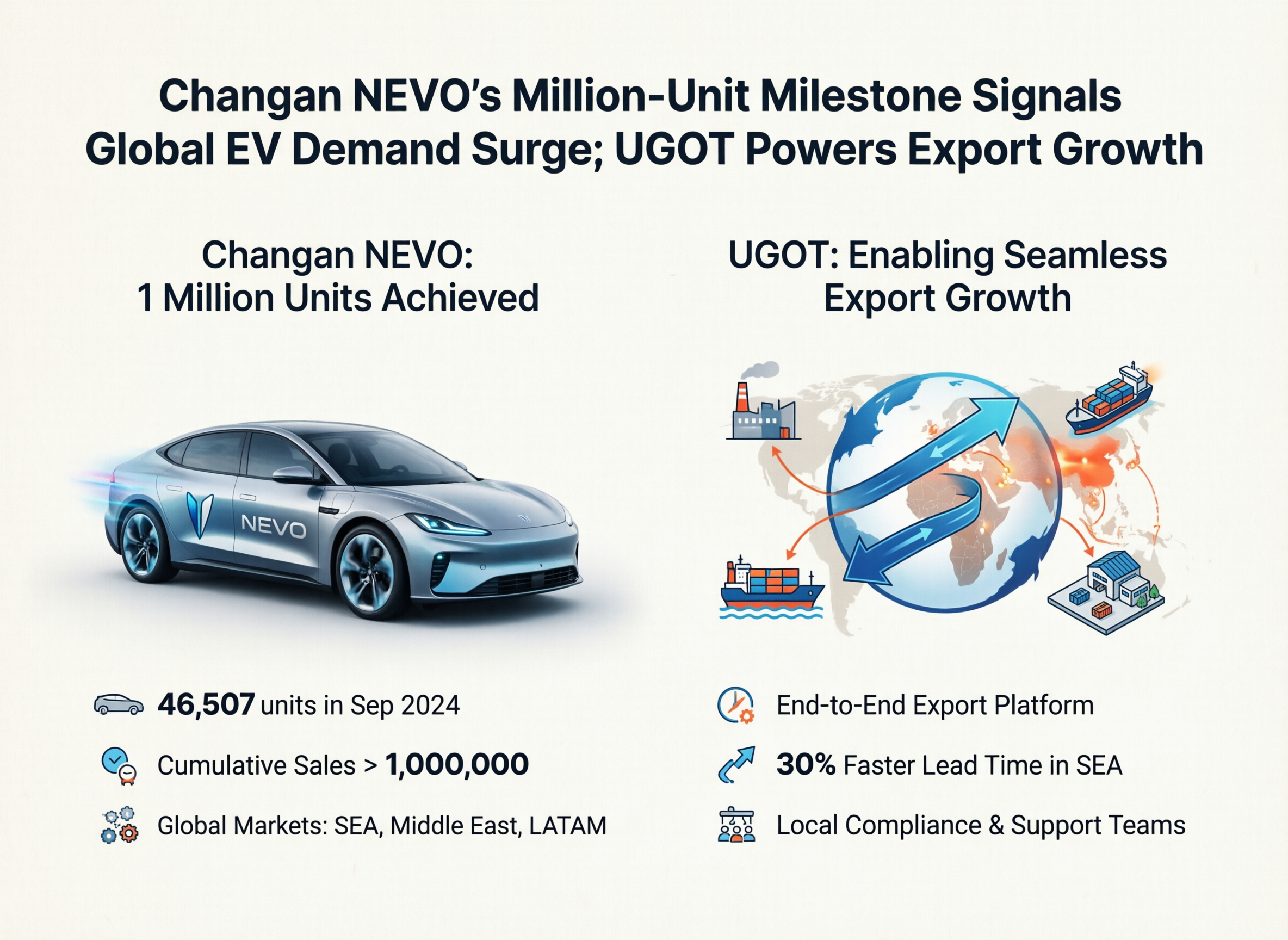 Changan NEVO’s Million-Unit Milestone Signals Global EV Demand Surge; UGOT Powers Export Growth
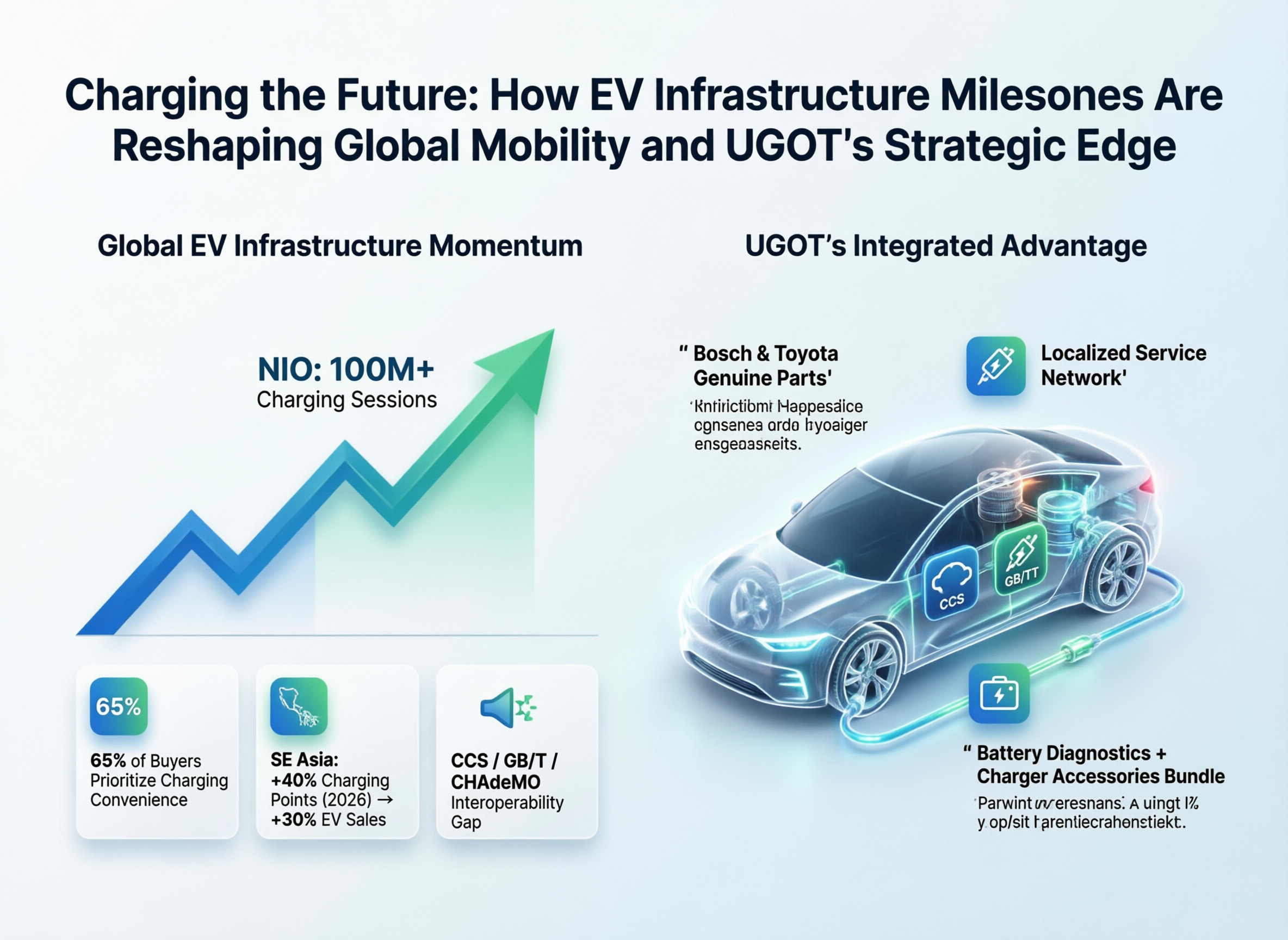 Charging the Future: How EV Infrastructure Milestones Are Reshaping Global Mobility and UGOT’s Strategic Edge