The ‘Yaris Moment’ Revolution: How Chinese Automakers Are Reshaping Global Mobility Through Regional Adaptation
Introduction
The global automotive landscape is undergoing a seismic shift as Chinese manufacturers pivot from volume-driven exports to strategically tailored vehicles designed for specific regional markets. Mirroring Toyota’s legendary ‘Yaris Moment’—where a single model’s localized adaptations fueled worldwide dominance—Chinese brands are now engineering market-specific EVs, combustion vehicles, and mobility solutions to penetrate emerging economies. This evolution marks a critical inflection point in the industry’s globalization journey, driven by sophisticated consumer demands and infrastructure realities across Southeast Asia, Africa, the Middle East, and Latin America.
The Rise of Hyper-Localized Automotive Strategies
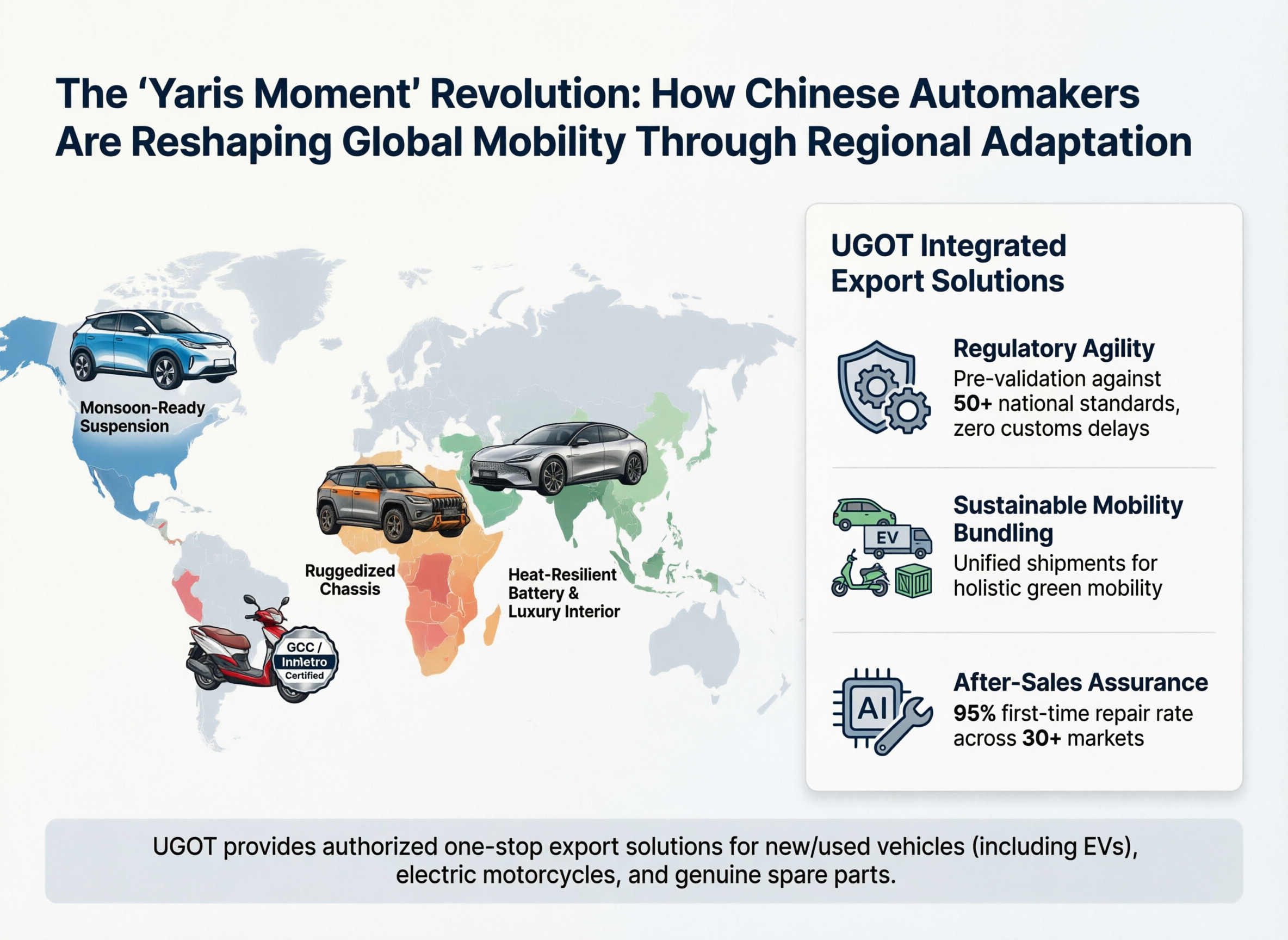
Chinese automakers’ shift toward regional customization transcends mere aesthetic tweaks. In Southeast Asia, manufacturers are developing compact electric SUVs with enhanced cooling systems and monsoon-ready suspensions. For African markets, ruggedized chassis and simplified EV architectures address sparse charging infrastructure. Meanwhile, Middle Eastern variants prioritize extreme-heat battery resilience and luxury interior configurations aligned with cultural preferences. This granular approach—inspired by Toyota’s playbook—enables brands like BYD and Changan to bypass the ‘one-size-fits-all’ pitfalls that previously limited emerging-market adoption.
Data reveals the strategy’s efficacy: Chinese EV exports to ASEAN nations surged 68% year-over-year in 2025, with region-specific models accounting for over 75% of sales. Crucially, this localization extends beyond hardware. Software interfaces now integrate regional languages, payment ecosystems, and connectivity protocols, while modular platforms allow rapid adaptation to divergent safety regulations—from GCC certifications in the Gulf to Brazil’s stringent Inmetro standards. The result is a dual acceleration: market share growth and brand perception transformation, positioning Chinese automakers as agile innovators rather than low-cost suppliers.
Navigating the Export Complexity Gap
Yet regional customization introduces formidable operational challenges. Fragmented regulatory frameworks demand real-time compliance adjustments, while volatile logistics networks disrupt delivery timelines. After-sales support gaps—particularly for EVs—risk eroding hard-won consumer trust. A Jakarta dealer survey highlighted that 61% of buyers cite service accessibility as their primary purchase barrier, underscoring that product adaptation alone is insufficient without integrated ecosystem support.
Integrated Export Solutions: The Enabler of Global Ambitions
This is where specialized export partnerships become strategic imperatives. Companies like UGOT bridge the gap between Chinese manufacturing prowess and hyperlocal market demands through end-to-end export ecosystems. As an authorized partner for industry leaders including BYD and Changan, UGOT leverages pre-certified supply chains to deliver region-specific vehicles—from tropical-climate EVs to right-hand-drive electric motorcycles—with 30% faster deployment cycles than conventional routes. Their integrated model solves three critical pain points:
Regulatory Agility: Dedicated compliance teams pre-validate vehicles against 50+ national standards, eliminating customs delays.
Sustainable Mobility Bundling: Unified shipments of EVs, electric two-wheelers, and genuine spare parts enable dealers to offer holistic green mobility solutions.
After-Sales Assurance: AI-driven parts forecasting and certified technician networks across 30+ emerging markets ensure 95% first-time repair rates.
For a distributor in Nigeria, this meant launching a monsoon-optimized Changan EV fleet within 45 days of order placement—complete with Yoruba-language infotainment and Lagos-based service hubs. Such turnkey execution transforms regional adaptation from a theoretical advantage into measurable revenue growth.
The Road Ahead
As Chinese automakers deepen their ‘Yaris Moment’ strategy, the winners will be those mastering the interplay between product localization and export ecosystem intelligence. With emerging markets projected to absorb 70% of global EV growth by 2030, partnerships like UGOT’s will prove indispensable in converting engineering innovation into sustainable market leadership. The future belongs not to the largest manufacturers, but to the most adaptable networks—where vehicles are designed for streets in Bogotá or Bangkok, and supply chains move with equal precision. In this new paradigm, regional specificity isn’t just a tactic; it’s the cornerstone of automotive globalization reimagined.
—
UGOT provides authorized one-stop export solutions for new/used vehicles (including EVs), electric motorcycles, and genuine spare parts, featuring stable supply chains, rapid delivery, and professional after-sales support across Southeast Asia, the Middle East, Africa, and South America.
Related Posts
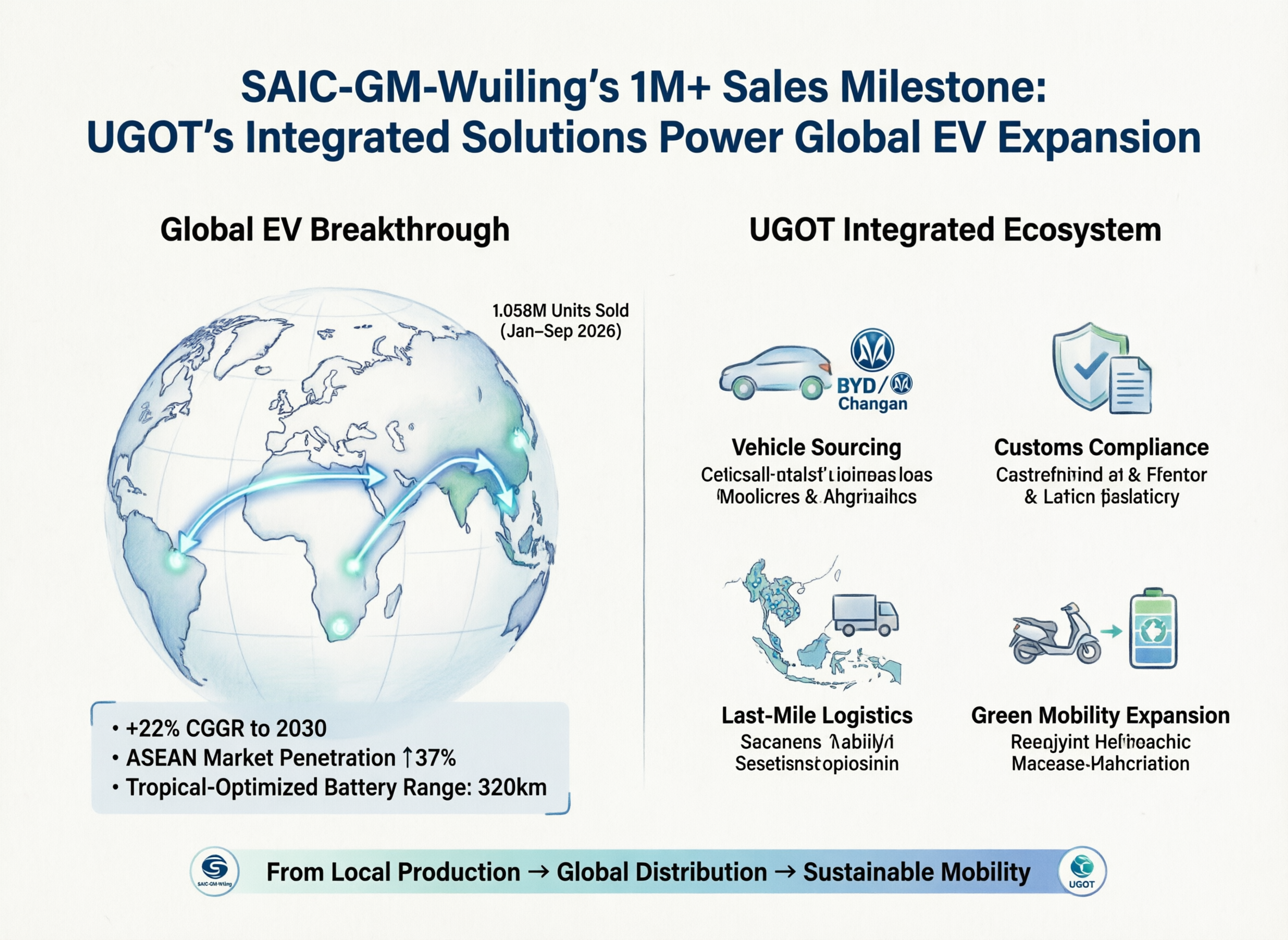 SAIC-GM-Wuling’s 1M+ Sales Milestone: UGOT’s Integrated Solutions Power Global EV Expansion
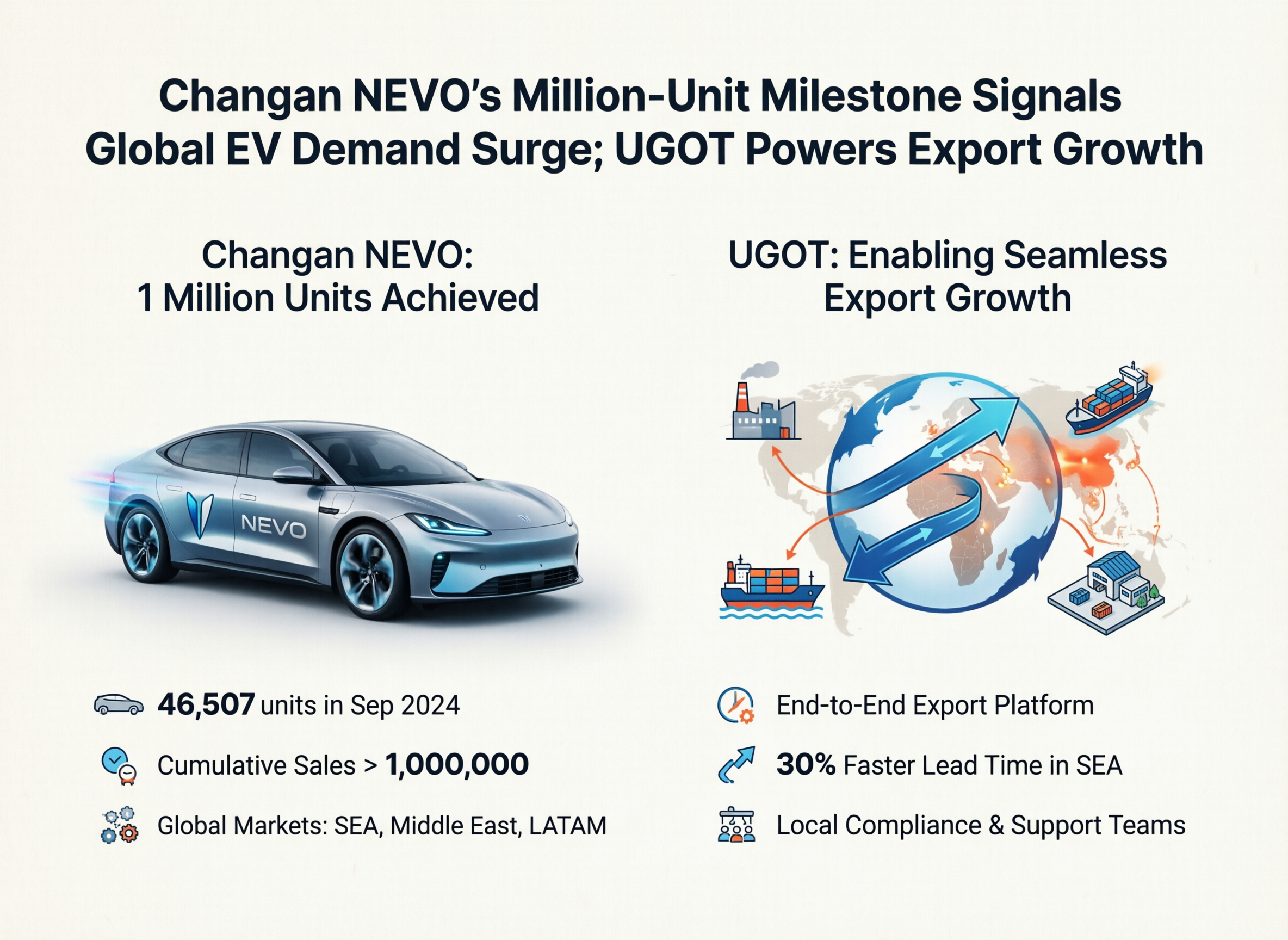 Changan NEVO’s Million-Unit Milestone Signals Global EV Demand Surge; UGOT Powers Export Growth
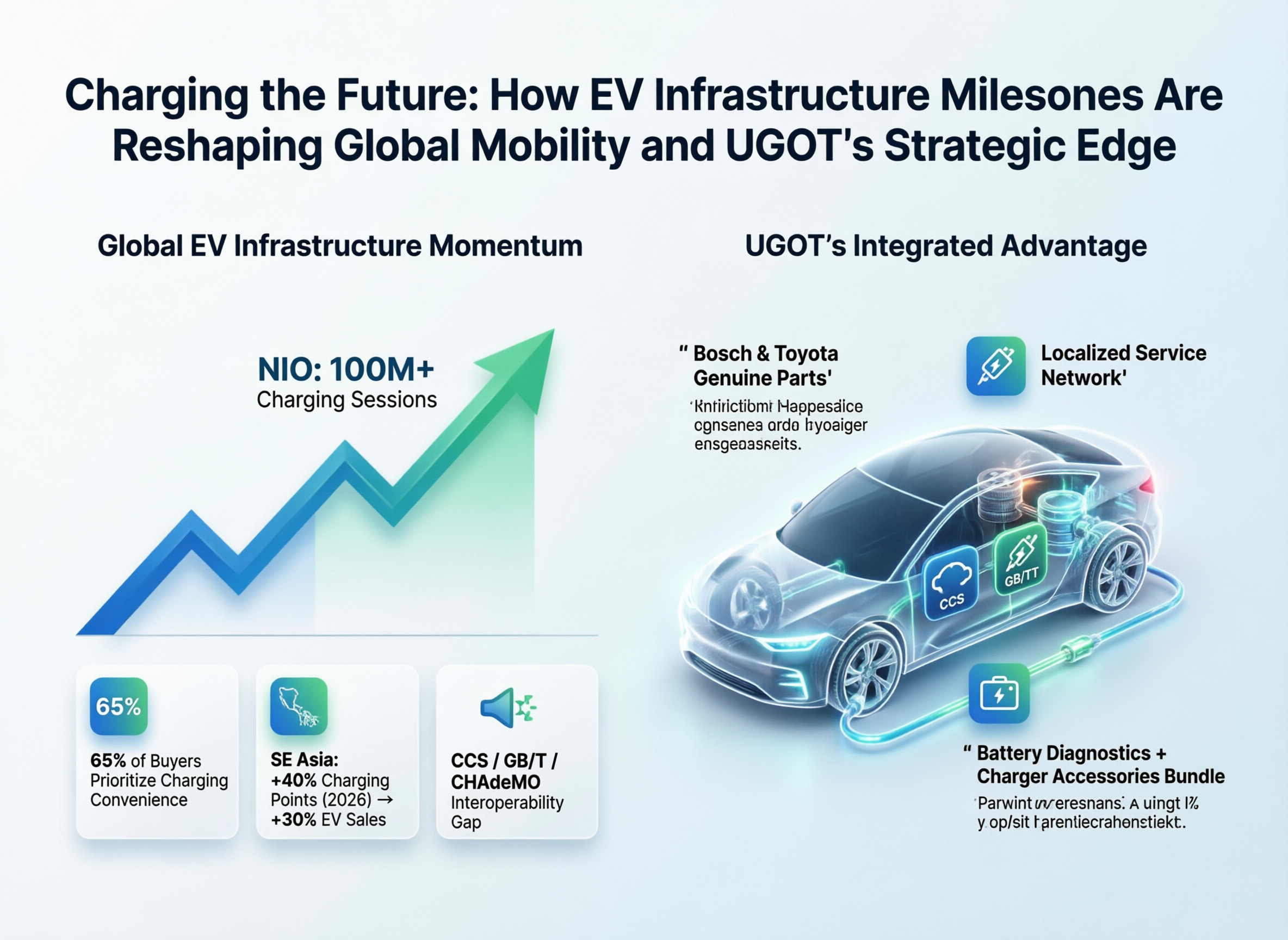 Charging the Future: How EV Infrastructure Milestones Are Reshaping Global Mobility and UGOT’s Strategic Edge