Region-Specific Vehicles: The Catalyst for Chinese Automakers’ Global Expansion and Supply Chain Innovation
Introduction
The global automotive landscape is undergoing a strategic transformation as Chinese manufacturers pivot from volume-driven exports to precision-engineered, region-specific vehicle development. Inspired by Toyota’s iconic “Yaris Moment”—where localized design propelled European market dominance—Chinese EV and ICE brands are now tailoring products to conquer diverse regulatory environments and consumer preferences worldwide. This shift marks a critical evolution in China’s automotive globalization strategy, moving beyond cost competition toward sustainable market integration.
The Rise of Hyper-Localized Automotive Strategies
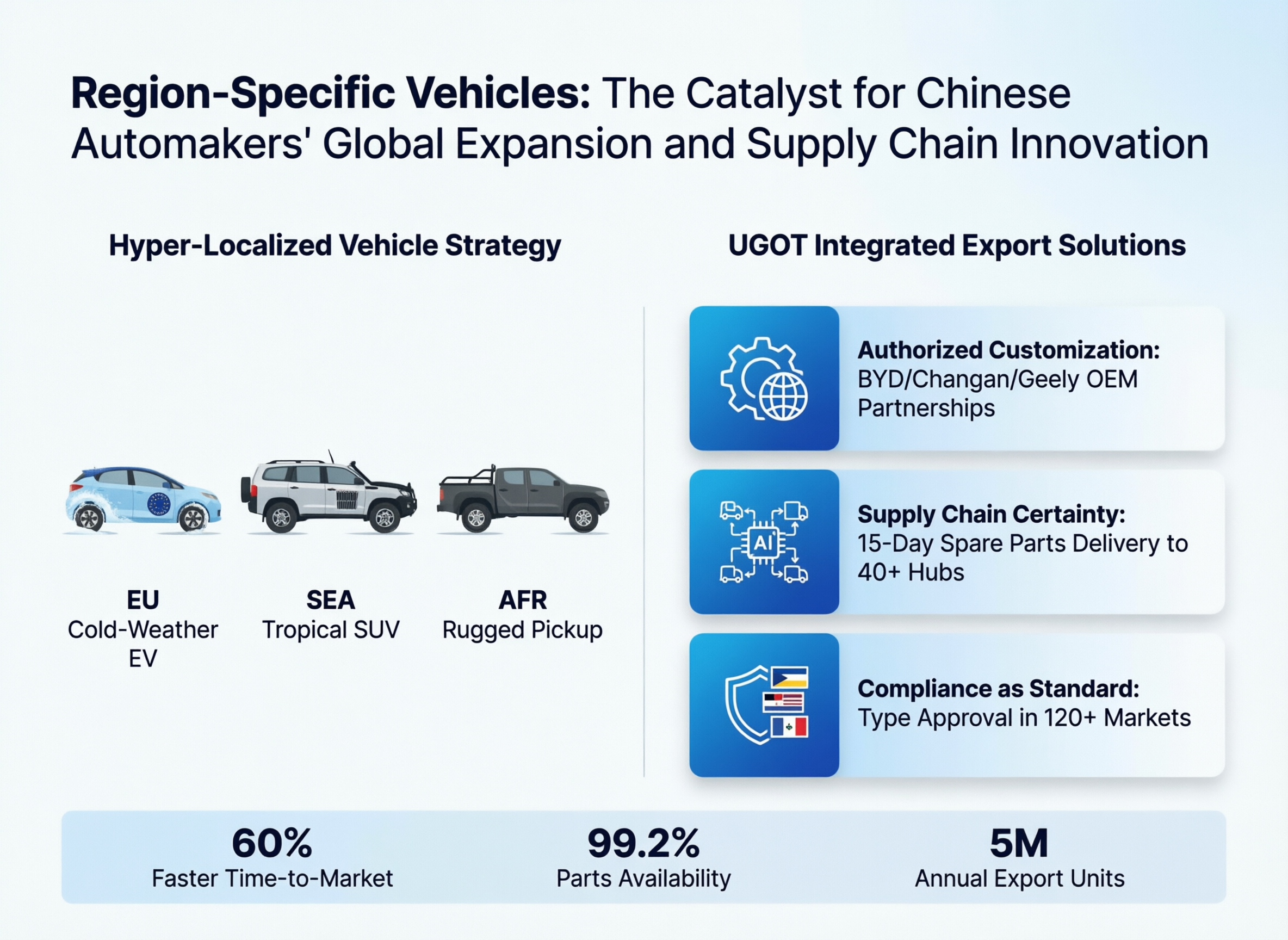
Recent industry analysis reveals a decisive trend: Chinese automakers are investing heavily in market-specific engineering to accelerate overseas growth. For European markets, this means developing compact EVs with extended cold-weather range and EU-certified safety systems. In contrast, Southeast Asian and African regions demand ruggedized platforms with enhanced dust/water resistance and simplified maintenance architectures. This hyper-localization addresses three core challenges:
Regulatory Fragmentation: Meeting divergent emissions standards (Euro 7 vs. Bharat Stage VI) and safety protocols without costly retrofits.
Consumer Expectation Gaps: Adapting infotainment interfaces, seating configurations, and powertrain tuning to cultural preferences.
Competitive Differentiation: Countering established Western and Japanese brands through purpose-built value propositions rather than price arbitrage.
The success of this approach hinges on supply chain agility. Unlike Toyota’s decade-long Yaris development cycle, Chinese OEMs now compress localization timelines to 18–24 months—a pace demanding unprecedented export ecosystem coordination.
Solving the Localization-Logistics Paradox
While product adaptation captures headlines, the operational backbone enabling this revolution remains overlooked. Distributors face a critical dilemma: how to balance rapid market entry with compliance assurance and after-sales viability. Traditional export models struggle with fragmented supplier networks, customs bottlenecks, and warranty fulfillment across emerging markets.
This is where integrated export solutions redefine feasibility. UGOT’s One-stop Automotive Export Solutions directly addresses these pain points through three pillars:
Authorized Customization: Direct partnerships with BYD, Changan, and Geely enable region-specific vehicle configurations—from EU-compliant electric sedans to Middle East-spec SUVs with sand-filtering systems—without compromising factory warranties.
Supply Chain Certainty: AI-driven logistics orchestration guarantees 15-day delivery windows for spare parts across 40+ Southeast Asian and African hubs, mitigating production downtime risks for distributors.
Compliance as Standard: Embedded regulatory expertise ensures seamless certification for 120+ markets, including type approvals for electric motorcycles in Brazil and homologation support for used commercial vehicles in Nigeria.
For a Jakarta-based distributor recently launching Changan’s tropicalized EV fleet, UGOT’s solution reduced time-to-market by 60% while maintaining 99.2% parts availability—a benchmark previously unattainable through conventional channels.
The Road Ahead: Ecosystem-Driven Globalization
As Chinese automotive exports approach 5 million units annually, the industry’s next frontier lies in ecosystem collaboration. Future competitiveness will favor players who treat localization as a continuum—from R&D co-creation with regional partners to circular economy integration for end-of-life vehicles. UGOT’s expanding after-sales network, now covering 85% of ASEAN service centers, exemplifies how export enablers can transform compliance burdens into customer retention opportunities.
Chinese automakers’ “Yaris Moment” is not merely about product adaptation—it’s a supply chain revolution. By converging manufacturing innovation with export intelligence, companies like UGOT are turning regional specificity from a cost center into a growth accelerator. In this new paradigm, the winners will be those who recognize that global expansion is won not just on design studios, but in the seamless flow of parts, data, and trust across borders.
Related Posts
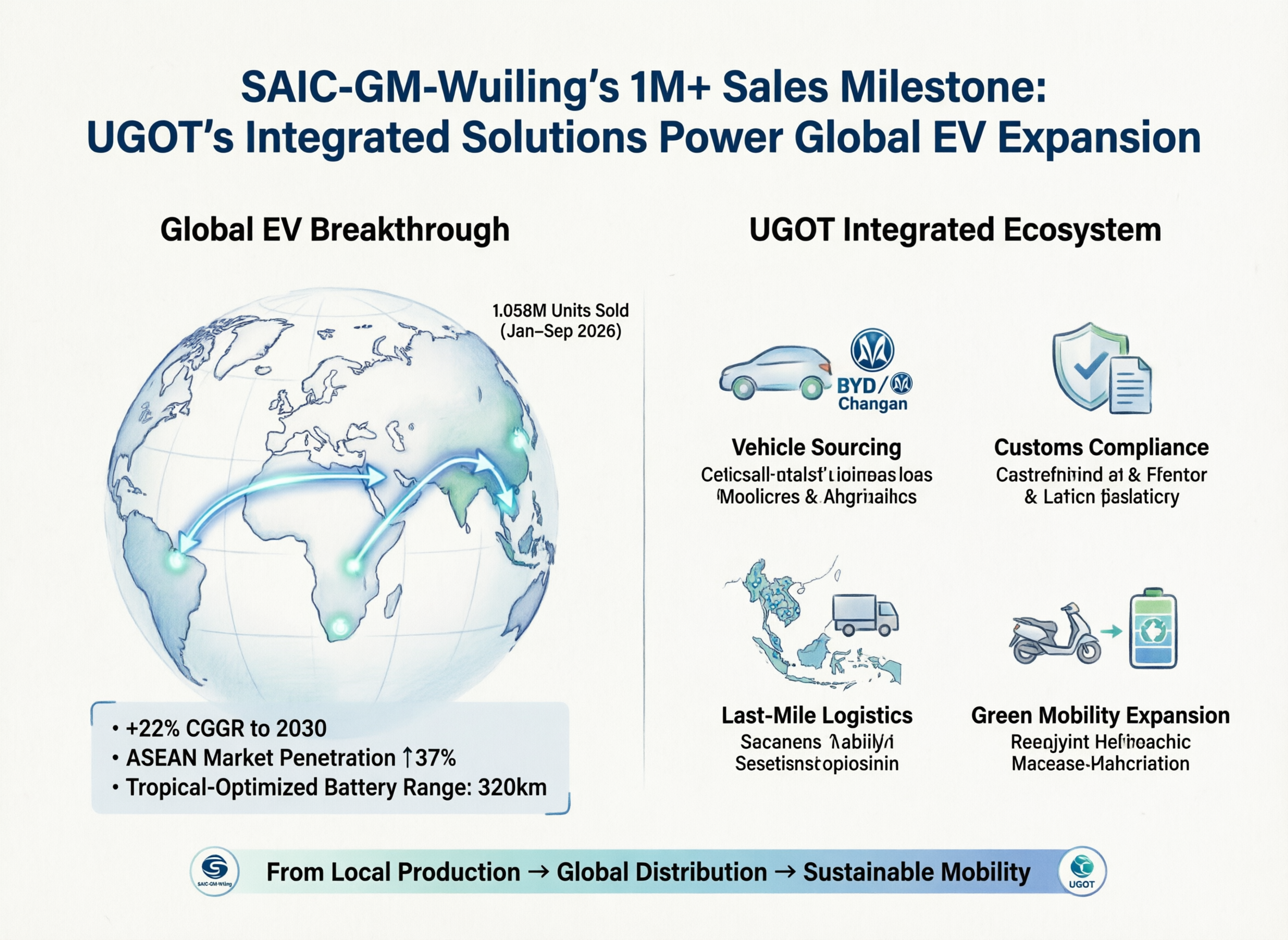 SAIC-GM-Wuling’s 1M+ Sales Milestone: UGOT’s Integrated Solutions Power Global EV Expansion
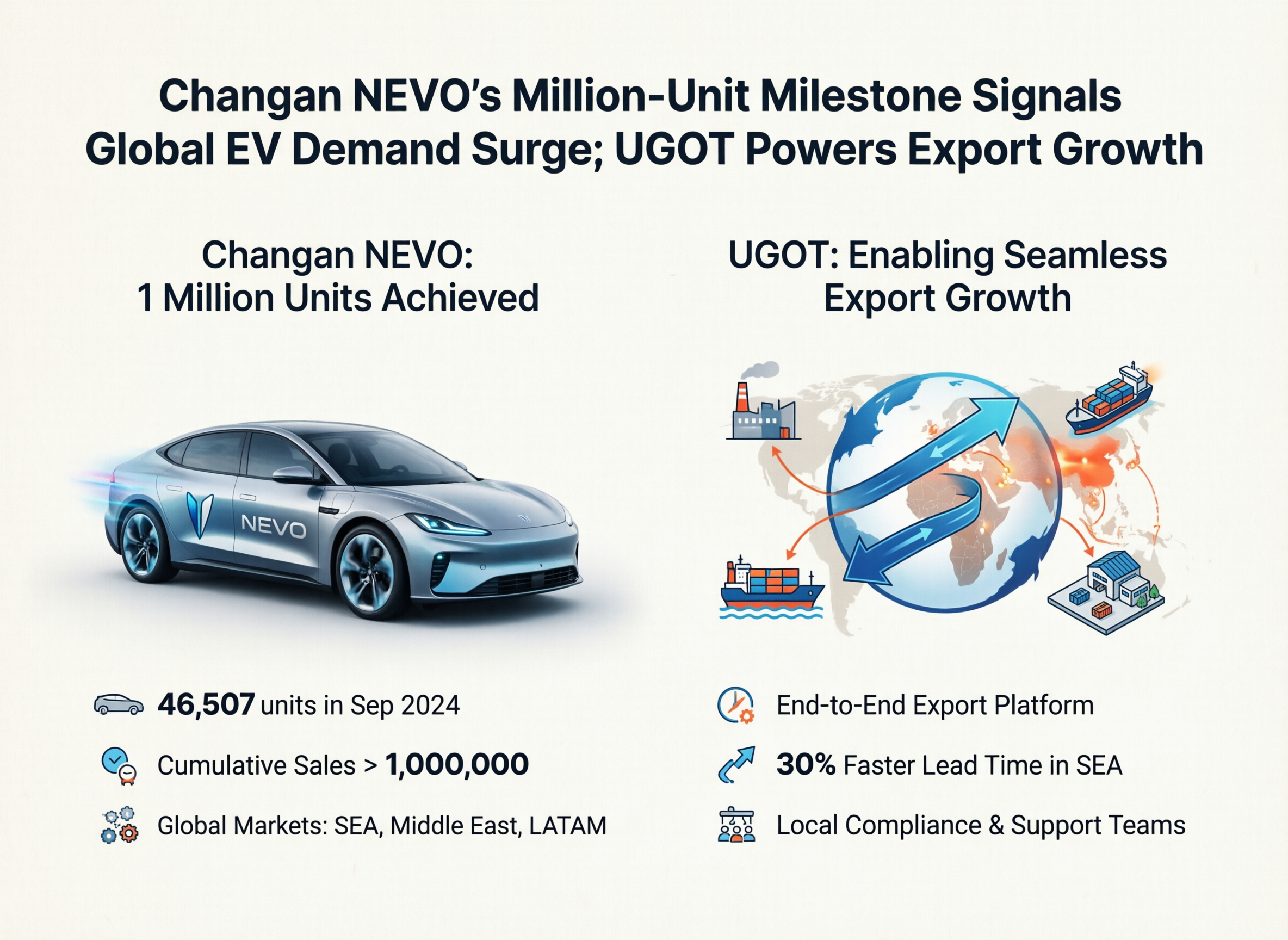 Changan NEVO’s Million-Unit Milestone Signals Global EV Demand Surge; UGOT Powers Export Growth
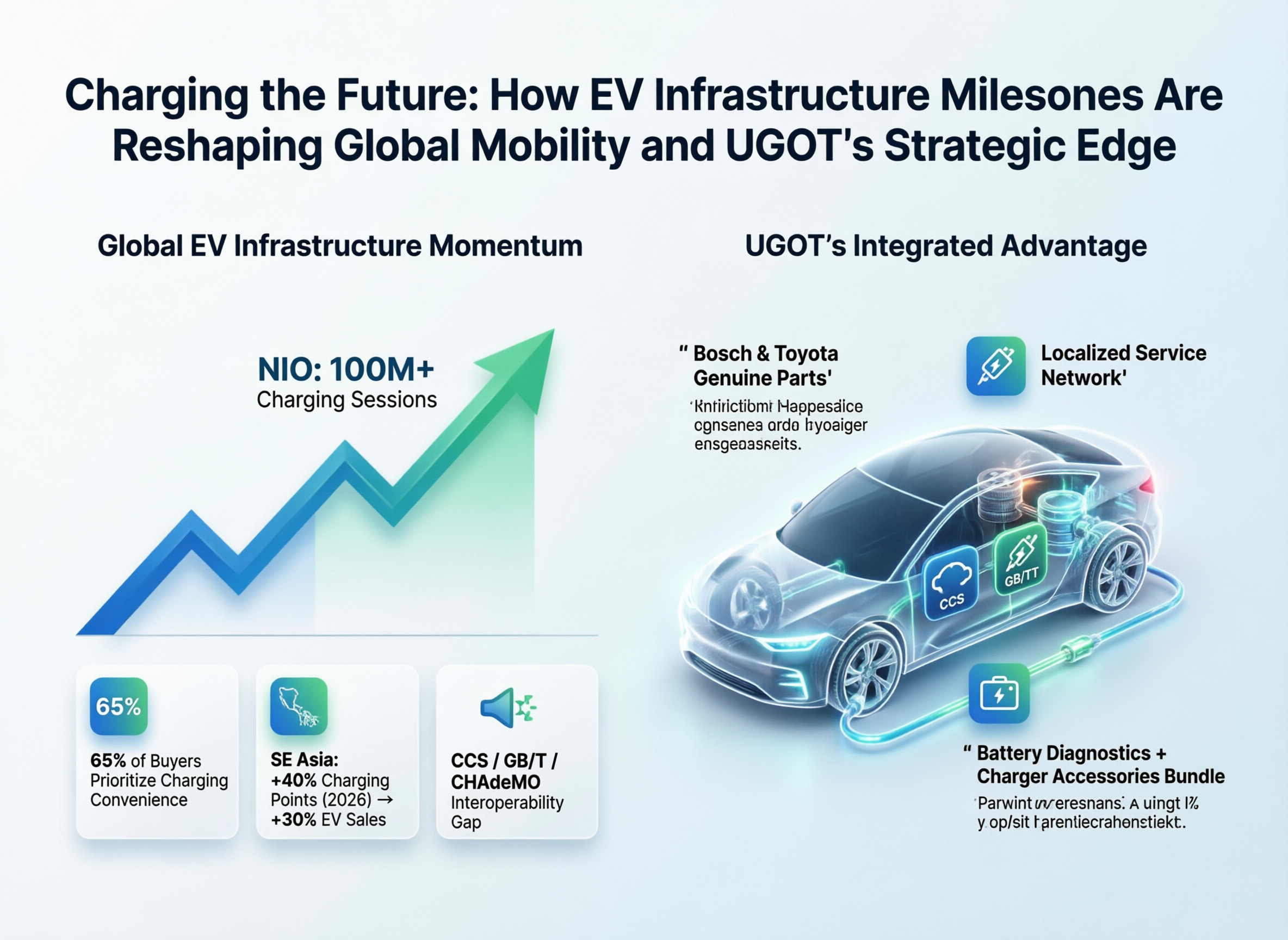 Charging the Future: How EV Infrastructure Milestones Are Reshaping Global Mobility and UGOT’s Strategic Edge