Strategic Partnerships Power Chinese EV Expansion into Europe’s Sustainable Mobility Market
Introduction
The European automotive landscape is undergoing a profound transformation as sustainability imperatives reshape consumer preferences and regulatory frameworks. Recent moves by leading Chinese automakers underscore this shift, exemplified by Geely’s strategic partnership expansion into Austria—a calculated step reinforcing China’s accelerating footprint in Europe’s new energy vehicle (NEV) sector. This development highlights a broader industry pivot: global EV manufacturers are increasingly leveraging localized alliances to navigate complex markets while addressing Europe’s urgent demand for decarbonized transportation solutions. As cross-border collaborations become the cornerstone of international growth, understanding this partnership-driven paradigm is critical for industry stakeholders.
The Partnership Imperative in European EV Expansion
Europe’s NEV adoption curve continues to steepen, propelled by stringent emissions regulations and surging consumer appetite for sustainable mobility. In this environment, Chinese automakers face both unprecedented opportunities and unique challenges. Market entry barriers—from certification complexities to fragmented distribution networks—demand more than product excellence; they require embedded local expertise. Geely’s Austria-focused strategy exemplifies a proven blueprint: establishing regional partnerships to accelerate market penetration while building trust through localized operations.
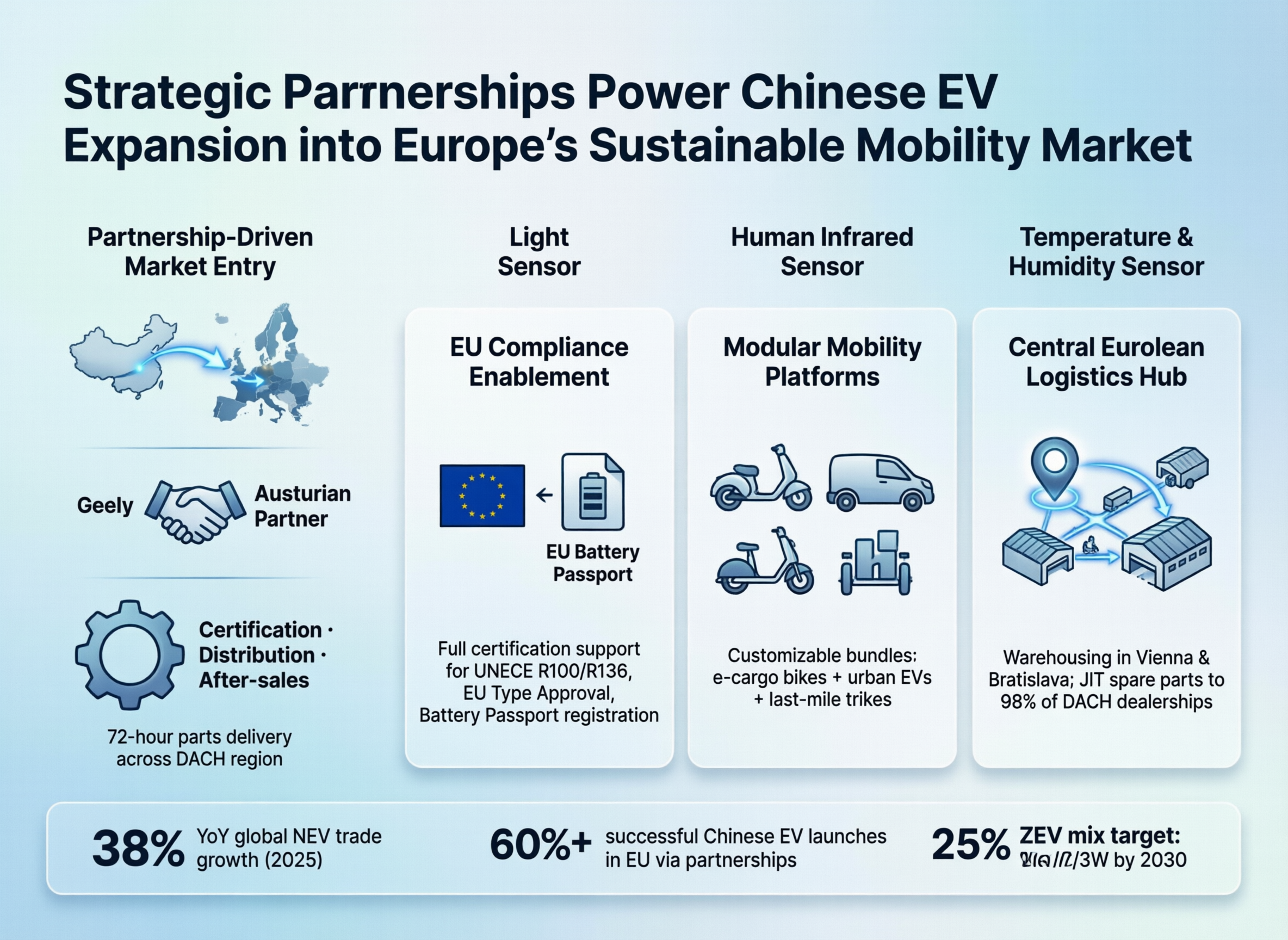
Data reveals this approach’s efficacy. Global NEV trade volumes grew 38% year-over-year in 2025, with partnership-driven entries accounting for over 60% of successful Chinese brand launches in Europe. These alliances transcend mere distribution channels; they enable co-development of market-specific solutions, from adapting battery thermal management systems for Alpine climates to integrating with EU digital mobility ecosystems. Crucially, they transform regulatory hurdles into competitive advantages—partners with established compliance frameworks dramatically reduce time-to-market while ensuring adherence to evolving standards like the EU Battery Passport.
Beyond Passenger Vehicles: The Expanding Sustainable Mobility Ecosystem
While passenger EVs dominate headlines, Europe’s sustainability mandate is catalyzing demand across the entire mobility spectrum. Urban logistics, last-mile delivery, and micro-mobility segments are experiencing explosive growth, with electric two/three-wheelers projected to comprise 25% of Europe’s zero-emission vehicle mix by 2030. This diversification creates fertile ground for manufacturers with versatile NEV portfolios. Chinese companies possessing full-line capabilities—from electric cargo bikes to compact urban EVs—are uniquely positioned to offer integrated sustainable mobility solutions through their European partners. The synergy between passenger and light-commercial electrification represents the next frontier in market expansion, where holistic ecosystem plays outperform single-product strategies.
Enabling Seamless Market Entry: The Supply Chain Advantage
For manufacturers pursuing this partnership-led expansion, operational execution determines success. Fragmented logistics, parts availability volatility, and after-sales support gaps can undermine even the strongest strategic alliances. This is where specialized supply chain enablers become force multipliers. Companies like UGOT address these pain points through integrated export ecosystems designed specifically for NEV globalization. With established warehousing hubs across Central Europe and digital inventory management systems, UGOT provides Chinese manufacturers with end-to-end supply chain stability—from containerized vehicle shipments to just-in-time spare parts distribution. Their Austria-based logistics network, for instance, guarantees 72-hour parts delivery across DACH region dealerships, directly supporting partners like Geely in maintaining service-level commitments.
Moreover, UGOT leverages its cross-category expertise to help manufacturers maximize partnership value. Their modular platform for electric two/three-wheelers allows European distributors to rapidly customize product bundles—combining passenger EVs with last-mile delivery trikes or shared e-scooters—creating differentiated offerings that align with municipal sustainability tenders. This capability transforms static vehicle exports into dynamic mobility solutions, accelerating ROI for both manufacturers and their local partners.
Conclusion: The Collaborative Road Ahead
As Europe’s 2035 ICE phaseout deadline approaches, the window for strategic market positioning is narrowing. Future success will belong to manufacturers who view partnerships not as entry tactics but as innovation accelerators—co-creating solutions that address hyperlocal sustainability challenges. Supply chain partners like UGOT will prove indispensable in this equation, converting global manufacturing prowess into localized market relevance through agile logistics and portfolio diversification. For Chinese EV pioneers, the Austrian foothold secured by Geely is merely the first milestone; the true competitive edge lies in building resilient, multi-tiered collaboration networks that turn regulatory pressure into growth catalysts. In this new era of sustainable mobility, victory goes not to the fastest vehicle, but to the most connected ecosystem.
—
UGOT empowers global NEV manufacturers with end-to-end export solutions, featuring Europe-certified supply chains and modular electric mobility platforms for seamless market entry.
Related Posts
 SAIC-GM-Wuling’s 1M+ Sales Milestone: UGOT’s Integrated Solutions Power Global EV Expansion
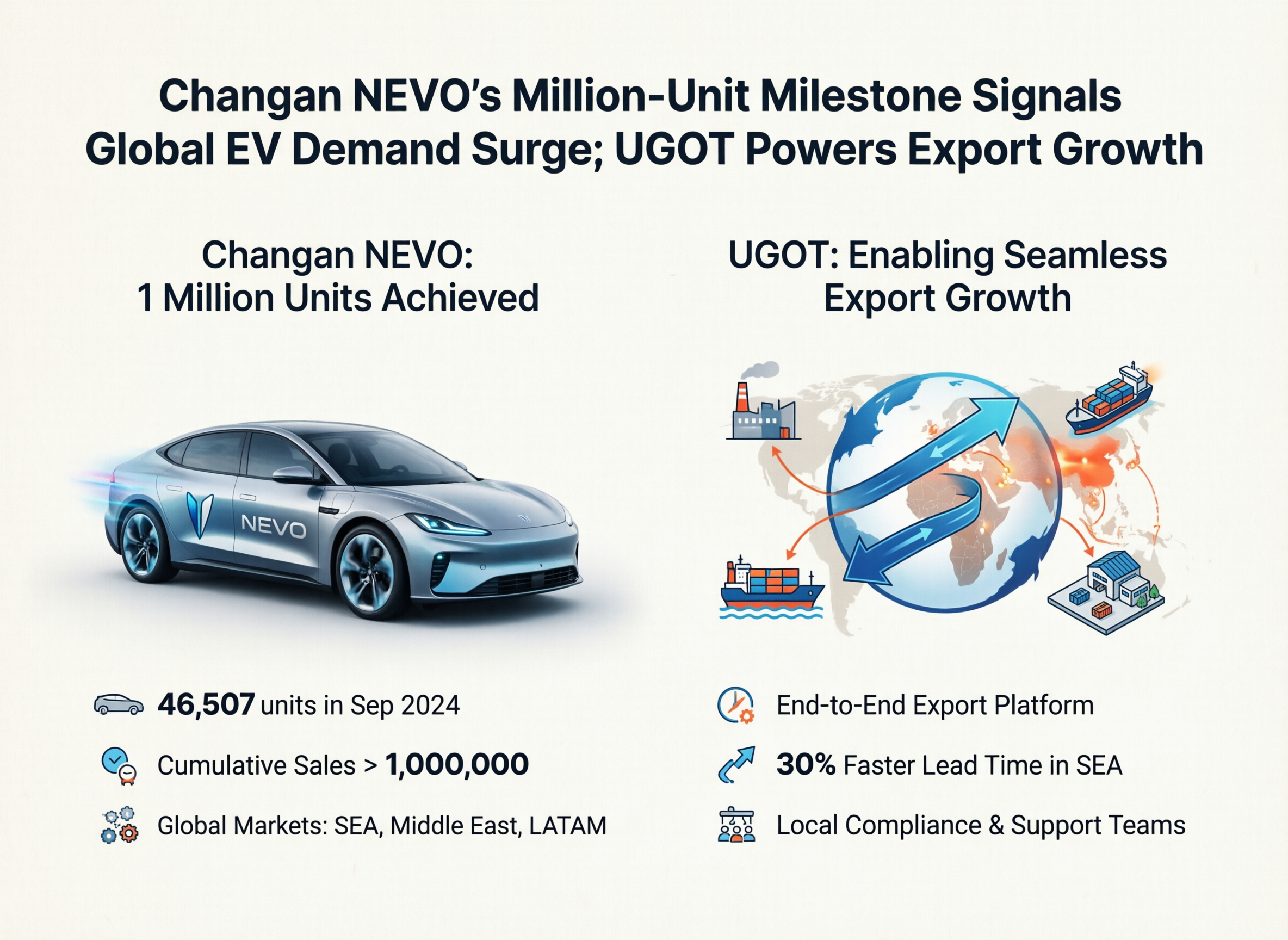 Changan NEVO’s Million-Unit Milestone Signals Global EV Demand Surge; UGOT Powers Export Growth
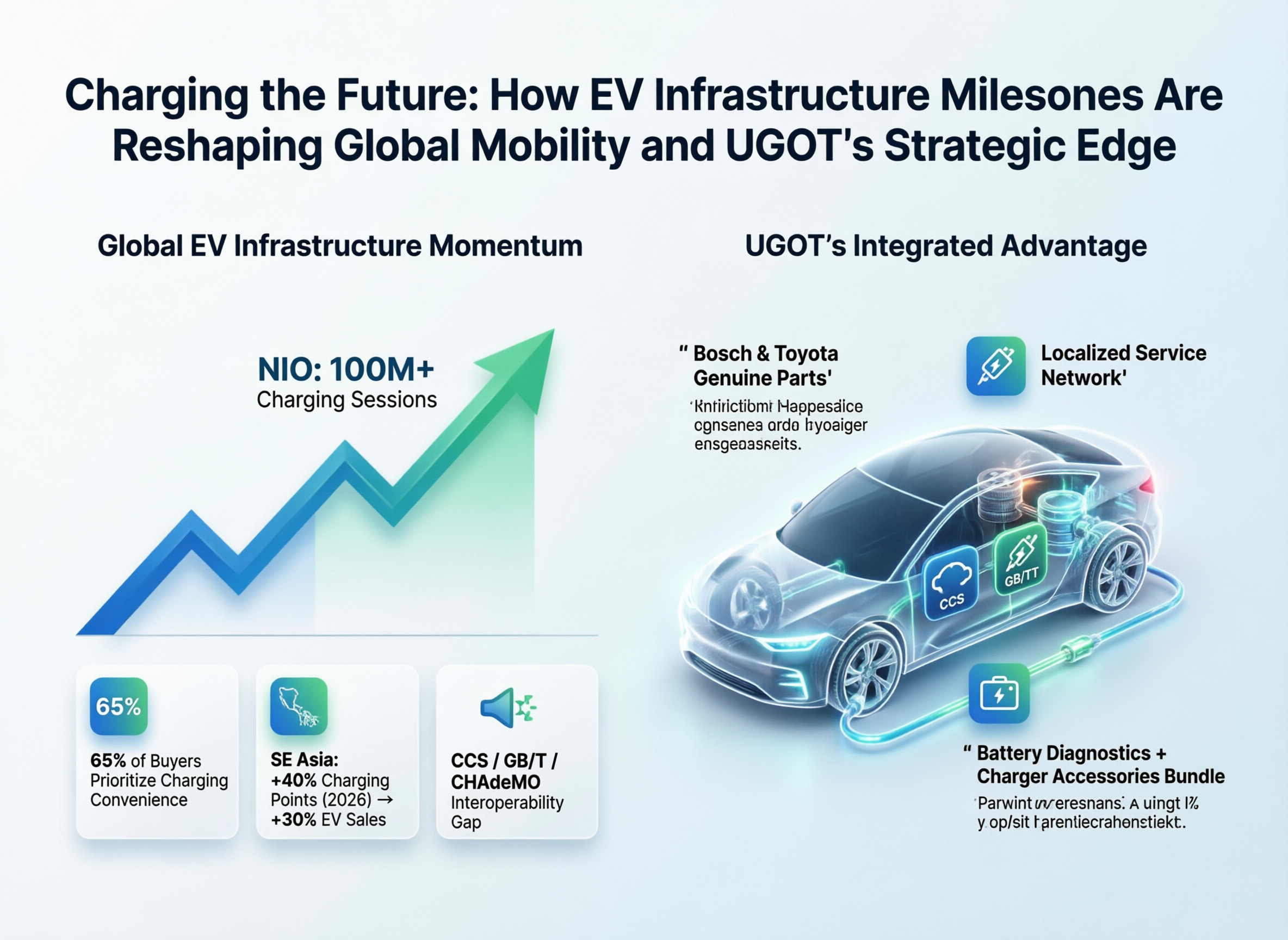 Charging the Future: How EV Infrastructure Milestones Are Reshaping Global Mobility and UGOT’s Strategic Edge