The Five-Seat PHEV Revolution: How Agile Export Strategies Capture Global SUV Demand
Introduction
The global automotive landscape is undergoing a strategic pivot toward optimized interior space and electrified versatility. Recent filings like Geely’s Galaxy M8—which mirrors the dimensions of its six-seat sibling M9 but prioritizes a spacious five-seat layout—highlight a decisive shift in consumer preferences. This trend, amplified by breakthroughs in plug-in hybrid (PHEV) technology, is redefining competitive dynamics across emerging markets. As manufacturers refine vehicle architectures for urban practicality and extended electric range, exporters must adapt with precision to capitalize on this evolution.
Industry Analysis: Space, Technology, and Competitive Agility
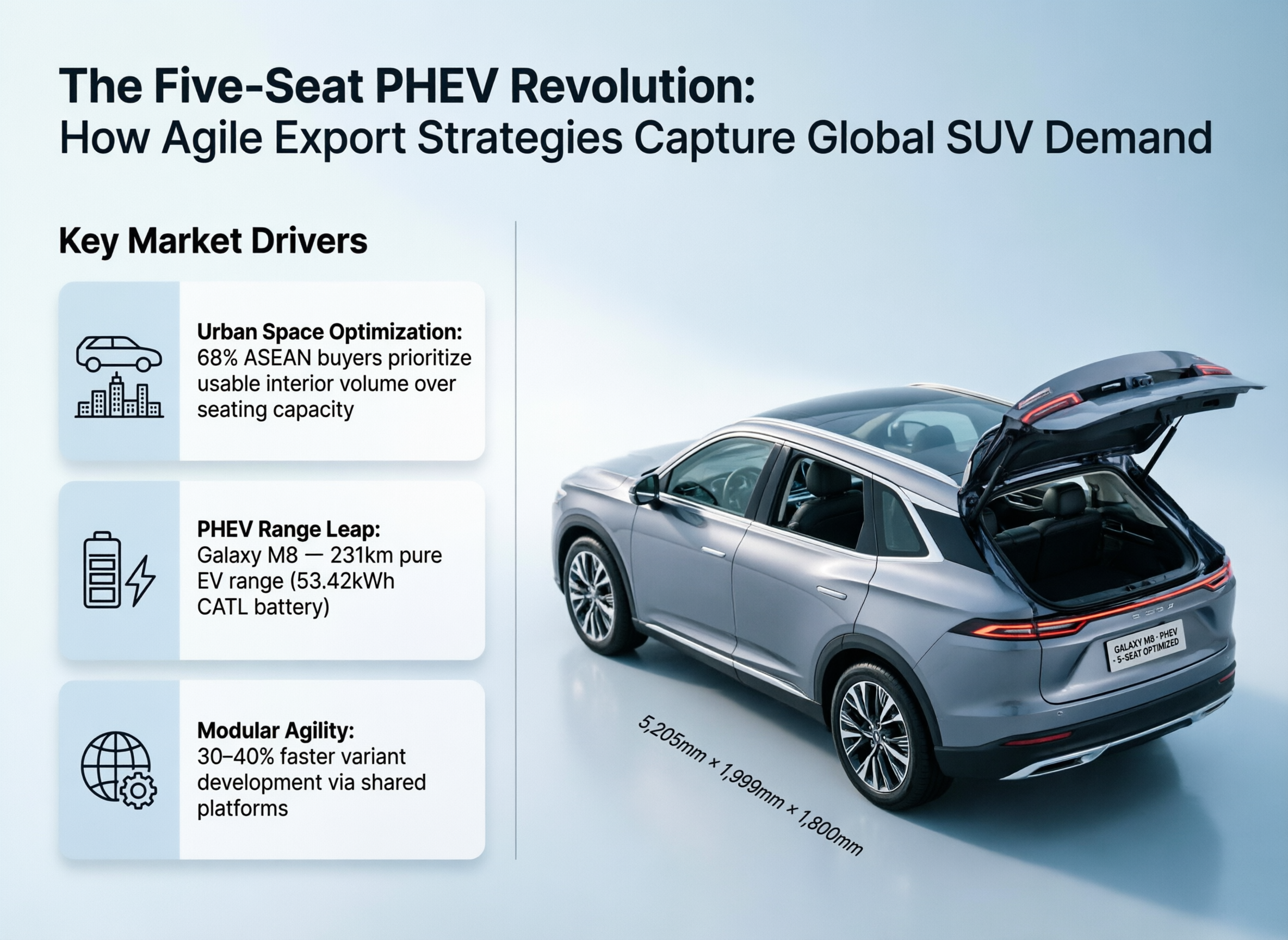
Consumer demand is increasingly favoring five-seat PHEV SUVs over traditional three-row configurations. Urbanization patterns reveal buyers prioritize cargo flexibility and cabin comfort over occasional third-row use, particularly in congested Southeast Asian and Middle Eastern cities. The Galaxy M8 exemplifies this shift: identical exterior dimensions to the M9 (5,205mm x 1,999mm x 1,800mm) but reconfigured for expansive legroom and storage. This spatial optimization aligns with data showing 68% of SUV buyers in ASEAN markets rank “usable interior volume” above seating capacity.
Technological advancements further accelerate this trend. The M8’s 53.42 kWh CATL battery enabling 231km of pure electric range (RWD) underscores a critical market differentiator. High-capacity PHEV systems now bridge the gap between full electrification and combustion reliability—addressing range anxiety while meeting tightening emissions regulations in regions like the Gulf Cooperation Council (GCC) states. Crucially, manufacturers are leveraging modular platforms to rapidly deploy variants (e.g., identical chassis with seating/battery adjustments), compressing development cycles by 30–40% according to industry benchmarks.
This agility intensifies competition. With Chinese OEMs filing 15+ new PHEV SUV models monthly, exporters face pressure to identify high-potential vehicles and navigate complex certification landscapes. Markets such as Saudi Arabia and Thailand now mandate localized after-sales ecosystems, making spare parts accessibility as vital as vehicle pricing.
Strategic Solutions: End-to-End Export Ecosystems
Navigating this complexity demands more than transactional procurement. Forward-thinking exporters are building integrated supply chains that anticipate regional nuances—from configuration customization to post-delivery support. For instance, space-optimized PHEVs like the Galaxy M8 require tailored marketing in markets where families prioritize weekend cargo capacity over daily multi-passenger use. Similarly, battery longevity concerns necessitate guaranteed access to genuine components.
This is where UGOT Global Vehicle Export Solutions delivers transformative value. By leveraging authorized partnerships with leading Chinese manufacturers—including Geely, BYD, and Changan—UGOT provides overseas distributors with rapid access to high-demand PHEV SUVs featuring identical space-focused engineering. Our platform enables configuration adjustments (e.g., enhanced cargo management systems for Middle Eastern fleets) with delivery timelines 25% faster than industry averages. Crucially, UGOT’s integrated spare parts ecosystem—featuring genuine CATL-compatible batteries and Bosch-certified components—ensures seamless after-sales support. This reduces vehicle downtime by up to 40% in regions like Africa and South America, where service infrastructure gaps traditionally eroded buyer confidence in new energy vehicles.
Conclusion: The Road Ahead
The convergence of spatial intelligence, electrification, and modular manufacturing will continue reshaping global SUV demand. Exporters who master agile vehicle sourcing paired with bulletproof after-sales networks will dominate growth corridors. UGOT’s end-to-end model—combining manufacturer-aligned procurement, market-specific customization, and certified spare parts logistics—positions partners at this convergence. As PHEV adoption surges across emerging economies, our commitment to stable supply chains and technical transparency doesn’t just move vehicles; it builds sustainable mobility ecosystems where every kilometer driven reinforces trust.
UGOT Global Vehicle Export Solutions empowers distributors across 60+ countries with seamless access to China’s automotive innovation. Learn how our certified procurement framework can future-proof your inventory at ugot-global.com.
Related Posts
 SAIC-GM-Wuling’s 1M+ Sales Milestone: UGOT’s Integrated Solutions Power Global EV Expansion
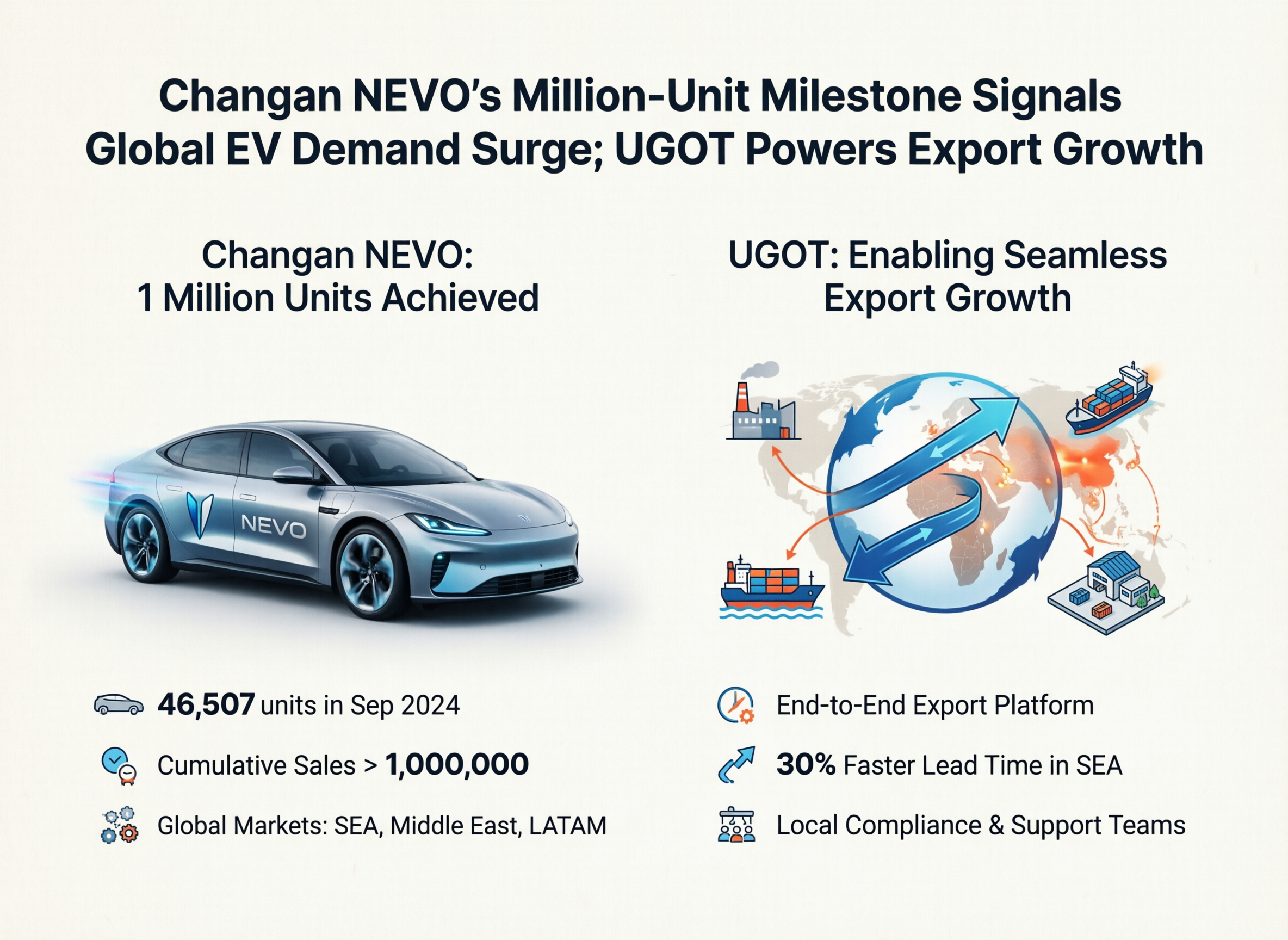 Changan NEVO’s Million-Unit Milestone Signals Global EV Demand Surge; UGOT Powers Export Growth
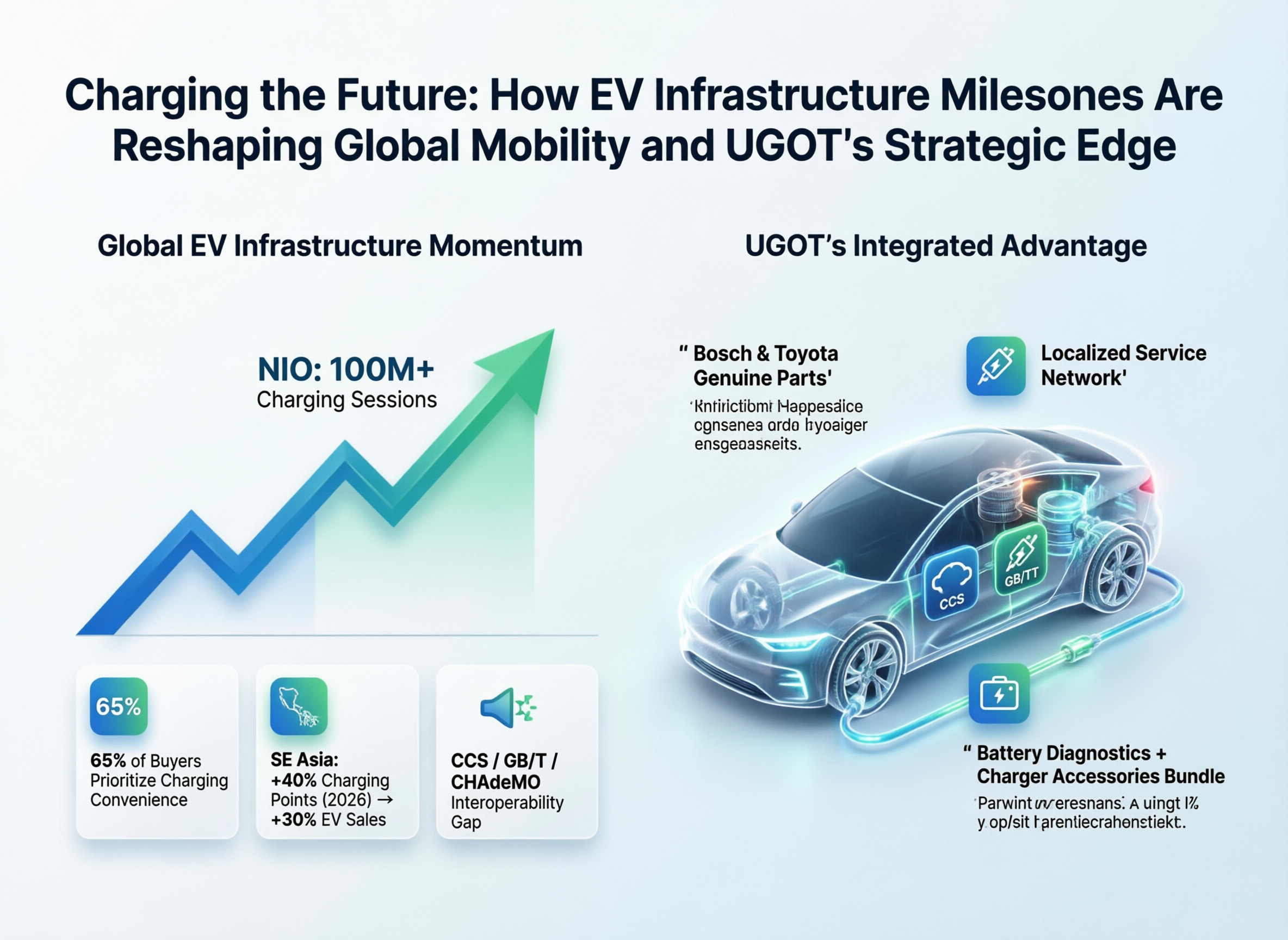 Charging the Future: How EV Infrastructure Milestones Are Reshaping Global Mobility and UGOT’s Strategic Edge