Powering Global EV Expansion: Strategic Partnerships and Supply Chain Resilience in European Market Entry
Introduction
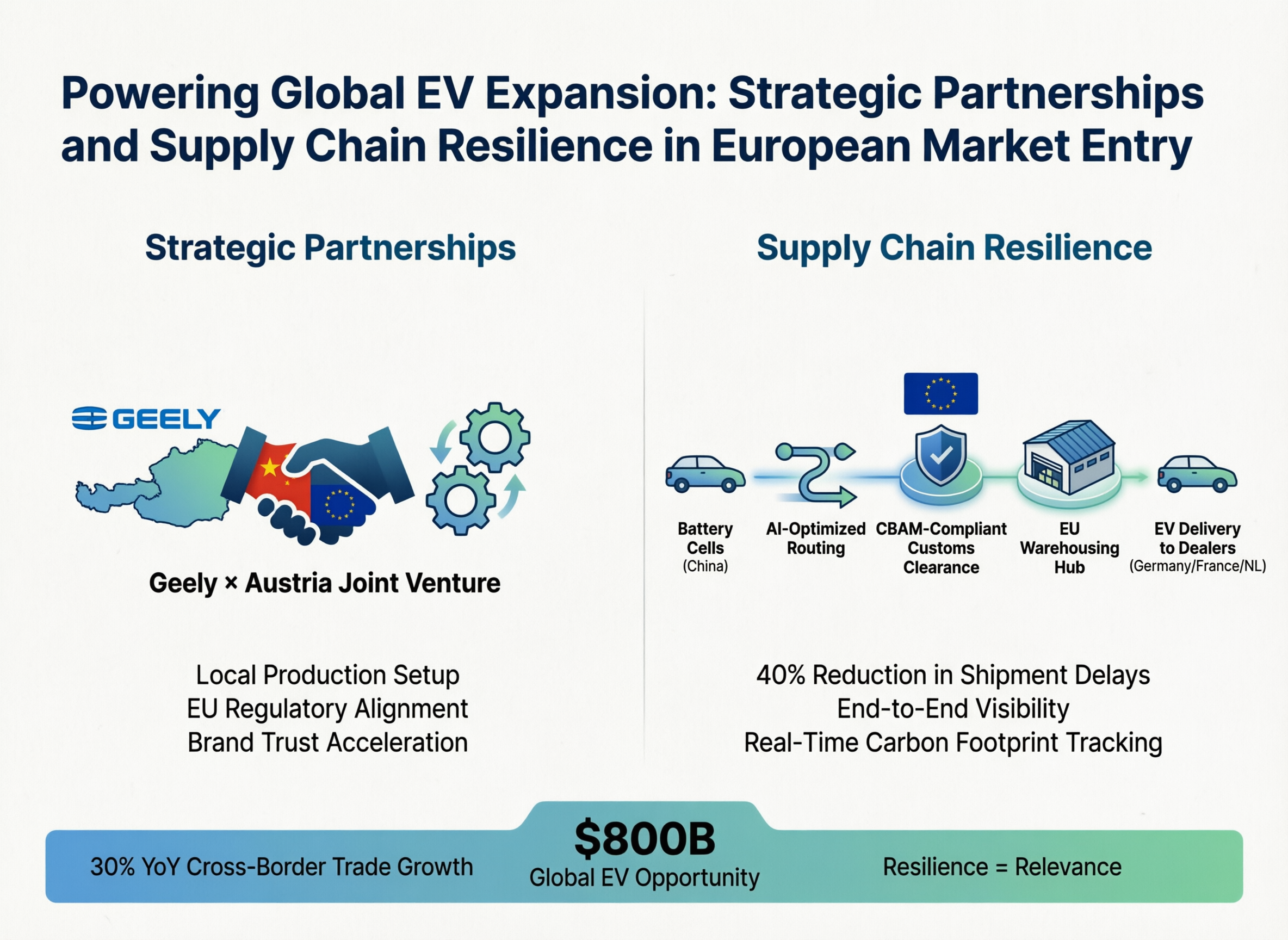
The automotive industry is witnessing a transformative shift as electric vehicle (EV) manufacturers accelerate their global footprint. Recent developments, such as Geely’s strategic partnership in Austria, underscore a broader trend: Chinese automakers are leveraging localized alliances to penetrate European markets, driven by surging demand for sustainable mobility. This move aligns with the industry’s pivot toward electrification, where cross-border expansion is no longer optional but essential for long-term growth. As EV adoption soars, companies face mounting pressures to navigate complex regulatory landscapes, cultural nuances, and logistical bottlenecks—highlighting the critical need for agile, integrated solutions in an increasingly interconnected world.
Industry Trends and Strategic Imperatives
Geely’s Austrian venture exemplifies a paradigm shift in global expansion strategies. Rather than relying on traditional export models, leading EV players are adopting hyper-localized partnerships to reduce market-entry barriers. This approach mitigates risks associated with regulatory compliance, consumer preferences, and supply chain volatility, while accelerating brand trust in regions like Europe, where sustainability standards are stringent. According to industry analysis, such collaborations are not merely tactical; they reflect a fundamental industry evolution. EVs now serve as the primary engine for international growth, fueling a 30% year-on-year increase in cross-border trade volumes. However, this momentum exposes vulnerabilities: fragmented logistics networks, customs delays, and inventory imbalances can derail even the most ambitious expansions. The lesson is clear—success hinges on resilience. Companies must prioritize end-to-end supply chain visibility and adaptability to capitalize on the $800 billion global EV opportunity.
Integrated Solutions for Sustainable Growth
Amid these challenges, the industry is turning to technology-driven platforms that unify trade complexities into seamless workflows. Businesses require more than fragmented tools; they need holistic systems that harmonize logistics, compliance, and real-time data analytics. This is where innovative solutions like GlobalTrade Nexus step in. Developed by our team at SinoGlobal Solutions, GlobalTrade Nexus offers a one-stop platform for cross-border EV exports, featuring AI-powered route optimization, automated customs documentation, and predictive risk management. For instance, its dynamic tracking module reduces shipment delays by 40% through proactive rerouting around bottlenecks, while embedded compliance engines ensure adherence to EU regulations like the CBAM carbon tax framework. By integrating warehousing, freight, and financial services, GlobalTrade Nexus empowers manufacturers to scale efficiently—turning strategic partnerships, such as Geely’s Austrian initiative, into sustainable competitive advantages without operational friction.
Future Outlook and Commitment to Innovation
Looking ahead, the EV landscape will intensify as new players enter Europe and consumer expectations evolve. Strategic alliances will deepen, but their success will depend on underlying infrastructure that anticipates disruption. At SinoGlobal Solutions, we are committed to pioneering this future. Our R&D investments focus on blockchain-enabled transparency and green logistics networks, ensuring clients not only navigate today’s complexities but also lead tomorrow’s sustainable transitions. By transforming supply chain vulnerabilities into strengths, we enable global innovators to focus on what they do best: redefining mobility. In an era where resilience equals relevance, our mission remains steadfast—powering growth that’s efficient, ethical, and enduring.
Related Posts
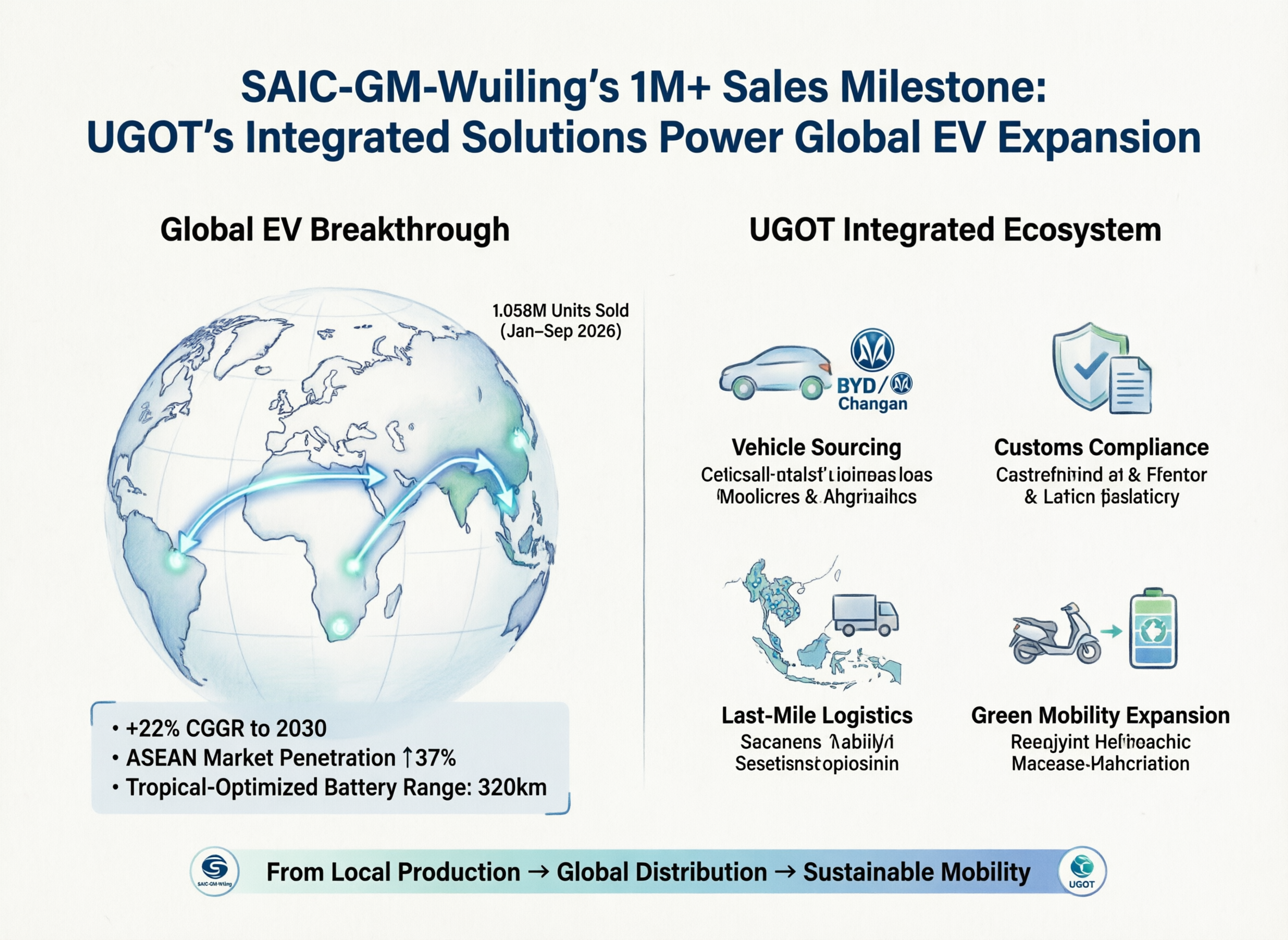 SAIC-GM-Wuling’s 1M+ Sales Milestone: UGOT’s Integrated Solutions Power Global EV Expansion
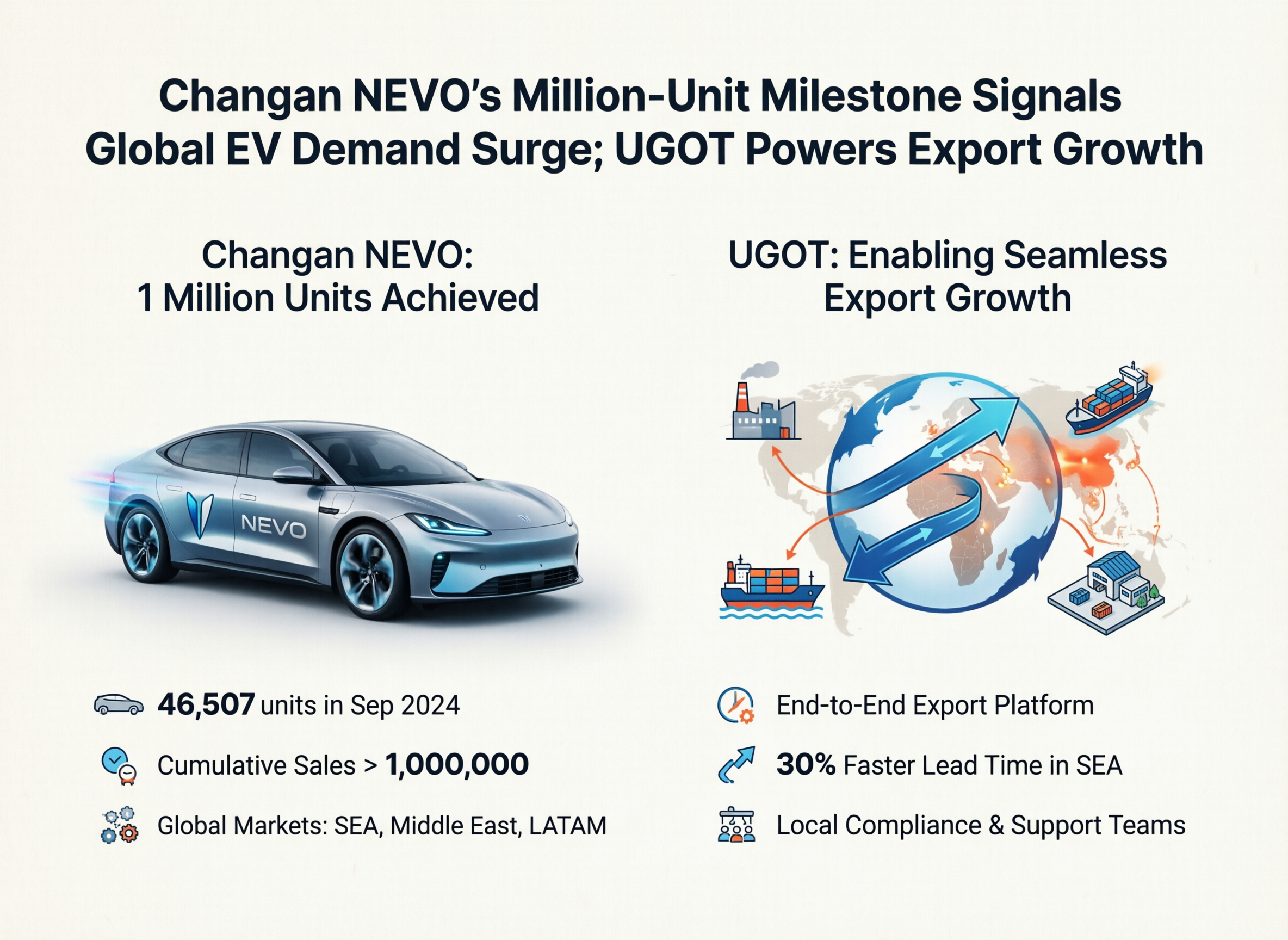 Changan NEVO’s Million-Unit Milestone Signals Global EV Demand Surge; UGOT Powers Export Growth
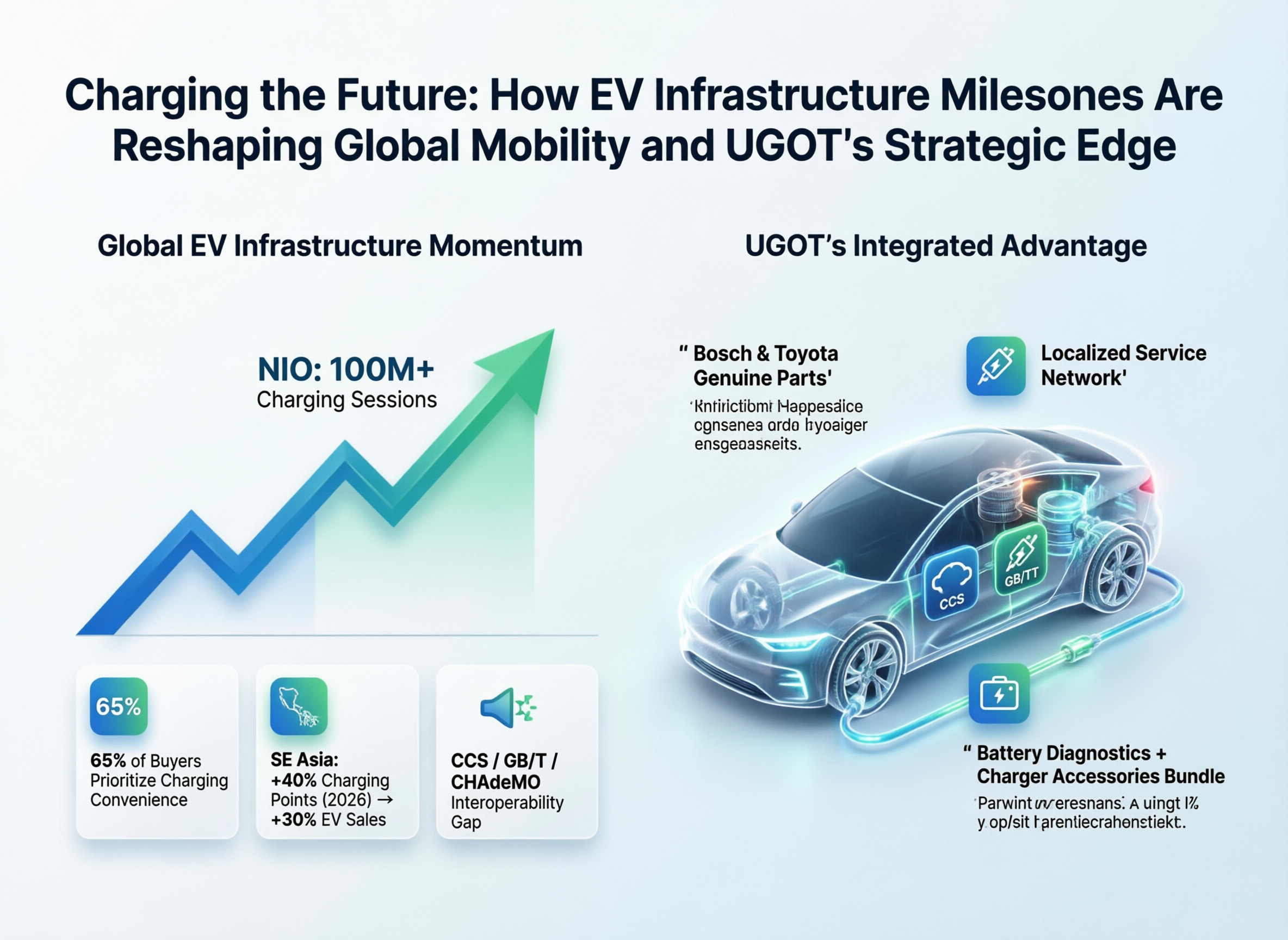 Charging the Future: How EV Infrastructure Milestones Are Reshaping Global Mobility and UGOT’s Strategic Edge