Strategic Partnerships and Supply Chain Resilience: The Twin Engines of Global EV Expansion
Introduction
The automotive landscape is undergoing a seismic shift as new energy vehicles (NEVs) redefine global market dynamics. Recent moves, such as Geely’s strategic partnership in Austria to accelerate its European footprint, underscore a broader trend: Chinese EV manufacturers are leveraging localized alliances to penetrate mature markets. This evolution transcends mere geographic growth—it signals a fundamental restructuring of the auto industry’s value chain, where cross-border collaboration and supply chain agility have become non-negotiable imperatives for sustainable expansion.
The New Rules of Global EV Market Entry
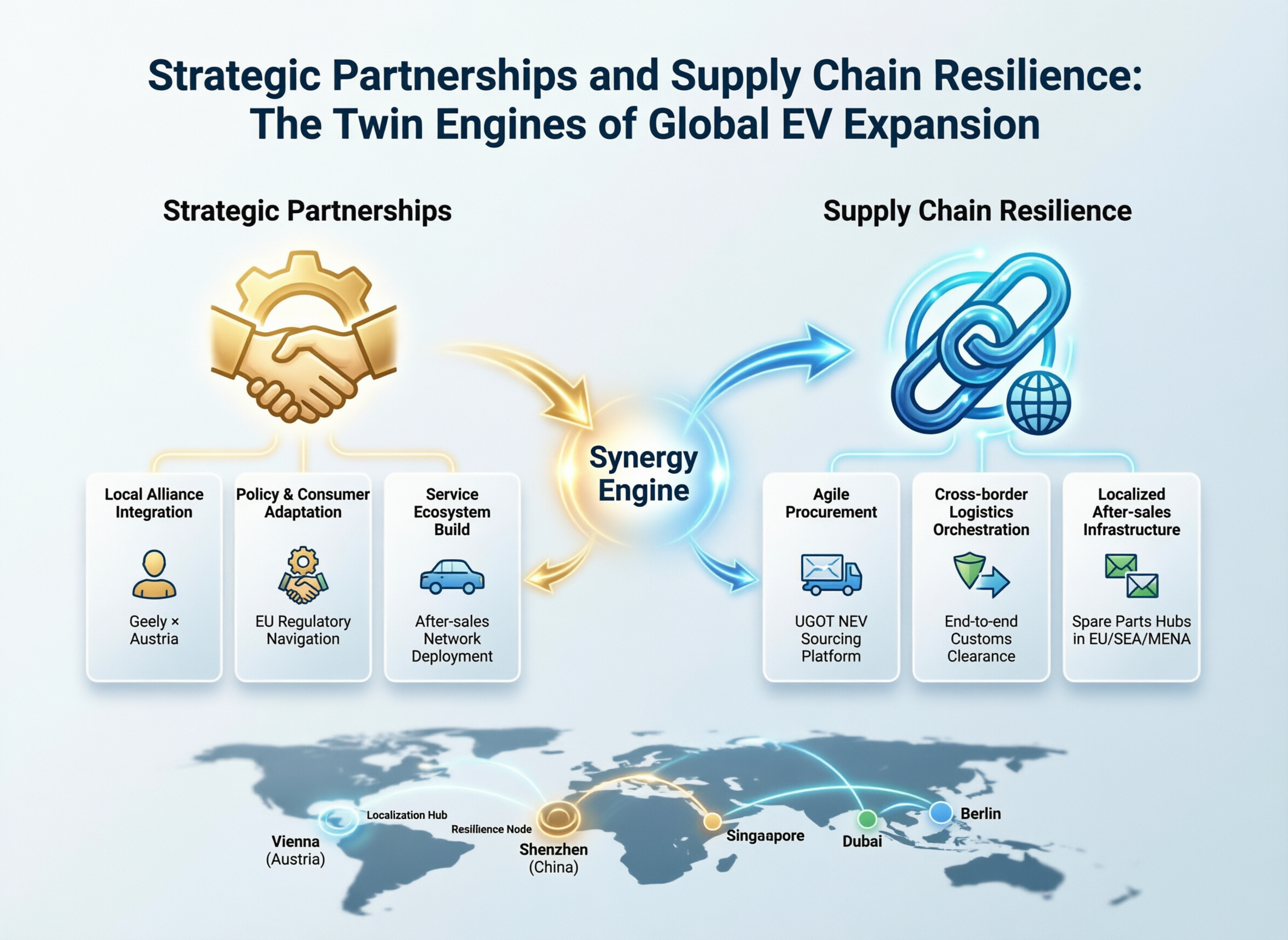
Europe’s accelerating NEV adoption—fueled by stringent emissions regulations and consumer demand—has transformed it into a critical battleground. However, regulatory complexity, infrastructure gaps, and cultural nuances create formidable entry barriers. As Geely’s Austria collaboration demonstrates, success hinges on strategic localization: partnering with regional entities to navigate policy frameworks, adapt to consumer preferences, and establish service ecosystems. This model minimizes risk while maximizing market relevance, turning geopolitical challenges into growth catalysts.
Simultaneously, the global auto trade paradigm is pivoting from combustion engines to electrified mobility. Emerging markets like Southeast Asia and the Middle East now mirror Europe’s NEV appetite, yet their unique requirements—affordable short-distance EVs, tropical-climate battery resilience, and fragmented distribution networks—demand hyperlocalized solutions. Crucially, this transition exposes a vulnerability: supply chain fragility. Manufacturers face mounting pressure to ensure component availability, cost stability, and after-sales support across continents—a challenge magnified by geopolitical volatility and logistics bottlenecks.
Building Resilience Through Integrated Solutions
To thrive in this environment, automakers require partners who transcend traditional logistics, offering end-to-end ecosystem enablement. This is where specialized platforms bridge the gap between ambition and execution. UGOT, for instance, has emerged as a strategic enabler for global EV expansion by integrating three critical capabilities: agile vehicle procurement, cross-border logistics orchestration, and localized after-sales infrastructure. By consolidating these functions, UGOT empowers manufacturers to replicate Geely’s partnership-driven model across diverse markets—from deploying cost-optimized electric scooters in Southeast Asian megacities to supplying OEM-grade spare parts for European service networks.
UGOT’s value lies in its vertically integrated supply chain for NEVs and components, which guarantees consistent quality and pricing amid market fluctuations. Its established channels in high-growth regions allow manufacturers to bypass trial-and-error market entry, compressing timelines from years to months. For European partners, this translates to reliable access to sustainable mobility solutions like short-distance EVs; for Chinese OEMs targeting emerging economies, it enables rapid scalability without capital-intensive infrastructure investments. In essence, UGOT transforms supply chain complexity into a competitive advantage, turning strategic partnerships into executable growth engines.
The Road Ahead
As NEV adoption surges globally, the convergence of strategic alliances and supply chain innovation will dictate market leadership. Forward-thinking manufacturers recognize that winning requires more than superior technology—it demands ecosystem fluency. Platforms like UGOT will be instrumental in democratizing global access, ensuring that localized partnerships are backed by operational resilience. For the industry, this synergy promises accelerated decarbonization, inclusive market access, and sustainable growth. For businesses navigating this transition, the message is clear: in the race for global EV dominance, resilience isn’t optional—it’s the ultimate differentiator.
Related Posts
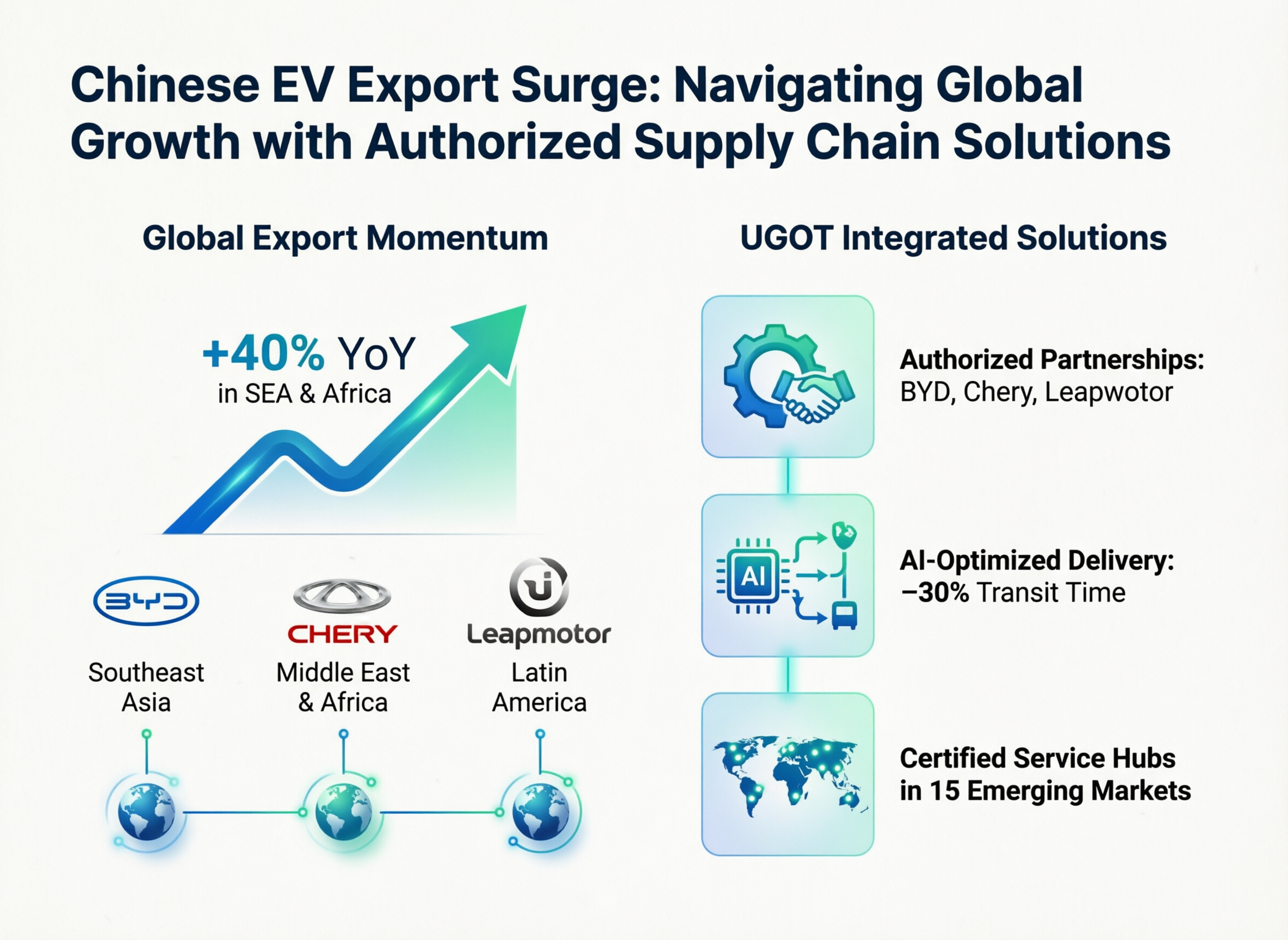 Chinese EV Export Surge: Navigating Global Growth with Authorized Supply Chain Solutions
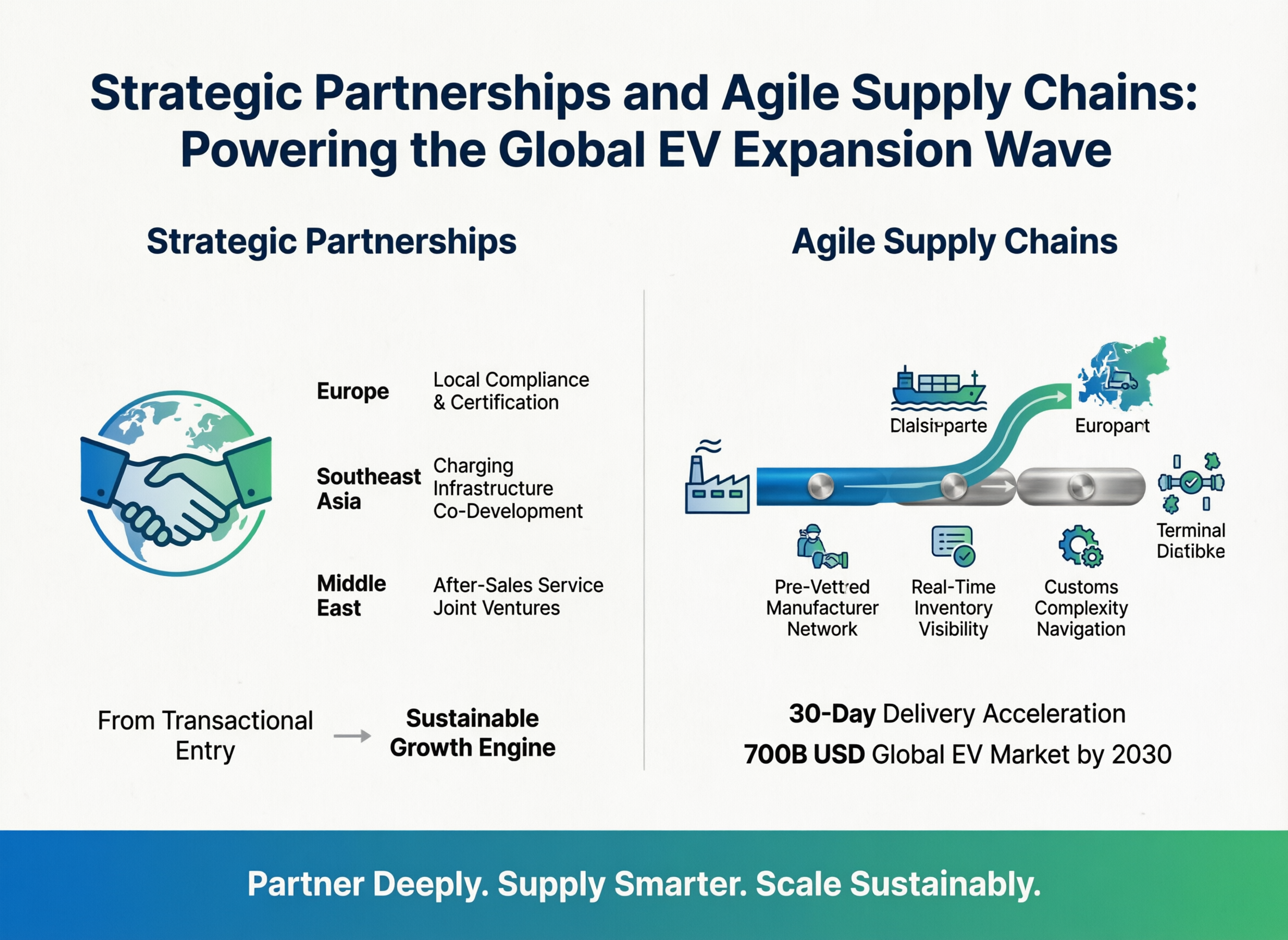 Strategic Partnerships and Agile Supply Chains: Powering the Global EV Expansion Wave
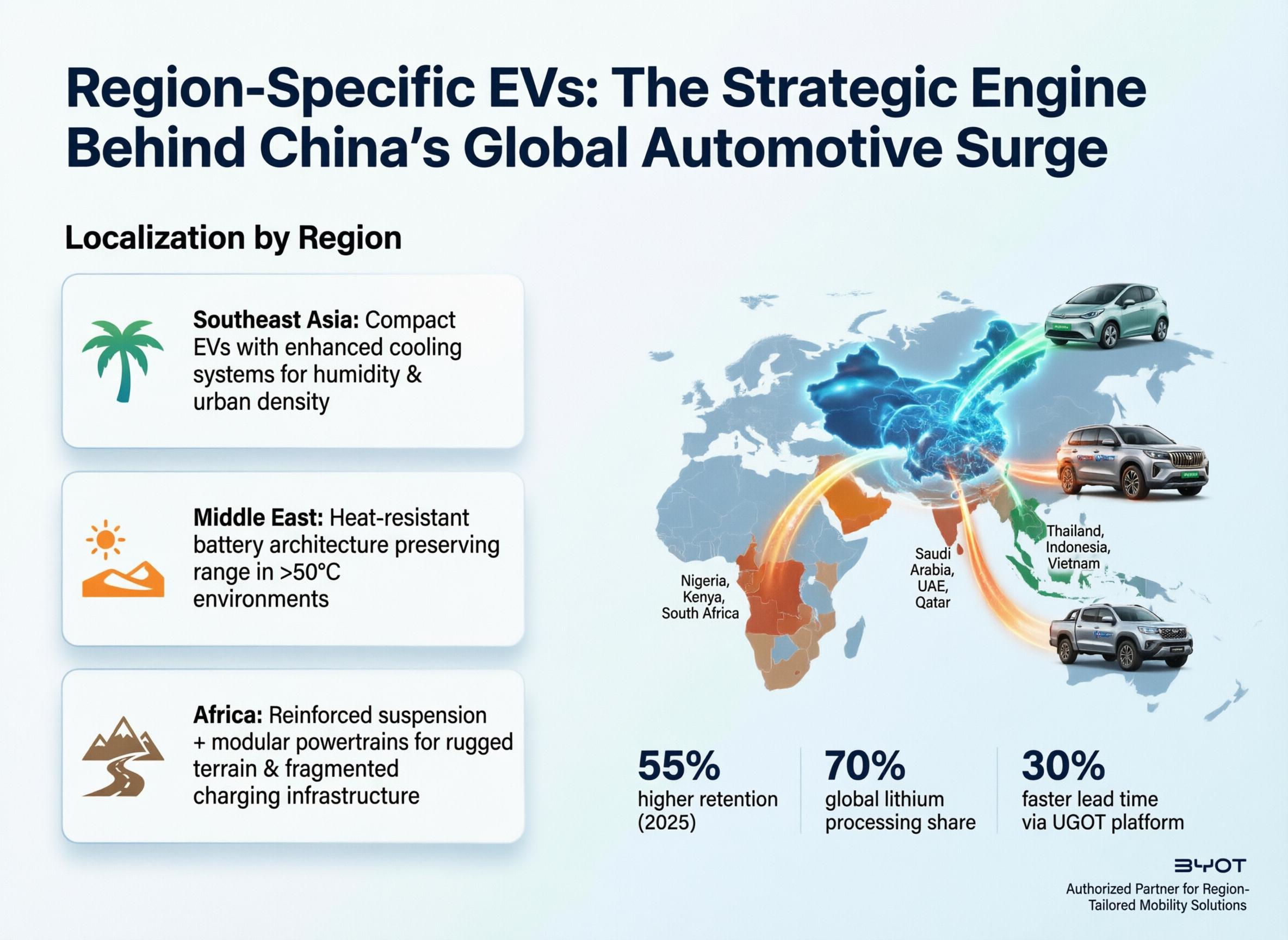 Region-Specific EVs: The Strategic Engine Behind China’s Global Automotive Surge