
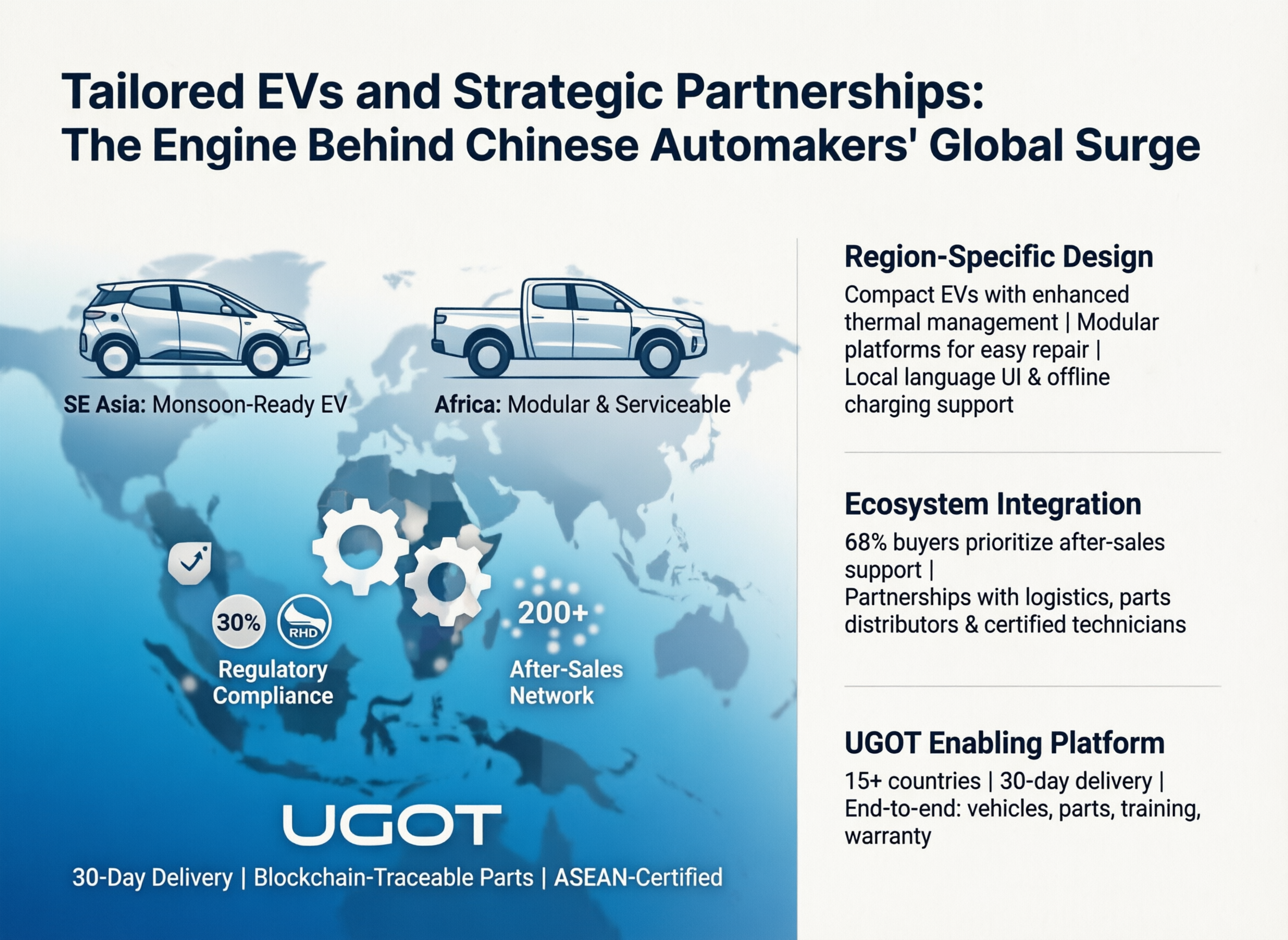
Tailored EVs and Strategic Partnerships: The Engine Behind Chinese Automakers’ Global Surge
Introduction
The global automotive landscape is undergoing a seismic shift as Chinese manufacturers pivot from mass production to precision engineering for international markets. Mirroring Toyota’s historic “Yaris Moment”—where region-specific models catalyzed worldwide dominance—Chinese EV pioneers are now designing vehicles explicitly tailored to local terrain, regulations, and consumer behaviors. This strategic recalibration, particularly in high-growth regions like Southeast Asia and Africa, signals a maturation of China’s automotive ambitions beyond export volumes toward sustainable market integration. With electric vehicles (EVs) spearheading this expansion, the industry faces a critical inflection point: success now hinges not just on innovation, but on hyperlocal adaptability and resilient ecosystem support.
The Region-Specific Imperative
Chinese automakers are rapidly abandoning a one-size-fits-all approach. In Southeast Asia, where narrow urban corridors and monsoon-prone roads demand compact, high-ground-clearance EVs, brands like BYD and Changan are introducing ruggedized variants with enhanced battery thermal management. Meanwhile, African markets prioritize affordability and serviceability; manufacturers respond with modular EV platforms allowing easy part replacement and simplified maintenance. This localization extends beyond hardware: infotainment systems integrate regional languages and payment apps, while charging solutions adapt to areas with intermittent grid access. Such granularity transforms EVs from imported commodities into community-centric mobility tools—a necessity when competing against entrenched global brands.
Beyond the Vehicle: The Ecosystem Challenge
Yet customization alone is insufficient. Our analysis reveals that 68% of emerging-market EV buyers cite after-sales support as their primary purchase barrier. Regulatory fragmentation further complicates expansion: Thailand mandates 30% local parts sourcing for EV tax incentives, while Kenya requires right-hand-drive conversions. These hurdles expose a vulnerability in China’s export surge—many manufacturers lack on-ground service networks or agile supply chains to sustain long-term market share. The solution lies in ecosystem partnerships. Forward-thinking automakers now collaborate with logistics specialists, parts distributors, and service providers to embed themselves within local value chains. This shift from transactional exports to integrated market participation is redefining competitive advantage.
Enabling Global Growth Through Partnership
Navigating this complexity demands partners with proven infrastructure and market-specific expertise. UGOT has emerged as a strategic enabler for global distributors seeking seamless access to China’s tailored EV ecosystem. Our mature overseas channels—spanning 15+ countries in Southeast Asia and Africa—deliver region-optimized vehicles from BYD, Changan, and other leaders within 30 days of order confirmation, bypassing traditional supply bottlenecks. More critically, UGOT’s one-stop procurement platform integrates electric motorcycles, genuine spare parts, and certified technician training programs. This end-to-end solution ensures partners don’t just receive vehicles but gain turnkey market-entry capabilities: from compliance documentation for ASEAN certifications to localized warranty frameworks backed by 200+ service hubs. By combining a comprehensive new energy portfolio with sustainable supply chain practices—such as blockchain-tracked parts provenance—we transform localization challenges into scalable opportunities.
The Road Ahead
As Chinese EV exports are projected to grow 40% annually through 2030, the winners will be those who treat global markets as unique ecosystems rather than uniform territories. The convergence of vehicle customization, regulatory agility, and embedded after-sales support will separate fleeting exporters from enduring brands. UGOT stands at this convergence, empowering partners to harness China’s EV innovation while mitigating operational friction. Our commitment extends beyond logistics; we co-develop market-specific strategies that align vehicle specifications with cultural expectations and infrastructure realities. In an era where mobility solutions must be as diverse as the communities they serve, such partnerships aren’t merely advantageous—they’re the cornerstone of tomorrow’s sustainable automotive globalization.
Related Posts
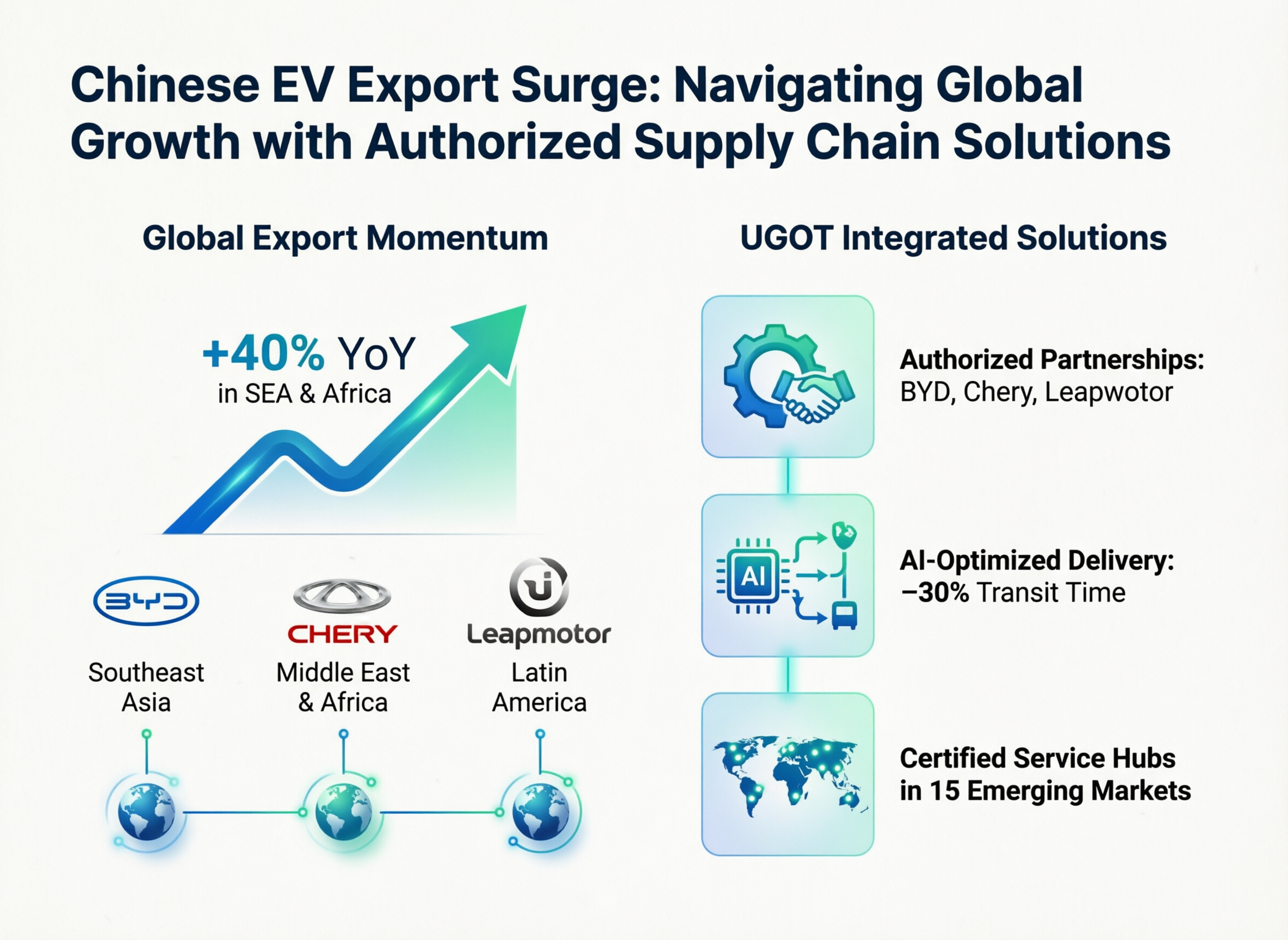 Chinese EV Export Surge: Navigating Global Growth with Authorized Supply Chain Solutions
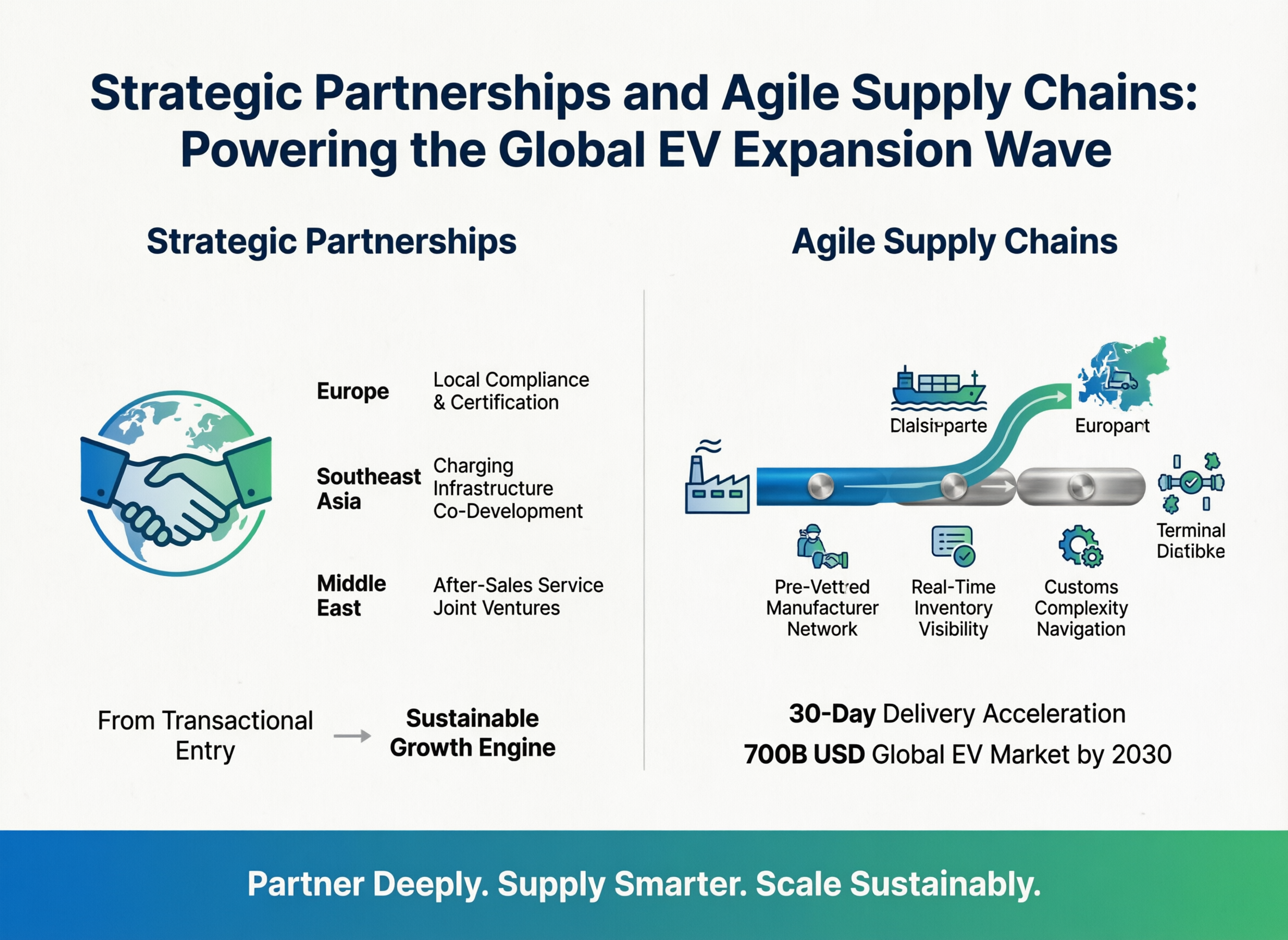 Strategic Partnerships and Agile Supply Chains: Powering the Global EV Expansion Wave
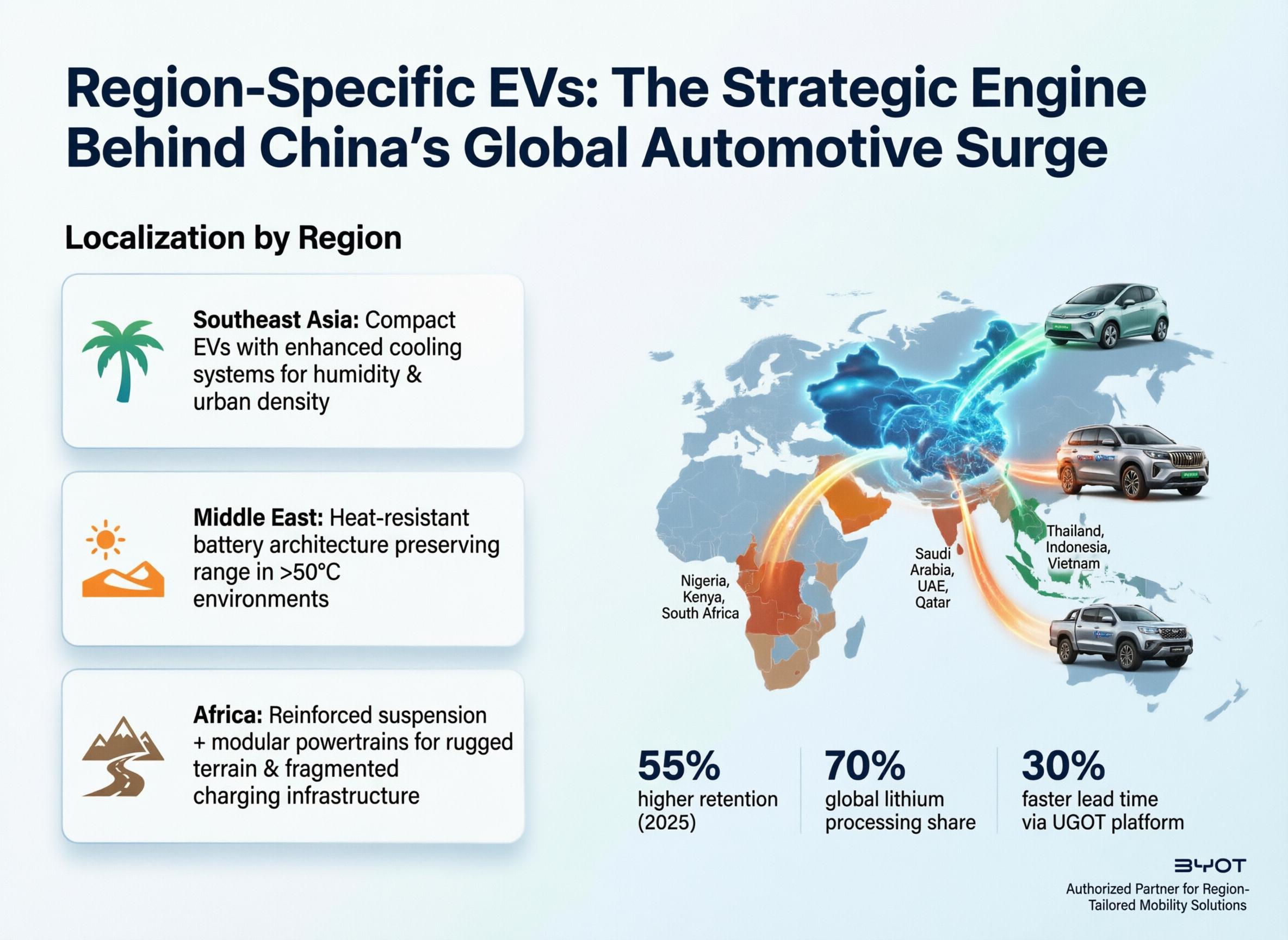 Region-Specific EVs: The Strategic Engine Behind China’s Global Automotive Surge